Location: Home >> Detail
J Sustain Res. 2026;8(1):e260012. https://doi.org/10.20900/jsr20260012
 ,
João Pereira 1,2 ,
Jorge Raposo 1,2,3 ,
Torres Farinha 1,2 ,
J. Edmundo de-Almeida-e-Pais 1,2,4
,
João Pereira 1,2 ,
Jorge Raposo 1,2,3 ,
Torres Farinha 1,2 ,
J. Edmundo de-Almeida-e-Pais 1,2,4
1 Instituto Superior de Engenharia de Coimbra, Polytechnic University of Coimbra, Lagar dos Cortiços, Rua da Misericórdia, S. Martinho do Bispo, Coimbra 3045-093, Portugal
2 RCM2+ Research Centre in Asset Management and System Engineering, Polytechnic University of Coimbra, Coimbra 3030-199, Portugal
3 Faculdade de Ciências Naturais, Engenharias e Tecnologias, University of Lusofona, Centro Universitário do Porto, Porto 4000-098, Portugal
4 CISE—Electromechatronic Systems Research Centre, University of Beira Interior, Covilhã 6201-001, Portugal
* Correspondence: Hugo Raposo
Due to the growing need for optimisation and efficiency of the production processes in the food industry, companies in this sector are looking to adopt methodologies that guarantee organisation, continuous improvement and waste reduction. The implementation of management systems and the standardization of processes are fundamental elements to guarantee the competitiveness and sustainability of operations. Efficient management of finished products, as well as correct maintenance and organization of spaces, are crucial for the proper functioning of production activities. Thus, the application of Toyota Production System (TPS) tools emerges, with emphasis for the 5S and a new concept: the 7S philosophy, a methodology that promotes the organization and the standardization of the work environment, allowing greater control over processes and, consequently, the reduction of errors and losses. This study was conducted to organize the production and storage areas, enhance workflow, and optimize the company’s overall production process. Therefore, to assess the state of the organization of an industrial food company, periodic audits were carried out, using a Questionnaire New Model, where the 5 and the 7 Senses were evaluated. For each sense, questions were posed and evaluated according to criteria with a maximum weight of 10 points. The sum of all the criteria of the 5 Senses corresponds to a total of 250 values and the sum of all the criteria of the 7 Senses corresponds to a total of 380 values, representing the maximum score for each philosophy. This case study aims to demonstrate that the application of TPS tools, especially 7S, can contribute significantly to the efficiency and organization of production, reinforcing the importance of continuous improvement practices in the food industry.
The bakery and pastry industry represents a significant segment of the global food sector, with high energy consumption, substantial raw material use, and considerable potential for waste generation [1]. As consumer demand shifts toward products produced under sustainable and safe conditions, companies in this sector face increasing pressure to align operational practices with the United Nations Sustainable Development Goals (SDGs) [2]. The SDGs adopted in 2015 (Figure 1), as part of the 2030 Agenda for Sustainable Development offer a comprehensive framework for addressing environmental, social, and economic challenges, including responsible production (SDG 12), clean water and sanitation (SDG 6), affordable and clean energy (SDG 7), sustainable industrialization (SDG 9), and climate action (SDG 13) [3].
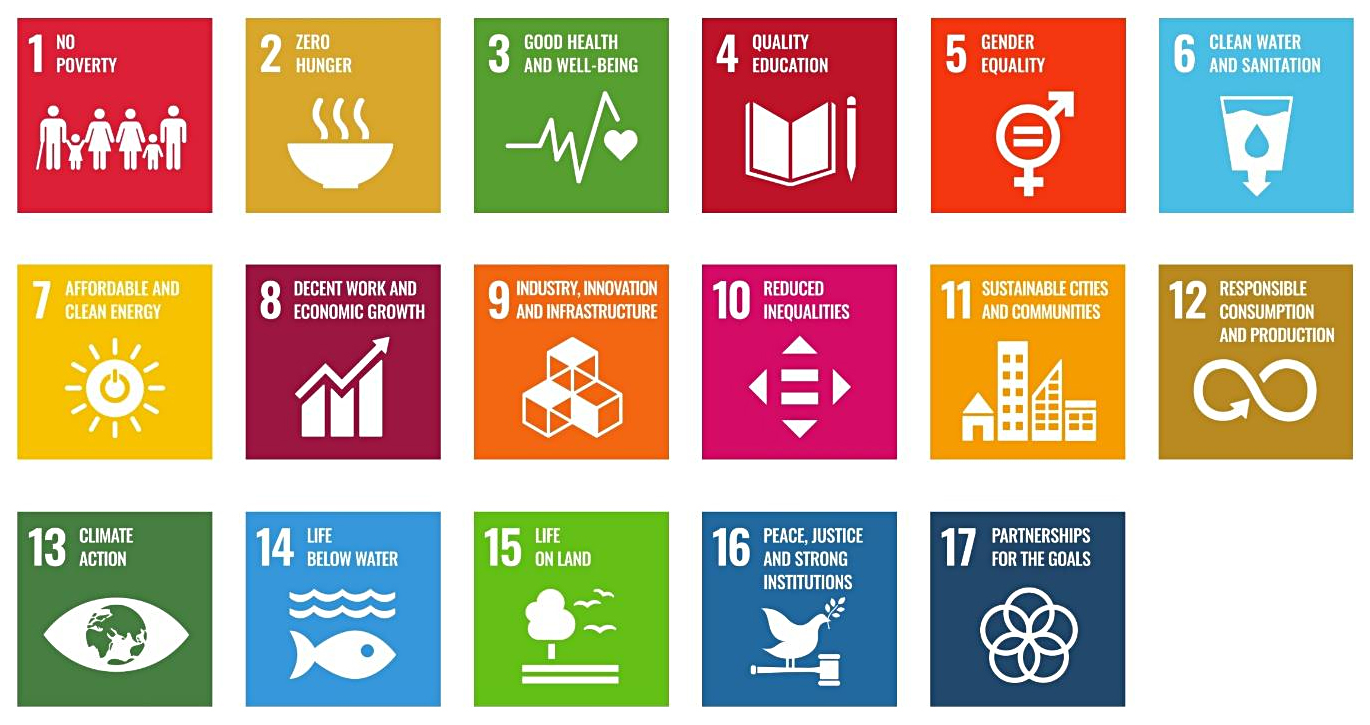 Figure 1. Sustainable Development Goals [4].
Lean manufacturing tools such as the 5S methodology have been widely recognized for their ability to enhance workplace efficiency, reduce waste, and foster continuous improvement [5,6]. Traditionally, 5S, Sort, Set in Order, Shine, Standardize, and Self-Discipline have focused on improving organization and productivity. However, recent adaptations in food manufacturing settings have incorporated additional “senses” to address broader operational goals, including safety (ensuring the well-being of workers and product quality) and environmental sustainability (reducing resource consumption and environmental impact) [7].
In the bakery and pastry context, such expanded 5S frameworks can deliver tangible benefits. For example, energy-efficient ovens and optimized production layouts reduce operational costs and carbon emissions, directly contributing to SDG 7 and SDG 13 [8]. Similarly, rigorous hygiene and equipment organisation minimize contamination risks, aligning with occupational safety requirements and enhancing food safety compliance [1]. Moreover, integrating sustainability into everyday operational routines can embed environmental responsibility into company culture, facilitating long-term alignment with global sustainability benchmarks [2].
This paper proposes a framework linking the SDGs with sustainability initiatives (Table 1) in a bakery and pastry factory through the adapted 5S methodology, incorporating the additional senses of safety and environmental sustainability. The proposed framework provides a structured pathway for improving operational efficiency, enhancing workplace safety, and meeting international sustainability targets.
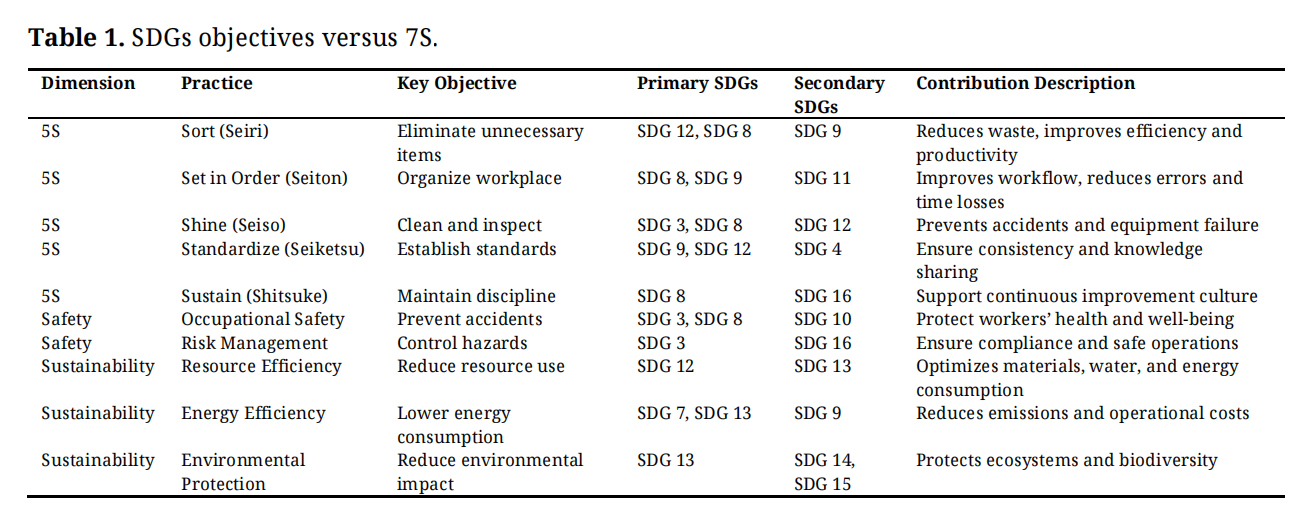 Table 1. SDGs objectives versus 7S.
This article arises from the completion of an academic project in a company in the food sector. This project took place at São Silvestre Pastry Factory, Lda., a company that manufactures and sells bakery and pastry products, located in Lousã, Coimbra District, Portugal. Its objectives were to implement the TPS tools, namely the 5S philosophy and subsequently the application of the 7S philosophy, a reformulation and update of the original “5S” philosophy.
Regarding the implementation of TPS tools, namely the 5S and 7S Philosophy, audits were carried out before the implementation of the two philosophies in order to verify which points should be changed by them. After these audits, new audits were carried out over a period of one year in order to verify the implementation of the respective philosophies.
First, it is important to provide a brief overview of the food industry in Portugal. Broadly speaking, this sector falls within the scope of processing industries, characterized by specific features and primarily focused on the production of food products. Based on the Portuguese Classification of Economic Activities (CAE) of the food industry, it can be subdivided into several branches of activity, as can be seen in Table 2.
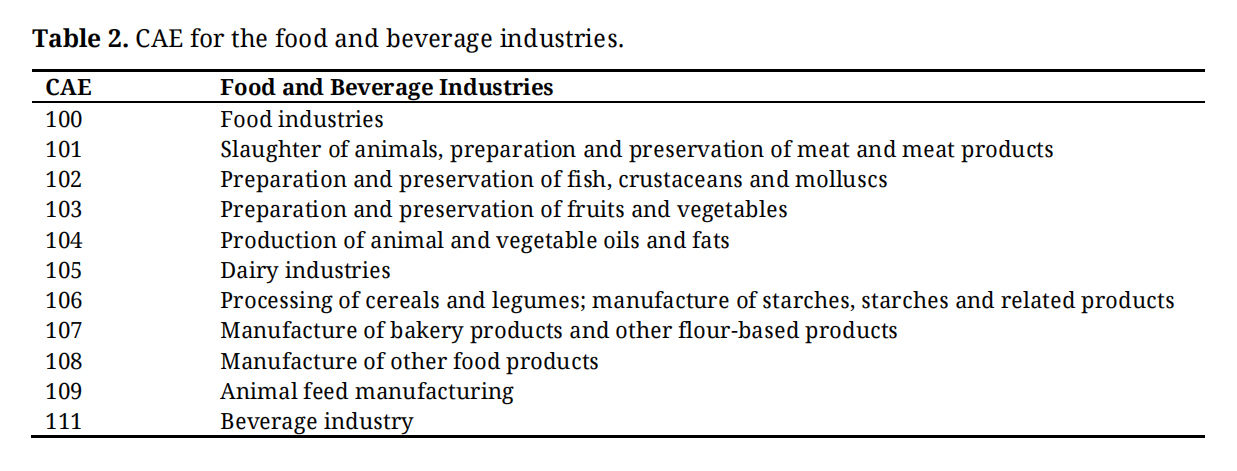 Table 2. CAE for the food and beverage industries.
Recent studies show that the turnover of the Bakery and Pastry and Fruit and Vegetable Sector has been increasing successively, while the Dairy sector has been decreasing. Gross Value Added (GVA) is used to evaluate the result of productive activity over a given period. This value results from the difference between the value of production and the value of intermediate consumption. More recent studies show that the GVA of the Bakery and Confectionery sector has been increasing gradually, as all others experience variations over the years.
Therefore, the São Silvestre Pastry Factory, Lda., has a very acceptable turnover. Through graphical analysis (Figure 2), it is possible to observe that the company’s revenue has been increasing significantly, reaching values of around 2,000,000€ in the last two years.
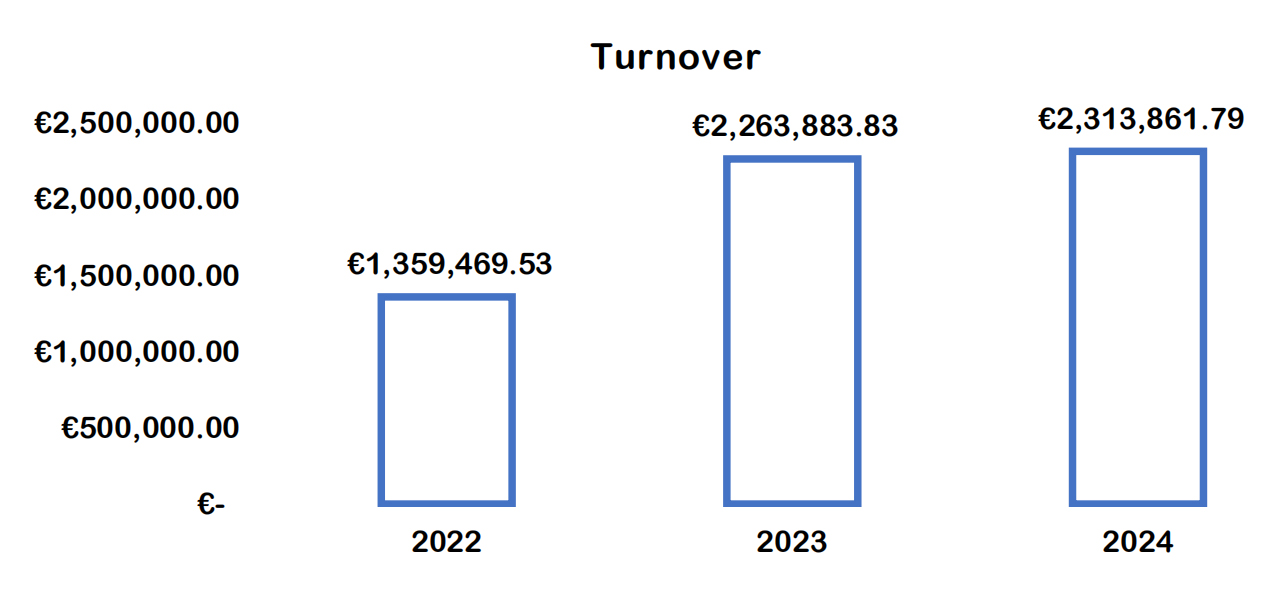 Figure 2. Turnover of the São Silvestre pastry factory, Lda.
GVA is the result of productive activity in a given period of time, which results from the difference between the value of production and the value of intermediate consumption, resulting in profit. By analysing Figure 3, it can be observed that the GVA has a small fluctuation in the three years analysed. In relation to the data presented by the author [9], it can be inferred that GVA values of Fábrica de Pastelaria São Silvestre, Lda. are stable.
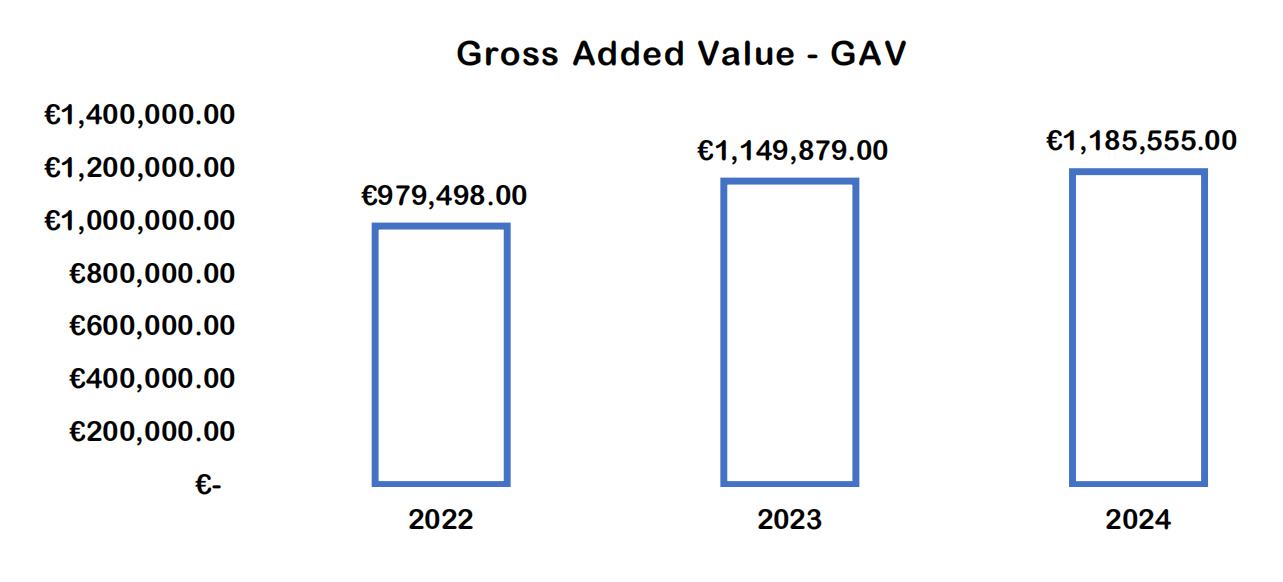 Figure 3. GAB of the São Silvestre pastry factory, Lda.
During the course of an organization’s activities, financial commitments may arise that must be met and achieved within a given period.
Methodology and Research QuestionsThis research aims to create a methodology introducing two new senses, safety and sustainability. For this purpose, a five-step methodology was used:
d)
d)
d)
d)
e)
This article is structured into the following sections:
●
●
●
●
●
●
In increasingly competitive markets, continuous improvement of industries prevails and must be increasingly valued. Nowadays, a large majority of companies implement tools from the TPS methodology to improve the organization of the factory in general and its production processes in particular. Applying TPS tools not only increases plant operational efficiency, but also improves customer experience, promoting company loyalty and repeated purchases [10].
TPS is the basis of Lean Manufacturing, a philosophy focused on eliminating waste and optimizing processes. In this way, Lean management also appeared and emerged as a strategic tool for increasing competitiveness and business performance [11].
The adoption of Lean management practices in the production of services, for example, in the context of after-sales services, has proven to be an effective strategy for eliminating waste, increasing operational efficiency and raising customer satisfaction levels. Also, in the maintenance and repair sector, such as the automotive sector, these principles are adapted to address the specific challenges of this context, promoting improvements in service quality and customer experience [11,12].
Lean practices are focused on delivering value to the customer, which is reflected in more qualified maintenance services and better overall performance of production systems. Furthermore, the Lean philosophy helps to align maintenance activities with the organization’s strategic objectives, ensuring that this area plays a relevant role in competitiveness and business success [11,12].
A customer-centric approach is an essential element of Lean practices in after-sales services. Unlike traditional manufacturing, customers actively participate in this sector’s processes. Operational efficiency, in this case, depends considerably on compliance with appointments scheduled by customers, which requires clear, effective and targeted communication to keep the customer informed and committed to the services offered [11,12].
Another significant advantage of the Lean approach is the ability to identify and resolve maintenance problems more quickly, improving response times and minimizing interruptions in production processes [11,12].
Still within the scope of the TPS methodology, the 5S tool stands out (separating what is useful from what is not used; organization; cleanliness; standardization; discipline), where the workplace is organized, facilitating the location of tools and materials. This organization reduces the time wasted searching for items or tools, as well as minimizes setup downtime and increases productivity [13].
In summary, the TPS and Lean concepts can be applied to these areas of an organization for its continuous improvement: process and equipment, production planning and control, maintenance management, human resources, product design, relationships with customers and suppliers.
Considering the current state of the art, Table 3 compares the 5S/TPS/Lean concepts discussed previously.
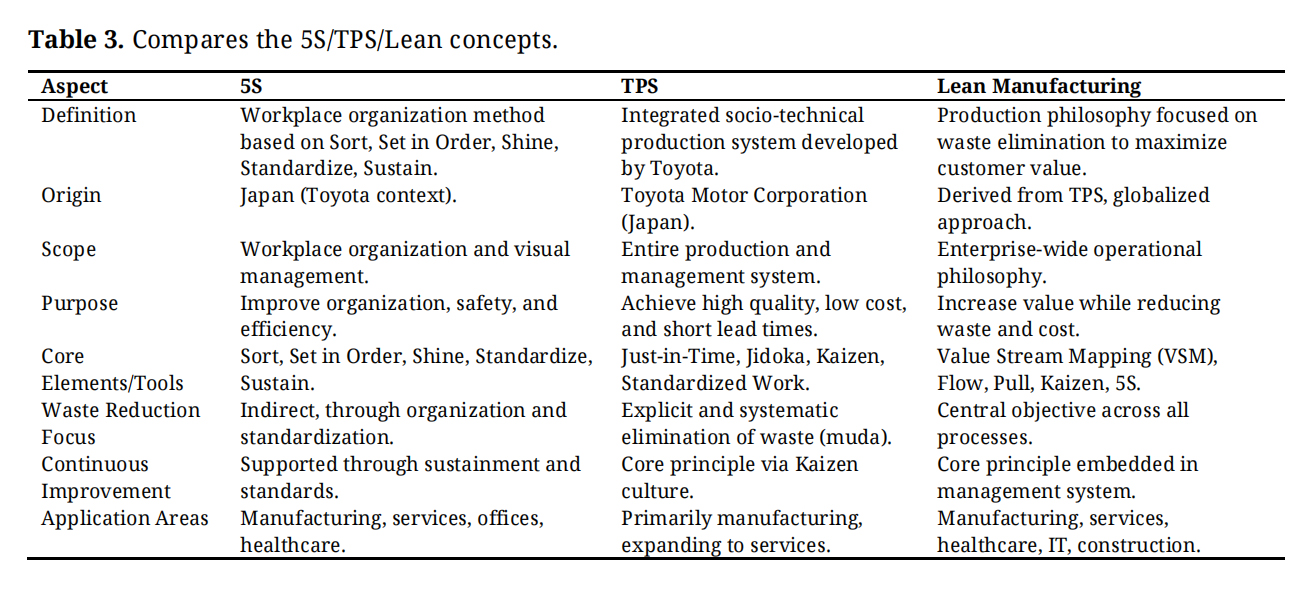 Table 3. Compares the 5S/TPS/Lean concepts.
However, variability in raw materials, processing techniques and storage conditions are just some of the factors that affect quality in the food industry.
Puttero et al. [14] state that in recent years, the food industry has faced a number of complex challenges related to both Quality Control (QC) and sustainability. Ensuring consumer safety and satisfaction remains a cornerstone of the food industry, supported by stringent standards that address the risks of contamination and spoilage. To manage this high variability, it is essential to analyse the production process and factors that most influence food quality, aiming to predict and minimise food waste, thereby ensuring a sustainable process. This convergence of QC and sustainability goals provides fertile ground for Machine Learning (ML) applications [14].
Puttero et al. [14] show the various applications of ML models in the food industry, where the variability of raw materials and the difficulty of controlling production and environmental factors challenge the use of traditional methods. The QC and sustainability of an industrial corn cakes production process are used as a case study.
Liakos et al. [15] review systematically explores recent advancements in ML for QC across six domains: Food Quality Applications; Defect Detection and Visual Inspection Systems; Ingredient Optimization and Nutritional Assessment; Packaging—Sensors and Predictive QC; Supply Chain—Traceability and Transparency and Food Industry Efficiency; and Industry 4.0 Models. The novelty of this review lies in combining a transparent PRISMA approach, a six-domain thematic framework, and Industry 4.0/5.0 integration, providing cross-domain insights and a roadmap for robust, transparent, and adaptive QC systems in the food industry [16].
These new approaches require a structured, stable, and effective organization, as well as well-organized and highly reliable data. This basic organization is only possible with the implementation of traditional concepts and philosophies, such as 5S, TPS, and Lean, which aim for organization, standardization, efficiency, quality, and continuous improvement.
The Seven WastesWaste can be defined as activities that are carried out and do not add value, making products and services more expensive and wasting unnecessary resources and time. This waste is divided into two categories: pure waste, which is waste that must be completely eliminated; and necessary waste, that corresponds to the activities that must be carried out; however, they do not add any type of value, so they should be minimized.
Pinto [16] notes that Ohno and Shingo, in developing the TPS, identified seven types of waste, which are as follows: Transportation, Inventory, Waste of the process itself, Waiting, Unnecessary work, Excess production and Defects:
1
2
3
4
5
6
7
Pinto [16] also mentions that, in addition to the waste mentioned above, there are currently some more, such as: Waste of human potential; Waste from using an inappropriate system; Waste of resources; Waste of materials; Wasting customer time; Waste of human communication.
TPS Tools and TechniquesThere are a large number of TPS tools and techniques, such as: 5S and 7S Philosophy; VSM; Failure Mode and Effect Analysis (FMEA); Levelled programming; The Kanban control system; The Cause and Effect Diagram (Diagram de Ishikawa); Standardized processes; The 5W2H formula (Who? What? Where? When? Why? How? How much?); SMED—Single Minute Exchange of Die; Among others. In this project, the TPS Tool used is the 5S philosophy, which will be described in the next sections, as well as the new 7S concept.
5S Philosophy5S was developed as a philosophy of organization and standardization in the workplace. It emerged in Japan after World War II, when many Japanese companies were trying to rebuild the economy and increase competitiveness in the global market [17–20].
The 5S Philosophy is an accessible and easy-to-understand management tool, allowing participation and involvement from all hierarchical levels of the company. This philosophy is an integral part of the TPS and was later disseminated by the Japan Industrial Standards Committee (JISC). Its aim is to organize work in a clean, efficient and safe manner in order to increase productivity and standardize work. The acronym 5S integrates five main Japanese words, each representing a fundamental principle of organization and efficiency (Figure 4 and Table 4): SEIRI—Organization (Separate the useful from the useless); SEITON—Tidying Up (A place for everything and everything in its place); SEISON—Cleaning (Clean the workplace and check for opportunities for improvement); SEIKESTSU—Normalization (Standardization); SHITSUKE—Self-discipline.
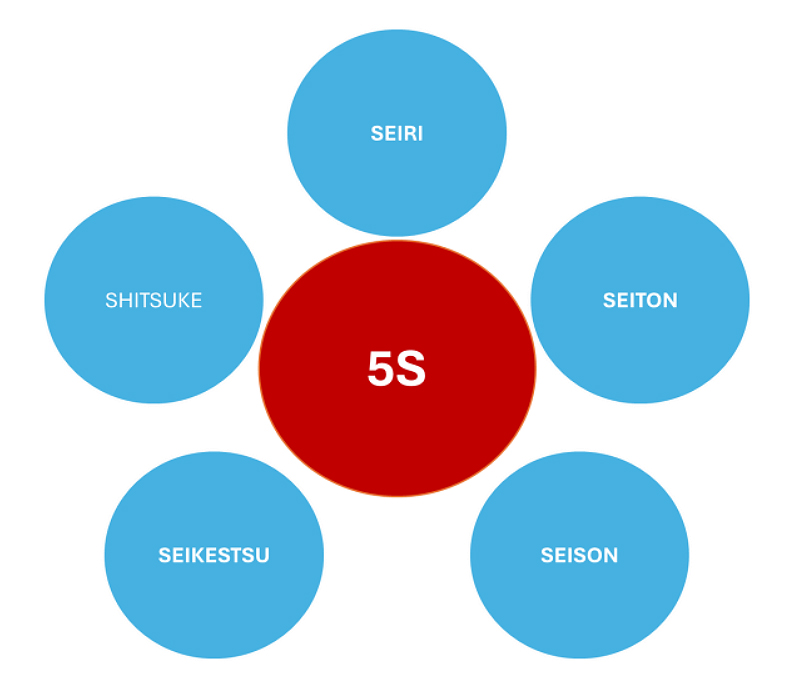 Figure 4. 5S philosophy.
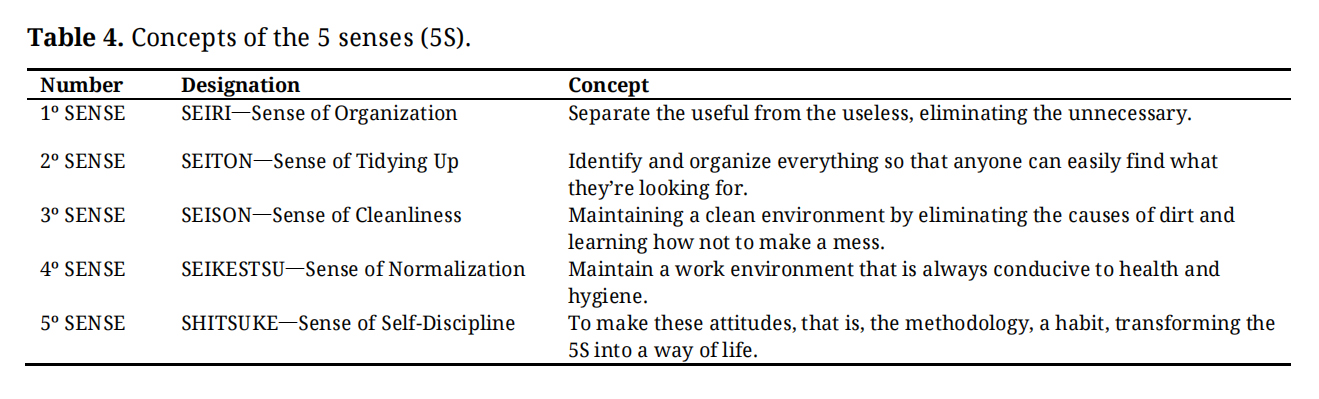 Table 4. Concepts of the 5 senses (5S).
It is very important to obtain evidence of the company’s current situation, in the areas that need improvement. That said, it is necessary to meet with all employees in order to understand what improvement actions must take in the workplace, as better that anyone else to know where to intervene. As already mentioned, all employees must participate in the implementation of this method. Therefore, implementation goes through the following process [21]: Motivate employees and senior management; Train employees on the method; Take stock of the facilities; Define an experimental area; Create a task management system; Form the experimental working group; Create a “5S dashboard”; Start with the working group; Implement the 5 senses; Generalize to other areas.
The application of the 5S methodology is divided into two stages, which are raising to the appropriate level and maintaining the reached level. In the first stage, it involves the implementation of the first three senses and the second stage involves the implementation of the other two senses. The PDCA cycle must be part of the implementation of the 5S methodology, that is, it must be part of the organization’s continuous improvement routine, that is, it must be incorporated into the organizational culture (sense of self-discipline).
Challenges in Implementing the 5S MethodologyThe 5S methodology is a fundamental tool for any organization due to its simplicity, low implementation cost and achievement of short-term results. However, not all companies are able to achieve the desired results, as they limit themselves to carrying out small activities on the premises without making them habitual for employees. Some examples of failure are [22]: Lack of understanding of concepts (the method is understood as an organization and cleaning task rather than an educational process); Lack of a strategic plan (despite the simplicity of the method, it is important to have a person present who can check the activities carried out); Assume that the 5S methodology is standardized (i.e., it does not vary from company to company); Judge that the 5S methodology has a solution for everything (there must be a well-defined business structure, the company’s technology must not be obsolete and salaries must be reasonable); Implement the 5S methodology to show to other entities (implementing the method just to show to customers or suppliers becomes a waste of time); Speed up the implementation of the methodology (“old habits” should not be changed drastically, this only makes it difficult for employees to implement it); Failure to establish a maintenance plan to ensure continuity of the 5S method (you should not just implement the method, it is important to continue the method and promote new improvement actions).
Other SensesCurrently, due to the failure in implementing the 5S methodology, some authors have advocated the emergence of new senses, but there has been no consensus among all authors. Table 5 presents the meanings proposed by [22].
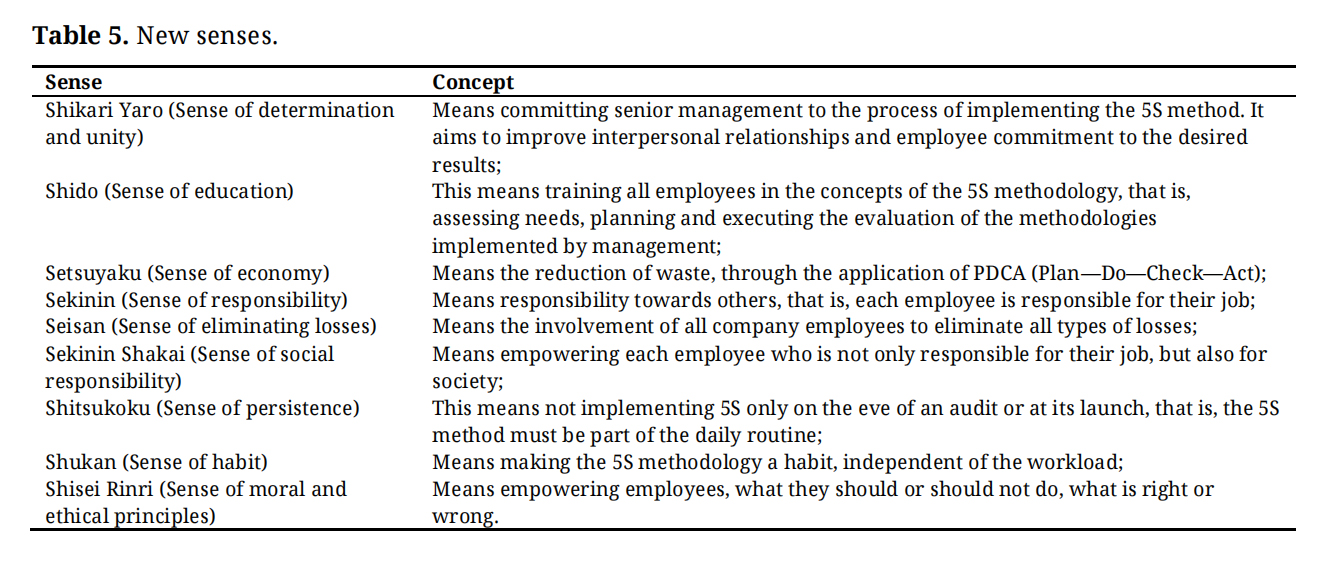 Table 5. New senses.
It is important to highlight that companies are increasingly adopting these senses, and others that are essential for them. A sense that is widely used alongside all the others mentioned above is the sense of Security. This sense is present in companies, as it is common to find emergency exits or blocked corridors, equipment without safety protection, etc. By applying this concept, companies will not eliminate work accidents, only its application will allow them to be reduced. Through it, employees will be aware of the dangers and that the place is safe and will be able to focus solely on solving problems that exist in the workplace itself. Another sense that is also in fashion is the Sense of Sustainability.
Therefore, in this article, we present a new concept: “7S Philosophy”, which adds two senses to the 5S.
The 6S added a sixth principle:
6º SENSE: Safety
Accident prevention and worker safety. It includes measures such as the correct use of PPE (Personal Protective Equipment), identification of risks and creation of safety protocols.
The 7S added a seventh principle:
7º SENSE: Sustainability
Efficient use of resources and reduction of environmental impact; encourages practices, such as the rational use of energy, the reduction of waste and the proper disposal of waste.
The Seven S (7S) philosophy adopted for the workplace organization by eliminating or reducing Muda, Mura and Muri. The 7S implementation consists of seven phases shown in Figure 5: Sort, Set in order, Shine, Standardize, Self-Discipline, Safety and Sustainability.
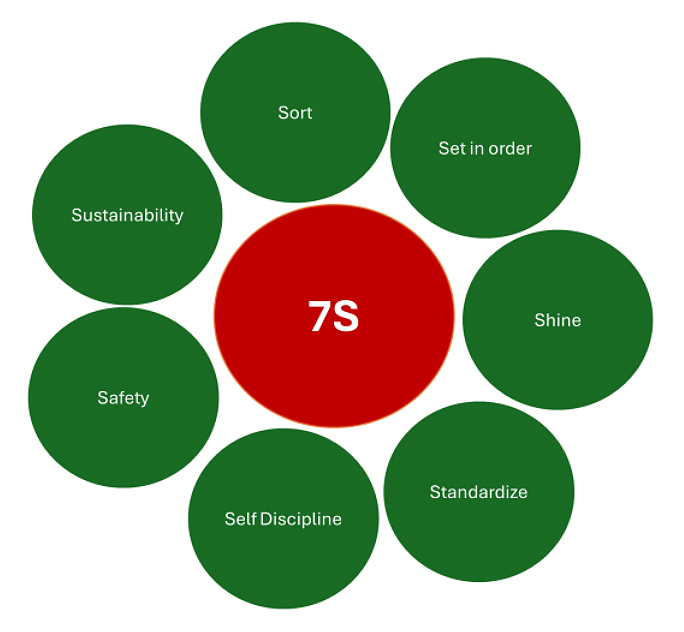 Figure 5. 7S philosophy.
Therefore, 7S is the extension of 5S with two additional S, namely Safety and Sustainability. Safety practices and safety training help reduce accidents in industry. The Sense of Sustainability encourages and motivates the correct use of resources, such as water, electricity, gas, etc. New standards must be created to ensure the sustainability of resources and the environment.
7S activities must be continuously monitored through regular audits and improved if there is deterioration. 7S improves the performance of organizations in terms of greater productivity, better quality, greater cleanliness and a healthier, safer and more sustainable work environment.
To implement this study, a bibliographic search was carried out on platforms such as Google Scholar, B-on, SciELO, Science Direct, prioritizing studies/articles published in the last five years and considering the Scimago Journal Rank (SJR) classification. The search strategy was based on the use of keywords in Portuguese and English, including terms such as “TPS”, “Lean” and “5S”.
Before starting the study, data collection was carried out, identifying and analysing the jobs in the different production areas, using the following collection methods:
●
●
●
In this way, data collection was carried out on site, during audits at different points of the process. The data obtained was processed and analysed with the help of Excel tools. The data was presented visually, using graphs and tables, to facilitate its interpretation and analysis. Regarding the application of 5S and 7S, the methodology consists of the following steps:
●
●
●
●
●
●
The 7S approaches can be seen from several perspectives (Figure 6), like the following:
●
●
●
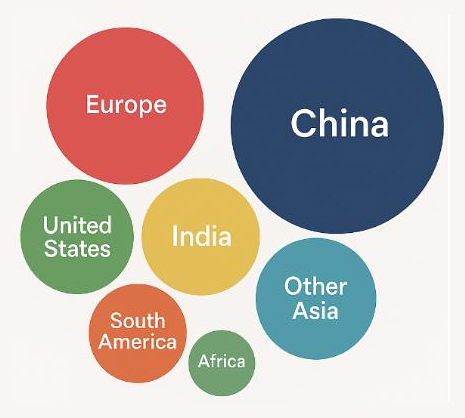 Figure 6. 7S articles published worldwide.
In this section, it can be observed the case study carried out in a sector of the food industry, namely the implementation on the factory floor of two philosophies: 5S and 7S. Some studies in the food industry sector are the following: [23–25].
Implementation of the 5SIn order to assess the state of the organization of the manufacturing part of Fábrica Pastelaria São Silvestre, Lda, at the time of the beginning of the implementation, and also to identify some aspects to be improved, an initial audit was carried out. For this purpose, a checklist was created (Table 6), where the 5 senses were evaluated. For the census, questions were asked and evaluated according to criteria with a maximum weight of 10 points. The sum of all the criteria of the 5 senses corresponds to a total of 240 values, making up 100% of the maximum score. As we can see in the radar map of the first audit (Figure 7).
In the first audit carried out, it was possible to verify some organizational problems. With the help of the checklist, it was possible to verify the level of disorganization in which the company was at the manufacturing level, and this observation could be compared with the results of the first audit. That said, through the implemented methodologies, it can be observed a significant increase in the company’s organization, since the result of the last audit was quite satisfactory.
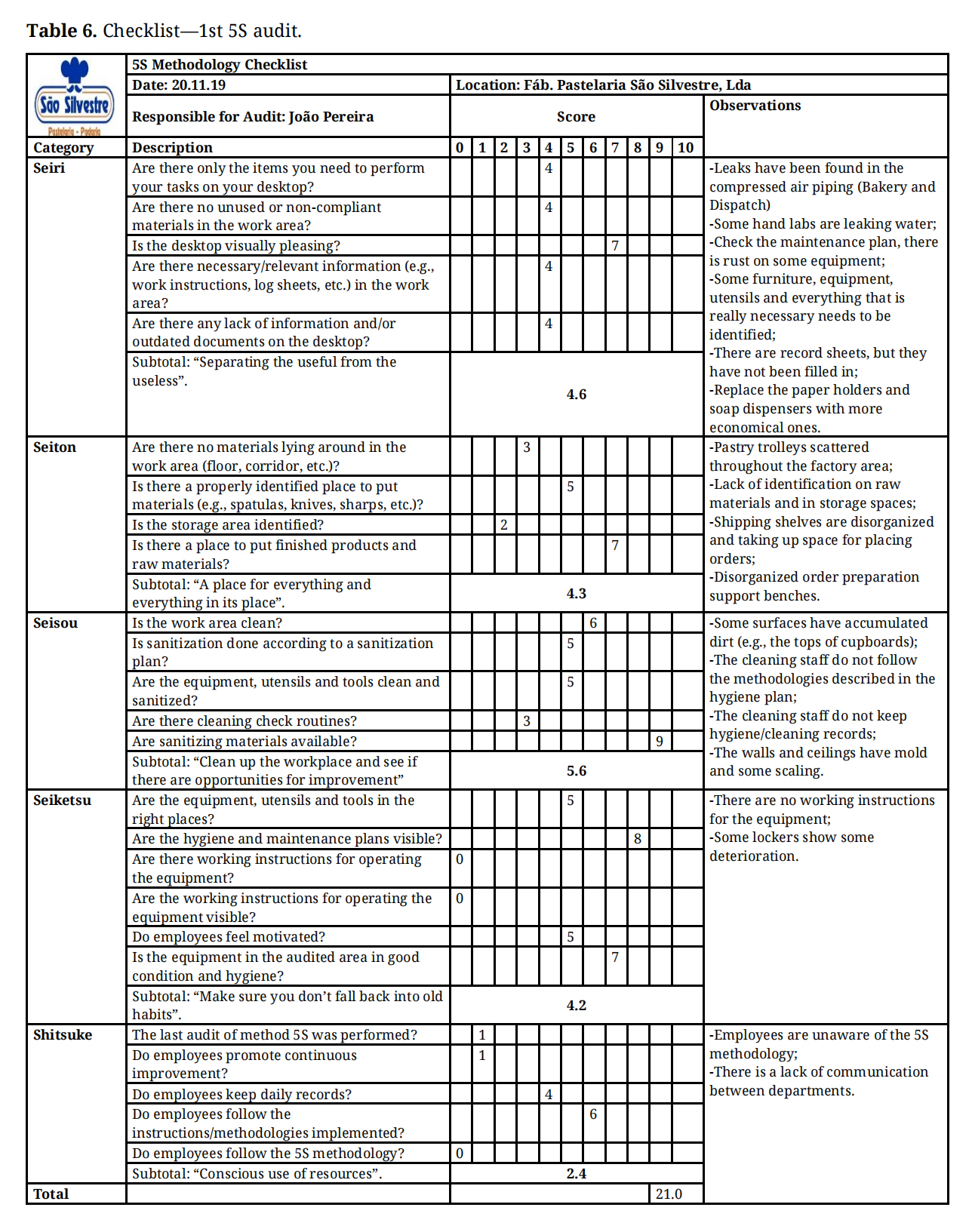 Table 6. Checklist—1st 5S audit.
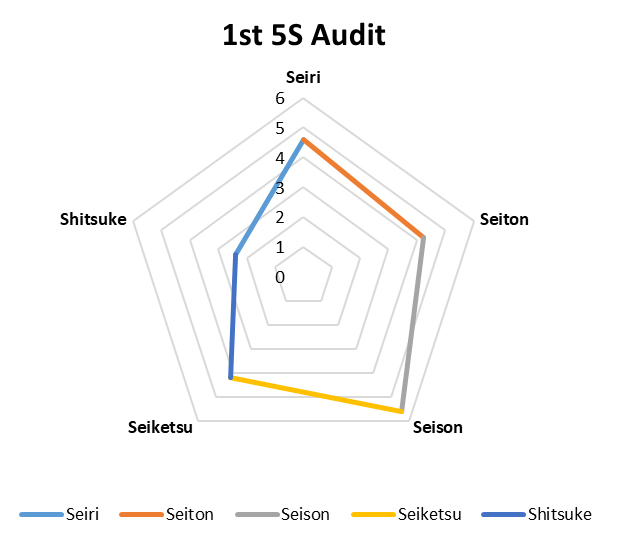 Figure 7. Radar map—1st 5S audit.
The sense of cleanliness (3rd SENSE: SEISON—Sense of Cleanliness) cannot be dissociated from the previous senses, as this one was applied as the shelves and cupboards were organized and tidied. With this sense, it was even possible to make the cleaners aware of the importance of keeping the production area clean and the need to fill out the spreadsheets. In this awareness, the importance of following hygiene plans and the safety measures should be used when using cleaning products was also reinforced.
4th SENSE: SEIKESTSU—Sense of Standardization. In this sense, rules must be described so that the work is always carried out in the same way and with the same tools or equipment, regardless of the employee. That said, work instructions were created for the equipment to facilitate the operators’ daily tasks. With this in mind, the equipment maintenance plan was also reviewed, as during the audits carried out, some non-conformities were found regarding the completion of the equipment registration forms.
5th SENSE: SHITSUKE—Sense of Self-Discipline. This sense consists of controlling all the other senses mentioned previously, in order to promote continuous improvement. To verify that there is continuous improvement, several audits were carried out, in order to improve all the less positive points until the final audit. It is important to emphasize that despite the 5S method having been implemented and a final audit having taken place, it is necessary to continue carrying out audits in order to continue improving the negative aspects that arise over time. In this sense, the last audit carried out for this study obtained a final result of 85%, that is, a maximum score of 237.
Implementation of the 7SAt this point the application of the new 7S concept is presented, and a new checklist was created (Table 7), where the 7 senses were evaluated. For each added sense (Safety and Sustainability), questions were asked and evaluated according to criteria with a maximum weight of 10 points. The sum of all the criteria of the 7 senses correspond to a total of 380 values, making up 100% of the maximum score (Figure 8).
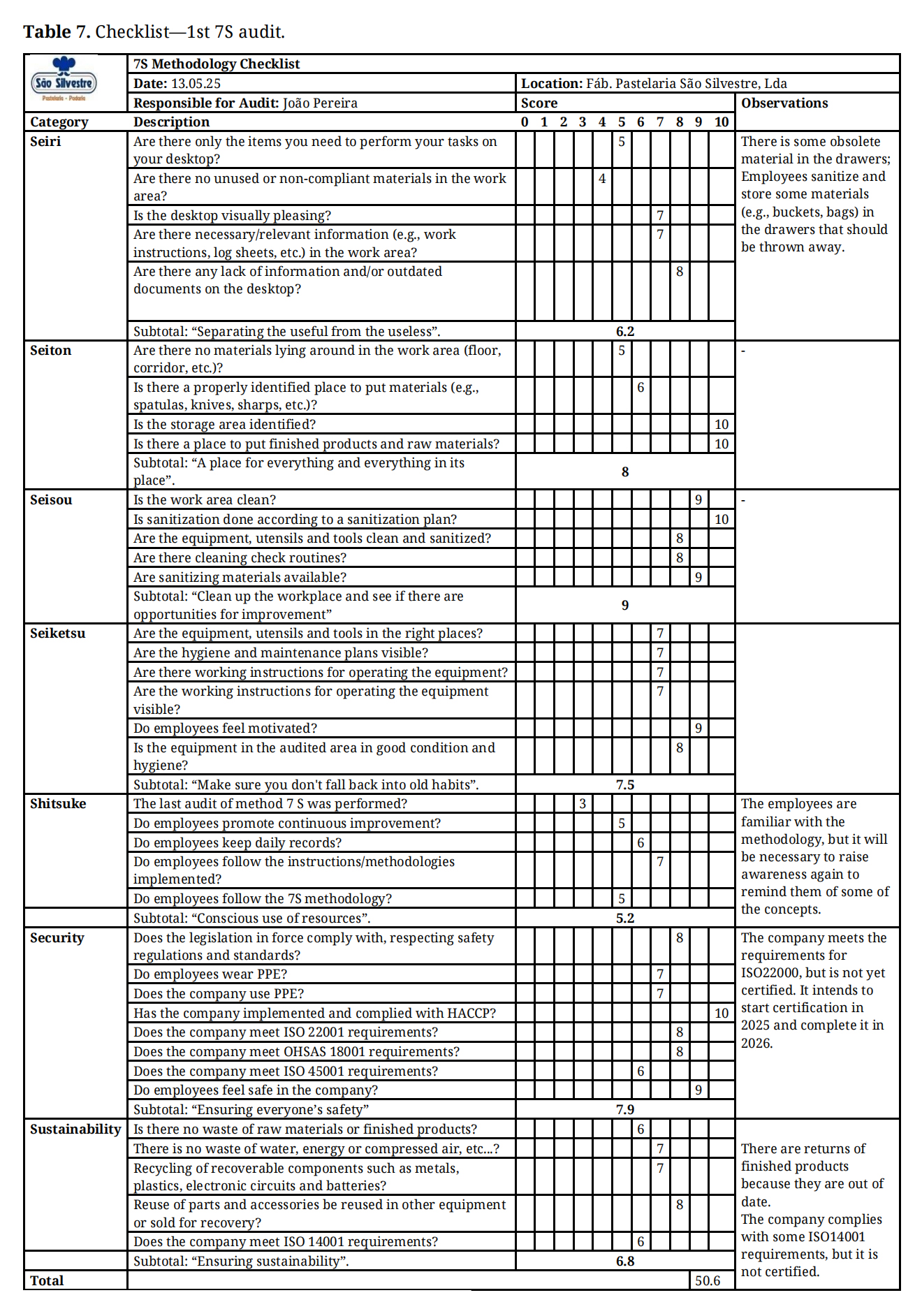 Table 7. Checklist—1st 7S audit.
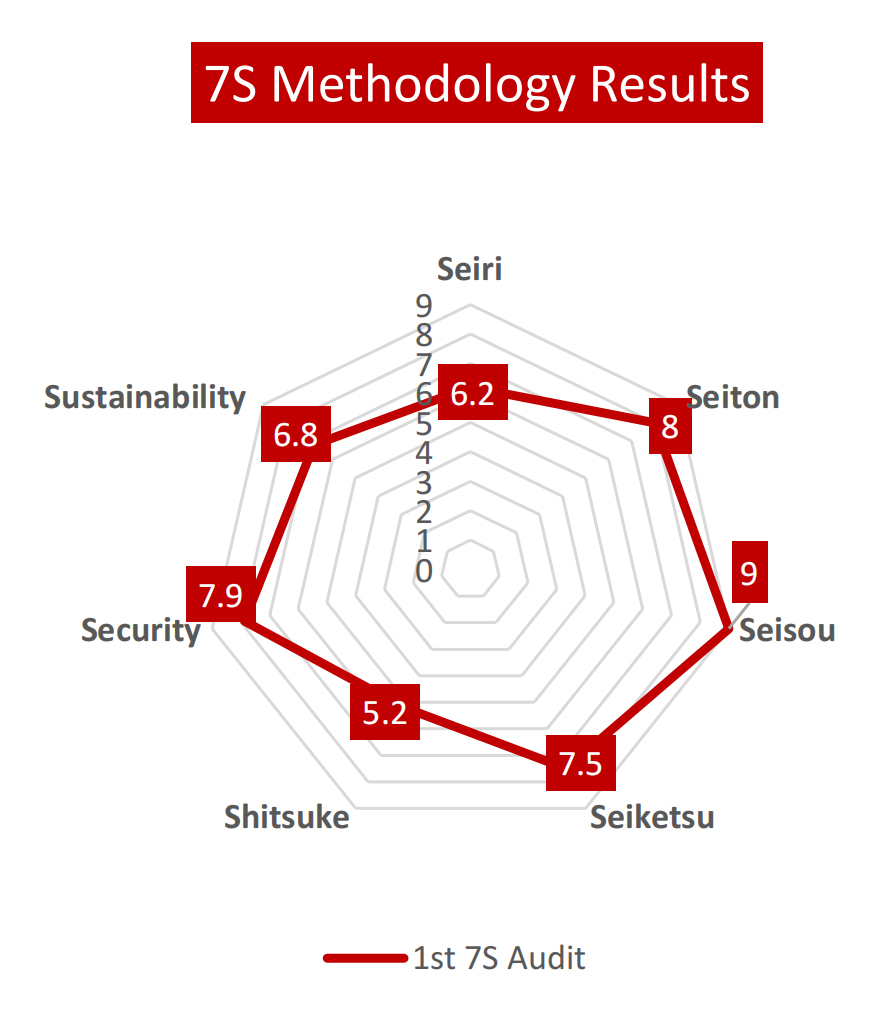 Figure 8. Radar map—1st 7S audit.
It can be verified, through the checklist created for the 7S philosophy audit, that questions were added for the two new senses (Safety and Sustainability), through brainstorming meetings between the authors and collaborators of the new concept. The new questions for the Safety and Sustainability senses are presented below.
Safety:
一
一
一
一
一
一
一
一
Sustainability:
一
一
一
一
一
In this section, they are presented the results and the discussion about the implementation of the 5S and 7S Philosophy, through the analysis of the audits carried out over time.
As previously stated, employees are highly resistant to change, but despite this, it was possible to increase the results obtained from implementing 5S from 42% to 95%. In Table 8, and according to Figure 9, it is possible observe the evolution of the audits carried out from the first to the last audit carried out for the 5S philosophy implementation project.
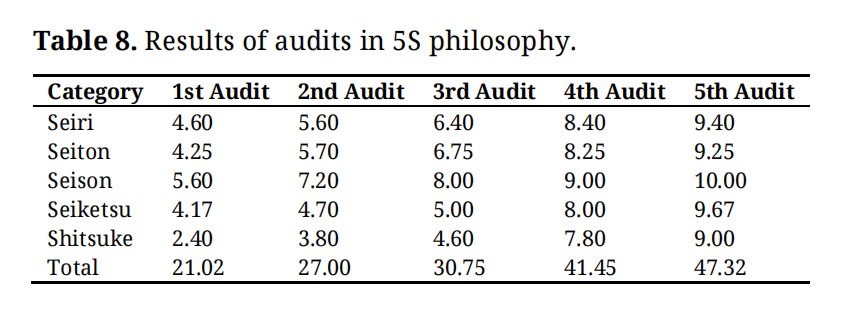 Table 8. Results of audits in 5S philosophy.
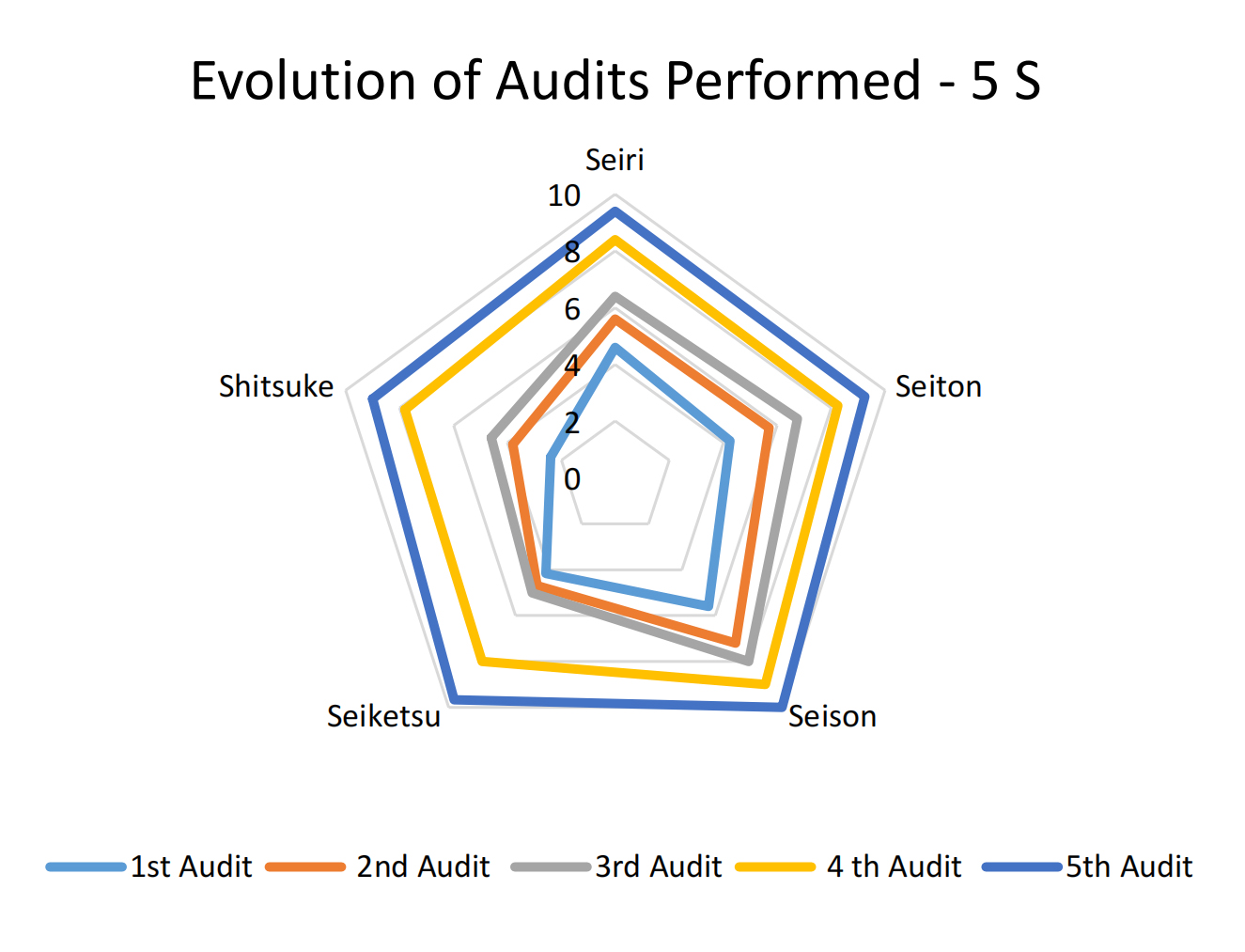 Figure 9. Evolution of audits performed—5 S.
Throughout the audits, it was possible to observe a continuous improvement in the five senses. By analysing Figure 10, it is possible to verify that the 1st, 4th and 5th senses showed a significant improvement after the third audit. This is due to resistance to change on the part of employees, the size of the team and the different schedules practiced, which makes it difficult to implement some new rules and self-discipline. As for the 2nd sense, as would be expected in the first and second audit, there were no significant improvements, since, despite there being defined places to put the work tools, they often tend to place them in the old places. Regarding the 3rd sense, there was a gradual increase in the parameters evaluated, perhaps because the team was smaller and a little more open to change.
Below it is presented the first audit of the 7S implementation. In Table 9 and Figure 10, it is possible to see the results obtained in the audit carried out for the 7S philosophy implementation project.
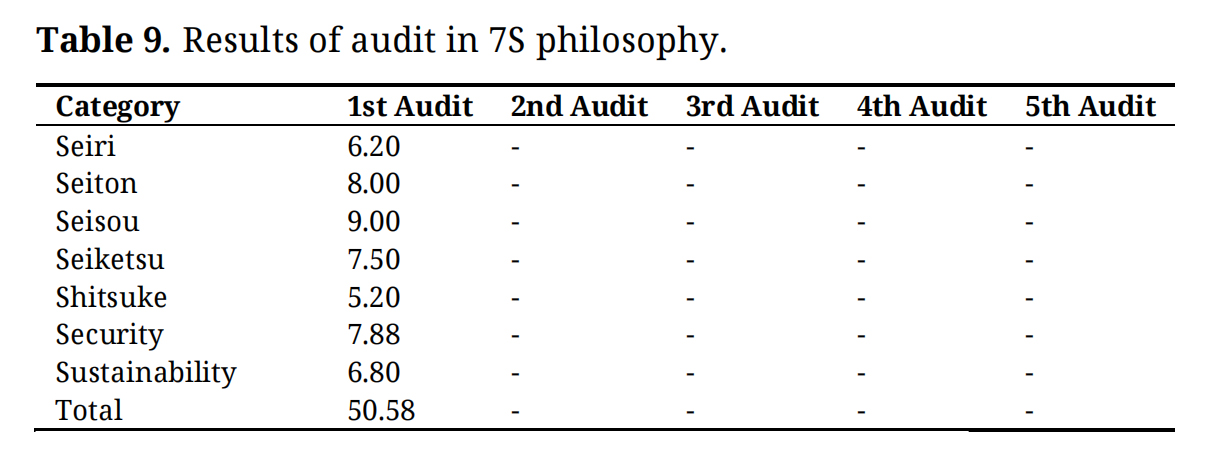 Table 9. Results of audit in 7S philosophy.
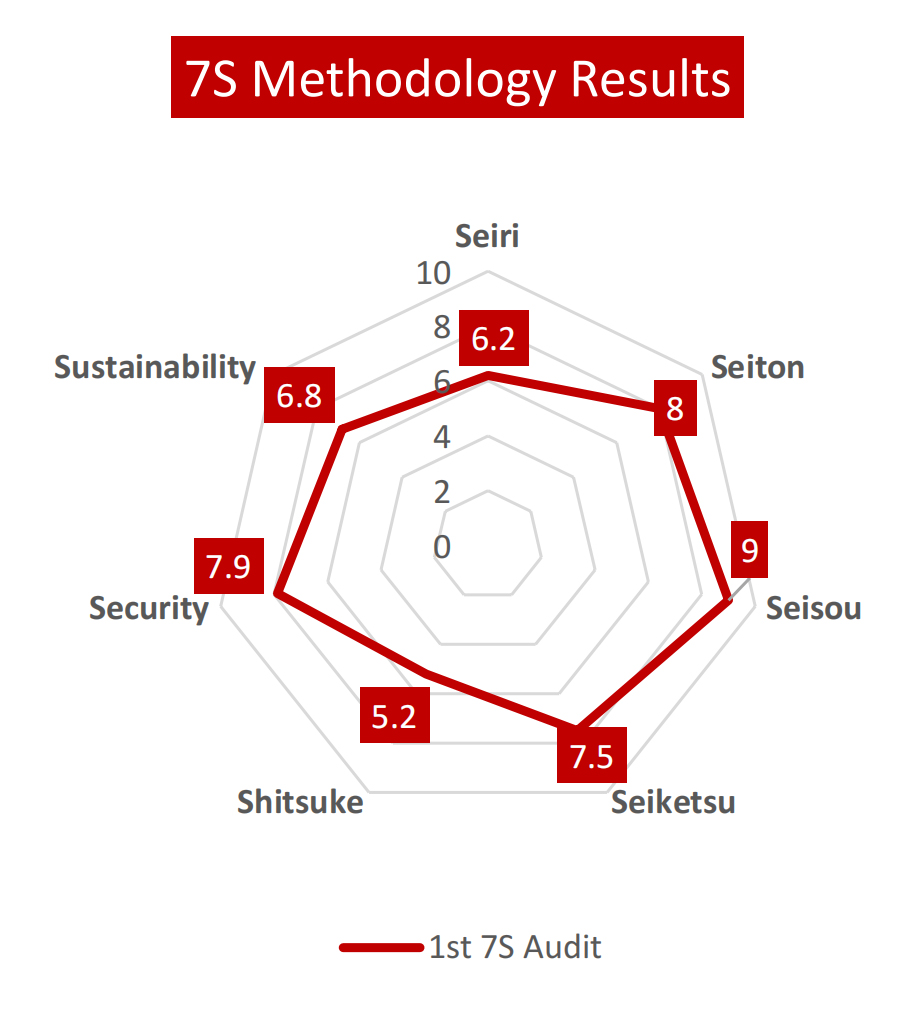 Figure 10. Audit 7S philosophy.
It can be seen from Table 9 and Figure 10, that the results obtained in the first audit of the 7S philosophy were quite satisfactory, but it is important to do better. In this sense, now they can be addressed some points that can improve the performance of the 7S philosophy.
Below are presented some points to improve the implementation of the 7S philosophy, namely in the last two senses: Safety and Sustainability.
6S—Safety: fewer errors, fewer injuries, fewer “run-overs”:
Safety is the condition of being protected against physical, social, spiritual, financial, political, emotional, occupational, psychological, educational, or other types of consequences of failure, damage, error, accident, harm, or any other event that could be considered undesirable.
Action Steps:
●
●
●
●
Resources required:
●
●
●
●
Target Outcomes:
●
●
●
7S—Sustainability: efficient use of resources:
The “sense of sustainability” refers to the awareness and understanding of the importance of balancing human needs with the preservation of the environment and the guarantee of resources for future generations. It involves recognizing the finiteness of natural resources and adopting practices that minimize negative impacts on the planet, promoting development that is socially fair, economically viable and environmentally responsible.
Examples of environmentally sustainable measures are the following: Avoid wasting water; Use renewable and clean energy sources (geothermal, wind and hydraulic); Moderate the exploitation of mineral resources (coal, oil, minerals); Prioritize the production and consumption of organic foods; Prioritize the use of technologies that use renewable energy sources; Recycle; Prefer biodegradable products; Preserve green areas.
Examples of socially sustainable measures: Free educational and social projects, particularly for people with low incomes; Public and quality education; Social inclusion programs, aimed at people with special needs; Professional qualification of young people, through free courses; Basic sanitation, guaranteeing sewage and drinking water to all citizens; Wide access to electricity; Free or reduced-price Internet access for low-income people; Professional qualification of workers or unemployed people; Youth awareness programs on risk behaviours; Support programs for the neediest people.
This methodology applied to the equipment under analysis is also applicable to determining best practices for the maintenance, operation, and management of the sensor network in the FMC-Fire project COMPETE2030-FEDER-00920900.
Examples of economically sustainable measures: Use of clean and renewable energy, such as wind and solar; Treatment of organic waste, namely through recycling; Rational use of energy and water resources; More economical and less polluting transport of goods, such as rail and sea transport; Tax incentives for companies with sustainable practices; Water treatment and reuse systems; Use of recycled or biodegradable materials.
In Table 10 and Figure 11, it is possible to see the results obtained in the 2nd audit carried out for the 7S philosophy implementation project.
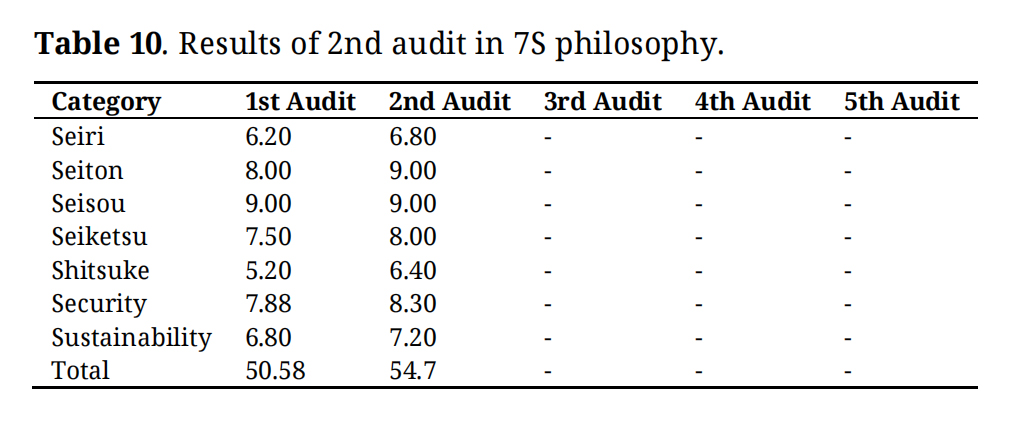 Table 10. Results of 2nd audit in 7S philosophy.
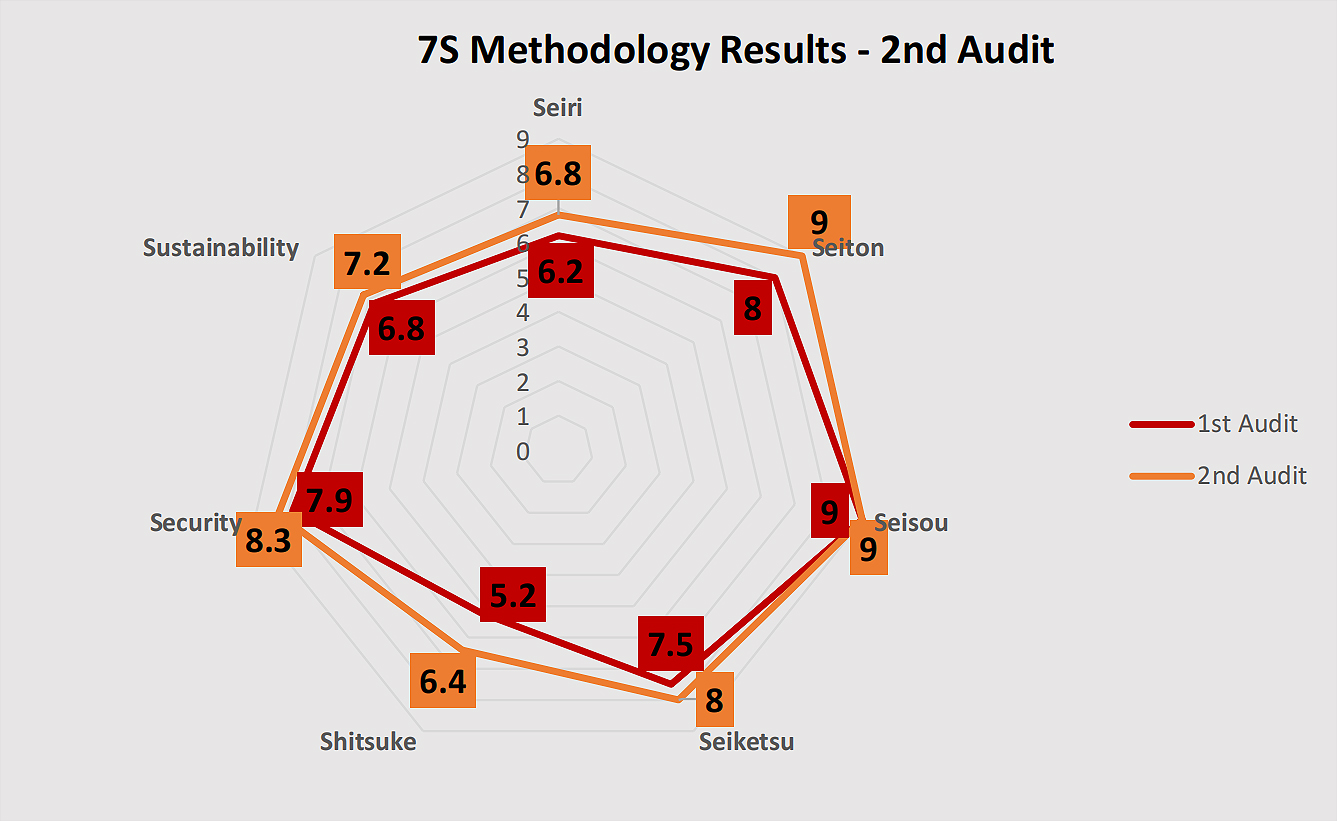 Figure 11. 2nd audit 7S philosophy.
Thus, it can be seen through the radar map that most of the senses showed improvement, namely the last two senses (Safety and Sustainability). With the reinforcement in the training of employees, it was possible, in the 1st audit, to improve the sense of safety from 7.9 to 8.3 points (reduction of minor accidents by 1%), as well as the improvement of the sense of sustainability which went from 6.8 to 7.2 points (reduction of raw materials to produce food products by 2%).
Finally, employees must be trained on the importance of maintaining the 7S philosophy in the company and its continuous improvement.
The present study was carried out at the São Silvestre Pastry Factory, Ltda., Portugal. Through this work, it was possible to implement TPS tools on the factory floor, notably the 5S philosophy and the 7S philosophy.
In this context and in relation to the implementation of the TPS tool, that is, the implementation of the 5S Philosophy, it was possible to verify that employees have some resistance to change; it was also been proven that it is necessary to provide them with training and information and give them attention, allowing them “to make the change”, which implies monitoring/guidance; so that, they feel the need and motivation to choose, for example, a place to put the cutting tools, without the person in charge being able to directly interfere in the choice of that same place. With this project, it was also possible to see that, where teams are smaller, it is easier to encourage them to change.
Therefore, it is important to highlight that the results obtained were very satisfactory. It can even be said that the implementation of 5S was a success, although there is still much more to be done and changed at the São Silvestre Pastry Factory, that is, it is necessary to promote a spirit and philosophy of continuous improvement; It is necessary to maintain and continuously improve, always with the help and involvement of all employees.
The 7S philosophy is the extension of 5S with two additional senses, namely Safety and Sustainability. Safety practices and safety training are helpful in reducing accidents in industry. A sense of sustainability encourages and motivates team members to work and produce products sustainably. Thus, reducing the consumption of natural resources, in view of the current and global concern with the sustainability of the world.
The activities of the 7s must be continually monitored through audits over time and improved if there is degradation. 7S improves the performance of organizations in terms of greater productivity, better quality, fewer accidents, cleaner, safer, healthier and a more sustainable work environment.
The results obtained from applying this new tool (7S Philosophy) in the food sector were a 7% reduction in the use of natural resources, such as water and energy (gas and electricity), as well as a 2% reduction in the raw materials used for food production. The application of this tool also allowed for a 1% reduction in accidents on the factory floor.
We recommend, as future work, the application of this new model in other companies in the food industry, as well as in other sectors of the economy and society, such as: Industry, Agriculture, Services, Hospitals and Transportation, in order to reinforce the validation of the innovative audit tool and the application of the 7S Philosophy.
All data generated from the study are available in the manuscript.
Conceptualization, HR and JP; methodology, HR and JP; validation, HR, JP and JR.; formal analysis, HR, JP and JR; investigation, HR, JP and JR; resources, HR, JP, JR, TF and JEd-A-e-P ; data curation, JP and HR; writing—original draft preparation, HR; writing—review and editing, HR, JR and TF; visualization, TF and JEd-A-e-P; supervision, TF; project administration, HR; funding acquisition, HR, JP, JR, TF and JEd-A-e-P.
The authors declare no conflicts of interest.
This article was supported by FEDER through the project FMC-FIRE—“FMC-Fire—rmination of Exposure Risk and Management of Civil Protection Assets in Forest Fires through Remote Analysis of the Moisture Content of Forest Fuels” with the reference COMPETE2030-FEDER-00920900 and RCM2+ Research Centre in Asset Management and System Engineering.
The authors would like to thank the FMC-Fire project, RCM2+ Research Centre in Asset Management and System Engineering for funding this research, the São Silvestre Pastry Factory, Lda. for sharing their data, three anonymous reviewers for their thoughtful recommendations for improvement.
1.
2.
3.
4.
5.
6.
7.
8.
9.
10.
11.
12.
13.
14.
15.
16.
17.
18.
19.
20.
21.
22.
23.
24.
25.
Raposo H, Pereira J, Raposo J, Farinha T, Edmundo de-Almeida-e-Pais J. Auditing the 5S and 7S philosophy in a food industry—Case study. J Sustain Res. 2026;8(1):e260012. https://doi.org/10.20900/jsr20260012.

Copyright © Hapres Co., Ltd. Privacy Policy | Terms and Conditions


