Location: Home >> Detail
J Psychiatry Brain Sci. 2026;11(4):e260012. https://doi.org/10.20900/jpbs.20260012
 ,
Stephen Houghton 2 ,
Shane Langsford 3
,
Stephen Houghton 2 ,
Shane Langsford 3
1
2
3
*
Background: There has been limited research on the prevalence of the three presentations of Attention-Deficit/Hyperactivity Disorder (ADHD Inattentive [IA], ADHD Hyperactive-Impulsive [HI], and ADHD Combined [C]) in adults and their associations with Bipolar I Disorder and anxiety disorders. Methods: This current study used loglinear analysis to examine the prevalence of positive symptom-screened different ADHD presentations in a clinic-referred sample of adults aged 18 to 59 years, with symptom-screened positive Bipolar I Disorder (BD-I) (N = 206), based exclusively on a self-screening measure. Results: Data revealed among those screened positively for BD-I, the prevalence for participants screened positive for all ADHD types was 0.699. For ADHD-IA, ADHD-HI, and ADHD-C (viewed as mutually exclusive categories) the risk for positive screen for BD-I was 0.218, 0.136, and 0.345, respectively. There were positive associations for positive screen for ADHD-C and BD-I with a positive screen for all the anxiety disorders, while positive screen for ADHD-IA and BD-I was associated positively with positive screen for Generalised Anxiety Disorder and Panic Disorder. Conclusion: These findings raise relevant theoretical and clinical questions regarding the independence of, and associations between ADHD (including different presentations) and BD, and their influences on any associations with anxiety disorders.
ADHD, Attention-Deficit/Hyperactivity Disorder; ADHD-IA, Predominantly Inattentive Presentation; ADHD-HI, Predominantly Hyperactive/Impulsive Presentation; ADHD-C, Combined Presentation; BD-I, Bipolar I Disorder; DSM, Diagnostic and Statistical Manual Mental Disorders; GA, Generalised Anxiety Disorder; PD, Panic Disorder; SP, Specific Phobia; OCD, Obsessive-Compulsive Disorder; PTSD, Posttraumatic Stress Disorder; APP, Adult PsychProfiler; CI, confidence intervals
The text revised edition of the latest Diagnostic and Statistical Manual Mental Disorders (DSM-5-TR) [1] characterizes Attention-Deficit/Hyperactivity Disorder (ADHD) in terms of pervasive and age-inappropriate symptoms of inattention, hyperactivity, and impulsivity, and proposes three different ADHD presentations. According to DSM-5-TR, Bipolar Disorder (BD) is characterized by alternating episodes of mania (i.e., increased energy and drive, psychomotor hyperactivity, restlessness, euphoria or irritability, and increased impulsivity in a state-like manner) and depression (usually includes low energy, feelings of hopelessness, and difficulty concentrating), with these cycles varying in intensity and frequency. There is now robust evidence that ADHD and BD, often diagnosed during adulthood [1], are highly comorbid with each other [2], and both are also highly comorbid with many other common psychological disorders [3–6]. Of these disorders, anxiety disorders are most prevalent [6,7].
Despite having three different ADHD presentations, there has been limited research in adults on the prevalence of these presentations when associated with BD, and virtually no research on how other common psychological disorders, including anxiety disorders, are associated with the associations between ADHD (either in terms of all ADHD presentations together, or each presentation separately) and BD. Consequently, the major aims of the current study were to examine the prevalence of the different ADHD presentations when associated with BD, in a group of clinic-referred adults, and investigate how these comorbid conditions are associated with anxiety disorders.
Attention-Deficit/Hyperactivity Disorder and Bipolar I DisorderThe DSM-5-TR [1] and DSM-5 [8] diagnostic criteria for ADHD and BP-I are identical, therefore, whilst we may refer to DSM-5-TR, the literature and findings presented here are also equally applicable to the corresponding disorders in the DSM-5.
For the diagnosis of ADHD, the DSM-5-TR has 18 symptoms, separated into two groups of nine symptoms each [1], namely inattention (IA) and hyperactivity/impulsivity (HI). The DSM-5-TR proposes three different ADHD presentations: ADHD-Predominantly Inattentive Presentation (ADHD-IA), ADHD-Predominantly Hyperactive/Impulsive Presentation (ADHD-HI), and ADHD-Combined Presentation (ADHD-C).
According to the DSM-5-TR, there are several types of BD (previously called manic depression), with Bipolar I Disorder (BD-I) and Bipolar II Disorder (BD-II) being more common. BD-I involves severe manic episodes (that prevents normal functioning and can include delusions), and depression episodes [8]. The diagnosis of BD-I requires a manic episode, presenting features of both elevated, expansive, or irritable mood and increased goal-directed activity or energy, with these symptoms being present for at least one week. Furthermore, at least three of seven other symptoms (i.e., inflated self-esteem; decreased need for sleep; more talkative than usual; flights of ideas; distractibility; increase in goal directed activity or psychomotor agitation, and excessive engagement in painful activity) need to be present [1]. In contrast to BD-I, BD-II is characterized by alternating periods of depression and hypomania [1]. The main differences between BD-I and BD-II is in the severity of the manic episodes, with it being less severe in BD-II. Furthermore, BD-II requires at least one hypomanic episode and at least one major depressive episode. This present study focused on BD-I.
Prevalence of ADHD in Individuals with BDThe findings from studies of prevalence of adults with BD also meeting the diagnostic criteria for ADHD have shown wide variability [2,5,6,9,10], ranging from low rates of 4% to 5% [9–12] to high rates of 30% to 50% [2,5,6]. A meta-analysis [2], based on studies reporting clinical diagnoses derived from DSM-IV and ICD-10, complemented with and without screening measures, concluded a prevalence rate of 17.1%. Substantial heterogeneity of comorbidity rates was present, and this was partially explained by diagnostic system (ICD vs. DSM, with DSM studies showing higher comorbidity than ICD), sample type (clinical samples showed higher comorbidity than population-based samples) and geographical location (higher rates in the Americas; lower in Taiwan; and very high in Turkey/Iran). A Mental Health Survey conducted by the World Health Organization (WHO), based on disorders derived from clinical interviews, reported a lifetime ADHD prevalence of 19.8% among those with BD [6]. In the National Comorbidity Survey-Replication (NCS-R) study, the comorbidity for BD with ADHD was reported to be even higher, at 31.4% [5]. This study was also based on disorders derived from clinical interviews. Other studies have suggested that almost half of adults with ADHD will have BD [13,14]. As will be noticed there is much variability in the prevalence of adults with BD also meeting the diagnostic criteria for ADHD. As highlighted earlier a previous meta-analysis [2] explained this in terms of sampling methods (clinical vs. community), diagnostic frameworks (DSM vs. ICD, and their different versions), assessment methods (self-report vs. structured interview), and geographical location. Notwithstanding this, it could also be argued that in addition to these factors, another possibility is that it may be related, in part, to not distinguishing between the different ADHD presentations.
Researchers have frequently speculated on the reasons for the high comorbidity between ADHD and BD. One explanation has been that this reflects shared genetic and environmental (including premature birth, low birth weight, maternal substance abuse, maternal stress during pregnancy, and childhood maltreatment) risk factors, and shared correlates (e.g., poor emotional regulation). Another explanation is that this reflects diagnostic artefact due to overlapping symptoms for BD and ADHD [2]. However, research [15] has shown that the majority of individuals with comorbid ADHD and BD continued to show both disorders even after removing overlapping symptoms, thereby suggesting that the comorbidity between ADHD and BD is not a diagnostic artefact due to overlapping symptoms. Also, there are findings that the high comorbidity rates between ADHD and BD are above and beyond the rates that are to be expected if they were independent disorders [16]. While these explanations view ADHD and BD as distinct disorders, Comparelli et al. (2022) [17] raised the possibility that ADHD and BD may be a single ADHD-bipolar disorder entity, with ADHD reflecting a prodromal stage or the atypical presentation of BD. Relatedly, it was suggested that ADHD symptoms may reflect a pre-pubertal expression of a later bipolar disorder diagnosis [18]. Thus, although at this point, ADHD and BD are considered independent disorders in major diagnostic classification systems, such as the DSM-5-TR [1], it may be that this is still an unresolved issue. Relatedly, it is conceivable that a more nuanced and better understanding of this issue can, in part, be derived by examining different ADHD presentations rather than as a single group. For instance, it may be that the observed higher than expected comorbidity rates between ADHD and BD are applicable to one presentation of ADHD rather than all presentations—most probably the ADHD-C presentation, considering the greater diagnostic overlap for the symptoms in this presentation with BD.
To date, there is limited data on how the different ADHD presentations are associated with BD. For children, it was reported that ADHD combined presentation is more likely to be diagnosed with BD [19]. Research has shown higher rates of BD for ADHD combined presentation compared to the other two ADHD presentations [20]. However, this study did not report on how ADHD-IA and ADHD-HI compared to each other. Apart from this study, no other studies appear to have examined the prevalence of different ADHD presentations in BD. Overall, therefore, while the limited findings in this area suggest that the different ADHD presentations are likely to be related differently to BD, they do not indicate specifically how the different ADHD presentations will be associated with BD. Clearly, more studies are necessary in this area, because it can provide insight into the independence, or otherwise, of ADHD and BD. Additionally, such research will reveal if the prevalence of the comorbidity of ADHD and BD varies by the ADHD presentation types.
Association of Common Psychological Disorders with the Association between ADHD and BDMany researchers have pointed out that the association between two disorders can influence how they are associated with a third disorder [21–25]. Studies involving adults have shown that individuals with BD [5,6] and ADHD [3,4,11,26] will show high comorbidity with many other psychological disorders, with anxiety disorders being most prominent [5,7,27–29]. For example, a meta-analysis by Nabavi et al. (2015) [7] that covered 52 studies, found that the rate of lifetime prevalence of any anxiety disorders in bipolar disorder was 42.7% comorbidity. For the different anxiety disorders, these were panic disorder (PD) = 16.8%, generalised anxiety disorder (GAD) = 14.4%, social anxiety disorder (SAD) = 13.3%, post-traumatic stress disorder (PTSD) = 10.8%, specific phobia (SP) = 10.8%, obsessive compulsive disorder (OCD) = 10.7%, and agoraphobia (AG) = 7.8%. Indeed, there are data showing that early manifestations of ADHD and anxiety are associated with higher risk of BD [24]. In their longitudinal study, Meier et al. (2018) [24] found that the combination of ADHD and anxiety disorders increased the risk of BD more than either disorder alone: by 10-fold compared with those at risk for ADHD or anxiety disorders; and 30-fold, compared with those with no prior diagnosis of either ADHD or anxiety. A review by [28] concluded that at least half of those with BD are likely to develop an anxiety disorder in their lifetime. Based on four previous meta-analytic reviews among adults, this review [28] reported highest lifetime rates for PD (17% to 22%), GAD (13% to 20%), and (20%), followed by PTSD (11% to 17%), SAD (13%), OCD (10% to 13%), SP (11%), and AG (8%). Considering such findings, it is conceivable that the association between ADHD and BD could induce greater comorbidity with anxiety disorders. Notwithstanding this, reviews have reported differences across the anxiety disorders, with GAD and PD being more prevalent [7,29]. Knowing how different anxiety disorders are associated with the associations of ADHD with BD can contribute to pre-emptive interventions for these disorders [24]. Surprisingly, with the exception of the study by Meier et al (2018) [24], no other study has examined this area, however. Consequently, there are no clear data on how different anxiety disorders are associated with the associations of the different ADHD presentations with BD.
Aims and Predictions in the StudyGiven the limitations in existing data, the first aim of the current study was to compare the prevalence of risk for different ADHD presentations in clinic-referred adults who were at risk for BD-I. However, given that the individuals for the different “clinical” groups were identified strictly via a self-screening tool in terms of meeting symptom threshold numbers for the respective disorders (see method section) rather than full diagnostic interviews, the at risk “clinical” groups in this study are symptom-screen positive groups rather than clinically diagnosed “clinical” groups. As an example, the ADHD-combined type is a symptom-screen positive ADHD-combined type and not clinically diagnosed ADHD-combined type. Considering this, we refer to our clinical groups as “symptom-screened positive”. To achieve our goal, we examined the prevalence (together with their 95% CI) of symptom-screened positive for the different ADHD presentations (ADHD-IA, ADHD-HI, and ADHD-C) in individuals with symptom-screened positive for BD-I and compared their CI.
The second aim of the study was to use log linear analysis to examine how symptom-screened positive for a number of anxiety disorders [Generalised Anxiety Disorder (GAD); Panic Disorder (PD); Specific Phobia (SP), Obsessive-Compulsive Disorder (OCD); and Posttraumatic Stress Disorder (PTSD)], were associated with symptom-screened positive for different ADHD presentations (ADHD-IA, ADHD-HI and ADHD-C) and were comorbid with symptom-screen positive for BD-I.
Related to our first aim, we made no prediction on how the different symptom-screened positive ADHD presentations would be associated with symptom-screened positive BD-I. Based on existing findings we predicted that, in general, all or most of the symptom-screened positive anxiety disorders would be associated with symptom-screened positive BD-I with at least moderate prevalence, with this being higher with symptom-screened positive GAD and PD.
The initial sample comprised 3,226 adults (1523 [47.2%] females, 1587 [49.2%] males; 116 [3.6%] unknown). There were no selection criteria restricting participation in the study. The mean age (SD, range) for all participants together (N = 3226) was 34.66 years (11.04 years, with an age range of 18 years to 82 years). The mean age (SD) for females and males was 34.22 years (10.98 years) and 34.85 years (11.05 years), respectively. There was no significant difference for age across females and males, t (df = 3108) = 1.61, p = 0.107.
Table 1 shows the frequencies of participants in the study meeting the symptom threshold numbers for BD-I, and ADHD-IA, ADHD-HI and ADHD-C presentations. As shown in the table, the number of individuals screened positive for BD-I was 206. Of this group, the frequencies of adults screened positive for all presentations of ADHD, ADHD-IA, ADHD-HI, and ADHD-C were 144 (69.9%), 45 (21.8%), 28 (13.3%), and 71 (34.5%), respectively (see Table 2). As there was no missing screened positive ADHD for those screened positive for BD-I, the study examined all the participants who were screened positive for BD-I (N = 206; males = 102; females = 102) to establish the co-occurrence of ADHD presentations in BD-I. While there were 116 individuals of unknown sex for the entire sample, in the BD-I subsample (N = 206) there were only 2 individuals without sex information. For this group, the mean age (SD) for the total BD-I sample (N = 206) was 32.40 years (9.52 years), with age ranging from 18 years to 59 years. The mean age (SD) for males and females was 34.39 years (9.49 years) and 30.13 years (8.96 years), respectively. These groups differed significantly for age, t (df = 202) = 3.39, p < 0.001. The effect size for this difference was medium (Cohen’s d = 0.46).
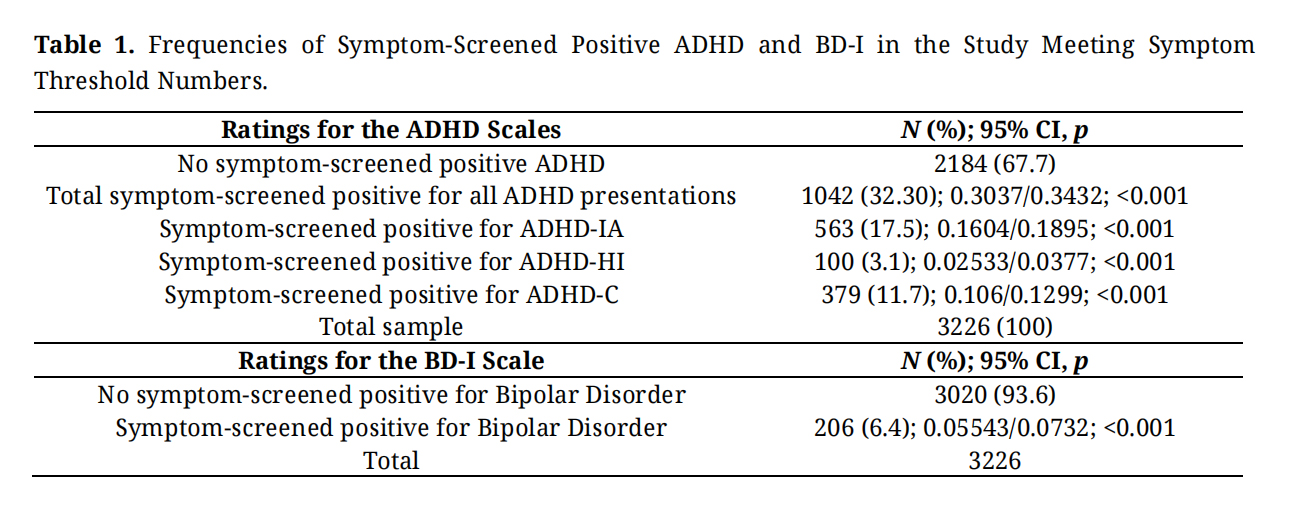 Table 1. Frequencies of Symptom-Screened Positive ADHD and BD-I in the Study Meeting Symptom Threshold Numbers.
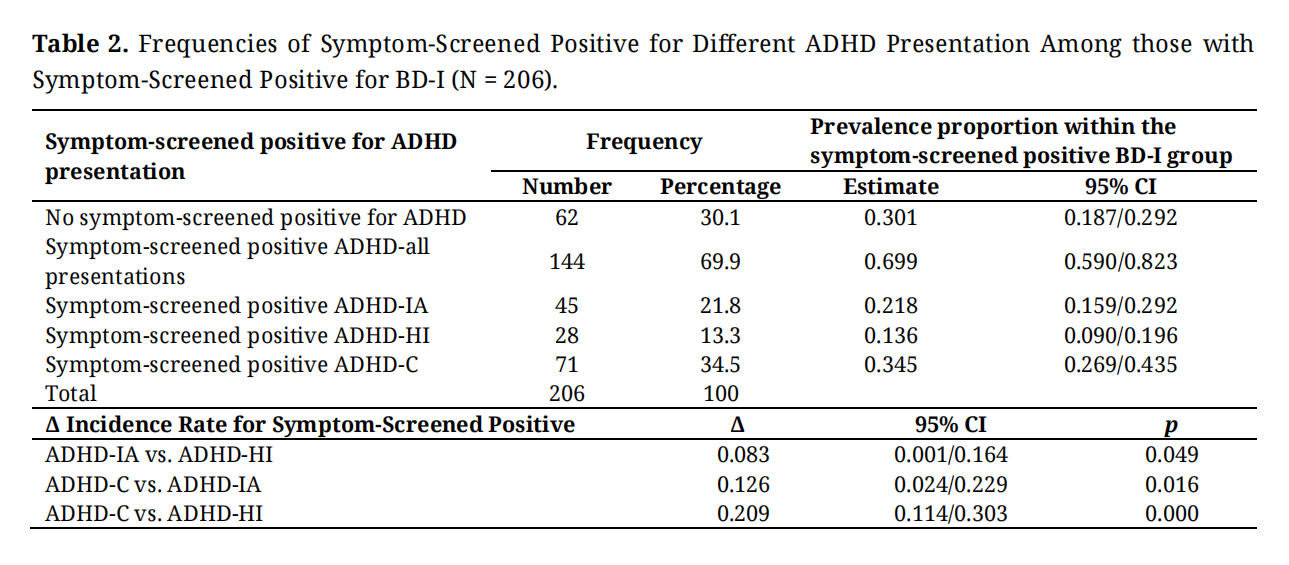 Table 2.
Frequencies of Symptom-Screened Positive for Different ADHD Presentation Among those with Symptom-Screened Positive for BD-I (N = 206).
Table 2.
Frequencies of Symptom-Screened Positive for Different ADHD Presentation Among those with Symptom-Screened Positive for BD-I (N = 206).
The 177 item self-report form of the Adult PsychProfiler (APP-SRF) [30], developed for the quick screening of 17 common DSM-5 adult disorders was used for screening the following disorders in the current study: Generalised Anxiety Disorder (GAD); Panic Disorder (PD); Specific Phobia (SP); Obsessive-Compulsive Disorder (OCD); Posttraumatic Stress Disorder (PTSD); Attention-Deficit/Hyperactivity Disorder (ADHD); and BD-I. For ADHD, the APP screens for all three presentations (i.e., ADHD-IA, ADHD-HI, and ADHD-C).
In the APP, the different disorders are measured using items corresponding to their symptoms (including wording in most instances), as presented in DSM-5-TR. The APP items are rated on a six-point Likert scale (never = 0, rarely = 1, sometimes = 2, regularly = 3, often = 4, and very often = 5). For calculating positive disorder screening scores, the item scores were recoded as follows: never, rarely and sometimes = 0; and regularly, often and very often = 1. The summation of items within each disorder produces a screening score for that disorder, which if exceeding the screening cut-off, was considered as having a ‘positive screen’ for that disorder. The cut-off scores for the respective disorders are identical with their symptom threshold scores in the DSM-5-TR. When the total recoded screening score for a scale met or exceeded the screening cut-off score, the disorder that it corresponded to was considered to be at risk. Given the close alignment of the items in the APP screening scales with the symptoms in the corresponding DSM-5-TR disorders, this practice seems intuitively prudent to identify adults at risk for the different disorders.
The original version of the APP was subjected to a rigorous psychometric analysis and found to “be reliable and valid” [31] (p. 51). It includes information supporting its validity, inter-rater reliability, clinical calibration, the application for a six-point scale for the ratings of the items, and support for the unidimensionality of the different scales. Notwithstanding this, the psychometric properties of APP have not been subjected to validation by other independent researchers. In the current study, the internal reliability alpha coefficients were as follows: GAD = 0.91; PD = 0.94; SP = 0.91; ADHD-IA = 0.86; ADHD-HI = 0.93; BD-I = 0.82; OCD = 0.88; and PTSD = 0.92. Thus, all CAPP-PRF scales used in the study had good internal reliability alpha coefficient values. Given that our primary focus was on ADHD and BD-I, the items in these scales and the scoring criteria used for screening are presented in Table S1.
The APP has a designated website that is used for online screening of DSM-5-TR disorders in this measure. The adults involved in the study, recruited from a psychology clinic in Perth, Western Australia, provided self-ratings for the APP through this website. They were self-referred or referred by their psychologists, psychiatrists, or medical doctor. On completion of the APP, participants were directed to a section pertaining to an option to provide their consent to use any of the data they provided. To avoid the introduction of demand characteristics participants were provided with clear, transparent details at the conclusion of the APP, about using their data in future studies, especially those seeking to validate the APP.
Only individuals with the APP ratings with consent were included in the current study.
In general, for a sample, prevalence of a disorder refers to the number of individuals with the disorder in the total sample. To establish the frequency of prevalence of comorbidity between two disorders (A and B) in a group, individuals are identified for both the disorders. Then a 2 (with A, and without A) by 2 (with B, and without B) contingency table can be formed. In general, a contingency table classifies frequencies of observed data according to the categories in two or more variables. When there are two categories (or disorder) it is referred to as a two-way contingency table; and when there are three or more categories disorder), it is referred to as multiway contingency table. With the two-way contingency table, the chi-square (χ2) independence test can be applied to establish the frequency of the relationship between the two disorders. Significant effects are interpreted as demonstrating an association between the frequencies of the two disorders. However, this approach cannot examine the associations between the frequencies of three or more categories (disorders, common in adults) in a multiway contingency table. An example is how the frequency of the association between disorder A and disorder B changes when disorder C is also present, or across a demographic categorical variable (like gender). A method well suited for multiway frequency tables is loglinear analysis as it can examine simultaneously if there is a statistically significant relationship among three or more categorical variables (or disorders), without need to separate them into pairs of categories (or disorders).
Methodologically, loglinear analysis assumes that data are drawn from random samples of a multinomial, mutually exclusive distribution, with all observations being independent of one another. In loglinear analysis, multi-dimensional contingency tables are created in which the responses are counts having Poisson distributions, with each cell containing the number of cases with a particular combination of values of the variables. Thus, the table reflects the joint probability distribution of the variables in the analysis. It is the condition in a loglinear analysis that the expected cell frequencies of less than five should not compose more than 20% of the cells, and no cell should have an expected frequency of less than one [32]. An advantage of loglinear analysis is that it can control (hold constant) other variables and test for higher order interactions. The interaction terms correspond to associations among variables. The relationships between the different variables are examined by comparing the observed cell frequencies to the expected frequencies (obtained by multiplying the probabilities in the cells by the size of the sample) using Pearson chi-square statistics or the likelihood ratio statistic (𝐺2), with the latter being more favoured.
When there are three categorical variables in a loglinear analysis, significant support for a three-way interaction would mean that the two-way interaction or relationship between variable 1 and variable 2 is not constant but varies depending on the specific condition of variable 3, or expressed differently, the prevalence of individuals with variables 1 and 2 will change depending on the presence of the variable 3. Thus, loglinear analysis can be used to examine if the prevalence of individuals with both ADHD and BD will change depending on the type of anxiety disorder in question. Alternately, it can show if the prevalence of individuals with both ADHD and BD with a specific anxiety disorder will change depending on the ADHD presentation type in question. As an example, when the three-way interaction for risk for ADHD-IA × BD-I × GAD is significant, it could mean that the prevalence of comorbidity of ADHD-IA and BD-I will change depending on the levels of GAD.
In the current study, the loglinear analysis module within the Statistical Package for the Social Sciences version 31 [33] was used to examine how prevalence for risk for different anxiety disorders (each one separately) varied across the associations for risk for ADHD-IA presentations with risk for BD-I, risk for ADHD-HI presentation with risk for BD-I, and risk for ADHD-C presentation with risk for BD-I. As multiple comparisons across five anxiety disorders and three ADHD presentations were conducted, there were in all 15 three-way interaction tests. Considering this, correction for multiple comparisons is generally warranted, such as Bonferroni correction, to reduce Type 1 errors. However, as this study was primarily exploratory, we decided not to impose this correction.
Initially we conducted preliminary analyses on the prevalence of symptom-screened positive for the different ADHD presentations in symptom-screened positive BD-I; and the associations of the different symptom-screened positive anxiety disorders with symptom-screened positive BD-I.
Frequencies of Symptom-Screened Positive ADHD and BD-I in the Study Meeting Symptom Threshold NumbersTable 1 shows the frequencies and prevalence of symptom-screened positive ADHD and BD-I in the study sample meeting symptom threshold numbers. It shows the prevalence of symptom-screened positive ADHD (all presentations together) was 32.2%, and 17.5%, 3.1%, and 11.2% for ADHD-IA, ADHD-HI, and ADHD-C, respectively. The prevalence for symptom-screened positive BD was 6.4%. Thus, assuming that ADHD and BD are independent disorders, the theoretical expected prevalence for all presentations of symptom-screened positive ADHD, given that symptom-screened positive BD is present, was 0.322 × 0.064 or 0.021 (or 2.1%). They were 0.011 (i.e., 0.175 × 0.064), 0.002 (i.e., 0.032 × 0.064), and 0.007 (i.e., 0.112 × 0.064) for symptom-screened positive ADHD-IA, ADHD-HI, and ADHC-C, respectively. As shown in Table 1, there were differences between the observed and theoretical expected prevalence for symptom-screened positive for ADHD together, ADHD-IA, ADHD-HI, and ADHC-C. Thus, the theoretical expected prevalence differed across the three symptom-screened positive presentations of ADHD.
Prevalence for the Different ADHD Presentations in BD-ITable 2 shows the frequencies of symptom-screened positive for all different ADHD presentations together and separately among those with symptom-screened positive for BD-I. As shown, the prevalence for symptom-screened positive for all presentations of ADHD together was 0.699. The frequency rates for symptom-screened positive ADHD-IA, ADHD-HI, and ADHD-C among those with symptom-screened positive for BD-I were 0.218 (95% CI = 0.159/0.292), 0.136 (95% CI = 0.090/0.196), and 0.345 (95% CI = 0.269/0.435), respectively. As shown, there were statistically significant differences across these rates. More specifically, the prevalence rate was significantly higher for symptom-screened positive ADHD-C than symptom-screened positive ADHD-HI and ADHD-IA presentations, and for symptom-screened positive ADHD-IA than symptom-screened positive ADHD-HI presentations (see Table 2). Also, as these values were well above the theoretical expected prevalence rates, they concur with the view that ADHD (all presentations) and BD are unlikely to be independent disorders.
Associations of Symptom-Screened Positive for Different Anxiety Disorders with Symptom-Screened Positive for BD-IThe associations of the prevalence for symptom-screened positive for the different anxiety disorders with symptom-screened positive for BD-I were conducted using 2 (anxiety disorder absent, anxiety disorder present) × 2 (BD-I absent, BD-I present) χ2 analysis. For all significant associations, we examined the prevalence of symptom-screened positive of the relevant disorders in BD-I. Table 3 show the results of the analyses that tested the associations of the symptom-screened positive for different disorders with symptom-screened positive BD-I. Although details are not presented, all associations were significant, thereby indicating that all symptom-screened positive anxiety disorders examined were statistically significantly associated with symptom-screened positive BD-I. Table 3 shows the prevalence of the symptom-screened positive anxiety disorders in symptom-screened positive BD-I. As shown, the prevalence for symptom-screened positive GAD, PD, SP, PTSD, and OCD were .641 (95% CI = 0.5361 to 0.7599), .413 (95% CI = 0.3296 to 0.5102), 0.160 (95% CI = 0.1103 to 0.225), 0.141 (95% CI = 0.0943 to 0.2022), and .087 (95% CI = 0.05179 to 0.1381), respectively. Also, as shown in Table 3, all associations were significant. Thus, it can be assumed that the risk for symptom-screened positive GAD and PD with symptom-screened positive BD-I are significantly more than for the other symptom-screened positive anxiety disorders.
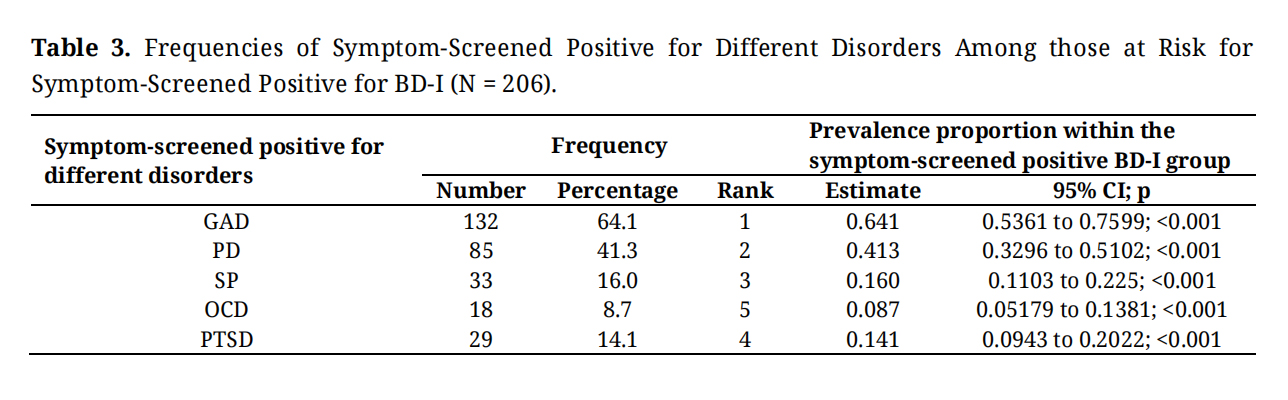 Table 3.
Frequencies of Symptom-Screened Positive for Different Disorders Among those at Risk for Symptom-Screened Positive for BD-I (N = 206).
Table 3.
Frequencies of Symptom-Screened Positive for Different Disorders Among those at Risk for Symptom-Screened Positive for BD-I (N = 206).
Initially, we examined the association between symptom-screened positive for ADHD-IA, ADHD-HI, and ADHD-C presentations (separately) with symptom-screened positive for BD-I using chi-square (χ2) analyses. Table 4 shows the 2 (no symptom-screened positive for ADHD presentation, symptom-screened positive for ADHD presentation) × 2 (no symptom-screened positive for BD-I, symptom-screened positive for BD-I) contingency tables for the different ADHD presentations in these analyses. The χ2 findings indicate significant associations for the 2 (no symptom-screened positive for ADHD-IA, symptom-screened positive for ADHD-IA) × 2 (no symptom-screened positive for BD-I, symptom-screened positive for BD), χ2(1) = 2.95, p = 0.086; the 2 (no symptom-screened positive for ADHD-HI, symptom-screened positive for ADHD-HI) × 2 (no symptom-screened positive for BD-I, symptom-screened positive for BD-I), χ2(1) = 80.65, p < 0.001; and 2 (no symptom-screened positive for ADHD-C, symptom-screened positive for ADHD-C) × 2 (no symptom-screened positive for BD-I, symptom-screened positive for BD-I), χ2(1) = 109.54, p < 0.001 chi-square analyses. Thus, the association between symptom-screened positive for ADHD-HI and ADHD-C presentations with BD-I were significant, while the association between symptom-screened positive for ADHD-IA presentation with symptom-screened positive BD-I showed borderline significance.
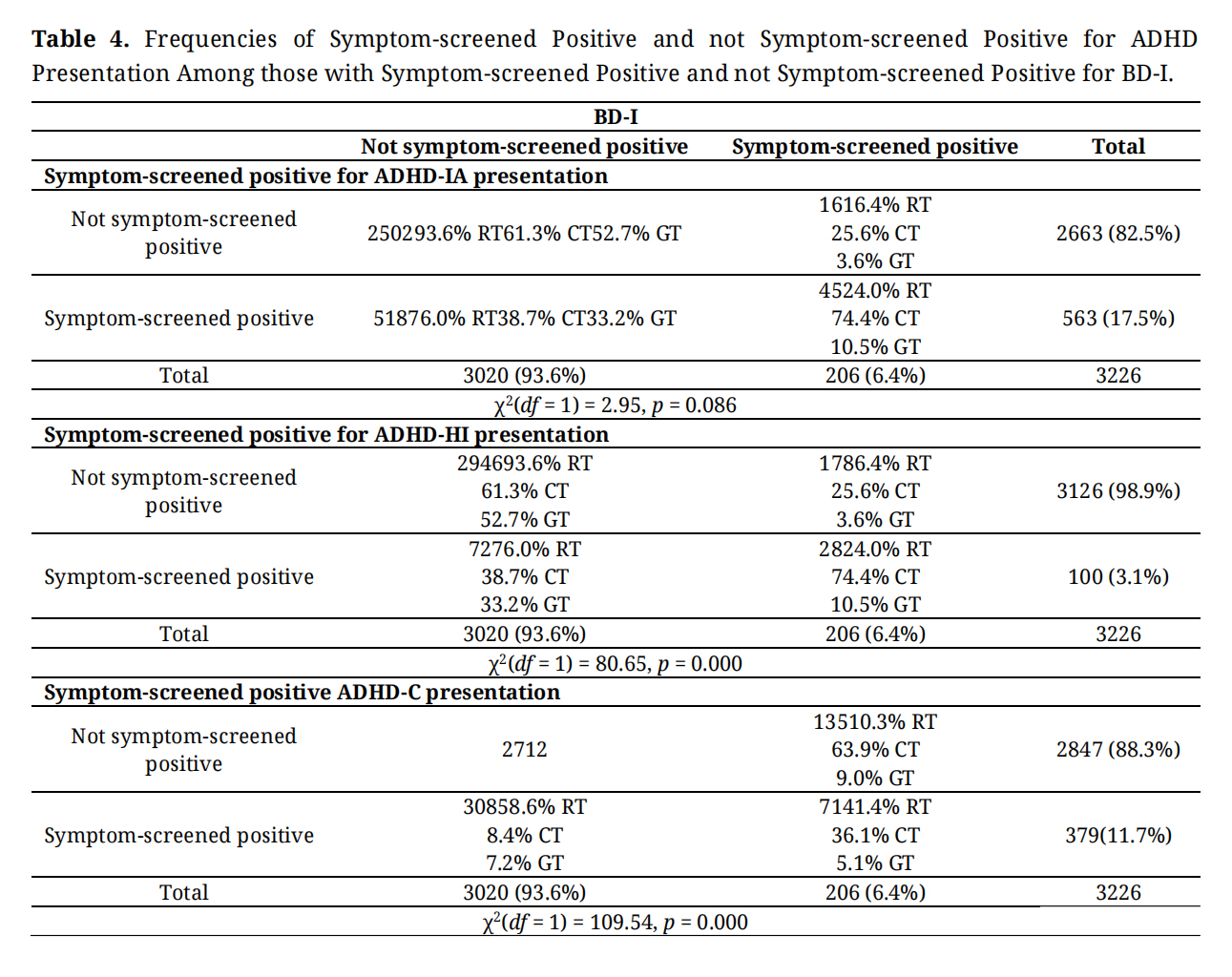 Table 4.
Frequencies of Symptom-screened Positive and not Symptom-screened Positive for ADHD Presentation Among those with Symptom-screened Positive and not Symptom-screened Positive for BD-I.
Table 4.
Frequencies of Symptom-screened Positive and not Symptom-screened Positive for ADHD Presentation Among those with Symptom-screened Positive and not Symptom-screened Positive for BD-I.
Tables S2–S6 show the contingency tables for the number of individuals with symptom-screened positive for the different anxiety disorders according to symptom-screened positive for ADHD and BD. Table 5 shows the prevalence rates of individuals with symptom-screened positive for different ADHD presentations and symptom-screened positive BD-I with the symptom-screened positive for different anxiety disorders. As shown in this table, except for symptom-screened positive GAD, for all the other symptom-screened positive anxiety disorders, the prevalence rates were the same for all the three symptom-screened positive ADHD presentations. For symptom-screened positive GAD, the prevalence rates for GAD were higher in symptom-screened positive ADHD-C than ADHD-HI, and the same for ADHD-C and ADHD-IA, and ADHD-IA and ADHD-HI.
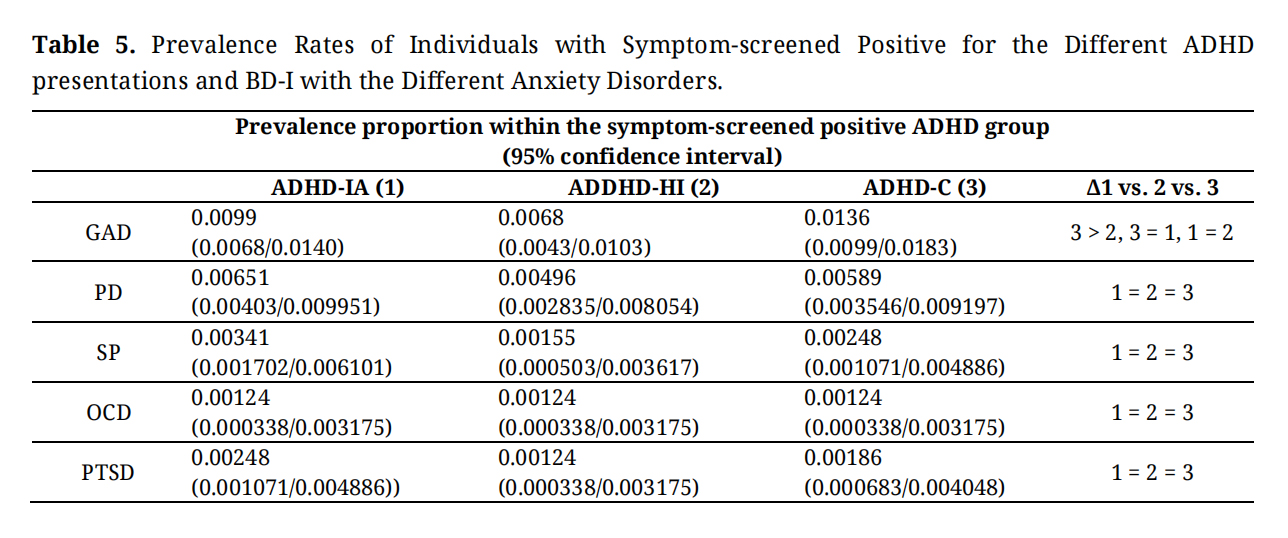 Table 5. Prevalence Rates of Individuals with Symptom-screened Positive for the Different ADHD presentations and BD-I with the Different Anxiety Disorders.
Table 6 shows the likelihood ratio for 3-way effects (symptom-screened positive anxiety disorder × symptom-screened positive ADHD presentation × symptom-screened positive BD-I), and parameter estimates for the associations of the different symptom-screened positive anxiety disorders with symptom-screened positive ADHD-presentations × BD-I from the log liner analyses. For this analysis the number of cells with frequencies less than five was less < 20% of the total number of cells. As shown in Table 6, for the 3-way interaction effects involving symptom-screened positive ADHD-HI, the parameter estimates for all the symptom-screened positive anxiety disorders (GAD, PD, SP, OCD, and PTSD) were not statistically significant. For the 3-way interaction effects involving symptom-screened positive ADHD-IA, the parameter estimates for symptom-screened positive GAD and PD were statistically significant, whereas the parameter estimates for symptom-screened positive SP, OCD, and PTSD were all not significant. For the 3-way interaction effects involving symptom-screened positive ADHD-C, the parameter estimates for all the anxiety disorders were statistically significant.
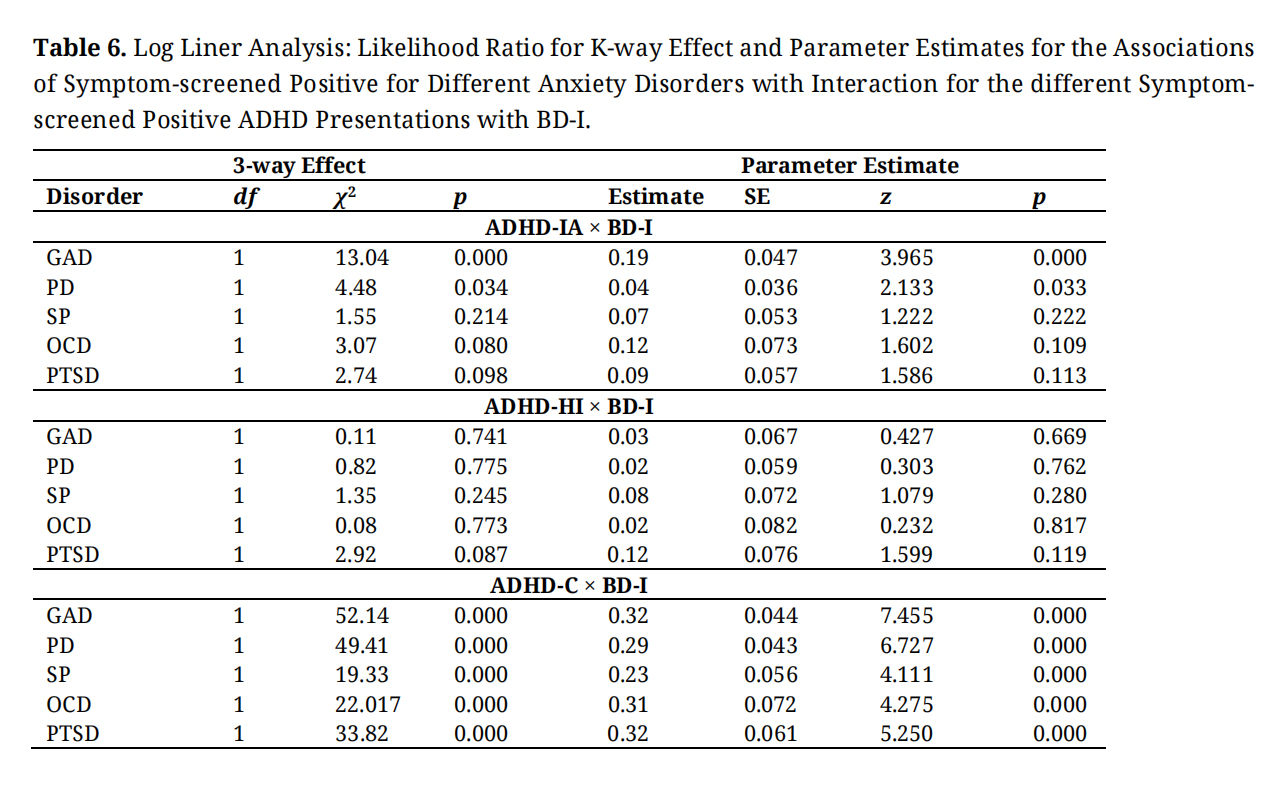 Table 6.
Log Liner Analysis: Likelihood Ratio for K-way Effect and Parameter Estimates for the Associations of Symptom-screened Positive for Different Anxiety Disorders with Interaction for the different Symptom-screened Positive ADHD Presentations with BD-I.
Table 6.
Log Liner Analysis: Likelihood Ratio for K-way Effect and Parameter Estimates for the Associations of Symptom-screened Positive for Different Anxiety Disorders with Interaction for the different Symptom-screened Positive ADHD Presentations with BD-I.
Using a group of clinic-referred adults, the first aim of the study was to compute and compare the prevalence of the risk for the different ADHD presentations in a group of adults at risk for BD-I. The second aim was to examine if the associations for the risk for different ADHD presentations and risk for BD-I were associated with the risk for a number of common anxiety disorders (GAD, PD, SP, OCD, and PTSD). In summary, the findings indicated that the prevalence of ADHD (all presentations together) was 32.2% and17.5%, 3.1%, and 11.2% for ADHD-IA, ADHD-HI, and ADHD-C, respectively. The prevalence for BD was 6.4%. Assuming that ADHD and BD are independent disorders, the theoretical expected prevalence for all presentations of ADHD given that BD is present was therefore 2.1%. They were 1.1%, 0.2%, and 0.7% for ADHD-IA, ADHD-HI, and ADHC-C, respectively. Also, the actual prevalence for risk for all presentations of ADHD together among those at risk for BD-I was 0.699. While the associations between risk for ADHD-HI and ADHD-C presentations with BD-I were significant, the association between risk for ADHD-IA presentation with BD-I showed only borderline significance. For the anxiety disorders examined, the prevalence rates for PD, SP, OCD, and PTSD were the same for all three ADHD presentations, whereas for GAD, the prevalence rates were higher in ADHD-C than ADHD-HI, and the same for ADHD-C and ADHD-IA, and ADHD-IA and ADHD-HI.
Comparison of Study Findings with Previous FindingsToday, many studies have examined the prevalence of ADHD in individuals with BD. The findings from studies of prevalence of adults with BD who also meet diagnostic criteria for ADHD have shown wide variability [2,5,6,9,10]. For adults, rates of 4% to 5% have been suggested [9–12], with other studies suggesting higher rates [2,5,6]. Indeed, the National Comorbidity Survey-Replication (NCS-R) study reported comorbidity for BD with ADHD as 31.4% [5] while the WHO reported a lifetime ADHD prevalence of 19.8% [6], and a meta-analysis [2] reported a prevalence rate of 17.11%, with no difference between BD-I and BD-II. Also consistent with existing findings is that the risk for GAD and PD with BD-I is more than that of the other anxiety disorders [5,7,27–29].
Our findings also extend existing data on the comorbidity of ADHD and BD in adults in a number of ways. First, unlike previous studies involving adults, we examined for different ADHD presentations. The findings showed that while the associations between risk for the ADHD-HI and ADHD-C presentations with BD-I were significant, the association between risk for ADHD-IA presentation with BD-I only reached borderline significance. Second, our findings also indicated that there were statistically significant differences in the prevalence rates for risk for ADHD-IA, ADHD-HI, and ADHD-C among those at risk for BD. The rate for ADHD-C presentation (35%) was higher than ADHD-IA (22%) and ADHD-HI (14%), and the rate for ADHD-IA was higher than that for ADHD-HI. Although our findings are novel, it may be worth noting that existing findings with children have shown that the ADHD-C presentation is more likely to be diagnosed with BD [19].
Third, our findings that all the anxiety disorders examined (GAD, PD, SP, OCD, and PTSD) were positively influenced by the association between ADHD-C and BD-I, but not influenced by the association between ADHD-HI and BD-I, and that GAD and PD (but not the other anxiety disorders) were positively influenced by the association between ADHD-IA and BD-I have not been examined in previous studies, and are therefore new. However, given the methodological limitations (discussed further in the limitations section), particularly the use of a single self-report instrument, lack of multiple comparison correction, and the absence of a clinical diagnosis, this view needs to be considered with a degree of caution. Fourth, as our findings indicated, the prevalence for risk for all presentations of ADHD together was .699, and so it can be argued that our finding in this respect is somewhat higher than reported in past studies. One possible reason for this may be that the estimate in the current study is based on a clinic-referred sample, where comorbidity rates have shown higher prevalence for affective disorders [34].
Theoretical and Clinical ImplicationsOur findings have a number of theoretical and clinical implications. First, considering this study showed the prevalence for risk for all ADHD presentations was 0.699, it follows that for every 10 individuals at risk for BD-I, seven will be at risk for ADHD, and 3 will not. Relatedly, like the finding reported by Youngstrom et al. (2010) [16], this study also found that the prevalence of all ADHD presentations, and the different ADHD presentations were higher than the theoretical rate that can be expected if BD and ADHD (including different presentations) are treated as independent disorders. These findings could be interpreted as suggesting that although ADHD and BD are substantially associated [16], they are different. Given this, it is reasonable to continue to question the independence or otherwise of these disorders [17,18]. Indeed, researchers have raised several possibilities for such high prevalence. Apart from the possibility that ADHD and BD may represent a single ADHD-BD entity [17], it has also been proposed that ADHD symptoms may reflect a pre-pubertal expression of a later BD diagnosis, or that ADHD could reflect a prodromal stage or the atypical presentation of BD [17]. It has also been proposed that the high comorbidity between ADHD and BD represents shared transdiagnostic features. These include deficits in dopaminergic neurotransmission, executive dysfunction, and emotional dysregulation that could manifest as overlapping clinical symptoms like impulsivity, distractibility, and heightened reward-seeking behaviour [35,36]. Related to this is the “limbic-sensorimotor tug of war” that refers to the dynamic balance of hippocampal connectivity between the limbic network and the sensorimotor network, which acts as a transdiagnostic biomarker for emotion dysregulation [37]. Additionally, it is conceivable that ADHD and BD may represent a condition that is a mixture of trait and state manifestations, respectively, of the same underlying disorder.
Notwithstanding our argument that our findings are suggestive of the non-independence of ADHD and BD-I, it should be noted that the theoretical inference that observed co-occurrence above chance rates implies non-independence of constructs, requires ruling out measurement artefact, which as we note in the limitations section, the self-report design of this study is poorly equipped to do. The APP items for ADHD and BD-I share conceptual content, particularly around distractibility (BPD5 and ADHD items), which could inflate co-occurrence through common method variance.
As many adults with BD-I would be at risk for ADHD, clinicians should consider the possibility of a dual ADHD/BD-I diagnosis when either BD-I or ADHD is the primary target of the diagnostic evaluation, as has often been stressed in the literature [38]. In this respect, it is worth keeping in mind that not all individuals at risk for one of these disorders would necessarily meet the diagnostic criteria of the other disorder. Additionally, our findings that risk for anxiety disorders are associated with risk for BD, further underscores the need for clinicians to evaluate for the presence of anxiety disorders when diagnosing adults referred for BD, and to consider, when present, the comorbid disorders in their treatment and management plans. These are important considerations as past studies have shown that compared to ADHD and BD alone, the presence of multiple comorbid disorders increases more negative outcomes [18,19,28,38]. Salvi et al. (2021) [38] have provided useful pharmacological intervention guidelines in this respect. Again, it is worth noting that these clinical implications were based on findings from a screening tool, not a diagnostic instrument, and therefore need careful consideration.
Third, our findings that the association between ADHD and BD influences their associations with anxiety disorders are consistent with the view that the comorbidity of two disorders can be influenced by other disorders [22,23,25,35]. However, our findings showed that the association of ADHD with BD will vary as a function of the ADHD presentation. More specifically, our findings suggest that the association of ADHD-C with BD could influence associations with most of the anxiety disorders; the association of ADHD-HI with BD would not influence associations with any anxiety disorder; and the association of ADHD-IA with BD would influence associations with GAD and PD, but not SP, OCD and PTSD.
Study LimitationsAlthough this study reported many new findings, there are limitations that need to be considered. First, as all data for all the disorders, including ADHD and BD-I, were collected through self-report, the results may be subject to bias due to common method variance. This might particularly be the case when persons report manic symptoms, impulsivity, and inattention through inflated reporting during mood episodes or through insight impairment characteristics of manic states. Second, as the study utilized a single, non-randomly recruited sample of adults, there are limitations on the generalizability of the findings to the general population. Also, as we examined adults, the findings may not be applicable to other age groups, such as school-aged children and adolescents. Third, although we recruited our participants from a psychology clinic, in reality, the participants were not clinically diagnosed and therefore could be considered somewhat characteristic of a community sample (because many were self-referred) enriched for psychopathologies than a typical clinical sample. Fourth, as the individuals for the different clinical groups were identified using only self-screening questionnaires, and not full diagnostic clinical interviews, the “clinical” groups in this study were symptom-screened positive groups rather than clinically diagnosed clinical” groups. Thus, it can be argued that the findings are limited in terms of the application to clinically diagnosed ADHD and BD-I. Notwithstanding this, there is evidence that both self-screening measures and clinical diagnostic interview methods have similar psychometric properties (i.e., internal consistency, test-retest reliability, and inter-rater reliability) for classifying psychiatric disorders among children and youth in epidemiological studies [39], and are not statistically different in terms of test accuracy and predictive validity for relevant life outcome [40]. Considering this, it can be argued that our findings are likely to be relevant to diagnostic interview clinical groups. Replication of these findings with other age groups and clinically diagnosed samples is therefore necessary before broader generalizations can be made. Fifth, the cross-sectional nature of the data prevents any inference of causal relationships. Sixth, the findings may be specific to the particular measure employed (i.e., the APP), and replication using alternative validated instruments is recommended. Even for the measure used, there is a limitation regarding overlapping item content between BD-I and ADHD scales in the APP, which is arguably the most consequential methodological threat to the study’s conclusions. Also, as the diagnostic properties of the APP have yet to be comprehensively validated against gold-standard structured diagnostic interviews, we have no data on the accuracy of this measure. Additionally, although the APP items were rated on a six-point response scale, for the purposes of analysis, these scores were recoded into binary scores to allow us to identify individuals screened positive/not positive for the different disorders. However, this approach may have resulted in substantial loss of information, and could have introduced misclassification of the ratings. Seventh, although the loglinear regression involved multiple comparisons, our study did not control for this, meaning some significant findings may reflect Type I error. Finally, we examined BD-I, and therefore the findings may not be applicable BD-II.
Overall, despite the acknowledged limitations, the study offers novel contributions to the literature and provides a foundation for future research aimed at further clarifying the prevalence of different ADHD presentations in BD-I (and BD-II) in adults. It also demonstrates the differential influence of the three ADHD presentations and BD on anxiety disorders. Theoretically, these findings raise questions about the independence, or single entity representation, of ADHD and BD. In assessment contexts clinicians must, therefore, consider a dual ADHD/BD-I diagnosis with adults with ADHD when BD-I or ADHD is the primary target. It is also recommended that during the assessment process anxiety disorders should be routinely screened for.
The following supplementary materials are available online, Table S1: Items and Scoring Criteria for ADHD and BD-I, Table S2: Contingency Table of Frequencies of Individuals with Generalized Anxiety Disorder According to ADHD Presentation and BD-I, Table S3: Contingency Table of Frequencies of Individuals with Panic Disorder According to ADHD Presentation and BD-I, Table S4: Contingency Table of Frequencies of Individuals with Specific Phobia According to ADHD Presentation and BD-I, Table S5: Contingency Table of Frequencies of Individuals with Obsessive-Compulsive Disorder According to ADHD Presentation and BD-I, Table S6: Contingency Table of Frequencies of Individuals with Posttraumatic Stress Disorder According to ADHD Presentation and BD-I.
All participants provided written informed consent. The study was approved by the Human Research Ethics Committee of The University of Western Australia (ROAP 2023/ET000965, 27 March 2025) and conducted in accordance with its ethical standards.
Declaration of Helsinki STROBE Reporting GuidelineThis study adhered to the Helsinki Declaration. The Strengthening the Reporting of Observational studies in Epidemiology (STROBE) recommended checklist for reporting research was followed to ensure sufficient detail, clarity, and transparency.
The data can be obtained upon reasonable request from corresponding author.
RG, conceptualization, methodology, formal data analysis, validation, original draft writing; SL, conceptualization, methodology, data curation, review & editing; SH, conceptualization, original draft writing, review & editing.
The authors declare that they have no conflicts of interest. During the preparation of this manuscript, the authors did not use any artificial intelligence to conduct experiments, analyze data, or write the manuscript.
The authors did not receive any funding for the research/study presented in this article.
We are grateful to the participants who provided consent for their data to be used in future studies.
1.
2.
3.
4.
5.
6.
7.
8.
9.
10.
11.
12.
13.
14.
15.
16.
17.
18.
19.
20.
21.
22.
23.
24.
25.
26.
27.
28.
29.
30.
31.
32.
33.
34.
35.
36.
37.
38.
39.
40.
Gomez R, Houghton S, Langsford S. Co-occurrence of Symptom-Screened Positive ADHD Presentation in Adults with Symptom-Screened Positive Bipolar I Disorder. J Psychiatry Brain Sci. 2026;11(4):e260012. https://doi.org/10.20900/jpbs.20260012.

Copyright © Hapres Co., Ltd. Privacy Policy | Terms and Conditions


