Location: Home >> Detail
Adv Geriatr Med Res. 2026;8(3):e260021. https://doi.org/10.20900/agmr20260021
 ,
Matthieu Lafontaine-Godbout ,
Audrey Dubé
,
Matthieu Lafontaine-Godbout ,
Audrey Dubé
Department of Family Medicine and Emergency Medicine, Université de Sherbrooke, Sherbrooke, QC J1H 5N4, Canada
* Correspondence: Marie-Pier Villemure.
Preventive care in older adults remains insufficiently defined in primary care. Existing structured clinical tools are largely centered on the systematic identification of geriatric syndromes, often without adequately considering the heterogeneity of aging trajectories ranging from robust aging to frailty. At the same time, primary care clinicians face increasing time constraints and limited evidence regarding which preventive interventions provide meaningful clinical benefit in older adults. Drawing on a previous scoping review identifying sixteen structured clinical tools for older adults in primary care, we examined the alignment between commonly recommended screening practices and current evidence regarding screening principles, feasibility, and expected benefit. Several geriatric syndromes frequently included in existing tools, such as urinary incontinence or neurocognitive disorders, are supported by heterogeneous or insufficient evidence for systematic population-based screening. In contrast, domains including falls prevention, hearing impairment, medication review, and nutritional status appear more consistently supported by current evidence or expert consensus. In response to these findings, this Viewpoint proposes the XYZ-tool, a structured, multilevel framework drawing on established preventive care models used across age groups in primary care. Universal preventive measures are recommended for all older adults, while targeted geriatric syndrome screening is reserved for individuals presenting frailty-related risk factors. Rather than promoting exhaustive syndrome-driven screening, the XYZ-tool offers a selective, pragmatic, and function-oriented approach adapted to the realities of primary care practice.
Over recent decades, the proportion of adults aged 65 years and older has increased worldwide, alongside gains in life expectancy [1,2]. Research on the health of older adults and in geriatric medicine has also expanded considerably [3]. This represents a major advance given the historical underrepresentation of this population in research [4–7]. Much of the geriatric literature appropriately focuses on conditions and clinical states commonly encountered in later life, particularly multimorbidity, geriatric syndromes, frailty, and associated functional decline. Geriatric syndromes are multifactorial health conditions commonly encountered in older adults that do not fit into discrete disease categories and arise from interacting physical, cognitive, and social factors, often affecting function, independence, and quality of life [8]. Frailty is a clinically identifiable, multidimensional state characterized by diminished physiological reserve and increased vulnerability to stressors and adverse health outcomes [9].
Although these geriatric-specific issues are essential, they only partially reflect the needs of older adults seen in primary care. Patient profiles vary substantially across clinical settings. Older adults receiving care in specialized geriatric clinics and in secondary or tertiary care generally have more pronounced frailty and complex care needs [10]. By contrast, older adults seen in primary care, particularly in family medicine practices, present highly heterogeneous profiles, with health needs extending beyond geriatric syndromes and frailty.
Some older adults live with significant frailty, whereas others experience expected or robust aging [11–13]. Ageist bias refers to stereotypes, prejudice, or discriminatory behavior toward older adults based on age [14]. Failing to account for the heterogeneity of aging trajectories may reinforce such bias and lead to care decisions based primarily on chronological age rather than individual health and functional status [14]. For primary care professionals caring for older adults, one size does not fit all: preventive care should be individualized according to functional status, health priorities, and clinical context.
This Viewpoint aims to reconsider preventive care for older adults in primary care by accounting for the heterogeneity of aging trajectories and the practical constraints of clinical practice. It proposes the XYZ-tool, a structured multi-level approach that combines universal preventive measures with targeted screening based on the older adult’s aging profile. Grounded in our previously published scoping review of structured clinical tools for older adults in primary care, this reflection seeks to support more individualized, context-sensitive, and function-oriented preventive care.
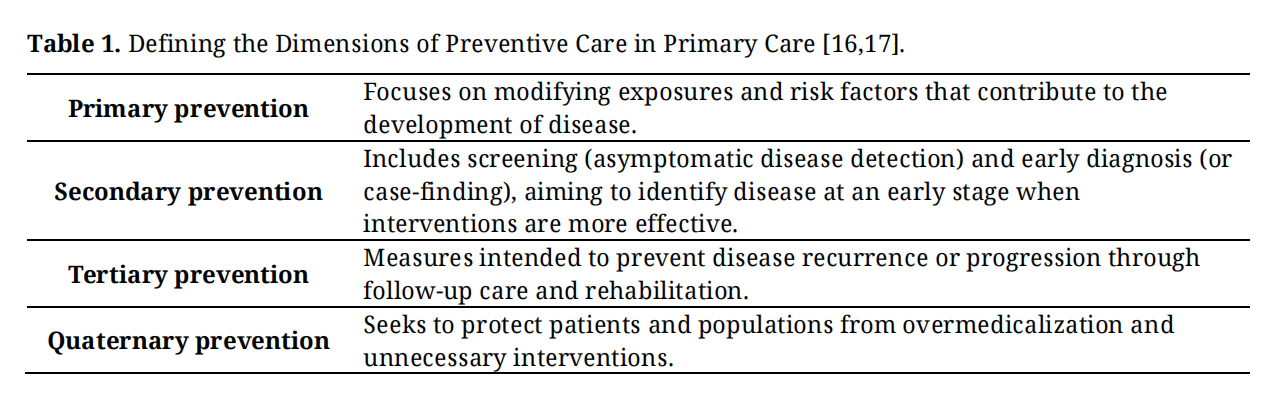
Preventive care encompasses a broad range of interventions delivered by primary care clinicians [15,16], spanning the full continuum (Table 1).
Primary care clinicians must navigate diverse aging profiles [17] while delivering comprehensive care within limited time [18]. Consultations often last less than 30 min [19,20], yet may encompass preventive, curative, and palliative care.
Faced with the considerable amount of information that must be integrated and efficiently utilized daily, several organizations have developed structured clinical tools to support primary care clinicians. Examples include the Rourke Baby Record, an evidence-based guide for preventive care during well-child visits, which was adapted in Quebec as the pediatric ABCD-tool [21,22]; HEADSS, a structured psychosocial interview framework for adolescents [23]; and one-page schedules or checklists summarizing age-appropriate preventive recommendations for adults under 65 [24,25].
Preventive care for older adults nevertheless remains poorly defined.
Is There a Place for Preventive Care Among Older Adults?Studies evaluating multidimensional preventive interventions and geriatric assessments in older adults have reported mixed results, with modest or inconsistent effects on mortality, functional outcomes, quality of life, and healthcare utilization [26–30]. These findings should be interpreted in light of substantial heterogeneity across studies in terms of populations, clinical settings, intervention components, and outcomes. Populations are often defined primarily by chronological age, preventive interventions are not standardized, and measured outcomes may not fully reflect what matters most to older adults, whose priorities vary according to their goals, values, functional status, and health context. When interpreted without considering this heterogeneity, such findings may inadvertently foster therapeutic nihilism and reinforce the assumption that aging is an inevitable process to which clinicians and patients can only react [31].
These findings should not discourage older adults from engaging in preventive care or prevent primary care clinicians from offering interventions that may provide meaningful benefit. Rather, they reveal a more fundamental challenge: preventive assessments have often been evaluated without a clearly defined and reproducible framework specifying which components should be addressed, for which aging profiles, and according to what decision-making process. In many studies, the content and delivery of preventive care were left largely to clinicians’ discretion, limiting comparison across interventions and settings.
This lack of specification limits rigorous evaluation. The question is not only whether preventive care is effective, but also what it should include and for whom. The XYZ-tool is proposed as a conceptual framework for more consistent, individualized delivery and subsequent evaluation.
Optimizing Preventive Care: Making Patient-Relevant Choices in a Constrained SystemOur previously published scoping review identified and characterized structured clinical tools for periodic health assessments of older adults in primary care, following the six-stage framework of Arksey and O’Malley, subsequent refinements by Levac and Peters et al., and PRISMA-ScR reporting guidance [32].
The review identified sixteen structured clinical tools. All addressed geriatric syndromes, but only two adapted their recommendations to different aging profiles. The tools varied substantially in content, format, administration time, and development process. Clinicians consulted during the scoping review emphasized that an ideal tool should be adaptable to different aging profiles and feasible within the time constraints of primary care practice.
Within this broader preventive framework, decisions about screening should remain grounded in the principles proposed by Wilson and Jungner (1968) [33] and updated in contemporary frameworks [34]. These principles provide a basis for determining whether a screening program is appropriate. Among other considerations, the targeted disease or syndrome should represent an important health concern, be detectable at an actionable stage, and be associated with interventions that are effective, acceptable to patients, and accessible within the healthcare system, with benefits that justify the potential harms and burdens of screening.
This Viewpoint interprets gaps identified through the scoping review in relation to screening principles and primary care constraints, with the XYZ-tool proposed as a pragmatic clinical response.
Limitations of Current Approaches Based on the Identification of Geriatric SyndromesConsidering these principles, the prominent place occupied by certain geriatric syndromes in the sixteen structured clinical tools identified through our scoping review warrants closer examination. Some conditions may be overrepresented across these tools relative to the strength of the supporting evidence. For example, several tools recommend systematic screening for urinary incontinence, yet current guidance remains inconsistent: some organizations endorse annual screening in women despite limited evidence of direct benefit, while evidence supporting screening in men is lacking. Although conservative and pharmacological treatments may be beneficial, uncertainty regarding optimal management in older adults favors individualized assessment over broad screening [35].
Similarly, fifteen tools recommend systematic screening for neurocognitive disorders in all older adults, for example through the administration of the Mini-Mental State Examination. However, this conflicts with professional guidance: the Fifth Canadian Consensus Conference on the Diagnosis and Treatment of Dementia recommends against screening asymptomatic individuals for cognitive impairment except in specific clinical situations [36].
Some tools require up to 40 min to complete, a burden that is difficult to reconcile with primary care time constraints and may limit their adoption [37,38]. This mismatch greatly predisposes these tools to a low adherence in practice, limiting their effective implementation [38].
Primary care clinicians express interest in improving preventive care for older adults but report uncertainty regarding clinical priorities [32]. However, many of them find themselves at a loss regarding the clinical priorities to adopt in this context.
Guiding Principles of the XYZ-ToolWe have come to propose a new structured clinical tool (Figure 1). The premise guiding its development was simple: Why change a winning formula? The ABCD-tool of pediatric preventive care has been widely recognized, appreciated, and used by primary care clinicians in Quebec for several decades [22]. We drew inspiration from this proven model to design a tool adapted to the clinical realities of primary care geriatrics: the XYZ-tool for geriatric preventive care. This approach rests on the premise that systematic screening for geriatric syndromes is generally not warranted in robust older adults without relevant risk factors. Some older patients remain extremely active, both physically and cognitively, and are still employed [39]. For these individuals, systematic screening for geriatric syndromes can be a waste of time and resources for both the patient and the clinician and carries the risk of eroding the relationship of trust between the patient and their doctor [40].
With this in mind, we have proposed a multi-level preventive care tool (Figure 2).
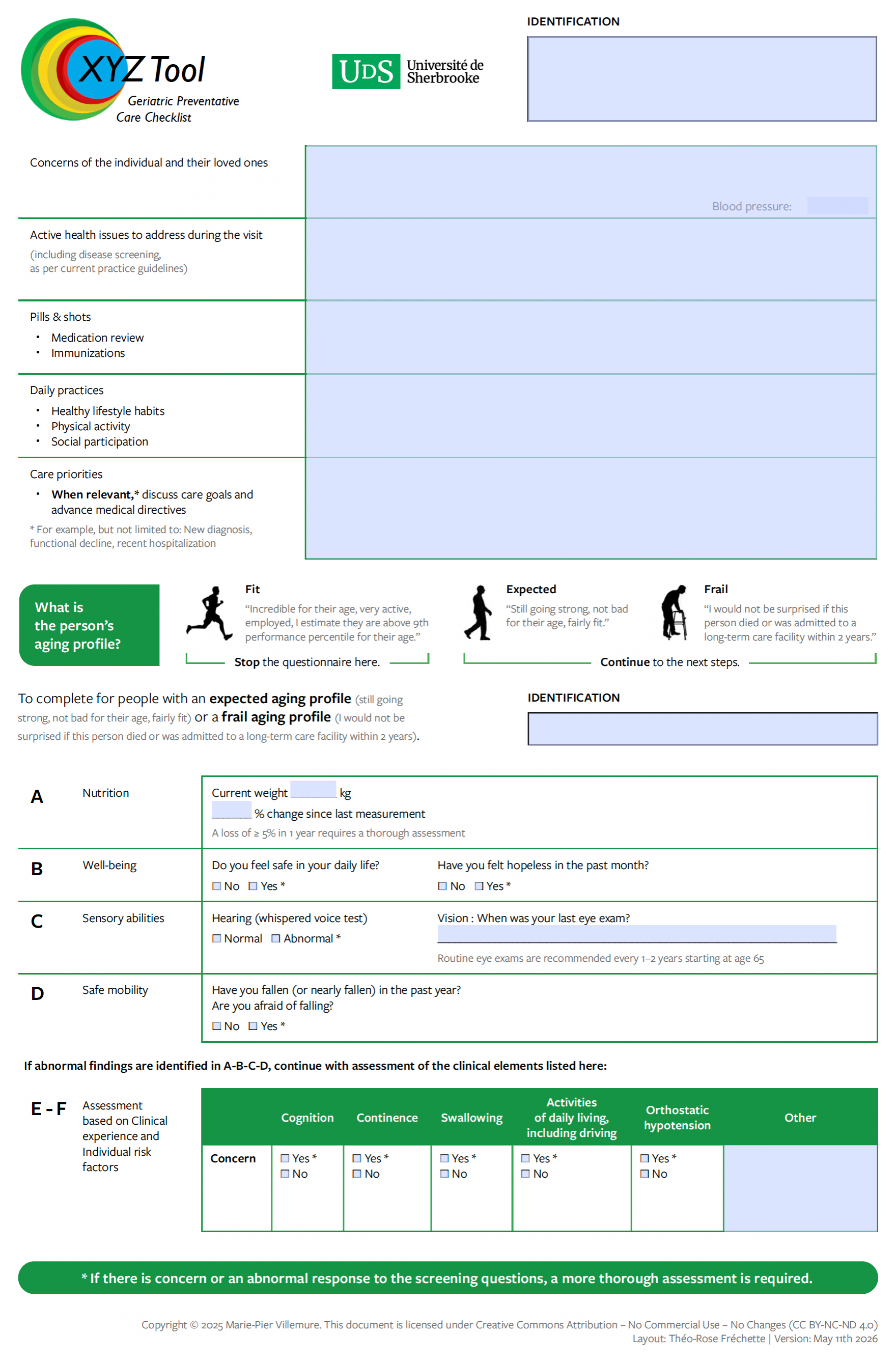 Figure 1. The XYZ-Tool of Geriatric Preventive Care Checklist.
 Figure 2.
Four-step structure of the XYZ-tool. Step 1, green circle: universal preventive care. Step 2, yellow circle: targeted geriatric syndrome screening when indicated by the older adult’s aging profile. Step 3, red circle: clinician practical aids. Step 4, blue circle: patient and caregiver support materials.
Figure 2.
Four-step structure of the XYZ-tool. Step 1, green circle: universal preventive care. Step 2, yellow circle: targeted geriatric syndrome screening when indicated by the older adult’s aging profile. Step 3, red circle: clinician practical aids. Step 4, blue circle: patient and caregiver support materials.
The XYZ-tool proposal is based on the idea that, for all older adults, regardless of their functional level, certain elements should be considered in clinical settings. Because aging trajectories vary substantially, the literature does not support a single, clearly established chronological age at which this type of preventive approach should begin, as also observed in our scoping review [32]. We therefore suggest considering use of the XYZ-tool from approximately 70 years of age, or earlier in individuals presenting marked frailty or other frailty-related risk factors. This age should be understood as a pragmatic clinical reference rather than a strict eligibility threshold.
The XYZ-tool is intended to be used opportunistically and incrementally during routine primary care encounters, including visits scheduled for other health concerns, rather than as a comprehensive assessment requiring a dedicated appointment. This approach is consistent with guidance from preventive care organizations, including the Canadian Task Force on Preventive Health Care, supporting the integration of appropriate preventive interventions into routine primary care [25].
Accordingly, the tool begins with a prominent section prompting clinicians to address the patient’s reason for the encounter, concerns, and priorities before considering preventive items. This design reflects a person-centered approach in which preventive care complements, rather than displaces, the patient’s immediate needs and the primary purpose of the consultation. Adequate follow-up of chronic diseases and active health issues also remains an essential component of the clinical encounter.
The XYZ-tool also draws on the ABCD-tool’s model of shared interprofessional use across the primary care team [22]. It provides a shared working framework for family physicians, nurses, nurse practitioners, pharmacists, occupational therapists, physiotherapists, and other primary care professionals, allowing each clinician to incorporate relevant preventive items into routine encounters. Its integration into a shared electronic medical record facilitates continuity by enabling team members to document completed interventions, identify unaddressed preventive needs, and direct patients to the professional best suited to address specific or more complex sections. Preventive care can therefore be distributed across professionals and encounters rather than assigned to a single clinician or confined to one comprehensive appointment.
Certain other priorities should be systematically integrated into the care of all older adults. Immunization and the promotion of healthy lifestyle habits are among them. It is widely recognized that, far beyond pharmacological interventions, healthy lifestyle habits represent one of the most effective ways to improve people’s functional and vital prognosis and should be encouraged regardless of their age [41].
We also recommend that a review of the pharmacological profile be conducted for all older adults, with a view toward deprescribing when appropriate, given the significant burden associated with polypharmacy [42].
Finally, the exploration of care goals should be addressed in older adults, particularly when health issues require specific consideration or guidance [43]. Although these discussions may be perceived as burdensome because of their duration and emotional intensity [44], studies suggest that they allow patients to prepare for future decisions in a low-pressure environment [45].
For older adults with a clearly robust profile, the assessment may stop at this first level. For those experiencing expected aging or presenting features of pre-frailty or frailty, we propose proceeding to a second, more in-depth level of assessment.
For example, a robust older adult may require only universal measures such as immunization, lifestyle counselling, medication review, and age-appropriate disease prevention. For an older adult experiencing expected aging or presenting features of pre-frailty or frailty, these measures may be complemented by targeted assessment of fall risk, nutritional status, hearing, and psychological well-being. Many subsequent interventions, including medication adjustment, exercise and nutrition counselling, and referral to other primary care professionals, can be initiated or coordinated within primary care.
Assessing Aging Profiles in Time-Constrained Primary CareCurrent evidence does not yet allow for reliable characterization of an older adult’s aging profile in routine clinical practice, despite a substantial body of literature on the subject [46,47]. Several approaches have been proposed, including prognostic indices such as those compiled through ePrognosis [48], frailty classification or prediction scores, and artificial intelligence models [49–51]. However, their formal application often requires additional data collection and multiple steps, limiting their routine use in time-constrained primary care settings [47]. Ideally, relevant clinical and functional data would be drawn directly from the electronic health record to generate a near-automatic, objective, and real-time frailty profile, thereby supporting tailored preventive recommendations. Such systems are not yet widely implemented because of administrative, financial, ethical, and legal barriers, while AI-driven clinical prediction also remains imperfect [52].
Pending the development of simple, rapid, and widely implementable methods for primary care, we propose that clinicians rely on their overall clinical judgment (“at a glance” or “eyeballing”) to assess the robustness or frailty profile of older adults. Although this approach is inherently imperfect, it currently demonstrates a correlation deemed acceptable in clinical practice [53–55].
Targeted Identification of Geriatric Syndromes in Frail IndividualsThis second level involves identifying geriatric syndromes for which the literature provides relatively robust recommendations regarding the benefits of screening. However, several previously developed tools recommend systematic screening for geriatric syndromes in all older adults without clearly documenting the evidence or decision-making process supporting these recommendations or their expected clinical and functional benefits.
While certain geriatric syndromes are of interest due to their potential to reduce the use of healthcare resources, others are more difficult to quantify economically, yet offer considerable moral and human benefits. To inform the development of the XYZ-tool, we conducted a targeted rapid review of clinical practice guidelines indexed in PubMed between 2000 and 2025. Searches combined the terms “guideline” and “primary care” with terms corresponding to the geriatric syndromes included in the 16 tools identified through our scoping review. The purpose was to determine whether available guidelines recommended systematic screening, targeted screening based on clinical features or risk factors, or no screening. This review was intended to inform the tool’s content rather than provide an exhaustive systematic synthesis or formal appraisal of guideline quality.
Based on this targeted rapid review, four geriatric syndromes were retained for initial screening among older adults with frailty because the selected guidelines supported their systematic or targeted assessment (Table 2).
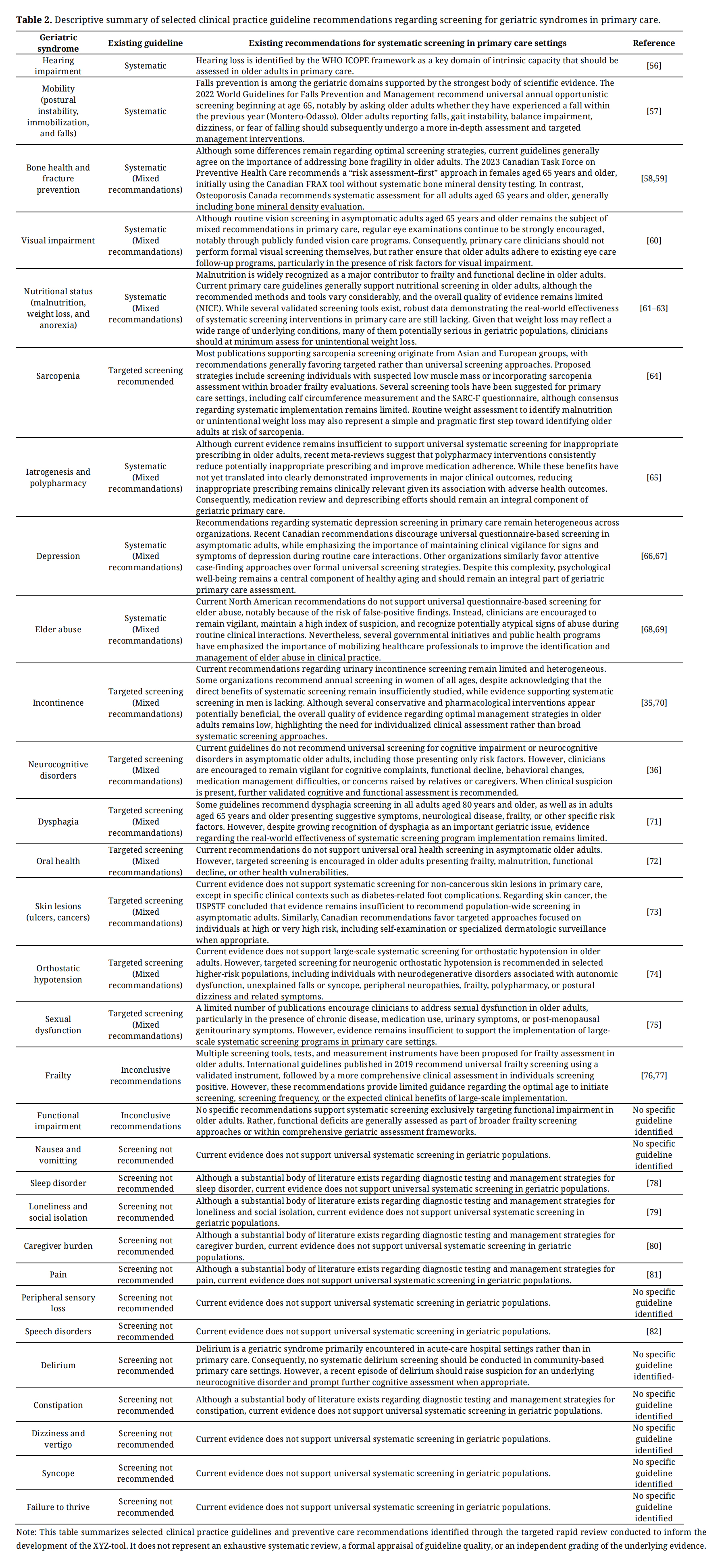 Table 2.
Descriptive summary of selected clinical practice guideline recommendations regarding screening for geriatric syndromes in primary care.
Table 2.
Descriptive summary of selected clinical practice guideline recommendations regarding screening for geriatric syndromes in primary care.
Primary care clinicians are not expected to perform formal visual screening using tools such as the Snellen chart but should ensure that patients regularly consult a vision care professional, such as an optometrist [60]. Regarding hearing, screening is universally recommended by the World Health Organization [56].
This includes screening for depression and the risk of abuse. Although the literature remains inconclusive as to whether systematic screening should be implemented in primary care [67–69,83,84], these domains are generally considered central to healthy aging, despite the complexity associated with their assessment and management.
Fall‑risk assessment and prevention are among the best‑supported geriatric preventive interventions [57].
Weight loss, whether voluntary or involuntary, has a major impact on all aspects of physical functioning and is an important determinant of frailty [61].
Other conditions specific to the geriatric population, such as cognitive impairment, orthostatic hypotension, urinary incontinence, loss of independence, or the ability to drive, should be assessed on an individualized basis, according to each person’s specific risk factors, rather than systematically [36,70,74,85].
From Screening to In-Depth Assessment: A Pragmatic ApproachWhen a geriatric syndrome is identified using the XYZ-tool, a positive result should not be interpreted as a diagnosis in itself, but rather as a signal prompting further investigation. This step opens the door to interdisciplinary collaboration, for example through cross-referrals among physicians, nurses, social workers, or other professionals available in the local care setting. Where resources permit, patients in whom frailty-related factors are identified should be referred for a comprehensive geriatric assessment [86].
However, the distribution of healthcare personnel remains uneven across geographic regions. Some more remote areas lack access to specialized professionals. To address this reality, the XYZ-tool offers practical aids designed for primary care clinicians enabling them, when needed, to conduct a more in-depth assessment of priority issues themselves when a geriatric syndrome is suspected (Red circle).
The XYZ-tool also includes support materials for patients and their families, designed to inform them of relevant, scientifically validated resources adapted to an appropriate literacy level, particularly when risk factors are identified (Blue circle).
Outlook and Next StepsThe XYZ-tool is currently being evaluated through a pilot implementation study in French-speaking primary care settings, focusing on acceptability and feasibility among clinicians, patients, and caregivers. The study received research ethics approval but was not prospectively registered. As it is not a clinical trial and this Viewpoint does not report its methods or findings, the study will be described in a separate publication.
In parallel, a separate protocol has been developed for the English translation and cross-cultural adaptation of the XYZ-tool and will also be reported independently.
Another priority is to develop and validate rapid, feasible methods to help primary care clinicians identify an older adult’s current aging profile and likely trajectory during routine encounters. Such methods would support more consistent application of profile-based preventive recommendations.
Longer-term research will be required to evaluate the tool’s effectiveness and impact on healthcare utilization, as these outcomes may take several years to measure rigorously. This timeframe should not preclude its phased implementation and continued evaluation as a potential response to the need for more structured and individualized preventive care for older adults.
Limitations of the XYZ-ToolThe XYZ-tool is intended to strengthen and better coordinate preventive care while building on effective practices already in place. Its design recognizes the time pressures of primary care and emphasizes the judicious prioritization of feasible, high-value interventions, consistent with Choosing Wisely principles [87]. Clinicians who already use other structured preventive approaches need not abandon successful workflows; instead, the XYZ-tool may complement and enhance them by providing a shared, evidence-informed framework that accounts for different aging profiles.
Furthermore, the XYZ-tool is not an end in itself, but a means of structuring and coordinating the delivery of preventive care for older adults in primary care. Existing care pathways for patients with chronic diseases or loss of autonomy remain highly relevant and should be maintained [88,89]. The tool is designed to complement these trajectories, not to replace them, by supporting a more structured and coherent approach to prevention within the broader continuum of care.
Preventive care in older adults cannot be reduced to a uniform, age-based approach. The heterogeneity of aging trajectories calls for a shift away from routine screening for geriatric syndromes regardless of individual risk, toward a more nuanced, individualized, and context-sensitive approach. In primary care, where time and resources are limited, the challenge is not to do more, but to do what matters most. This requires prioritizing interventions with a meaningful likelihood of benefit while avoiding tests, treatments, and procedures whose expected benefits are limited or whose burdens and risks may outweigh their value.
The XYZ-tool proposes a pragmatic framework to support this shift. By distinguishing between levels of intervention based on aging profiles and prioritizing measures with meaningful clinical and functional impact, it aims to reconcile the complexity of geriatric care with the realities of primary care practice. Beyond the tool itself, this work invites a broader reconsideration of how preventive care is conceptualized and delivered to older adults.
Moving forward, efforts should focus on refining, validating, and integrating such approaches into clinical workflows, while ensuring that preventive care remains relevant, individualized, and equitable for older adults.
Ethics approval was not required for this study, as it is based on a narrative analysis and synthesis of previously published literature and does not involve human participants or identifiable data.
Declaration of Helsinki STROBE Reporting GuidelineThis study adhered to the Helsinki Declaration. The Strengthening the Reporting of Observational studies in Epidemiology (STROBE) reporting guideline was followed.
No new datasets were generated or analyzed during the current study. All information discussed in this article is derived from previously published literature.
Study concept, design, literature review, M-PV; Manuscript preparation, M-PV; Manuscript revision, AD, ML-G.
The authors declare that they have no competing interests. Artificial intelligence tools (ChatGPT-5.5, OpenAI; DeepL Translate) were used to assist with language translation, linguistic revision, and text reformulation. All content was reviewed and validated by the authors.
This study received financial support from the Département de médecine de famille et de médecine d'urgence, Faculté de Médecine et des Sciences de la Santé, Université de Sherbrooke (no grant number applicable).
1.
2.
3.
4.
5.
6.
7.
8.
9.
10.
11.
12.
13.
14.
15.
16.
17.
18.
19.
20.
21.
22.
23.
24.
25.
26.
27.
28.
29.
30.
31.
32.
33.
34.
35.
36.
37.
38.
39.
40.
41.
42.
43.
44.
45.
46.
47.
48.
49.
50.
51.
52.
53.
54.
55.
56.
57.
58.
59.
60.
61.
62.
63.
64.
65.
66.
67.
68.
69.
70.
71.
72.
73.
74.
75.
76.
77.
78.
79.
80.
81.
82.
83.
84.
85.
86.
87.
88.
89.
Villemure M-P, Lafontaine-Godbout M, Dubé A. Who is the older adult in primary care? Rethinking Prevention in Aging Populations Through the XYZ-Tool. Adv Geriatr Med Res. 2026;8(3):e260021. https://doi.org/10.20900/agmr20260021.

Copyright © Hapres Co., Ltd. Privacy Policy | Terms and Conditions