Location: Home >> Detail
Adv Geriatr Med Res. 2026;8(4):e260028. https://doi.org/10.20900/agmr20260028
 ,
Théodora Merenda ,
Stéphanie Patris
,
Théodora Merenda ,
Stéphanie Patris
Clinical Pharmacy Unit, Faculty of Medicine, Pharmacy and Biomedical Sciences, University of Mons (UMONS), Chemin du Champ de Mars, 25, Bât. 6, 7000 Mons, Belgium
*Correspondence: Julien Bamps.
Background: Population ageing highlights the need for effective prevention strategies. The WHO introduced the concept of intrinsic capacity and the Integrated Care for Older People (ICOPE) programme to support healthy ageing, but the contribution of community pharmacists remains poorly explored. This study aimed to assess the feasibility of implementing Step 1 of the ICOPE programme in community pharmacies. Methods: A mixed-methods study was conducted, combining prospective implementation study and qualitative analysis. Pharmacy students implemented ICOPE Step 1 screening in community pharmacies among patients aged ≥ 65 years. Intrinsic capacity domains were measured at baseline while other data were collected at baseline and at six months, including quality of life, falls, and hospitalisations. Semi-structured interviews with students were analysed using thematic analysis. The RE-AIM framework guided data integration. Results: Forty-five patients were included, with a 71% follow-up rate. At least one intrinsic capacity decline was identified in 82% of patients (mean 1.8 declines). At six months, only 31% of participants reported taking action following screening. Key barriers to implementation included time constraints, limited patient engagement, and lack of infrastructure, while facilitators included strong patient–pharmacist relationships and simplicity of the tool. Conclusions: Implementing ICOPE Step 1 in community pharmacies is possible under the study conditions and enables early detection of intrinsic capacity declines. Although implementation barriers were identified, these challenges can be addressed through simple adaptations. Further studies should explore full ICOPE integration and larger-scale implementation.
By 2050, one third of the European population is expected to be aged over 65. This demographic shift is likely to result in increased healthcare and long-term care costs [1]. Addressing these challenges will require the development of effective prevention strategies, particularly targeting factors that contribute to the loss of autonomy [2]. In this context, the concept of intrinsic capacity has emerged as a key framework for understanding ageing and guiding preventive approaches.
Introduced by the World Health Organization (WHO) in 2015, intrinsic capacity refers to “the composite of all the physical and mental capacities that an individual can draw on” [3]. This concept is embedded within the broader framework of healthy ageing, defined as “the process of developing and maintaining the functional ability that enables well-being in older age” [3].
Building on this framework, the WHO developed the Integrated Care for Older People (ICOPE). This programme provides a comprehensive approach aimed at maintaining intrinsic capacity and promoting healthy ageing. ICOPE is designed to optimise care for older individuals by supporting healthcare professionals in the prevention and management of declines in intrinsic capacity. Six domains are assessed through ICOPE: cognition, locomotion, vitality (or nutrition), vision, hearing, and mood. The programme consists of four steps: (1) screening for declines in intrinsic capacity; (2) conducting a person-centred assessment in primary care; (3) developing a personalised care plan; and (4) ensuring referral pathways and monitoring the care plan [4].
Following its release in 2019, several studies have been conducted to implement the ICOPE programme [5]. For example, in France, the Gérontopôle of Toulouse has conducted a large-scale implementation study since 2020. The study included more than 10,000 patients over approximately two years, with the involvement of 245 pharmacists alongside other healthcare professionals, mainly nurses [6,7].
The global evolution of pharmacy practice has been characterised by a transition from a product-oriented model of service delivery to a patient-centred approach, encompassing the provision of specific clinical services [8]. This evolution represents a paradigm shift, thereby creating the conditions necessary for pharmacists to assume a broader range of roles within primary healthcare systems [9].
Strong evidence has highlighted the important role of pharmacists in public health, particularly in improving vaccination uptake, supporting chronic disease management, and promoting more appropriate use of antibiotics through point-of-care testing [10]. However, these contributions remain uneven across settings, as regulatory constraints, insufficient remuneration for preventive services, and gaps in training and digital infrastructure continue to limit the expansion of pharmacists’ roles [10]. As a result, their potential to contribute more fully to population health and health system performance remains underexploited [11]. Moreover, their specific contribution to the implementation of ICOPE remains poorly explored.
In Belgium, although ICOPE has been the subject of local or regional initiatives, it has not yet been integrated into routine practice, and its feasibility in community pharmacy settings remains largely unknown.
The primary objective of this study was to assess the feasibility of implementing the Step 1 of ICOPE programme in community pharmacies. To address this objective, three specific aims were defined: (1) to assess implementation-related indicators, including participation rate and perceived acceptability; (2) to measure the number of intrinsic capacity declines identified by pharmacists, as well as the domains affected; and (3) to identify barriers and facilitators to the implementation of ICOPE Step 1 in this setting.
We conducted a mixed-methods study consisting of a prospective implementation study and a qualitative study. The prospective implementation study was carried out in community pharmacies, where final-year pharmacy students implemented the ICOPE Step 1 tool with patients during their internships. This study was conducted in two sequential phases: Phase 1 from September 2023 to June 2025, and Phase 2 from March 2024 to December 2025. Phase 1 consisted of the actual implementation of step 1 of ICOPE, while phase 2 consisted of a 6-month follow-up of the included patients. In parallel, a qualitative study involving individual semi-structured interviews with the students was conducted from February to August 2025. Feasibility was assessed descriptively across several dimensions of implementation, including student engagement, delivery of ICOPE Step 1, patient retention, and the perceived acceptability of the intervention. Quantitative data were reported following the StaRI checklist (Online Resource S1) [12] while qualitative data were reported following the SRQR checklist [13].
Setting and ParticipantsPatients included in the prospective study were required to be aged 65 years or older and to live at home. We excluded patients who did not speak or understand French, as well as those unable to respond because of functional or cognitive impairment. Participation of pharmacy students was voluntary. Students were eligible to take part in the study only if both they and their internship supervisor agreed to participate. All students who took part in the prospective study were invited to participate in the qualitative study.
No a priori sample size calculation was performed, as this study was designed as a feasibility study rather than a powered effectiveness trial. The sample size was pragmatically determined based on recruitment feasibility and available resources, with the primary aim of assessing intervention implementation and feasibility. Accordingly, a convenience sample was recruited.
Prospective Implementation Study ProcedureAll students who agreed to participate in the study received an individual training session. During this session, the researcher explained the purpose of the study, reviewed the documents provided to the students, and described the tests to be conducted, while also providing practical instructions for their administration. The intervention was implemented in four sequential steps. Upon enrolment, students first gathered basic socio-demographic information from patients. Next, they conducted a brief clinical assessment. This assessment included the collection of the patient's medication history and clinical information through standardised questions. In the third step, the students administered the ICOPE Step 1 in accordance with the French version of the WHO ICOPE guidelines [14]. It consisted of assessing declines across six domains (cognitive decline, limited mobility, malnutrition, visual impairment, hearing impairment and depressive symptoms) through nine tests (Table 1). Following the screening, students communicated the results directly to the patients and provided standardized clinical recommendations. Patients were encouraged to discuss the findings with their physician and were provided with a letter summarising the results. Finally, a six-month follow-up was conducted by the researcher (JB) via phone call. If patients could not be reached, the researcher contacted the pharmacy to determine whether the patient had been institutionalised, had died, or was otherwise lost to follow-up.
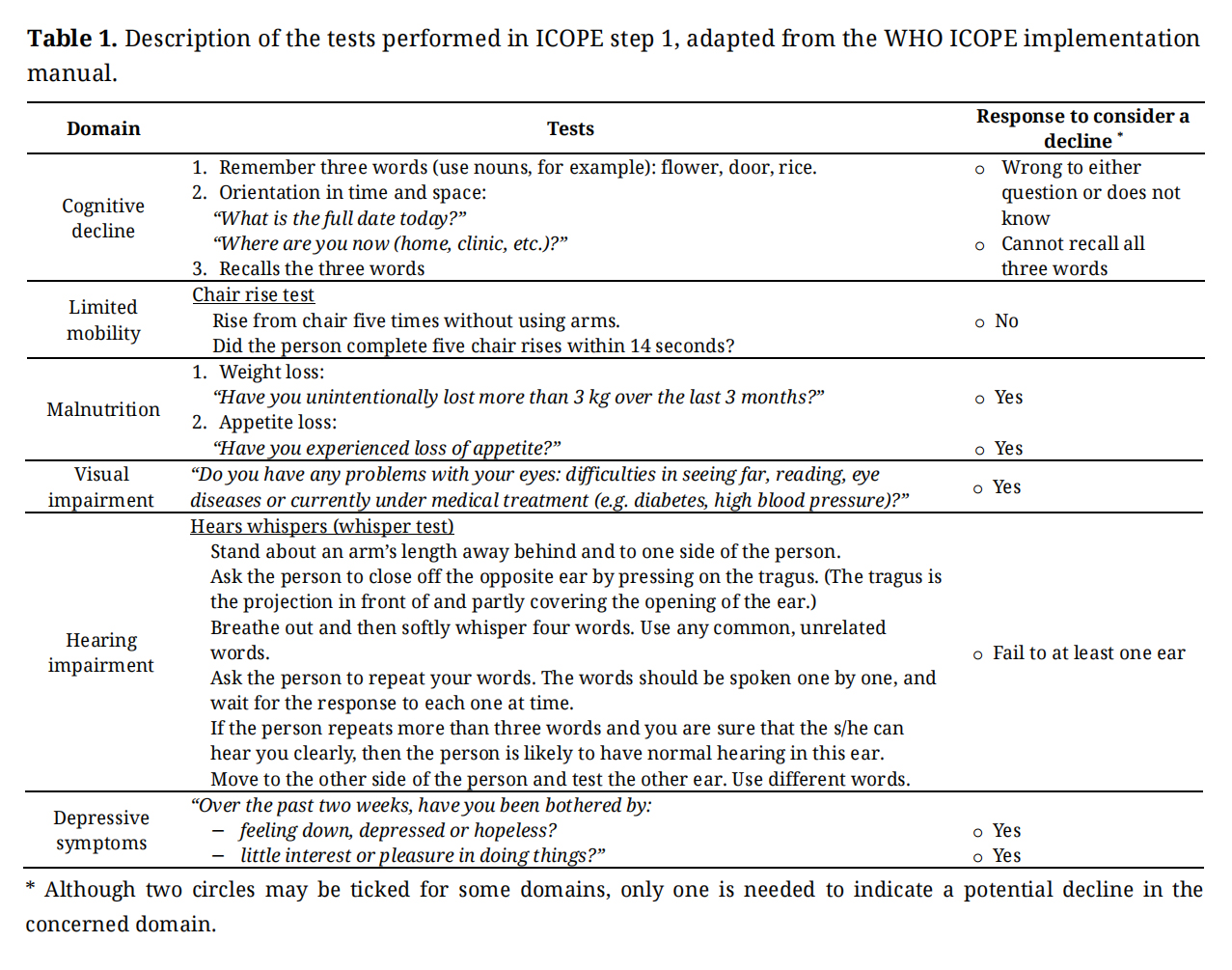 Table 1.
Description of the tests performed in ICOPE step 1, adapted from the WHO ICOPE implementation manual.
Table 1.
Description of the tests performed in ICOPE step 1, adapted from the WHO ICOPE implementation manual.
Data were collected at baseline and at the 6-month follow-up using a structured data collection sheet (Online Resource S2). The sheet was divided into three sections. The first section collected patients’ socio-demographic and clinical characteristics. Socio-demographic variables included gender, age, marital status (single, married, divorced, or widowed), and level of education (primary school, secondary school, bachelor’s degree, master’s degree, PhD, or other). Clinical variables included the Charlson Comorbidity Index (CCI) [15], number of medications, number of falls and unplanned hospitalisations in the previous six months, and health-related quality of life assessed using the EuroQol 5-Dimension 3-Level (EQ-5D-3L) instrument [16].
The second section recorded the results of the ICOPE Step 1 screening. Each domain was assessed independently and scored as 0 (absence of decline) or 1 (presence of decline). A global score ranging from 0 to 6 was also calculated.
The third section corresponded to the six-month follow-up and collected information on actions taken by the patient after participation in the study (no action, discussion with close circle, or discussion with a physician), number of falls and unplanned hospitalisations since study inclusion, health-related quality of life, institutionalisation (yes/no), and death (yes/no).
Outcome MeasuresEQ-5D-3L index values were calculated using the Belgian value set based on visual analogue scale (VAS) preferences [17]. Utility scores were derived by applying dimension-specific disutility weights, along with an additional penalty (N3) when at least one dimension was at level 3. The final index score was computed using the formula: EQ-5D index = 1 − 0.152 − total disutility. A score of 1 was assigned to respondents reporting no problems in any dimension.
Statistical AnalysisContinuous variables were first assessed for normality using the Shapiro–Wilk test, as well as by graphical inspection using histograms and box plots. Normally distributed continuous variables were reported as mean ± standard deviation, whereas non-normally distributed variables were reported as median with interquartile range.
Comparisons between two independent groups were performed using an independent Student’s t-test for continuous variables when normally distributed, and a Mann–Whitney U test otherwise. Paired comparisons were assessed using a paired Student’s t-test or a Wilcoxon signed-rank test, according to data distribution. Associations between categorical variables were evaluated using Pearson’s chi-square test (χ2).
A p-value < 0.05 was considered statistically significant. Data analysis was performed using IBM SPSS Statistics® version 26.
Qualitative Study Semi-Structured InterviewsSemi-structured interviews were conducted with students who took part in the prospective study. The interviewer was a teaching assistant in the students’ educational setting and had a pre-existing pedagogical relationship with the participants. A study-specific interview guide (Online Resource S3) was developed and structured around four thematic areas: the framework and integration of Step 1 of the ICOPE programme, patient involvement, implementation of the service, and perspectives on its continuity. Interviews were conducted via videoconference using Microsoft Teams. Before each interview, the researcher explained the aim of the interview and obtained informed consent from participants. Interviews lasted between 12 and 24 min and were audio-recorded directly via the application. Interviews were subsequently transcribed verbatim, with all data pseudonymised.
Given that all students who participated in the prospective study were invited to take part in the interviews, data collection was not driven by the achievement of data saturation but rather aimed at including the full range of available perspectives within this specific sample.
Data AnalysisA hybrid thematic analysis was conducted for each interview following the six phases of Braun and Clarke’s thematic analysis [18]. This approach combined deductive and inductive methods: initial themes were identified deductively based on the scientific literature, while additional themes emerged inductively from the data. These newly developed themes were subsequently explored across the entire dataset.
Data analysis was conducted concurrently with data collection using NVivo 14 software. Two researchers (JB and TM) independently coded the transcripts. Following the independent coding phase, the two researchers met to compare their respective coding frameworks, including the identified themes and subthemes. During this consensus meeting, they systematically reviewed all codes to identify conceptual similarities and overlaps. Similar themes and subthemes were merged or renamed to improve conceptual clarity and consistency across the coding framework. Additional themes or subthemes that had been overlooked during the independent analyses were also discussed and incorporated when both researchers agreed that they were supported by the data. This iterative process resulted in a shared coding framework that reflected the combined interpretation of both researchers. The final set of themes and subthemes was established through mutual agreement.
TrustworthinessThe trustworthiness of the qualitative part of the study was ensured following the criteria defined by Lincoln and Guba [19]. Credibility was enhanced through two complementary strategies: persistent observation and researcher triangulation during data analysis. More specifically, persistent observation was operationalized through sustained attention to study-relevant themes during the interviews and subsequent iterative analysis. The semi-structured format allowed the interviewer to probe emerging issues and clarify participants’ responses. An independent dual coding and analysis of the data, including comparison between datasets, helped to minimise interpretative bias and enhanced consistency in data selection and interpretation. Transferability was supported by providing a rich and comprehensive description of the study context, participants, and research protocol. Dependability was ensured through strict adherence to the six phases of Braun & Clarke’s thematic analysis. Finally, no inter-coder agreement was assessed as the analysis was a consensus-based iterative coding process.
Integration of Qualitative and Quantitative DataThe quantitative and qualitative approaches were used as complementary sources of evidence, as each addressed aspects of the intervention that could not be fully captured by the other approach. Quantitative and qualitative data were initially analysed separately and subsequently brought together at the interpretation stage. The integration of quantitative and qualitative data was guided by the RE-AIM framework [20]. The framework was used to structure the presentation of the findings rather than to conduct a comprehensive RE-AIM evaluation. Reach was assessed through patient participation and follow-up rates, as well as by identifying reasons for patient acceptance and refusal as reported by participating students. Effectiveness was evaluated by quantifying the number of declines in intrinsic capacities detected and by exploring benefits perceived by students for patients. As previously stated, this study was designed as a feasibility study rather than as a powered effectiveness trial. Accordingly, the term “effectiveness” used throughout the article refers exclusively to the “E” component of the RE-AIM framework and should not be interpreted as evidence of intervention efficacy or effectiveness. Adoption was assessed by calculating the student participation rate and by identifying reasons for implementing ICOPE Step 1 in community pharmacies, as well as the perceived role of pharmacists. Implementation was evaluated by identifying barriers and facilitators encountered during the intervention. Finally, Maintenance was explored by identifying perceived conditions and areas for improvement required to ensure the sustainability of the service.
Ethical ConsiderationsThe study protocol was approved on 12 June 2023 by the Ethics Committee of HUB-ULB, (approval number: P2023/126). All participants (students and patients) provided written informed consent prior to participation.
The personal data required for the follow-up study were collected from documents separate from those used for the analysis. The analytical dataset was anonymised using a sequential coding system for patient identification, consisting of the letter “P” followed by a two-digit number corresponding to the order of inclusion. Accordingly, the first participant was assigned the code P01.
An identical system was implemented for the interviews, using the letters “EP” in the unique identification codes. Accordingly, the first student was assigned the code EP01.
The results are presented for each RE-AIM dimension (Reach, Effectiveness, Adoption, Implementation, Maintenance), integrating both quantitative and qualitative findings.
The qualitative analysis led to the identification of 34 sub-themes, which were subsequently grouped into 10 overarching themes. The results are presented as a synthesis of participants’ responses organised according to these themes. These summaries were developed while remaining as faithful as possible to the participants’ original statements. For each theme, the results are illustrated with relevant verbatim extracts from participants. These extracts were manually translated into English at the time of selection and subsequently verified through back-translation to ensure that their original meaning was preserved.
Participant Characteristics Patient CharacteristicsThe baseline characteristics of the included patients are presented in Table 2. The mean age was 74.0 years (SD = 6.7), and 49% were female. Participants were predominantly married (49%), and secondary education was the most frequently reported educational level (38%). Patients took a mean of 5.8 medications (SD = 3.1) and had a mean Charlson Comorbidity Index score of 4.2 (SD = 1.5). The mean EQ-5D-3L index score was 0.70 (SD = 0.25).
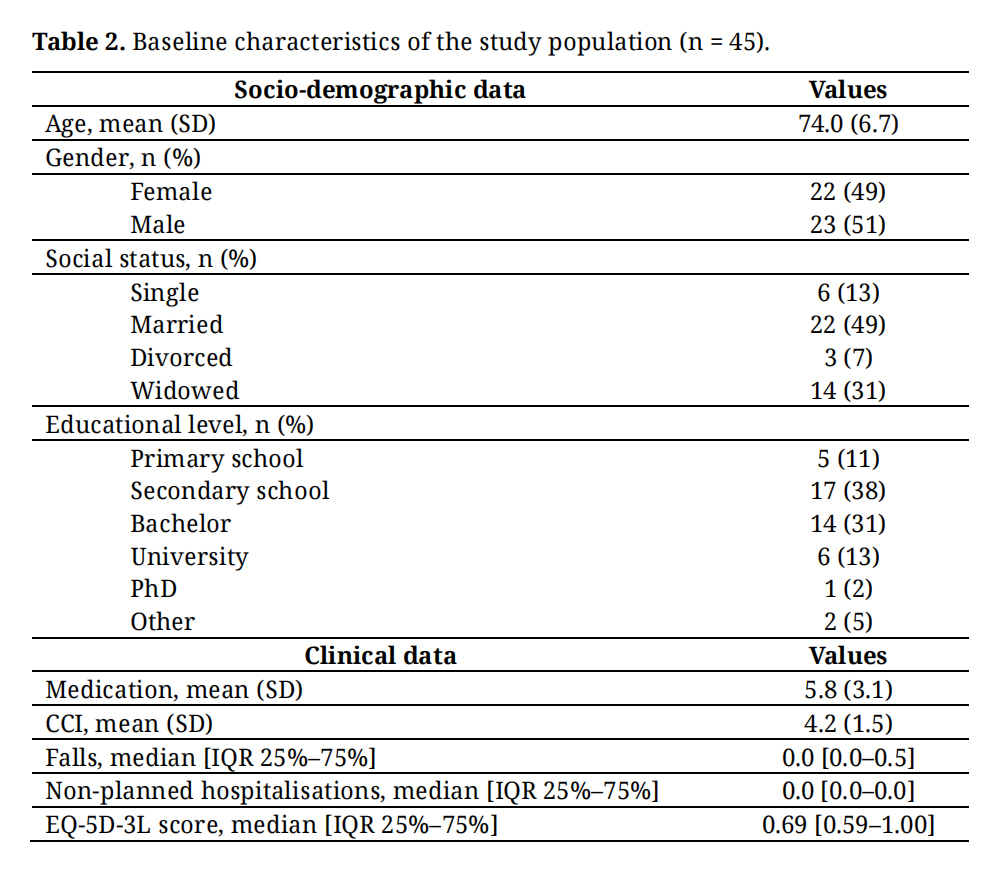 Table 2.
Baseline characteristics of the study population (n = 45).
Table 2.
Baseline characteristics of the study population (n = 45).
The characteristics of the students who took part in the interviews are presented in Table 3. A total of 12 interviews were conducted with a mean time of 18 min (SD = 4). Majority of the interviewed students were female (75%).
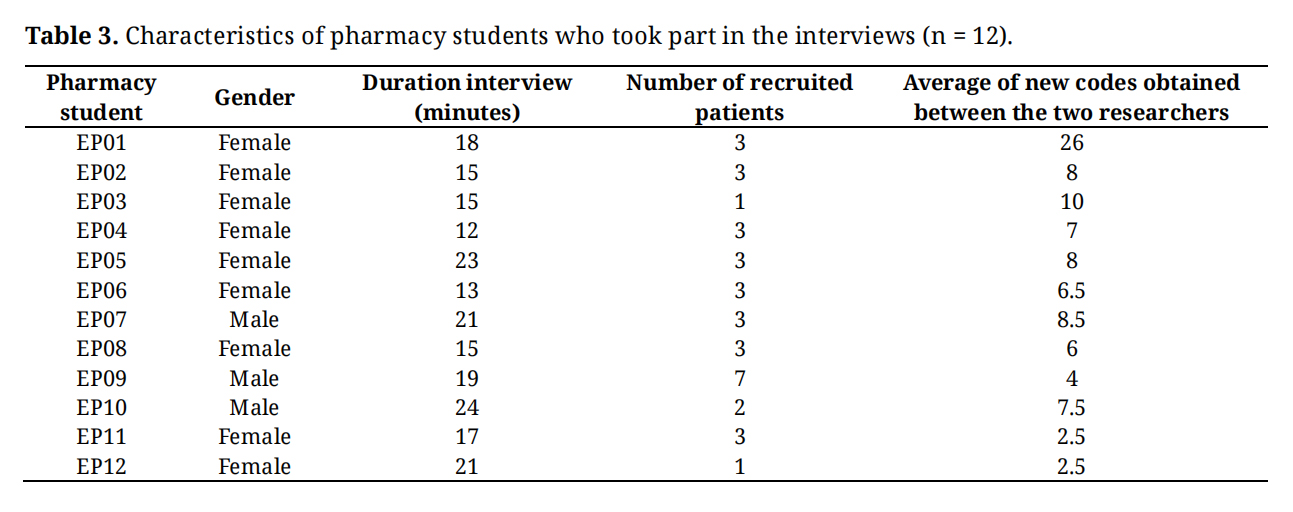 Table 3.
Characteristics of pharmacy students who took part in the interviews (n = 12).
Table 3.
Characteristics of pharmacy students who took part in the interviews (n = 12).
As shown in Figure 1, a total of 45 patients was recruited. At six months, 32 patients completed follow-up, corresponding to a retention rate of 71%. Thirteen patients were lost to follow-up, including two who were institutionalised. No deaths were reported.
Table 4 compares the baseline characteristics of patients who completed follow-up with those of patients who were lost to follow-up. On average, patients lost to follow-up were taking two more medications (p = 0.043) and had a poorer quality of life (p = 0.005) than those who completed follow-up. No significant differences were observed for the other baseline characteristics.
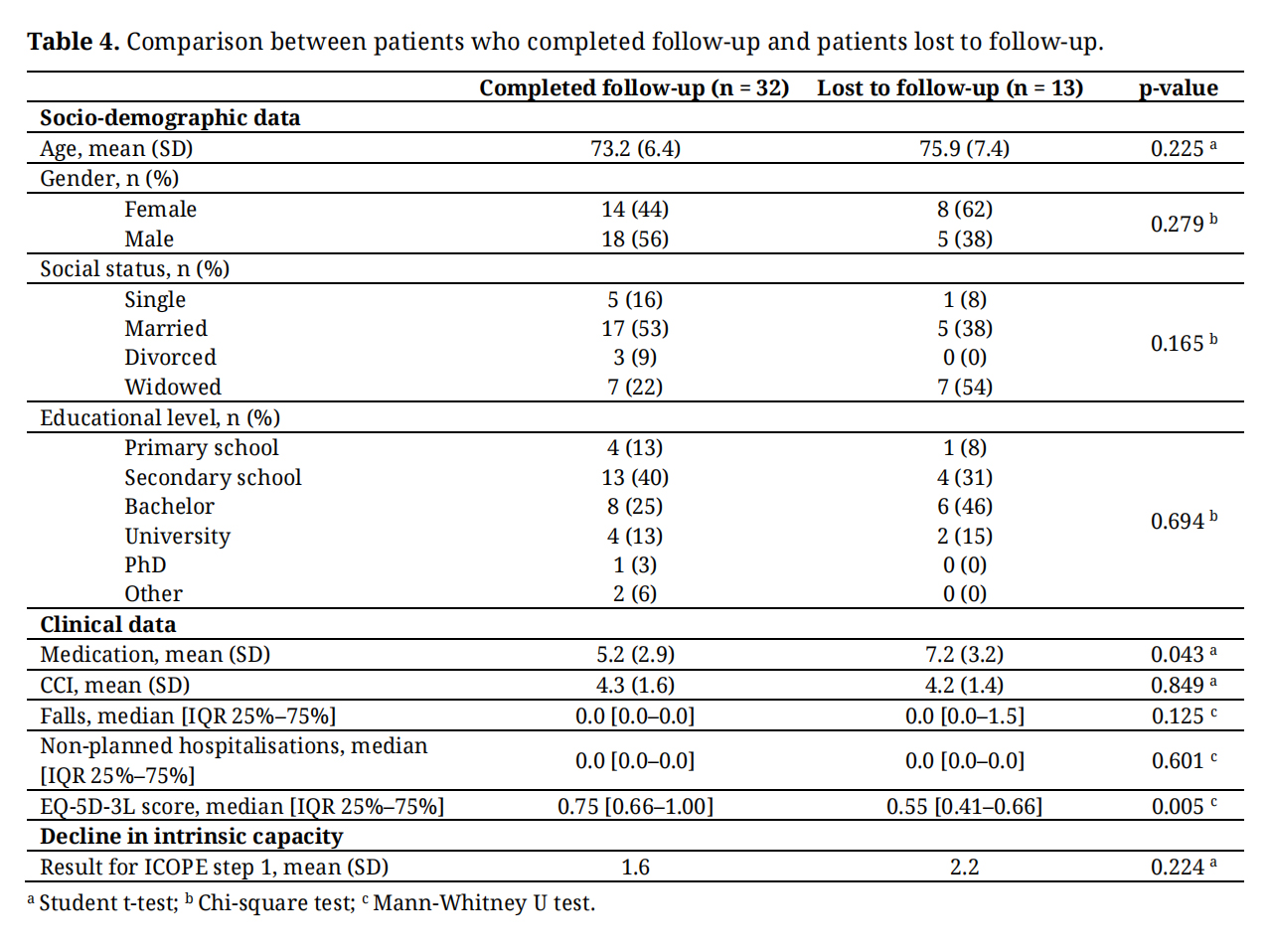 Table 4.
Comparison between patients who completed follow-up and patients lost to follow-up.
Table 4.
Comparison between patients who completed follow-up and patients lost to follow-up.
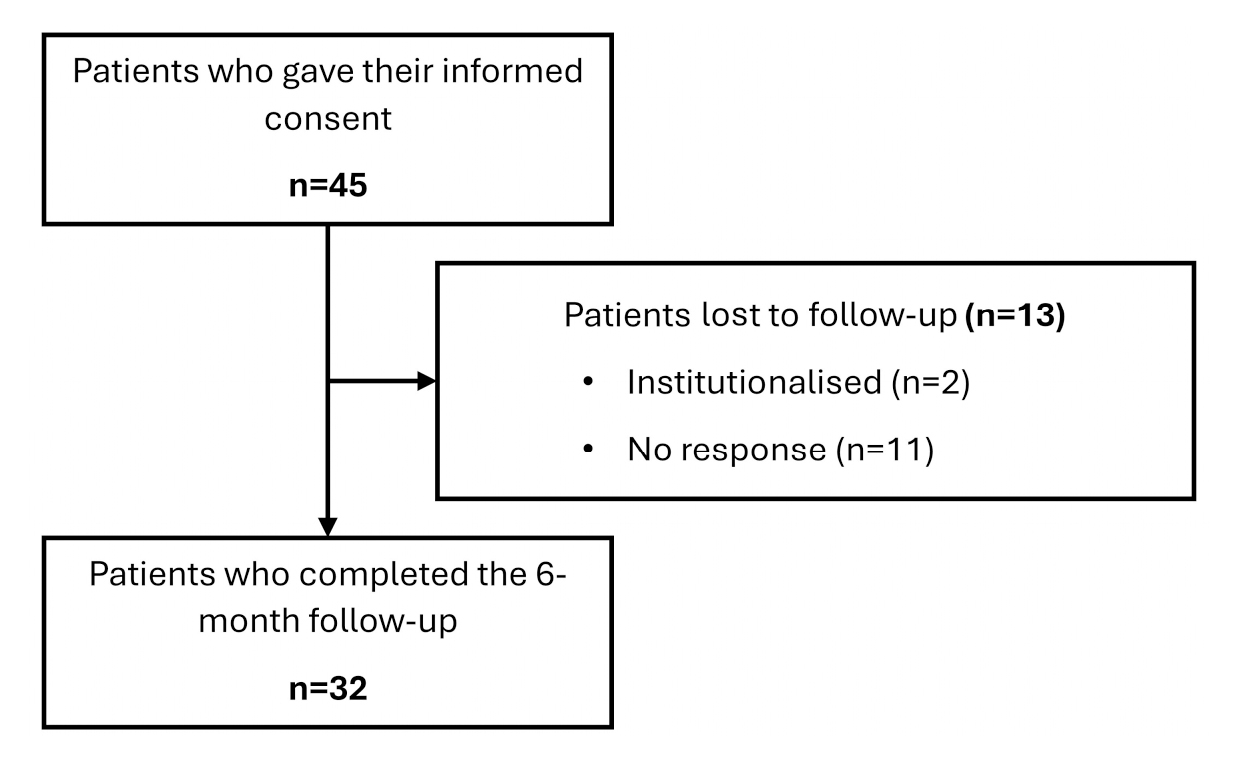 Figure 1. Flow diagram of patient inclusion and follow-up.
Students reported several factors that appeared to hinder patient participation. Patients were often perceived as finding the service burdensome and demonstrating limited awareness of its potential benefits. The minimum age threshold of 65 years was also identified as a limiting factor. In addition, students noted that a lack of trust in pharmacists, as well as patients’ concerns about potential results, further impeded engagement.
“Some of them were perhaps a bit worried about the results.” EP06.
Facilitators to Patient RecruitmentIn contrast, several factors were identified by students as facilitating patient recruitment. Patients who were more familiar with the healthcare system appeared more likely to engage with the service. A higher level of education was also perceived as a facilitating factor. In addition, patients with greater ease in social interactions were considered more receptive. Finally, a strong pre-existing relationship between the patient and the pharmacist was reported as a facilitator of participation.
“So there’s a large patient base made up of people of a certain age who have been familiar with the pharmacy for 10 or 20 years, and who have complete trust in the pharmacist. And when they saw that I was offering this study, they were actually happy to take part.” EP07.
Effectiveness Number of Declines DetectedScreening for intrinsic capacities identified at least one decline in 82% of patients, with a mean of 1.8 declines per patient (SD = 1.5). Vision was the most frequently affected domain (49%), whereas vitality (nutrition) was the least frequently affected (13%). Detailed results for each domain are presented in Table 5.
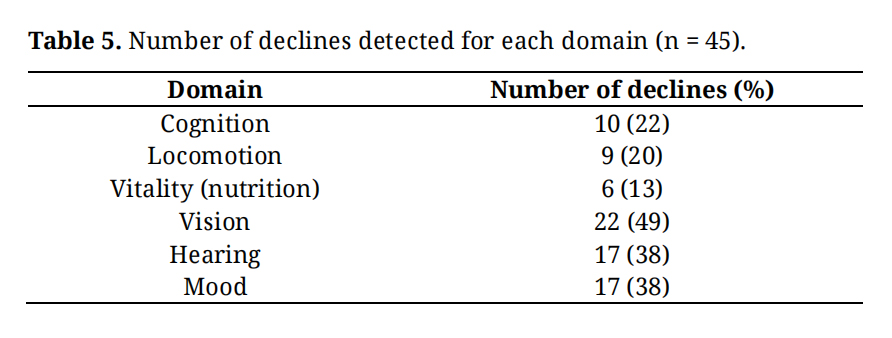 Table 5.
Number of declines detected for each domain (n = 45).
Table 5.
Number of declines detected for each domain (n = 45).
Of the 32 patients who responded to the follow-up survey, approximately one third (31%) reported taking action after participating in the study; six patients (19%) reported discussing the results with members of their close circle, while four patients (13%) reported discussing them with their physician.
A comparison of falls, unplanned hospitalisations, and quality of life at baseline and after 6 months is provided in Online Resource S4.
Perceived Benefits of the ServiceTwo main benefits for patients were identified based on qualitative data. First, the service appeared to enhance patients’ awareness of their intrinsic capacities, whether impaired or preserved. Second, it enabled the identification and implementation of solutions to address detected declines.
“Or even when it comes to his mobility—he thought he’d reached his limit, that he was too old. But in the end, he’s actually doing very well. You see? So, it helps restore their confidence, while also making them realise certain things.” EP10.
Adoption Student ParticipationFigure 2 presents the flow diagram of pharmacy student participation. In total, 80 pharmacy students were eligible for participation, corresponding to 72 different internship supervisors. Among them, 24 students expressed willingness to participate, and 30 internship supervisors agreed to the implementation of the intervention in their pharmacy. Dual agreement from both the student and the internship supervisor was obtained for 21 students. Ultimately, 14 students actively participated in the study.
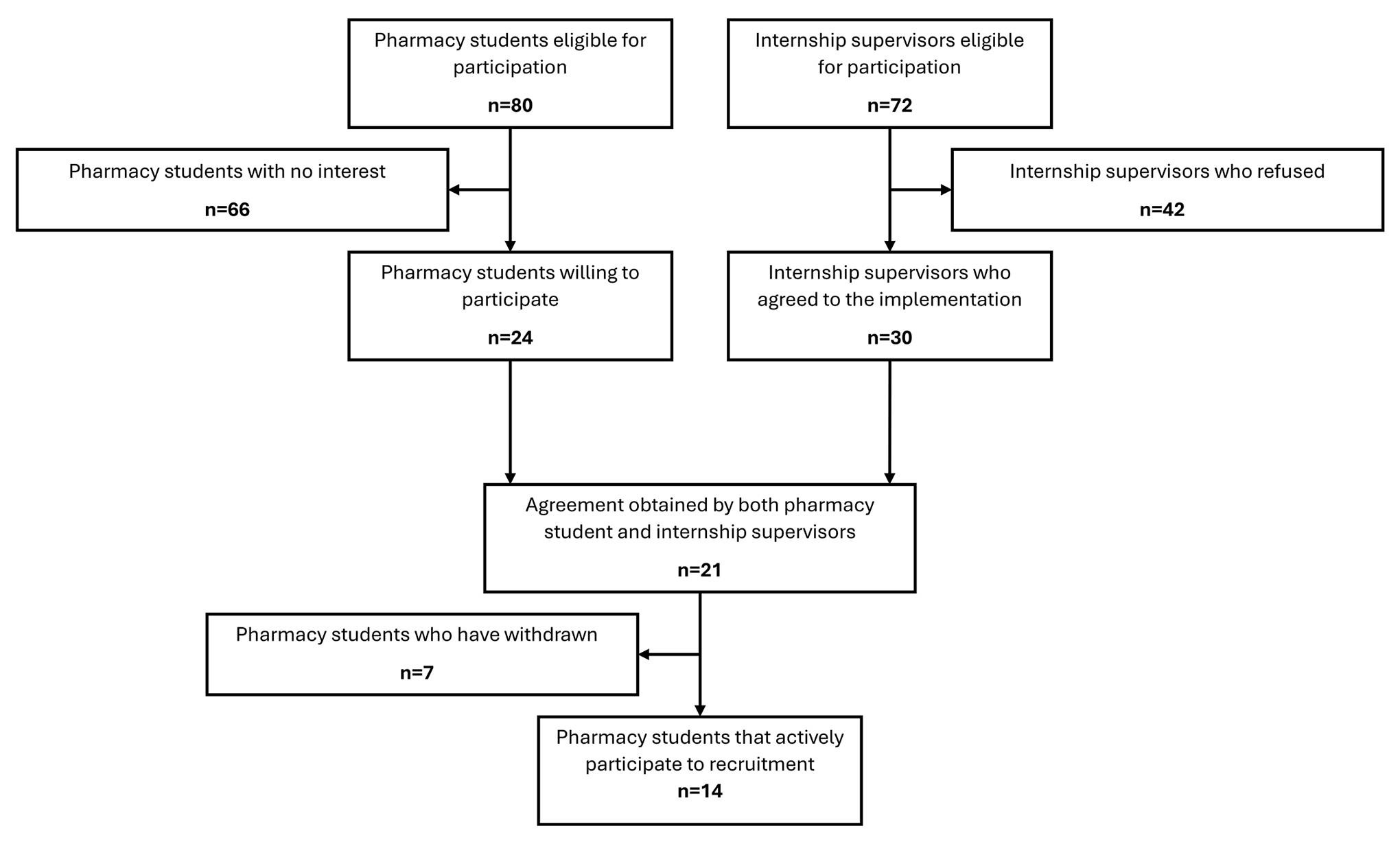 Figure 2. Flow diagram of pharmacy student participation.
Students identified two reasons supporting the adoption of the service. First, integrating ICOPE into community pharmacies was perceived as an opportunity to strengthen and expand the pharmacist’s role. Second, the service was seen as a means of establishing or further strengthening relationships with patients.
“So for me, it would still somewhat enhance the value of our profession, our role.” EP02.
Role of the PharmacistsStudents’ accounts highlighted several dimensions of the pharmacist’s role within the service. Pharmacists were perceived as playing a key role in supporting and managing patients throughout the process. They were also seen as trusted confidants, fostering a safe space for discussion. Finally, their role in screening for declines and referring patients to appropriate healthcare professionals was identified as central.
“It’s an additional role that also makes it possible, perhaps, to redirect the patient to certain physicians or other specialists we might not have initially considered.” EP01.
Implementation Barriers to ImplementationStudents reported several barriers to implementing the service in community pharmacies. Time constraints were frequently cited. Infrastructure-related limitations, such as the availability of private spaces, were also identified. Human-related factors emerged as another major theme, including the need for additional personnel and a perceived lack of team engagement. Finally, the service was sometimes viewed as potentially intrusive, as it required familiarity with patients and engagement with aspects of their private lives.
“But actually, I feel like we’re not really used to sitting down behind a desk with a patient and really starting to step into, to so speak, their private sphere, things like cognitive decline, malnutrition and so on, asking about their weight and things like that. So, I think it can sometimes be a bit delicate to really step into people’s lives.” EP08.
Enablers to ImplementationSeveral factors were perceived as facilitating the implementation of the service. Support from the internship supervisor was highlighted as crucial, as was the availability of a dedicated, private space. Students reported that the service’s efficiency and the simplicity and completeness of the provided materials further facilitated its adoption.
“Honestly, all the materials and documents you provided were clear and comprehensive. So it helped me to move quickly without wasting time trying to figure everything out, how I should do it, what I needed to do.” EP10.
Maintenance Perceived Conditions for Sustainability of the ServiceStudents suggested several strategies to improve both patient recruitment and the implementation of the ICOPE service.
Regarding patient recruitment, enhancing communication and visibility was emphasised. Specific recommendations included providing informative posters, disseminating information through media channels, offering scripted phrases to introduce the service, and clearly explaining the study’s objectives. Expanding the scope of the service and promoting multidisciplinary collaboration were also highlighted as potential facilitators.
“And maybe put up some information on the counter or something, so that patients can read it themselves and think, ‘Oh, what’s that? That looks interesting.’ That way, they also take a step toward us, instead of it always being us who take the first step toward them.” EP03.
Concerning the implementation of the ICOPE programme, students suggested establishing dedicated time slots or appointments and ensuring the availability of a private, quiet space for consultations. Involving the entire pharmacy team, providing tailored training sessions and explanatory videos, offering remuneration for the service, and sending reports directly to physicians were also recommended.
“Actually, I thought about it afterwards, during the vaccination. I thought to myself that while people were waiting for 15 min, it’s true that we could perhaps have already asked a few questions and told them about the study, either to do it afterwards or to schedule an appointment. It’s true that it might have been a good time of year for that. We might have had more opportunities and more interest. That could be an idea.” EP05.
Regarding materials, improvements focused on making the guide better structured and more intuitive, rendering patient-facing materials more engaging, and digitising the questionnaire to facilitate completion and data collection.
“It might be good to have an electronic format where you can just tick the boxes and it calculates everything automatically, so you don’t have to transfer it onto a sheet afterwards. It would do everything on its own. That might be useful and would probably make things a bit faster.” EP09.
Figure 3 provides an overview of the 10 themes and 34 sub-themes identified in the qualitative analysis.
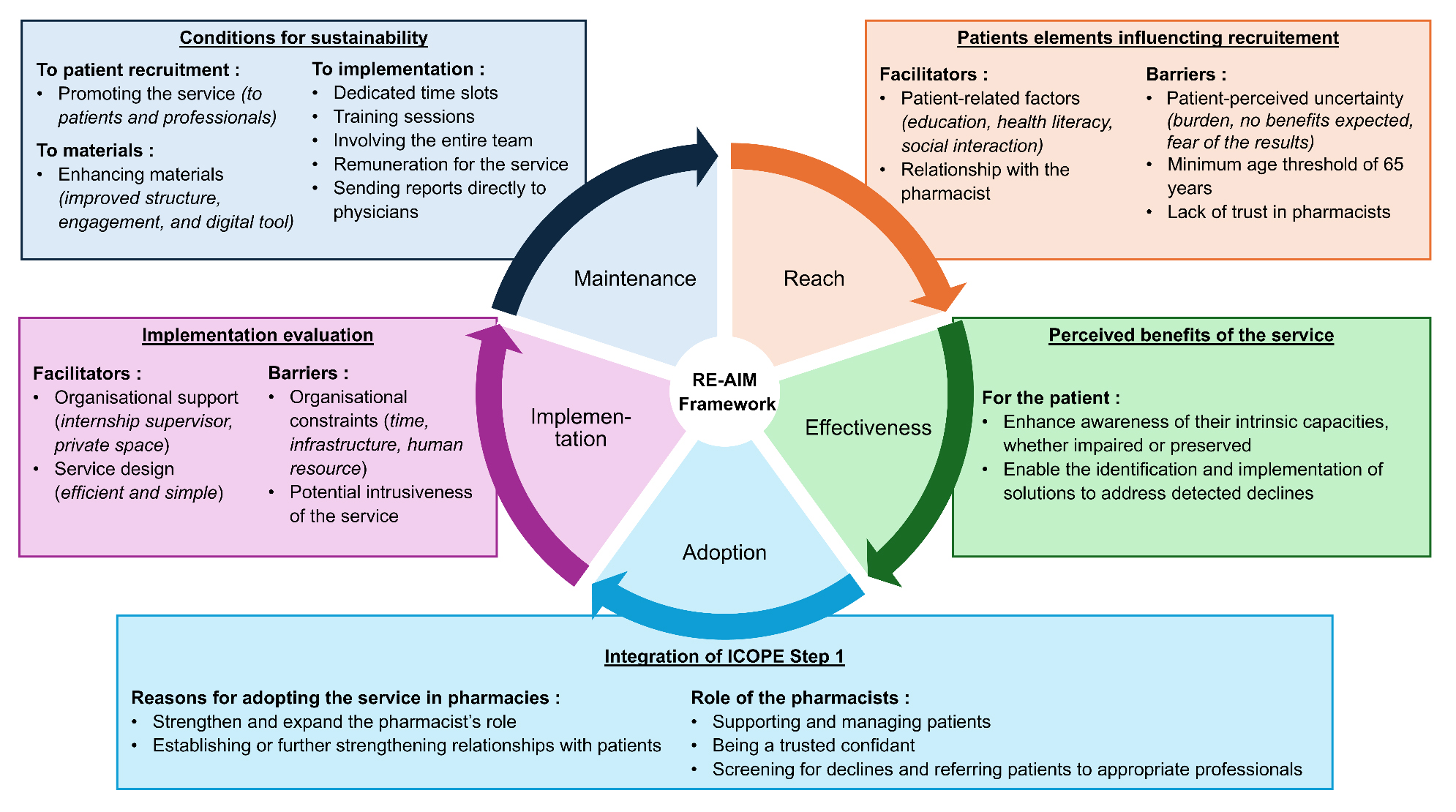 Figure 3.
Overview of the main qualitative themes and their relationships across the dimensions of the RE-AIM framework.
Figure 3.
Overview of the main qualitative themes and their relationships across the dimensions of the RE-AIM framework.
To integrate the quantitative and qualitative findings, a joint display was developed across the five RE-AIM dimensions (Table 6). The display brings together the quantitative evidence, qualitative findings, and resulting integrated interpretation.
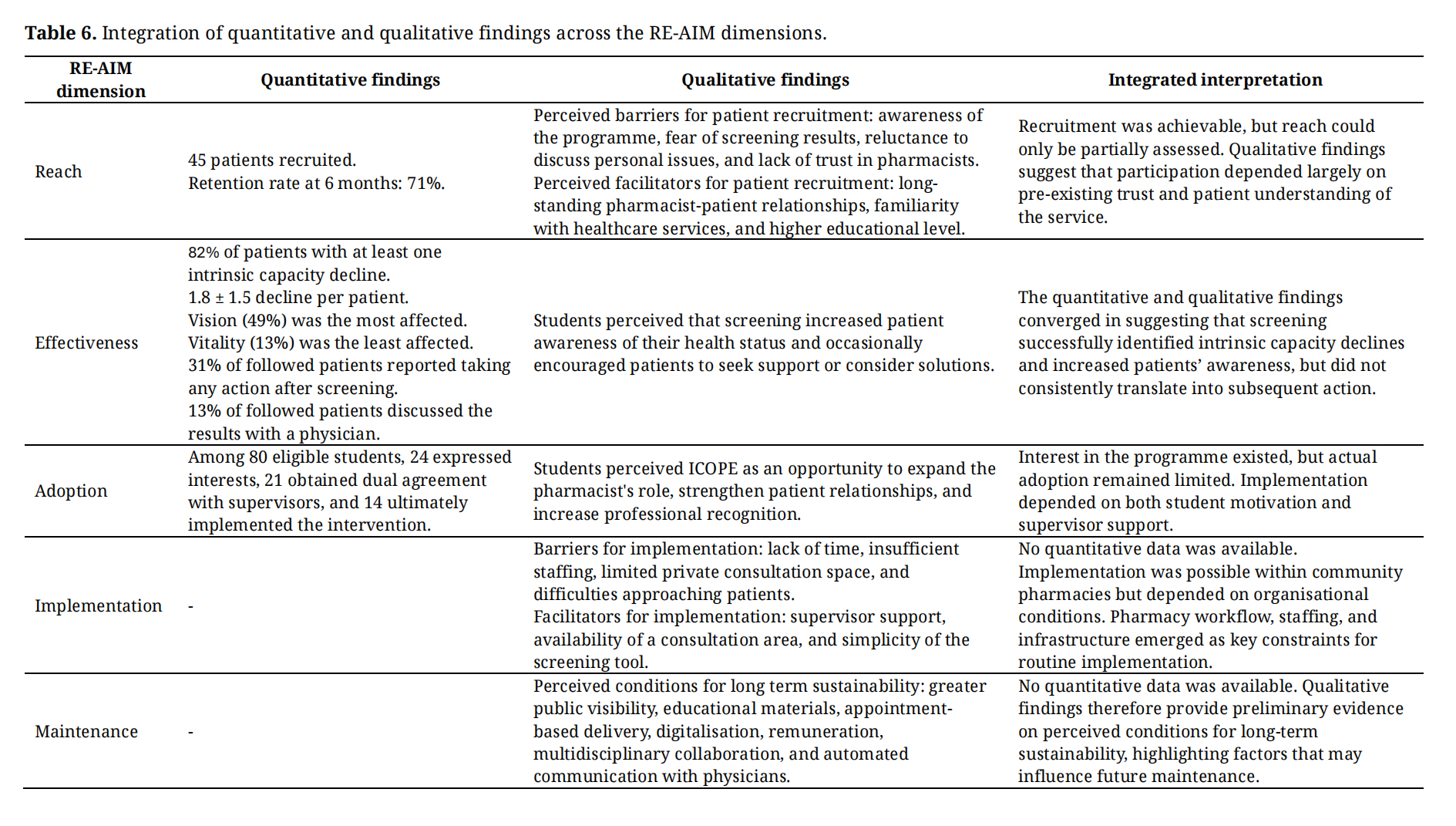 Table 6.
Integration of quantitative and qualitative findings across the RE-AIM dimensions.
Table 6.
Integration of quantitative and qualitative findings across the RE-AIM dimensions.
This study explored the feasibility of implementing Step 1 of the ICOPE programme in community pharmacies. Overall, the results suggest that such implementation is feasible, although several barriers were identified. A high proportion of patients presented at least one intrinsic capacity decline, highlighting the relevance of screening in this setting.
Intrinsic CapacitiesOur study identified at least one intrinsic capacity decline in 82% of the patients. This prevalence was consistent with previous studies conducted in Europe, such as Spain (70%) [21] and France (91%) [22], as well as in other settings such as China (80%) [23], although our sample size was smaller than that of these previous studies. It should therefore be taken into consideration when interpreting this estimate.
When focusing on individual domains, comparisons with European studies reveal broadly similar patterns, although variations are observed. In our study, vision was the most affected domain, which is consistent with findings reported by Rojano i Luque et al. in Spain (2023) [21], Berbon et al. in France (2025) [22], and Heras et al. in Andorra (2026) [24], although the prevalence of decline varied substantially across studies (ranging from 34% to 83%). Similarly, vitality was the least affected domain both in our study and in European literature, with consistent prevalence estimates across studies (approximately 10% to 18%). The other domains showed intermediate prevalence, comparable to those reported in European populations. An exception was cognition, which appeared less frequently impaired in our study (22%) compared with European studies, where prevalence ranged from 31% to 60%. This difference may be partly explained by variations in inclusion criteria, as well as by the study setting, which was specifically conducted in community pharmacies.
Follow-UpOnly a minority of patients reported taking action following the intervention. While participants were encouraged to discuss the results with their physician, few reported doing so. This limited uptake may reflect a lack of structured follow-up and highlights a potential gap between screening and subsequent care. However, the small sample size, combined with the relatively high rate of loss to follow-up (29%), limited the ability to determine whether this finding reflects a broader trend and to fully evaluate the impact of the intervention at 6 months.
Moreover, attrition bias cannot be ruled out, as participants who remained in the study may have been more engaged or motivated than those who discontinued participation. Notably, patients lost to follow-up had a poorer quality of life and were taking more medications at baseline, suggesting that those who discontinued participation may have had a poorer overall health status or greater healthcare needs. This may have influenced their ability or willingness to remain in the study and could therefore have affected the observed outcomes. Future studies involving larger samples and incorporating strategies to minimise loss to follow-up are warranted to provide a more robust evaluation of the intervention’s effectiveness.
Furthermore, the study focused exclusively on Step 1 of the ICOPE programme, which is restricted to the identification of intrinsic capacity declines and does not include integrated management or care coordination. In the absence of direct involvement or prior awareness of the programme among physicians, the continuity between screening and clinical decision-making may have been insufficient.
Taken together, these elements suggest that screening alone, without a clearly defined care pathway and active engagement of other healthcare professionals, may be insufficient to impact patient-reported outcomes over a short follow-up period.
Feasibility of the ImplementationAlthough this study suggests that implementing Step 1 of the ICOPE programme in community pharmacies is feasible, several areas for improvement were identified. First, patient recruitment remains a major challenge. This finding was not unexpected and has already been reported in another Belgian implementation study, in which pharmacists faced an average patient refusal rate of nearly 50% [25].
Several strategies proposed by students deserve further exploration. Increasing the visibility of the service through broader communication campaigns could help shift from pharmacist-driven recruitment to a more proactive patient-driven demand. Second, improvements to the operational delivery of Step 1 should be considered. The tool was perceived as rapid by students, which is consistent with WHO estimates indicating that the assessment can be completed within 5 to 20 min depending on the setting [26]. However, the use of paper-based materials was considered inefficient. While full digitalisation was not feasible within the scope of this study, dedicated tools already exist [27]. In France, for example, the Gérontopôle of Toulouse developed the ICOPE Monitor mobile application to support the implementation of Step 1. This application, specifically designed to meet the requirements of the study conducted by the Gérontopôle, allows both healthcare professionals and included patients to complete the nine WHO-recommended tests, with results automatically transmitted to a secure database managed by the research team [28]. Although this tool is specific to the Gérontopôle of Toulouse, it illustrates the feasibility of developing and integrating such digital solutions into routine clinical practice. Finally, continuity of care represents a key area for improvement. As previously noted, only a small proportion of patients (4/32) reported discussing their results with their physician. Students suggested that systematic transmission of screening results to physicians could enhance follow-up. This approach is already implemented in other care contexts and could be facilitated through the digitalisation of the screening tool, enabling the automatic and secure transmission of results to physicians.
Implication for PracticeThese findings suggest that community pharmacies may represent a relevant and accessible setting for the early detection of intrinsic capacity declines, particularly given their proximity to older populations. However, as the intervention was delivered by final-year pharmacy students, these findings should be interpreted with caution. Future implementation studies involving community pharmacists are needed to confirm the integration of this approach into routine practice. To maximise the impact of such interventions, screening should be integrated into a broader care pathway, including structured follow-up and stronger collaboration with other healthcare professionals, especially general practitioners. In this perspective, the development of digital tools integrated into pharmacy software, enabling real-time data collection and secure information sharing between healthcare professionals, could play a key role in supporting this integration, facilitating continuity of care and enhancing the overall effectiveness of the ICOPE programme in routine practice.
Building on these considerations, future research should focus on larger-scale implementations studies in community pharmacies and involving practising pharmacists, incorporating all four steps of the ICOPE programme. Such studies should also further explore the role of digital tools in supporting screening, data collection, and interprofessional communication, in order to improve integration into routine practice and maximise clinical impact.
Limitations and StrengthsThis study has several limitations. The most important one is the relatively small number of patients included. While this allowed us to identify challenges related to patient recruitment and to propose potential solutions, the limited sample size, together with the loss to follow-up, may have reduced the ability to detect changes in outcomes. Another limitation was the exclusion of patients unable to respond because of cognitive or functional impairment. These individuals may be at increased risk of intrinsic capacity decline and may represent an important target population for ICOPE. Therefore, prevalence estimates should not be extrapolated to the broader population of community-dwelling older adults. Furthermore, the implementation of the intervention by pharmacy students rather than experienced pharmacists may limit the generalisability of the findings to routine practice. Selection bias may also be present, as participating patients were more motivated or more engaged in their health. Finally, data saturation, i.e., the point in qualitative analysis at which no new themes or insights emerge from additional data collection, was not achieved due to the limited number of students involved. Therefore, relevant themes may have been missed, particularly in the implementation and maintenance dimensions of the RE-AIM framework, leading to an incomplete analysis of the barriers and facilitators to implementation, as well as conditions that may influence long-term sustainability. The generalizability of our findings may be limited by the small sample size, the specific pharmacy settings involved, and the use of pharmacy students as implementers. Further studies across diverse community pharmacy contexts are needed to evaluate the transferability of these results.
This study also has several strengths. First, the use of the RE-AIM framework to structure the results enhances the comprehensiveness of the evaluation and supports the reproducibility of the study by addressing multiple dimensions of implementation. Second, the mixed-methods design provides a more in-depth and multidimensional assessment, thereby strengthening the overall rigor of the analysis. Finally, although the number of patients included was small, the multicentre design allows for a broader interpretation of the findings and increases their potential generalisability to the wider region.
This study demonstrates that the integration of ICOPE Step 1 into community pharmacy practice was possible under the study conditions, but was constrained by low adoption, incomplete follow-up, and limited linkage between screening and subsequent care. The high proportion of intrinsic capacity declines identified highlights the potential of community pharmacies as suitable settings for the early detection of age-related impairments.
In addition, this study has identified several barriers to implementation and patient recruitment, while also proposing practical strategies to address them. These findings provide valuable insights to support the optimisation and wider adoption of the service.
Finally, the transmission of screening results to physicians emerged as a key component, underlining the importance of strong multidisciplinary collaboration within the ICOPE framework. Strengthening communication and coordination between healthcare professionals will be essential to ensure continuity of care and maximise the benefits of such interventions.
The study was approved by the Ethics Committee of HUB-ULB, (approval number: P2023/126) on 12 June 2023. Regarding the Informed Consent Statement, informed consent was obtained from all subjects involved in the study.
Declaration of Helsinki STROBE Reporting GuidelineThis study adhered to the Helsinki Declaration. The Strengthening the Reporting of Observational studies in Epidemiology (STROBE) reporting guideline was followed.
The following supplementary materials are available online, Online Resource S1: Completion of the StaRI checklist, Online Resource S2: Data collection sheet, Online Resource S3: Study-specific interview guide, Online Resource S4: Complementary statistical analysis.
The datasets generated during and/or analysed during the current study are available from the corresponding author on reasonable request.
Conceptualisation and design of the study: JB and SP. Data collection and initial data analysis: JB. Data analysis and interpretation: JB, TM and SP. Preparation of the manuscript: JB. Critical reviewing and editing of the first and subsequent drafts of the manuscript: SP. Critical revision of the manuscript and final approval of the version to be published: JB, TM and SP.
The authors declare no conflict of interests.
This research received no external funding.
The authors would like to express their sincere gratitude to all the students and internship supervisors who participated in this study. Special thanks are extended to Alice, Amélie, Chayan, Elea, Émilie, Emma, Filippo, Ilia, Jonathan, Mahault, Maryam, and Romane for their valuable contribution through participation in the interviews.
1.
2.
3.
4.
5.
6.
7.
8.
9.
10.
11.
12.
13.
14.
15.
16.
17.
18.
19.
20.
21.
22.
23.
24.
25.
26.
27.
28.
Bamps J, Merenda T, Patris S. Implementation of the WHO Integrated Care for Older People Step 1 in Belgian Community Pharmacies: A Mixed-Methods Study. Adv Geriatr Med Res. 2026;8(4):e260028. https://doi.org/10.20900/agmr20260028.

Copyright © Hapres Co., Ltd. Privacy Policy | Terms and Conditions


