Location: Home >> Detail
Crop Breed Genet Genom. 2026;8(3):e260022. https://doi.org/10.20900/cbgg20260022

School of Environment and Science, Griffith University, Nathan Campus, Brisbane, QLD 4111, Australia
Grain filling is a critical stage of rice development that influences grain quality and milling performance. This study investigated the effect of heat stress (31/23 °C, day/night) during late grain filling (10–20 days after anthesis) on head rice yield percentage (%HRY) in a medium-grain japonica biparental mapping population comprising 282 recombinant inbred lines (F7–F8). The measured traits exhibited continuous variation, indicating polygenic inheritance. A derived trait, Δ weight 100-grain head rice, was evaluated as a potential indicator of variation in grain development and milling performance. Mean best linear unbiased predictors (BLUPs) for grain yield, plant biomass, and harvest index were 11.85 g pot−1, 31.56 g pot−1, and 0.29, respectively. The mean 100-grain weight of head rice was 1.76 g, compared with 1.43 g for brown rice, resulting in a mean Δ weight 100-grain head rice of 0.32 g (approximately 32%). Milling losses as a percentage of the initial paddy mass included husk loss (43.19%), bran loss (8.39%), broken brown rice loss (7.53%), and broken white rice loss (8.27%). Mean BLUP values for %HRY were 46.43% relative to the initial paddy mass and 77.15% relative to milling operations. Narrow-sense heritability ranged from 0.17 to 0.78, with high estimates for straw biomass (0.70), days to anthesis (0.65), whole-grain brown rice biomass (0.78), and 100-grain weight head rice (0.76). The greatest predicted genetic advance was observed for total milling yield (4.56%–5.12%) and %HRY (3.78%–4.22%). Genotypic correlations (rg) revealed that Δ weight 100-grain head rice was negatively associated with husk loss (rg = −0.74 to −0.78) and positively associated with %HRY (rg = 0.37 to 0.39). These findings indicate that Δ weight 100-grain head rice may complement existing milling-quality traits and provide additional insight into the genetic factors influencing head rice yield under heat-stress conditions. Further validation across populations and environments is required before routine application in breeding programs.
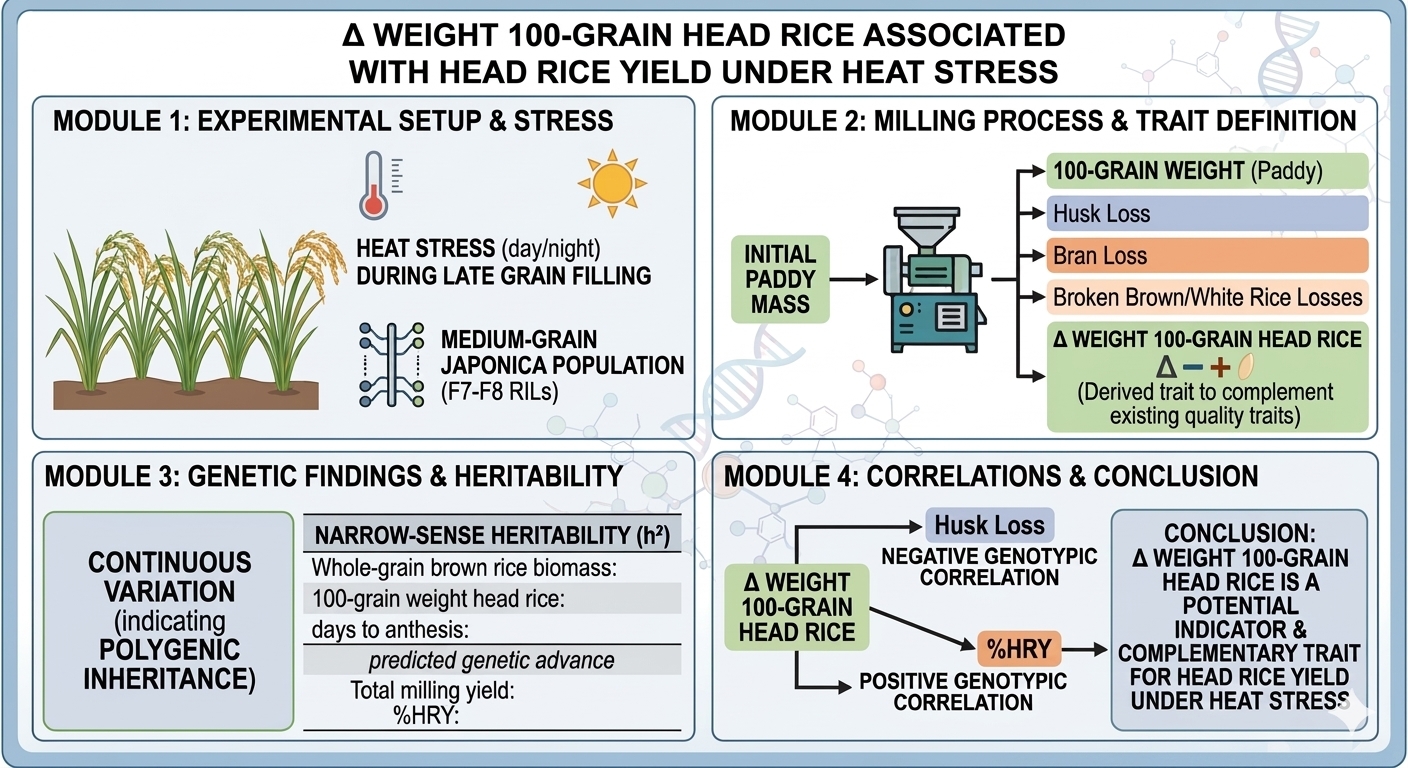
Rice (Oryza sativa L.) provides a primary source of dietary energy for more than 3.5 billion people worldwide. The sustainability of rice production is increasingly threatened by climatic instability, particularly elevated temperatures associated with global climate change [1,2]. Temperature stress occurring during reproductive development can induce spikelet sterility and substantially reduce grain yield [1]. Beyond yield losses, heat stress can adversely affect grain quality traits that determine market value and consumer acceptance [3]. Consequently, understanding the genetic basis of grain-quality responses to elevated temperature has become an important priority for rice improvement programs.
The effects of heat stress vary according to crop developmental stage. While exposure during flowering and reproductive development often causes severe reductions in grain production, heat stress during grain filling generally has a smaller impact on final grain yield [3]. Nevertheless, elevated temperatures during grain filling can substantially alter grain quality by increasing chalkiness [4], reducing grain integrity, and lowering head rice yield percentage (%HRY) [5,6]. Head rice yield percentage, defined as the proportion of unbroken polished grains recovered after milling, is one of the most economically important quality traits in rice because it directly influences processing efficiency and market return.
The reduction in %HRY under elevated temperatures has traditionally been attributed to increased grain fissuring, chalkiness, and susceptibility to breakage during milling operations [6,7]. However, recent evidence suggests that reductions in %HRY arise from multiple biological and physical processes occurring throughout grain development and milling [5]. These processes include husk loss and broken brown rice loss during dehusking, as well as bran loss and broken white rice loss during polishing [5]. The relative contribution of these loss components varies among genotypes, indicating substantial genetic variation that breeding can exploit. Furthermore, bioeconomic analyses have shown that considering milling-loss components simultaneously can improve the identification of superior rice genotypes for milling performance and help prioritise breeding targets associated with head rice yield under heat stress [8,9].
Quantitative genetic approaches provide powerful tools for dissecting the inheritance of complex traits and identifying superior genetic material. Linear and multivariate mixed models enable estimation of genetic parameters and prediction of genetic merit through best linear unbiased prediction (BLUP) methodologies [9–11]. These approaches separate genetic and environmental sources of variation and improve selection efficiency for quantitatively inherited traits. Consequently, BLUP-based analyses have become widely used in modern breeding programs to evaluate genetic worth and predict breeding outcomes.
Numerous quantitative trait loci (QTL) associated with milling quality and head rice yield have been reported [12–22]. However, most studies evaluated %HRY as an integrated phenotype and did not explicitly examine the individual loss processes that contribute to reductions in milling performance. In addition, relatively little information is available regarding the genetic architecture of milling-quality traits under heat-stress conditions. Several published studies utilised populations derived from contrasting grain types and assessed milling traits under standard environmental conditions [17]. Because grain morphology influences grain breakage during milling [16], some previously identified QTL may reflect variation in grain size or grain shape rather than mechanisms directly associated with grain-filling responses to heat stress.
Previous studies demonstrated that husk loss, bran loss, broken brown rice loss, and broken white rice loss collectively contribute to reductions in %HRY under heat-stress conditions [5,11]. However, variation in Δ weight 100-grain head rice, defined as the difference between the weight of 100 whole-grain brown rice kernels and 100 whole-grain head rice kernels, has received limited attention as a potential indicator of variation in grain development and milling performance. Understanding how this trait relates to milling-loss processes, grain development, and productivity traits may provide additional insight into the biological factors influencing head rice yield percentage.
Therefore, the objectives of this study were to (i) quantify genetic variation and inheritance patterns of key agronomic, productivity, and milling-quality traits under heat stress during late grain filling (10–20 DAA), (ii) determine the genetic relationships among milling-loss components and Δ weight 100-grain head rice, and (iii) evaluate the potential contribution of this trait to variation in percentage head rice yield within a recombinant inbred line population.
A set of 282 recombinant inbred lines (RILs; F7–F8 generation; biparental mapping population) was derived from the F1 of a cross between two inbred medium-grain japonica cultivars (M205 × Baru). Grain yield and milling data were obtained from RILs subjected to heat stress during the late grain-filling period (10 days after anthesis/50% flowering to 20 days after anthesis; DAA) in a temperature-controlled glasshouse, following the protocol previously described [5]. The experimental design, replication structure, plant management practices, and environmental conditions were identical to those described [5]. The present study utilised the resulting phenotypic dataset to investigate inheritance patterns, narrow-sense heritability, genetic advance, and genotypic relationships among agronomic, grain-development, and milling-quality traits.
Heat Stress TreatmentRice plants were grown under a 28/21 °C day/night temperature regime with 12 h/12 h day/night cycles. Heat stress (31/23 °C; day/night regimes with 12 h/12 h day/night cycles) was imposed from 10 days after anthesis (DAA) until 20 DAA, as per [5,11]. This heat stress duration and timing were applied because they cause a substantial reduction in %HRY with minimal effects on paddy yields [3,5,8]. Following heat stress treatment, rice plants were returned to a 28/21 °C day/night temperature regime with 12 h/12 h day/night cycles until maturity (40 DAA).
MeasurementsData were recorded at booting/anthesis (days to 50% flowering; DAA) and maturity for each RIL. Harvesting was conducted at 40 DAA when the grain moisture content ranged between 18%–20% (KETT moisture meter; PM 450). Each RIL was manually threshed to separate the grain from the straw. The paddy was dried at 40 °C until a moisture content of 14% was achieved using flat trays (0.61 m × 0.61 m). The straw was dried for 7 days at 40 °C and weighed, and grain yield was expressed at 14% moisture. Total plant biomass was calculated by summing the grain and straw biomass, and the harvest index (HI) was determined as the grain yield divided by the total plant biomass.
The milling dataset was generated from the same heat-stress experiment previously described [5,11]. The present study focuses on quantitative genetic analyses of trait inheritance, heritability, genetic correlations, and Δ weight 100-grain head rice. Although the population comprised 282 RILs, only 124 lines produced sufficient grain quantity and quality for detailed milling analyses following heat-stress treatment. A 20 g subsample of paddy rice from each RIL was first dehusked using a KETT TR250 dehusker to separate husk and brown rice fractions. Broken and unbroken grain fractions of brown rice were separated using an indent cylinder (FQS-13X20 Acme Agro-Tech) and weighed individually on an analytical balance (HR-250AZ; A&D Company Ltd., Tokyo, Japan). The resulting unbroken brown rice was subsequently polished using a KETT TP-3000 Pearlest Grain Polisher according to the manufacturer's instructions to produce polished white rice and bran fractions. Broken and unbroken grain fractions of white rice were separated using an indent cylinder (FQS-13X20 Acme Agro-Tech) and weighed individually on an analytical balance (HR-250AZ; A&D Company Ltd., Tokyo, Japan). Husk, bran, broken brown rice, broken white rice, and whole-grain fractions were recorded and used to calculate milling-loss and milling-yield traits.
The contribution of each loss process during milling to %HRY, expressed as a percentage of the initial paddy mass (P) used for milling (20 g), was calculated as follows:
●
●
●
●
The 100-grain paddy weight (g) was measured on 100 randomly selected paddy rice grains. Likewise, the 100-grain weight of brown rice (g) and 100-grain weight of head rice (g) were measured on 100 randomly selected unbroken (whole-grain) brown rice kernels and 100 randomly selected unbroken (whole-grain) polished white rice kernels, respectively.
To determine whether changes in 100-grain weight between successive milling stages were consistent with the measured milling losses, predicted 100-grain weights were calculated for brown rice and head rice. Predicted brown rice weight was derived from the 100-grain paddy weight after accounting for husk loss, whereas predicted head rice weight was derived from the 100-grain brown rice weight after accounting for bran loss. Observed and predicted values were compared using paired t-tests [23] and were found to be significant (P < 0.05).
The change in 100-grain head rice weight (Δ weight 100-grain head rice) was calculated as:
This difference was evaluated because it directly quantifies the change in grain weight between brown rice and head rice fractions following polishing and may capture variation associated with grain development, milling losses, and grain integrity.
From the weights measured for the grain components, relative (RT) percentages to the step during which they occurred:
●
●
●
●
●
●
The full-sib family data for key desirable agronomic, productivity, and milling yield traits were used to estimate genetic variation and narrow-sense heritability (h2n) on a family-mean basis.
DeltaGen software [9] was used to fit univariate and multivariate mixed models using residual maximum likelihood (REML) to estimate genetic variance for key desirable agronomic, productivity, and milling yield traits. The genetic worth of each RIL was determined across targeted traits using best linear unbiased predictions (BLUP) that were used to estimate the mean BLUP values of each targeted trait across RIL individuals.
Variance and Covariance Components, Narrow-Sense Heritability (h2n) and Genotypic Correlation (rg)Narrow-sense heritability (h2n) was estimated based on the equation [23]:
where, additive variance (σ2a) and phenotypic variance (σ2p); Genotypic correlation (rg) was calculated using the following formula.
where the covariance of each trait X and Y (COVXY) and the genotypic variance (σg) of each trait (X and Y).
Genetic Advance (Percentages)The genetic advance (or gain) for each trait in the F7 generation was predicted using [24].
where k is the selection intensity, σp is the phenotypic standard deviation, and h2n is narrow-sense heritability. The selection intensity corresponded to the upper 10% of individuals (k = 1.76), following [24].
Estimating the Inheritance Pattern through HistogramTrait distribution was estimated through histograms using ‘StataCorp 2025’ [25].
All phenotypes approximated a polygonal distribution, indicating polygenic inheritance of the targeted traits, as shown by quantitative genetic estimates (Figure 1). Mean BLUP values for grain yield and plant biomass were approximately 11 g pot−1 and 31 g pot−1, respectively. Among the measured grain-weight traits, mean BLUP values ranged from 1.07 g for 100-seed husk weight to 2.51 g for 100-seed paddy weight (Table 1). In contrast, Δ weight 100-grain head rice, a derived trait calculated from the difference between brown rice and head rice weights following polishing, had a mean value of 0.32 g, equivalent to a relative difference of approximately 32%.
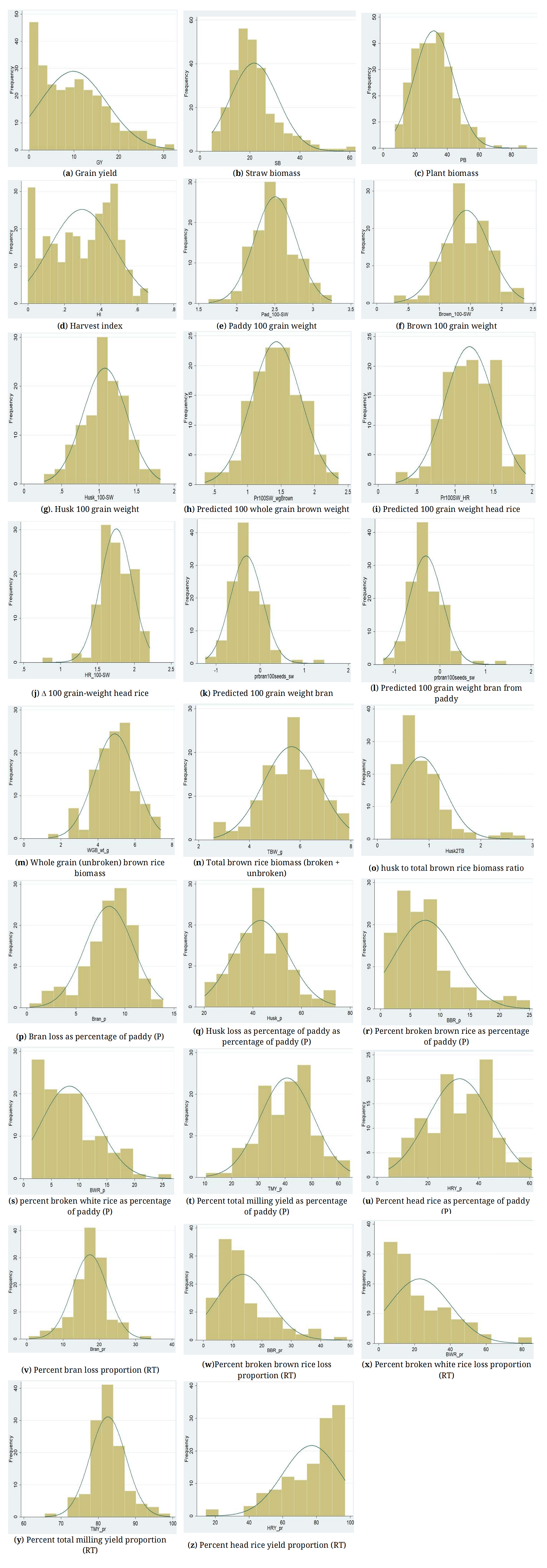 Figure 1.
Distribution patterns of agronomic, productivity, grain-weight, milling-loss, and milling-yield traits across recombinant inbred lines subjected to heat stress during grain filling. Continuous distributions indicate quantitative inheritance consistent with polygenic control. Panels (a)–(z) correspond to the individual traits shown. P refers to milling losses expressed as a percentage of the initial paddy mass used for milling (20 g). RT refers to milling losses expressed relative to the milling process during which the loss occurred (dehusking or polishing).
Figure 1.
Distribution patterns of agronomic, productivity, grain-weight, milling-loss, and milling-yield traits across recombinant inbred lines subjected to heat stress during grain filling. Continuous distributions indicate quantitative inheritance consistent with polygenic control. Panels (a)–(z) correspond to the individual traits shown. P refers to milling losses expressed as a percentage of the initial paddy mass used for milling (20 g). RT refers to milling losses expressed relative to the milling process during which the loss occurred (dehusking or polishing).
The mean BLUP values associated with losses during milling operations relative to the initial paddy mass (P) used for milling (20 g) ranged from 8% to 43% (Table 1), while the corresponding relative percentage (RT) losses, expressed relative to the milling step during which they occurred, ranged from 17% to 43%. Mean BLUP values for head rice yield expressed relative to the initial paddy mass (HRY-P) and polishing operations (HRY-RT) were 46.43% and 77.15%, respectively (Table 1).
A paired t-test indicated significant differences (P < 0.05) between the observed and predicted values of 100-grain head rice weight (1.76 g and 1.18 g, respectively; Table 1). Consequently, Δ weight 100-grain head rice averaged 0.32 g across the RIL population (Table 1; Figure 2), indicating substantial variation among genotypes in the relationship between brown rice and head rice weights following polishing. In contrast, the observed 100-grain weight of whole-grain brown rice (1.43 g) was not significantly different from the predicted value (1.42 g; Table 1).
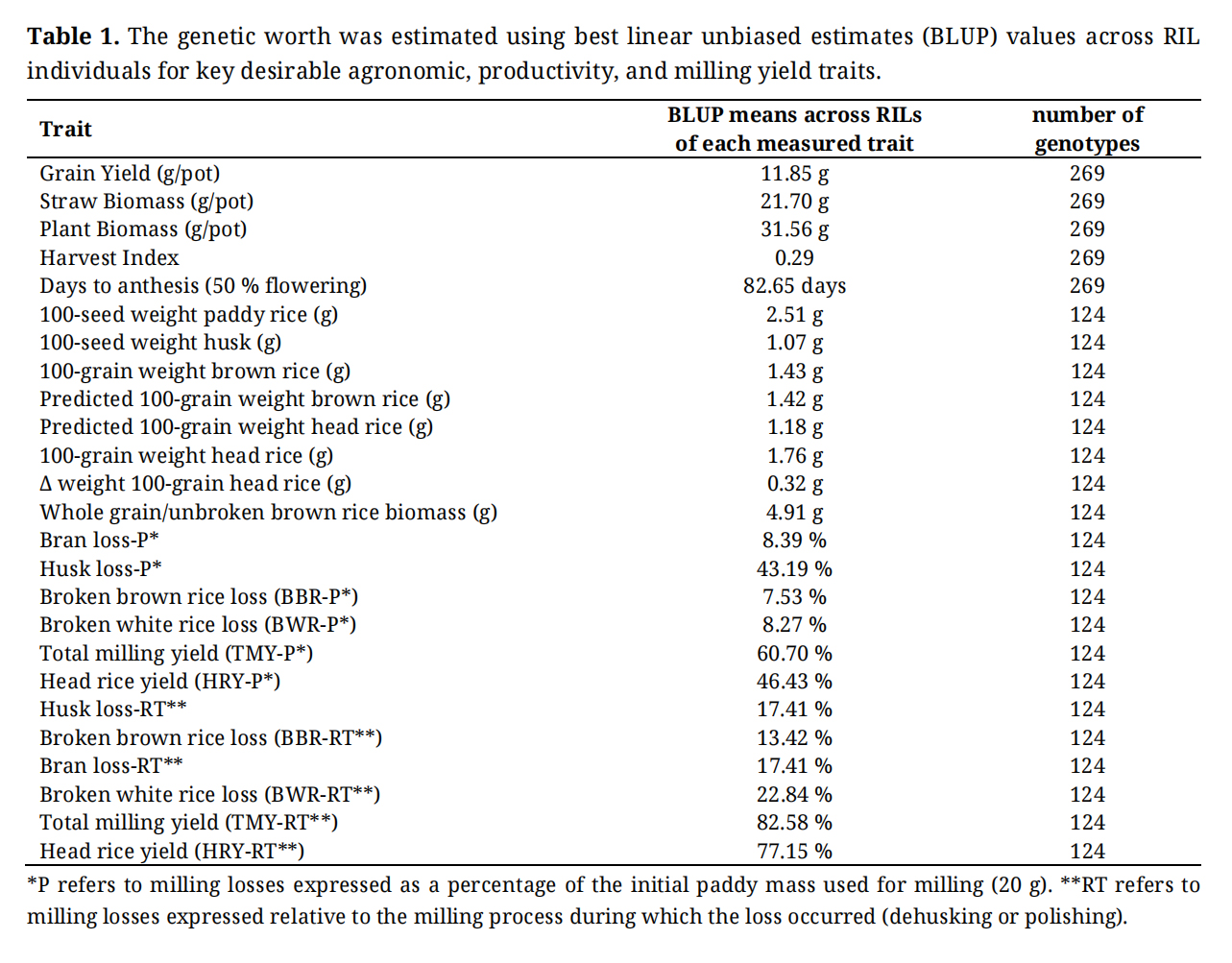 Table 1.
The genetic worth was estimated using best linear unbiased estimates (BLUP) values across RIL individuals for key desirable agronomic, productivity, and milling yield traits.
Table 1.
The genetic worth was estimated using best linear unbiased estimates (BLUP) values across RIL individuals for key desirable agronomic, productivity, and milling yield traits.
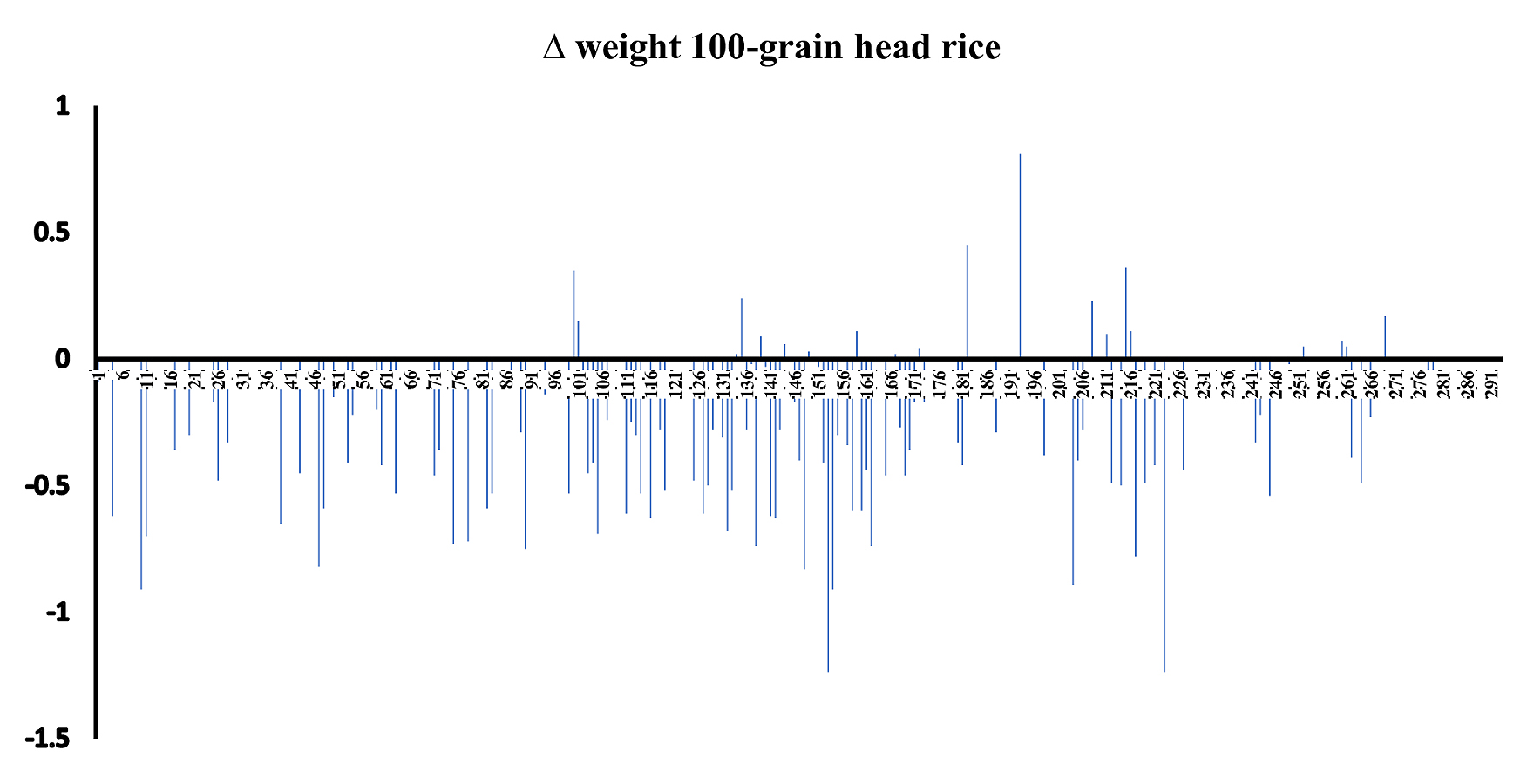 Figure 2.
Distribution of BLUP values for Δ weight 100-grain head rice across recombinant inbred lines exposed to heat stress during grain filling.
Figure 2.
Distribution of BLUP values for Δ weight 100-grain head rice across recombinant inbred lines exposed to heat stress during grain filling.
Genotypic correlations (rg) were estimated among the measured traits (Table S1). Key correlations involving Δ weight 100-grain head rice and head rice yield are presented in Table 2. Δ weight 100-grain head rice showed strong positive associations with 100-grain weight brown rice (rg = 0.80), whole-grain brown rice biomass (rg = 0.67), bran loss-P (rg = 0.85), and bran loss-RT (rg = 0.84). In contrast, the trait exhibited strong negative associations with husk-related traits, including husk loss-P (rg = −0.74), husk loss-RT (rg = −0.78), and 100-seed husk weight (rg = −0.60). Δ weight 100-grain head rice was positively associated with head rice yield expressed relative to both the initial paddy mass (HRY-P; rg = 0.39) and the polishing process (HRY-RT; rg = 0.37) (Table 2).
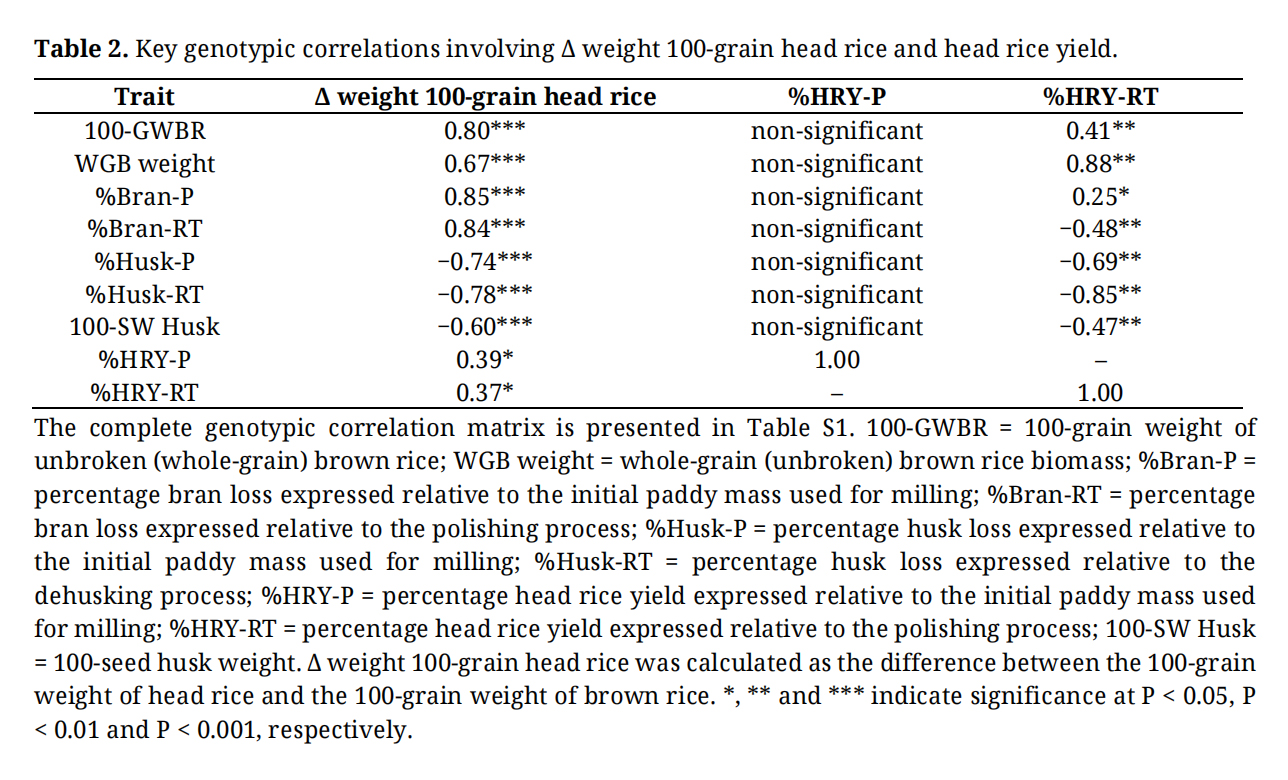 Table 2. Key genotypic correlations involving Δ weight 100-grain head rice and head rice yield.
Narrow-sense heritability across the measured traits ranged from 0.17 to 0.78 (Table 3). High narrow-sense heritability (>0.60) was observed for straw biomass (0.70), days to anthesis (0.65), 100-grain weight head rice (0.76), whole grain/unbroken brown rice biomass (0.78), and total milling yield (0.61–0.64). Genetic advance across the targeted traits ranged from 0.40 to 5.12 (Table 3). The highest genetic advance (>1 per selection cycle) was observed for total milling yield (4.56–5.12), followed by head rice yield (3.78–4.22), 100-seed husk weight (2.55), husk loss (1.67–1.71), and broken white rice loss (1.01–1.12) (Table 3).
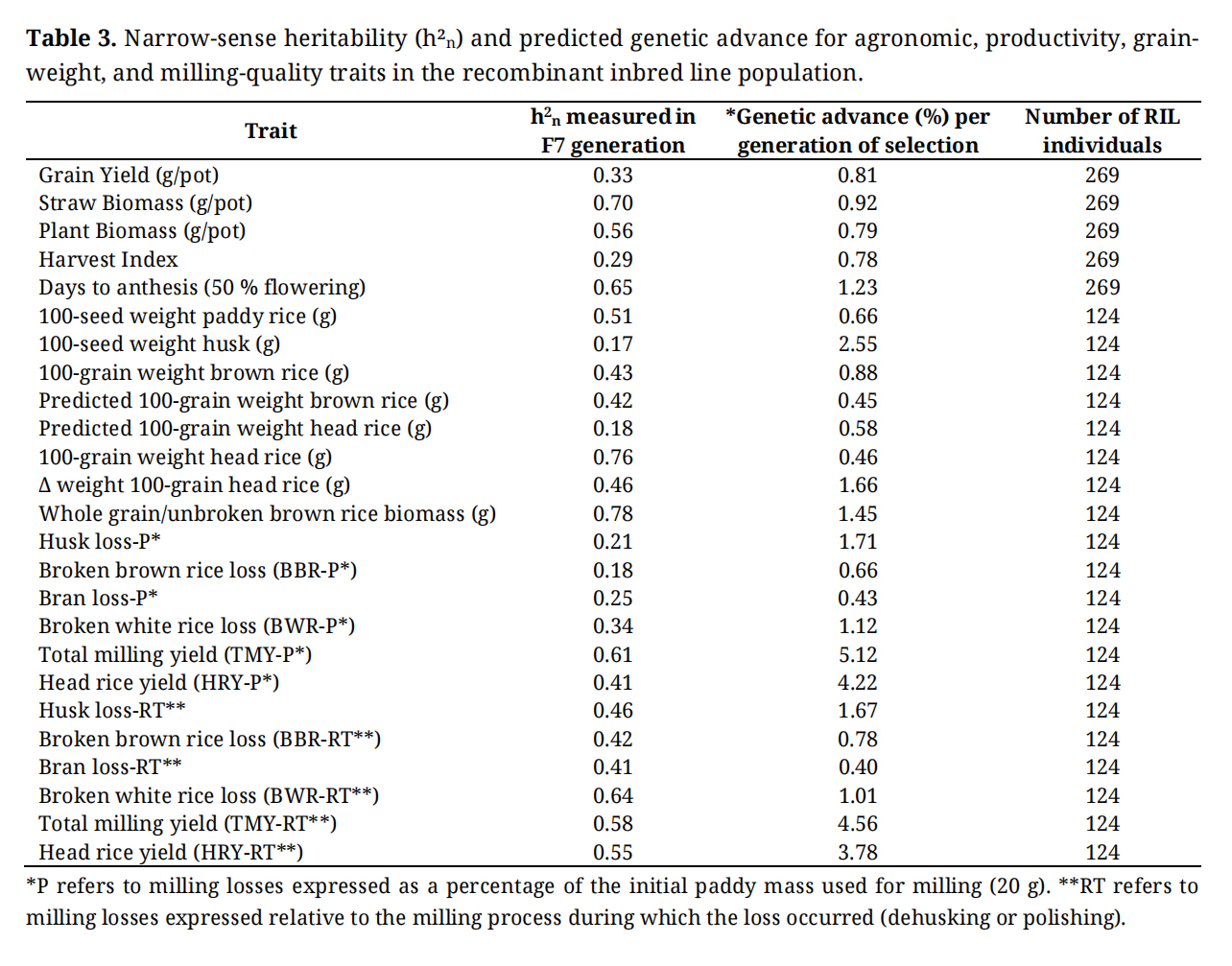 Table 3.
Narrow-sense heritability (h2n) and predicted genetic advance for agronomic, productivity, grain-weight, and milling-quality traits in the recombinant inbred line population.
Table 3.
Narrow-sense heritability (h2n) and predicted genetic advance for agronomic, productivity, grain-weight, and milling-quality traits in the recombinant inbred line population.
The distribution pattern of all measured phenotypes, as illustrated in Figure 1, approximated a continuous (polygonal) distribution, indicating polygenic inheritance of the targeted traits. Previous studies reported that reductions in %HRY under heat stress during grain filling were associated with losses incurred during dehusking and polishing operations [5,7,9]. To further investigate the biological factors underlying reductions in %HRY, the present study examined variation in Δ weight 100-grain head rice across the RIL population and its relationship with milling-loss components and grain-quality traits. The observed variation of approximately 32% among genotypes (Table 1; Figure 2) indicates substantial genetic variation for this trait under heat-stress conditions.
Δ weight 100-grain head rice exhibited a significant negative genetic association with husk biomass and husk-loss traits, while showing positive associations with head rice yield (Table 2). These relationships suggest that the trait may reflect variation in grain-filling efficiency and assimilate allocation among grain components during development. Genotypes exhibiting lower husk losses and a greater proportion of fully developed grains may be more likely to maintain higher head rice yields after milling. However, the precise biological mechanisms underlying these associations remain unclear because the present study did not directly measure grain density, grain chalkiness, bran thickness, or kernel structural integrity. Therefore, the observed relationships might be interpreted as evidence of association rather than proof of causation.
The strong positive genetic correlations between Δ weight 100-grain head rice and bran-related traits (bran-P and bran-RT) indicate that variation in bran removal during polishing may contribute to differences between brown rice and head rice weights. Likewise, the significant negative correlations with husk-related traits suggest that incomplete grain filling and altered assimilate partitioning may influence the extent of milling losses. Similar relationships between grain development, grain filling, and milling quality have previously been reported in rice [26–30]. Therefore, rather than representing a completely new biological process, Δ weight 100-grain head rice may provide an integrative metric that captures the combined effects of grain filling, grain development, and milling-related losses on final milling performance. Unlike %HRY, which represents the final milling outcome, Δ weight 100-grain head rice reflects changes occurring between successive milling products and may therefore provide complementary information regarding grain development and susceptibility to milling losses.
Several studies have identified QTL associated with head rice yield and milling quality traits in rice [12,16,17,19,22,26]. These studies demonstrated that genetic variation contributes to milling performance and identified genomic regions associated with grain quality, grain appearance, and milling-related traits. However, most investigations evaluated %HRY as a single integrated phenotype and did not explicitly partition the individual loss processes contributing to reductions in milling performance. Consequently, while previous studies successfully identified genomic regions associated with overall milling outcomes, they provided limited insight into whether variation in %HRY resulted primarily from husk loss during dehusking, bran removal during polishing, broken brown rice formation, or broken white rice formation. In addition, many QTL studies were conducted under standard production environments and focused primarily on overall milling outcomes rather than the biological factors associated with losses during dehusking and polishing [12,16,17,19,22,26].
In the present study, milling performance was partitioned into individual components, including husk loss, bran loss, broken brown rice loss, and broken white rice loss, and their genetic relationships with Δ weight 100-grain head rice were evaluated. This approach provides additional biological resolution by enabling examination of the relative contribution of individual milling-loss processes to variation in %HRY under heat-stress conditions. The strong associations observed between Δ weight 100-grain head rice, husk-related traits, bran-related traits, and head rice yield suggest that reductions in %HRY do not arise from a single process but instead reflect the combined effects of multiple grain-development and milling-loss pathways. Consequently, future QTL and genomic studies may benefit from evaluating these component traits individually, alongside %HRY, to improve understanding of the genetic factors influencing milling quality and to facilitate the identification of genomic regions associated with specific milling-loss processes under heat stress.
Grain breakage during milling operations is generally greater in smaller, immature, or partially filled grains than in fully developed grains [27]. In the present study, the mean 100-grain weight of head rice (1.76 g) exceeded that of brown rice (1.43 g), resulting in a mean Δ weight 100-grain head rice of approximately 0.32 g, equivalent to a relative difference of approximately 32%. This suggests that lighter or partially filled grains were more susceptible to breakage during dehusking and polishing, leaving a greater proportion of heavier, more completely filled grains in the head-rice fraction. These findings are consistent with [27], who reported that grain-filling characteristics influence milling quality through their effects on grain integrity and susceptibility to breakage [27]. The significant genetic variation observed for Δ weight 100-grain head rice (Figure 2) indicates that this trait may capture differences among genotypes in grain development and milling performance. Because the trait was genetically associated with both milling-loss components and head rice yield, it may provide additional information beyond conventional milling-quality measurements when evaluating breeding populations.
The present findings suggest that Δ weight 100-grain head rice may serve as a complementary trait for evaluating milling quality in rice breeding programs. Integration of this trait with QTL mapping and genomic analyses may help identify genomic regions associated with grain filling, assimilate partitioning, and milling performance under heat-stress conditions. Nevertheless, further validation is required before this trait can be routinely incorporated into selection strategies. The formation of partially filled grains is likely governed by a complex interaction between source-sink relationships, assimilate partitioning, and environmental conditions during grain filling [28–30]. Consequently, variation in Δ weight 100-grain head rice may reflect differences in carbon allocation to developing grains, grain density, grain composition, or structural integrity.
The current study was conducted under controlled glasshouse conditions using a single heat-stress treatment and a single recombinant inbred line population. Consequently, the stability of the observed relationships across environments, years, populations, and field conditions remain unknown. Field environments are inherently more variable than controlled glasshouse conditions and may expose plants to fluctuating temperatures, humidity, solar radiation, soil conditions, and other interacting environmental factors that could influence grain development, milling losses, and head rice yield percentage. Because grain chalkiness, grain density, bran thickness, grain composition, and kernel structural properties were not measured directly, their relative contribution to variation in Δ weight 100-grain head rice remains uncertain. Future studies may evaluate this trait across multiple environments and genetic backgrounds while integrating physiological, biochemical, and genetic analyses. Measurements of grain chalkiness, grain density, bran thickness, grain composition, and kernel structural properties would help clarify the biological basis of this trait and determine whether it provides additional value for improving milling quality and maintaining %HRY under increasingly frequent heat-stress conditions associated with climate change. For plant breeders, Δ weight 100-grain head rice may provide an additional phenotypic measure for identifying genotypes that maintain superior milling performance under heat stress, particularly when used alongside conventional head rice yield assessments.
Heat stress during grain filling resulted in substantial genetic variation in agronomic, grain-weight, and milling-quality traits within the recombinant inbred line population, with the observed continuous trait distributions indicating polygenic inheritance. Head rice yield percentage was strongly influenced by multiple milling-loss processes, including husk loss, bran loss, broken brown rice loss, and broken white rice loss. The derived trait Δ weight 100-grain head rice exhibited moderate heritability, positive genetic associations with head rice yield, and negative associations with husk-related losses, suggesting that it captures variation associated with grain development and milling performance under heat-stress conditions. High genetic advance estimates for total milling yield and head rice yield indicate opportunities for genetic improvement through selection. Collectively, the findings suggest that Δ weight 100-grain head rice may provide complementary information to conventional milling-quality traits and could assist future genetic studies aimed at improving head rice yield under heat stress. Further validation across diverse environments and genetic backgrounds is required before routine implementation in breeding programs.
Prospects of %HRY and Δ Weight 100-Grain Head RiceThe present study examined the inheritance patterns of key agronomic, productivity, and milling-quality traits associated with head rice yield under heat stress during grain filling. Reductions in %HRY following heat stress during 10–20 days after anthesis (DAA) were associated with milling losses and variation in Δ weight 100-grain head rice. Previous studies reported that 10–20 DAA is a critical grain-filling period during which substantial carbon assimilates are transferred from source tissues to developing sink organs [5,28]. Consequently, variation in the biomasses of husk, bran, brown rice, and head rice may reflect differences in assimilate partitioning during grain development [5,11]. The substantial variation observed among genotypes in grain weight, milling losses, and Δ weight 100-grain head rice suggests that grain-filling processes contribute to differences in milling performance and ultimately influence %HRY. Bran-related traits were associated with variation in Δ weight 100-grain head rice, indicating that grain development and polishing-related processes jointly influence the final weight of head rice kernels. These findings suggest that Δ weight 100-grain head rice may serve as a complementary trait for investigating the genetic basis of milling quality. Integrating this trait with QTL mapping and genome-wide marker analyses may help identify genomic regions associated with grain filling, assimilate partitioning, and milling performance under heat-stress conditions. However, further validation across diverse populations and environments is required before its routine application in breeding programs can be recommended. The observed relationships are consistent with the hypothesis that carbon partitioning during grain filling influences the development of fully filled grains and subsequent milling performance [27,28]. Nevertheless, the biological mechanisms underlying variation in Δ weight 100-grain head rice remain incompletely understood. Factors such as grain density, grain chalkiness, bran thickness, grain composition, and kernel structural integrity may contribute to the observed variation. Future studies integrating physiological, biochemical, and genetic analyses across multiple environments will help clarify the biological basis of this trait and determine its potential contribution to improving %HRY under heat-stress conditions.
The following supplementary materials are available online, Table S1: Genotypic correlation (rg) was estimated across the RIL population for key desirable agronomic, productivity and milling yield traits.
The data used in this study will be available upon request.
The author declares that he has no conflicts of interest.
This study received no funding.
1.
2.
3.
4.
5.
6.
7.
8.
9.
10.
11.
12.
13.
14.
15.
16.
17.
18.
19.
20.
21.
22.
23.
24.
25.
26.
27.
28.
29.
30.
Ali F. Heat Stress during Grain Filling Reveals Polygenic Variation in Rice Milling Quality: Δ Weight 100-Grain Head Rice as a Candidate Trait Associated with Head Rice Yield. Crop Breed Genet Genom. 2026;8(3):e260022. https://doi.org/10.20900/cbgg20260022.

Copyright © Hapres Co., Ltd. Privacy Policy | Terms and Conditions


