Location: Home >> Detail
Crop Breed Genet Genom. 2026;8(3):e260021. https://doi.org/10.20900/cbgg20260021
 ,
Ke Wang 2 ,
Min Gao 1 ,
Yuchao Wang 3 ,
Yiyong Cai 2 ,
Michael G K Jones 4 ,
Rongchang Yang 2,4,*
,
Ke Wang 2 ,
Min Gao 1 ,
Yuchao Wang 3 ,
Yiyong Cai 2 ,
Michael G K Jones 4 ,
Rongchang Yang 2,4,*
1
2
3
4
*
Tomato (Solanum lycopersicum) faces increasing pressure from both biotic threats, including bacterial, fungal, and viral pathogens, and abiotic stresses such as drought, salinity, heat, and cold, all of which substantially reduce productivity under changing climatic conditions. CRISPR/Cas-based genome editing has emerged as a powerful platform for elucidating stress-response mechanisms and accelerating the development of resilient tomato cultivars. This review summarizes recent advances in CRISPR-mediated engineering of both disease resistance and abiotic stress tolerance in tomato. For biotic resistance, we discuss susceptibility gene disruption, negative regulator knockout, and host-factor targeting strategies against major bacterial, fungal, and viral pathogens, including Pseudomonas syringae, Ralstonia solanacearum, Xanthomonas spp., TYLCV, and ToBRFV. For abiotic stress tolerance, we examine editing of regulatory networks controlling ion homeostasis, osmotic adjustment, ROS detoxification, hormonal signalling, and transcriptional regulation. We further evaluate delivery strategies, including Agrobacterium-mediated transformation, viral vectors, nanoparticle-assisted systems, and ribonucleoprotein (RNP) delivery, together with their implications for editing efficiency and transgene-free breeding. Emerging technologies such as base editing, prime editing, and multiplex CRISPR systems are highlighted for their capacity to fine-tune stress-associated alleles and regulatory pathways. Collectively, CRISPR-based technologies are advancing an integrated and mechanism-driven framework, linking perturbation data with transcriptomic, metabolomic, and epigenomic datasets, for improving both biotic resistance and abiotic stress resilience in tomato breeding programs. Oxidative stress is treated here not as an independent stress category but as a shared downstream ROS-mediated signal connecting these stress responses.
ABA, Abscisic acid; ABE, Adenine base editor; ARF4, Auxin response factor 4; BR, Brassinosteroid; BZR1, Brassinazole-resistant 1 transcription factor; CAT, Catalase; CBE, Cytosine base editor; CBF, C-repeat binding factor; Cas, CRISPR-associated protein; crRNA, CRISPR RNA; CRISPR, Clustered regularly interspaced short palindromic repeats; DMR6, Downy mildew resistant 6; DSB, Double-strand break; eIF4E, Eukaryotic translation initiation factor 4E; EREBP, Ethylene-responsive element binding protein; FA, Ferulic acid; gRNA, Guide RNA; GID1a, GA-insensitive dwarf 1a; HDR, Homology-directed repair; HSE, Heat shock element; HSP, Heat shock protein; HyPRP1, Hybrid proline-rich protein 1; JA , Jasmonic acid; JAZ, Jasmonate ZIM-domain repressor protein; LBD, Lateral organ boundaries domain; MAPK, Mitogen-activated protein kinase; MeJA, Methyl jasmonate; MYC2, MYC2 bHLH transcription factor; MDA, Malondialdehyde; MLO, Mildew resistance locus O; miRNA, MicroRNA; MTC, Methylthioalkylmalate synthase (auxin-related); NLR, Nucleotide-binding leucine-rich repeat; NHEJ, Non-homologous end joining; NPR1, Nonexpressor of pathogenesis-related genes 1; PAM, Protospacer adjacent motif; PE, Prime editing/Prime editor; PMR4, Powdery mildew resistant 4; PP2C, Protein phosphatase 2C; PTI, Pattern-triggered immunity; PEG, Polyethylene glycol; PepMoV, Pepper mottle virus; PepMV, Pepino mosaic virus; RNA-seq, RNA sequencing; RNP, ribonucleoprotein; ROS, Reactive oxygen species; SA, Salicylic acid; SAMT, Salicylic acid methyltransferase; sgRNA, Single-guide RNA; SlHAK20, High-affinity K⁺ transporter 20; SlSOS1, Salt overly sensitive 1 Na⁺ extrusion transporter; SnRK2, Sucrose nonfermenting 1-related protein kinase 2; SOD, Superoxide dismutase; Sl, Solanum lycopersicum gene prefix; T-DNA, Transfer DNA; TOM1, Tobamovirus multiplication 1 host factor; TRV, Tobacco rattle virus; TLFP8, Tubby-like F-box protein 8; ToBRFV, Tomato brown rugose fruit virus; TYLCV, Tomato yellow leaf curl virus; XSP10, Xylem sap protein 10
Tomato (Solanum lycopersicum L.) is one of the most widely cultivated vegetable crops worldwide and serves as a model system for fleshy fruit development, stress biology, and translational crop improvement. Foundational advances in plant developmental biology, particularly in cell expansion, cell wall biosynthesis, and water relations, have clarified the genetic and biochemical mechanisms shaping fruit growth and quality [1]. Building upon this framework, genome editing technologies have transformed tomato genetics from descriptive analysis to precision-driven manipulation.
Among these technologies, the CRISPR/Cas9 system has emerged as a powerful platform for targeted genome modification. Since its initial demonstration in tomato, which achieved efficient first-generation editing [2], CRISPR/Cas systems have rapidly transformed plant biotechnology and crop improvement, offering unprecedented precision for functional genomics and trait engineering [3]. Subsequent refinements enabled domestication of wild relatives [4,5], efficient heritable mutagenesis [6], and broader plant genome engineering applications [7,8].
The field has now progressed beyond simple gene knockouts toward highly precise and diversified editing platforms. Recent advances include ultra-efficient prime editing systems that substantially improve editing efficiency, multiplex capability, and heritability in tomato [9], as well as compact RNA-guided nucleases such as TnpBmax that expand genome engineering possibilities in dicot crops [10]. These innovations significantly enhance precision, reduce genotype constraints, and broaden the applicability of genome editing in elite commercial germplasm, where transformation efficiency and regeneration capacity remain limiting factors [11].
In parallel, CRISPR applications increasingly target agronomically relevant traits. Editing strategies have improved resilience to abiotic stresses such as drought, salinity, and heat [12], while regulatory modifications enable fine-tuning of stress-responsive pathways with reduced pleiotropic effects [13,14]. Disease-resistance engineering has similarly shifted toward mechanistic, host-centred approaches. For viral pathogens, disruption of host susceptibility genes such as SlTOM1 and SlTOM3 confers strong resistance to tomato brown rugose fruit virus (ToBRFV) without foreign DNA integration [14,15]. Multiplex editing of SlTOM1 homologs produces durable resistance, illustrating the strategic balance between resistance efficacy and host fitness.
Emerging viral threats such as ToBRFV and Pepino mosaic virus (PepMV) further highlight the urgency of innovative resistance strategies. Recent analyses emphasize susceptibility gene targeting, RNA-based approaches, and CRISPR-assisted diagnostics as complementary tools for sustainable disease management [16,17]. Similarly, CRISPR-mediated disruption of plant compatibility factors is being explored to enhance resistance against root-knot nematodes, representing a broader expansion of host-centred editing strategies in crop protection [18]. These developments reflect a paradigm shift from classical resistance gene deployment toward precision-guided and systems-informed genome engineering.
Several reviews have previously addressed CRISPR applications in tomato, and it is important to define precisely how the present work differs from and extends that literature. Tiwari et al. (2023) [19] provided a broad survey of CRISPR-edited traits in tomato including quality, yield, and stress tolerance, but treated biotic resistance and abiotic stress as separate thematic sections without mechanistic integration across domains. Keerthana et al. (2025) [12] focused primarily on abiotic stress-drought, salinity, and temperature-cataloguing edited genes without systematically examining the shared signalling architecture that connects these responses. Amoroso and Ercolano (2025) [11] addressed the technical and regulatory challenges of editing elite tomato lines, with emphasis on delivery systems and genotype-specific transformation barriers rather than on the biology of resistance or tolerance traits. Zafar et al. (2020) [13] offered a broader crop-level perspective on CRISPR for abiotic stress that was not tomato-specific and predates much of the functional genetics work reviewed here.
The present review makes three specific contributions that are not provided by any of these prior works. First, it integrates biotic resistance and abiotic stress tolerance within a single mechanistic framework, identifying the shared signalling hubs, ROS networks, JA–ABA hormonal crosstalk, and MAPK cascades, that connect these domains and represent strategic targets for simultaneous trait improvement. Second, it provides a tomato-specific synthesis that is justified on biological grounds: tomato’s unique combination of fleshy fruit development, domestication history, dual role as field crop and laboratory model, and susceptibility profile to both bacterial wilt and climate-driven abiotic stresses create a research context distinct from other Solanaceae or broad-crop comparisons. Third, it incorporates the most recent editing studies through early 2026, capturing advances in prime editing, compact nucleases, and multiplex susceptibility gene disruption that postdate the earlier reviews. Together, these features mean that this review does not duplicate existing literature but instead provides a synthesis that connects mechanistic understanding to practical breeding strategy in a way that no single prior review has done for tomato. To keep this synthesis anchored in experimentally validated CRISPR/Cas-edited tomato studies, its scope is explicitly delimited to bacterial, fungal, and viral biotic stresses and to drought, salinity, heat, and cold abiotic stresses, the domains for which a substantial body of tomato-specific gene-editing literature exists. Insect herbivory, nematode parasitism, heavy-metal toxicity, and high-light/photooxidative stress are agronomically important but are addressed by only a handful of tomato-specific CRISPR studies to date (or, for insect resistance, by essentially none); these are highlighted in Section “Outlook” as priority areas for future CRISPR/Cas-based tomato research rather than included here on the basis of extrapolation from other species or other crops.
The CRISPR/Cas9 system, originally identified as an adaptive immune mechanism in bacteria and archaea, has been adapted as a versatile genome-editing platform in eukaryotes [7]. In its canonical form derived from Streptococcus pyogenes, Cas9 functions with a single-guide RNA (sgRNA) to generate site-specific double-stranded breaks (DSBs) at target loci adjacent to a protospacer adjacent motif (PAM) [8].
In plants, DSBs are primarily repaired through non-homologous end joining (NHEJ), leading to insertions or deletions that frequently disrupt gene function. Although homology-directed repair (HDR) enables precise sequence replacement when a donor template is supplied, its efficiency remains relatively low in most plant species [20]. The system also supports multiplex genome editing through simultaneous expression of multiple sgRNAs, allowing coordinated modification of gene families and complex traits [5].
Engineered variants, including catalytically inactive dCas9 and Cas9 nickase, have expanded the versatility of CRISPR-based genome engineering. These variants further expand functionality to transcriptional regulation (CRISPRa/i) and epigenome modification without altering genomic sequences [21]. CRISPR-based epigenome editing platforms further enable programmable transcriptional memory and stable transcriptional reprogramming [22].
Tomato was among the earliest crop species successfully edited using CRISPR/Cas9, owing to its well-annotated genome and efficient transformation systems. Initial demonstrations of high editing efficiency in tomato established its utility as a model for crop genetic engineering [2]. Since then, CRISPR-based approaches have become integral to tomato functional genomics and breeding, particularly for improving disease resistance and abiotic stress tolerance.
The efficiency and precision of CRISPR/Cas9 genome editing in tomato are strongly influenced by the delivery platform used to introduce editing components into plant cells. Current strategies range from DNA-based constructs to RNA molecules and ribonucleoprotein (RNP) complexes, each with distinct advantages and technical constraints (Figure 1) [23,24].
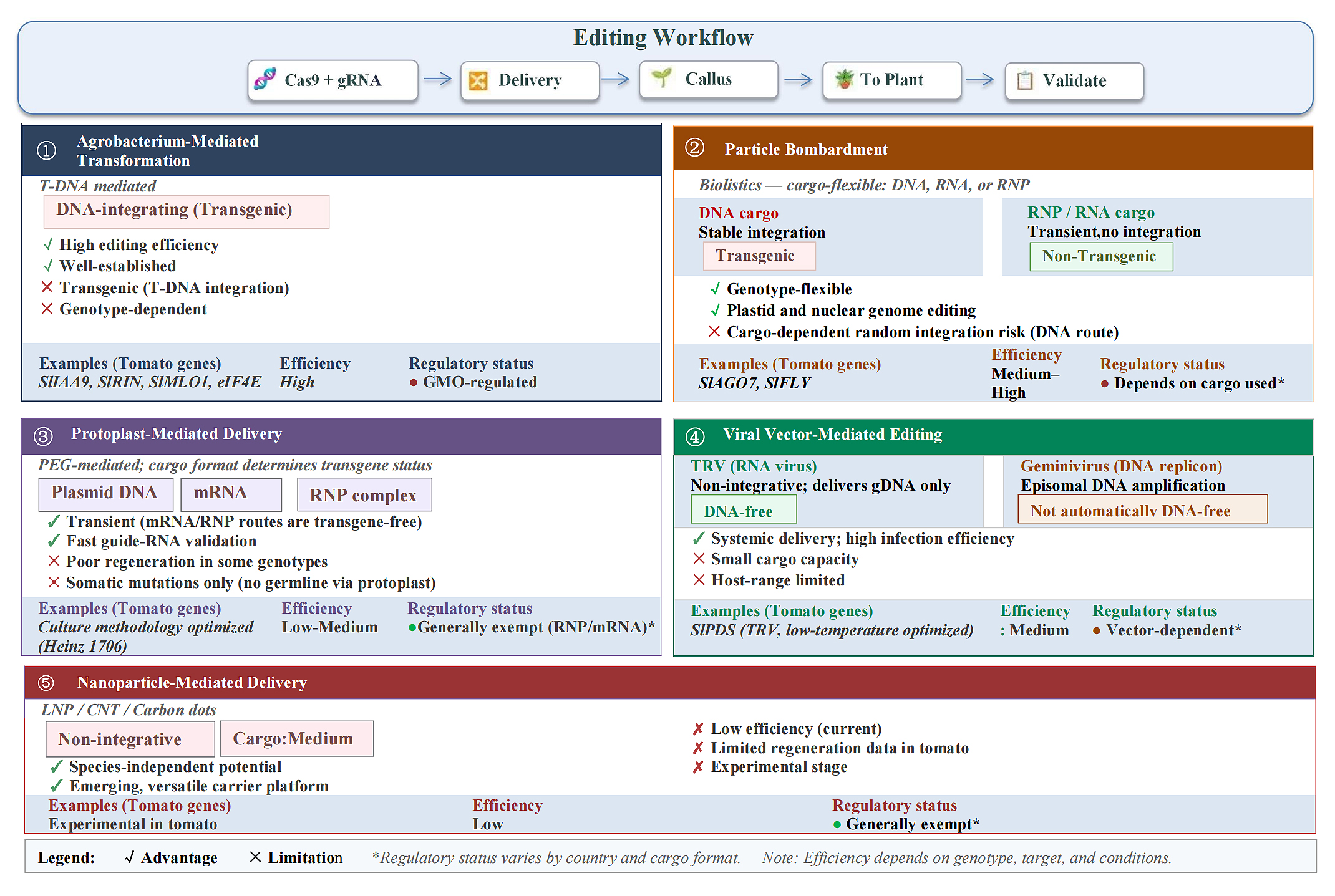 Figure 1.
CRISPR/Cas9 delivery strategies for tomato genome editing. Five delivery routes are compared, Agrobacterium-mediated transformation, particle bombardment, protoplast-mediated delivery, viral vectors, and nanoparticles, across key qualitative attributes including integration type (stable, transient, or non-integrative), cargo capacity, transgenic/non-transgenic status, advantages, and limitations. Particle bombardment and protoplast-mediated delivery are each shown with their cargo-dependent outcomes (DNA-integrating vs. RNP/RNA-mediated transient editing), and viral vectors are split by vector type, since TRV (RNA virus) is genuinely DNA-free whereas geminivirus-based systems are DNA replicons and are not automatically DNA-free. Example tomato genes edited via each platform are indicated. The editing workflow from CRISPR component assembly through phenotypic validation is shown at the top.
Figure 1.
CRISPR/Cas9 delivery strategies for tomato genome editing. Five delivery routes are compared, Agrobacterium-mediated transformation, particle bombardment, protoplast-mediated delivery, viral vectors, and nanoparticles, across key qualitative attributes including integration type (stable, transient, or non-integrative), cargo capacity, transgenic/non-transgenic status, advantages, and limitations. Particle bombardment and protoplast-mediated delivery are each shown with their cargo-dependent outcomes (DNA-integrating vs. RNP/RNA-mediated transient editing), and viral vectors are split by vector type, since TRV (RNA virus) is genuinely DNA-free whereas geminivirus-based systems are DNA replicons and are not automatically DNA-free. Example tomato genes edited via each platform are indicated. The editing workflow from CRISPR component assembly through phenotypic validation is shown at the top.
Agrobacterium tumefaciens–mediated transformation remains the primary method for stable CRISPR/Cas9 delivery in tomato. T-DNA vectors encoding Cas9 and guide RNAs are integrated into the host genome, typically via cotyledon or hypocotyl explants followed by regeneration under selection [2]. This system has enabled efficient editing of genes such as SlIAA9 and SlRIN, demonstrating its reliability for functional genomics and breeding applications [2,25]. However, stable integration of transgenic sequences may complicate regulatory approval and downstream commercialization.
Protoplast TransfectionProtoplast-based delivery supports transient expression of CRISPR components, thereby avoiding genomic integration. Polyethylene glycol (PEG)–mediated transfection with plasmid DNA, mRNA, or RNP complexes has been widely used for rapid guide RNA validation and mutation screening [26]. Tomato protoplasts have also been used for DNA-free RNP-mediated editing [27]. Although this approach offers speed and flexibility, its broader application is limited by inefficient plant regeneration and potential off-target effects associated with transient overexpression.
Particle Bombardment (Biolistics)Particle bombardment introduces CRISPR reagents via DNA- or RNP-coated microprojectiles and is less genotype-dependent than Agrobacterium-mediated transformation [28]. It can support both stable and transient editing and is particularly useful for recalcitrant cultivars. Nevertheless, lower transformation efficiency and tissue damage constrain routine use. Its utility in specialized applications, including plastid genome modification, highlights its technical versatility. Particle bombardment has also enabled chloroplast transformation in newly developed tomato cultivars, expanding organelle genome engineering potential [29].
Viral Vector DeliveryViral vectors provide systemic and often non-integrative delivery of CRISPR components. Tobacco rattle virus (TRV)–based systems and geminivirus-derived vectors have enabled efficient guide RNA expression for genome editing and transcriptional modulation in tomato [23,30,31]. These platforms offer high infection efficiency but are constrained by cargo size limitations and restricted host ranges.
TRV-mediated genome editing has recently been optimized for tomato, improving systemic delivery efficiency [32]. Editing efficiency via viral vectors may also be influenced by temperature conditions during delivery [33].
Ribonucleoprotein (RNP) Complex DeliveryDirect delivery of preassembled Cas9–gRNA RNP complexes represents a DNA-free editing strategy that reduces off-target risk and avoids stable transgene integration [26]. Delivery through protoplast transfection or biolistics aligns with regulatory frameworks distinguishing genome-edited from transgenic plants. However, efficient regeneration of edited tissues remains a major technical challenge.
Nanoparticle-Mediated DeliveryNanoparticle-based systems, including lipid nanoparticles and carbon nanotubes, are emerging as potential next-generation CRISPR delivery platforms [24]. These approaches aim to facilitate species-independent, non-integrative editing by enhancing cellular uptake of nucleic acids or proteins. Although still largely experimental in tomato, they may offer scalable alternatives to conventional transformation systems.
Comparative PerspectiveEach delivery method involves trade-offs among efficiency, integration status, genotype dependency, cost, and scalability. Agrobacterium-mediated transformation remains the benchmark for stable editing in tomato [2], whereas RNP-based and protoplast approaches provide integration-free alternatives [26,34,35]. Viral and nanoparticle systems represent innovative strategies with future potential [23,24]. Continued optimization of regeneration protocols and genotype responsiveness will be essential for broad application of genome editing in tomato breeding.
High throughput sgRNA validation has clarified determinants of Cas9 specificity and DNA repair outcomes in tomato cells [36]. CRISPR-mediated haplotyping approaches further broaden allele-specific editing capabilities [37].
Disease resistance is essential for sustainable tomato production. CRISPR/Cas9 has advanced both functional understanding and practical engineering of resistance by targeting susceptibility (S) genes, negative regulators of immunity, and host factors required for pathogen proliferation (Figure 2).
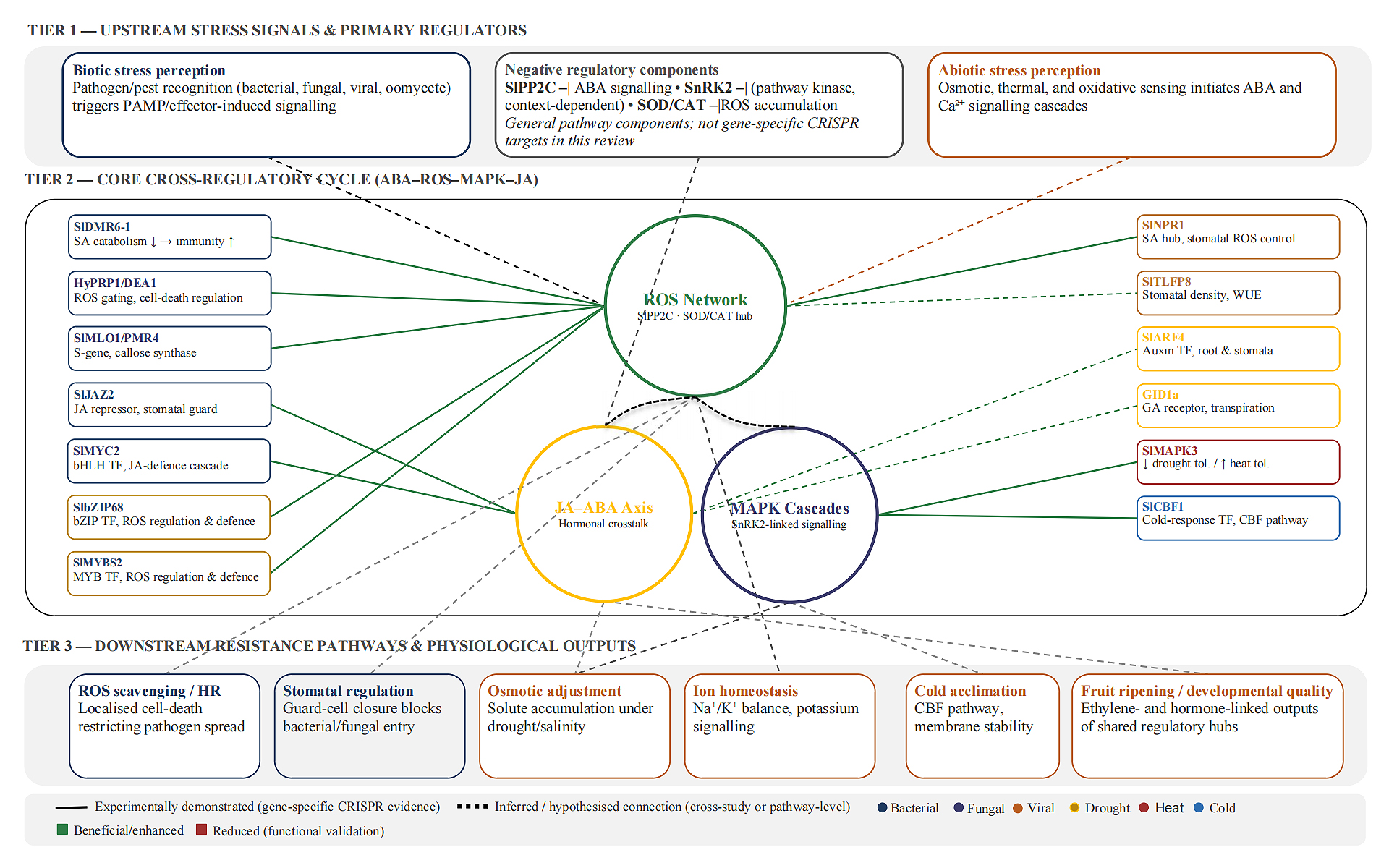 Figure 2.
Integrated regulatory map of the ABA/ROS/JA/MAPK signalling pathways in tomato and their connections to CRISPR-edited genes. The figure is organised into three hierarchical tiers: (TIER1) upstream stress signals and primary regulators, including biotic/abiotic stress-induced gene expression and negative regulatory components (SlPP2C, SnRK2, SOD/CAT); (TIER2) the core cross-regulatory cycle linking ABA, ROS, MAPK, and JA through interconnected signalling cascades and (TIER3) downstream stress resistance pathways (ROS scavenging, stomatal regulation, NLR immune activation) and physiological/developmental outputs (fruit ripening, osmotic adjustment, ion homeostasis, cold acclimation)—the observed phenotypic outcomes in CRISPR-edited tomato lines. CRISPR-edited genes are indicated throughout with red badges (e.g., SlMAPK3, SlNPR1, SlDMR6-1, HyPRP1, SlJAZ2, SlMYC2, SlARF4, GID1a, SlCBF1). The context-dependent divergence of SlMAPK3 knockout, reducing drought tolerance while enhancing heat tolerance, is highlighted to illustrate the stress-specific nature of shared regulatory hubs. Solid connector lines denote relationships with direct, gene-specific CRISPR evidence from a single study; dashed lines denote inferred or hypothesised connections, including all cross-hub links within the core cycle and all links to the upstream and downstream tiers that have not been experimentally tested as an integrated pathway.
Figure 2.
Integrated regulatory map of the ABA/ROS/JA/MAPK signalling pathways in tomato and their connections to CRISPR-edited genes. The figure is organised into three hierarchical tiers: (TIER1) upstream stress signals and primary regulators, including biotic/abiotic stress-induced gene expression and negative regulatory components (SlPP2C, SnRK2, SOD/CAT); (TIER2) the core cross-regulatory cycle linking ABA, ROS, MAPK, and JA through interconnected signalling cascades and (TIER3) downstream stress resistance pathways (ROS scavenging, stomatal regulation, NLR immune activation) and physiological/developmental outputs (fruit ripening, osmotic adjustment, ion homeostasis, cold acclimation)—the observed phenotypic outcomes in CRISPR-edited tomato lines. CRISPR-edited genes are indicated throughout with red badges (e.g., SlMAPK3, SlNPR1, SlDMR6-1, HyPRP1, SlJAZ2, SlMYC2, SlARF4, GID1a, SlCBF1). The context-dependent divergence of SlMAPK3 knockout, reducing drought tolerance while enhancing heat tolerance, is highlighted to illustrate the stress-specific nature of shared regulatory hubs. Solid connector lines denote relationships with direct, gene-specific CRISPR evidence from a single study; dashed lines denote inferred or hypothesised connections, including all cross-hub links within the core cycle and all links to the upstream and downstream tiers that have not been experimentally tested as an integrated pathway.
Bacterial pathogens such as Pseudomonas syringae pv. tomato, Ralstonia solanacearum, and Xanthomonas spp. cause substantial yield losses. CRISPR/Cas9-mediated editing has revealed key regulatory nodes in tomato immunity.
Targeted disruption of SlJAZ2 generated Sljaz2Δjas mutants resistant to coronatine-mediated stomatal reopening, effectively blocking bacterial entry without impairing normal stomatal function [38]. Importantly, resistance was specific and did not compromise responses to necrotrophic fungi, demonstrating the precision of regulatory editing.
More recently, CRISPR/Cas9-mediated editing of Bs5 and Bs5L conferred resistance against Xanthomonas species, further expanding susceptibility gene targeting strategies [39].
HyPRP1 has been previously characterized as a dual regulator of cell death and basal immunity [40]. Similarly, knockout of negative regulators such as HyPRP1 and DEA1 enhanced resistance to R. solanacearum and Xanthomonas spp, partly through modulation of defence gene expression and reactive oxygen species (ROS) dynamics [41]. Editing of the susceptibility gene SlDMR6-1 further conferred broad-spectrum resistance to multiple bacterial pathogens without detectable growth penalties [42], highlighting salicylic acid–mediated defence amplification as a central mechanism.
Collectively, these studies illustrate how CRISPR-mediated modification of regulatory and susceptibility genes can enhance bacterial resistance while maintaining plant fitness.
Fungal and Oomycete ResistanceFungal and oomycete pathogens, including Oidium neolycopersici, Phytophthora infestans (an oomycete rather than a true fungus), and Fusarium oxysporum remain major threats to tomato production. Genome editing has enabled precise targeting of genes associated with susceptibility and defence regulation.
Powdery MildewDisruption of the susceptibility gene SlMlo1 conferred durable resistance to powdery mildew in non-transgenic tomato [43]. Editing of SlPMR4 reduced fungal biomass and haustorial development, although resistance was partial, indicating that complete immunity may require combinatorial targeting [43,44].
Late BlightFor late blight, CRISPR knockout of SlPMR4 reduced susceptibility [45], while simultaneous CRISPR/Cas9 editing of miR482b and miR482c enhanced resistance to Phytophthora infestans by derepressing nucleotide-binding leucine-rich repeat (NLR) immune genes [46]. Functional validation of transcription factors such as SlMYBS2 and SlbZIP68 further clarified their roles in ROS regulation and defence gene activation [47,48]. Beyond late blight, CRISPR/Cas9-mediated knockout of SlMYC2, a bHLH transcription factor central to jasmonate signalling, adversely affected resistance to the necrotrophic pathogen Botrytis cinerea, confirming the essential role of JA-mediated defence in grey mould resistance and demonstrating that SlMYC2 is a positive regulator of MeJA-induced fruit resistance [49].
Fusarium WiltDual knockout of Xylem sap protein 10 (XSP10) and SlSAMT, both negative regulators of immunity, significantly enhanced resistance to F. oxysporum, outperforming single-gene edits [50]. Editing additional regulators of resistance may further strengthen Fusarium wilt resistance. Transcripomic and expression profiling studies have identified WRKY transcription factors as differentially regulated components of tomato immunity, highlighting them as potential targets for future genome editing to improve resistance to Fusarium wilt in tomato [51]; loss of SlHyPRP1 and SlDEA1 enhanced resistance through modulation of ROS dynamics and cell death pathways [41]; and CRISPR-mediated mutation of DDTFR10/A, an ethylene-response element-binding protein (EREBP) family member, conferred increased Fusarium wilt tolerance by reprogramming ethylene-mediated defence signalling [52].
These examples demonstrate that multiplex editing of regulatory pathways can provide stronger and more durable fungal resistance than single-gene approaches, with expression profiling nominating WRKY genes as promising future editing candidates.
Viral ResistanceViral diseases, including those caused by tomato yellow leaf curl virus (TYLCV) and ToBRFV, pose persistent challenges. CRISPR/Cas9 strategies have targeted both antiviral defence components and host susceptibility factors.
Editing of RNA silencing–related genes and translation initiation factors such as Eukaryotic translation initiation factor 4E (eIF4E) has conferred resistance to several RNA viruses [53], although resistance remains virus-specific [54]. More recently, disruption of host factors required for tobamovirus replication, particularly SlTOM1 homologs, has provided strong resistance to ToBRFV. SlTOM1 and SlTOM3 encode tonoplast membrane proteins that are required for the assembly and function of tobamovirus replication complexes. CRISPR/Cas9-mediated disruption of these host factors interferes with viral replication and markedly reduces viral accumulation, thereby conferring durable resistance to ToBRFV [15]. Multiplex editing of multiple SlTOM1 family members eliminated detectable viral accumulation, illustrating the effectiveness of host-factor targeting for durable resistance.
A consolidated overview of CRISPR-based strategies against bacterial, fungal, and viral pathogens is presented in Figure 2. Together, these studies demonstrate that precision editing of susceptibility genes, regulatory hubs, and host compatibility factors provides a practical and increasingly breeding-oriented framework for enhancing disease resistance in tomato. This mechanistic foundation supports the extension of genome editing approaches to abiotic stress tolerance.
Abiotic stresses including drought, salinity, heat, and cold severely limit tomato productivity by disrupting physiological homeostasis and yield stability. CRISPR/Cas9 has enabled precise modification of genes involved in stress perception, hormonal signalling, redox regulation, and developmental control, providing a targeted alternative to conventional breeding approaches [55,56] (Figure 2).
Primary Stress Sensing and Signalling (Ca2+, ROS, MAPK Cascades)CRISPR-based approaches for drought and salinity mitigation across crops have been comprehensively reviewed [57]. In tomato, CRISPR-based editing has clarified how early signal-transduction components shape tomato’s response to abiotic stress. Knockout of SlMAPK3 resulted in enhanced drought sensitivity, confirming its role in coordinating ROS detoxification and stress-induced transcription under water deficit [56,58]. However, a separate study demonstrated that SlMAPK3 knockout enhances tolerance to heat stress by maintaining ROS homeostasis under elevated temperature [59]. This functional dichotomy, where loss of SlMAPK3 is detrimental under drought yet beneficial under heat, illustrates that MAPK signalling nodes operate in a stress context-dependent manner, with opposing outcomes that reflect the distinct ROS dynamics and hormonal environments of each stress type. Such findings caution against assuming that editing outcomes established in one stress context will generalise across stress conditions and argue for multi-stress phenotyping of edited lines. Similarly, SlNPR1 disruption impaired stomatal regulation and antioxidant capacity under drought [60], increased oxidative damage and reduced antioxidant capacity under cold conditions, and is implicated in redox regulation and ferulic acid (FA) metabolism [61], illustrating how a single SA/ROS-linked signalling node mediates divergent responses across stress contexts. Functional studies further revealed roles for SlAGL6, calcium-dependent protein kinases, and MAPK pathways more broadly in thermal adaptation [37,62,63]. Together, these primary sensing and signalling components, centred on Ca2+, ROS, and MAPK cascades, represent the earliest layer at which CRISPR-edited genes intersect with abiotic stress perception in tomato.
Transcriptional ReprogrammingDownstream of primary sensing, several CRISPR-edited transcription factors reprogram gene expression to consolidate stress responses. Knockout of SlCBF1, a member of the CBF/DREB family of cold-responsive transcription factors, confirmed its central function in cold-responsive transcriptional regulation and chilling tolerance [55]. CRISPR-mediated knockout of SlBZR1, a brassinosteroid-signalling transcription factor, reduced heat stress tolerance and impaired ROS homeostasis under elevated temperature, confirming the role of the BR–FERONIA–ROS signalling axis in thermotolerance [64,65]. Knockout of SlLBD40, a lateral organ boundaries domain transcription factor, enhanced drought tolerance, likely through modulation of stomatal aperture and root system architecture [66]. These examples show that transcriptional reprogramming by CBF/DREB, brassinosteroid-, and LBD-family regulators forms a second, largely stress-specific layer that converts upstream sensing signals into coordinated downstream physiological adjustments.
Physiological and Ion-Transport ResponsesA further set of CRISPR-edited genes acts more directly on the physiological and ion-transport machinery that determines stress tolerance outcomes. Previous functional studies have identified SlSOS1 as a critical regulator of Na⁺ homeostasis and salinity tolerance in tomato [67]. Complementing these findings, knockout of SlHAK20, a potassium transporter, altered K⁺/Na⁺ homeostasis and modified salt tolerance responses, underscoring the importance of potassium signalling alongside sodium extrusion in salinity adaptation [68]. Editing of GID1a, encoding a gibberellin receptor, produced semi-dwarf plants with reduced transpiration and improved water-use efficiency while maintaining yield under field conditions [69]. Manipulation of SlTLFP8 further demonstrated that regulatory pathways affecting stomatal density and epidermal development can enhance drought resilience without compromising biomass or fruit size [70]. Multiplex editing strategies, including combinatorial modification of stress-responsive genes in Solanum pimpinellifolium, demonstrate the potential of coordinated genome editing to strengthen salinity resilience in cultivated tomato backgrounds [4,71]. These physiological consequences are agronomically significant: high temperature stress impairs tomato reproductive development and fruit set [72], and chilling stress significantly reduces tomato yield and fruit quality [73,74], underscoring why ion-transport and water-relations traits are priority targets for editing. The pipecolic acid (Pip) biosynthetic pathway provides a further, redox-linked route to drought tolerance: CRISPR/Cas9 knockout of SlALD1 dramatically increased drought resistance by enhancing CO2 assimilation, photosystem activity, and antioxidant enzyme activity while reducing ROS accumulation and lipid peroxidation, whereas knockout of the downstream gene SlFMO1 increased drought sensitivity, indicating that conversion of Pip to N-hydroxypipecolic acid (NHP) mitigates the otherwise detrimental effect of Pip accumulation on drought tolerance [75].
Hormonal CrosstalkA final group of CRISPR-edited genes acts through cross-talk among ABA, auxin, gibberellin, and other hormonal pathways. CRISPR-mediated knockout of SlARF4, an auxin response factor, enhanced drought tolerance by modulating stomatal conductance and root architecture [76], and CRISPR/Cas9-mediated disruption of SlARF4 together with the negative regulator SlHyPRP1 enhanced salt tolerance by improving root architecture and reducing transpiration [41,77–79]. Notably, editing of HyPRP1 improved both salinity and heat tolerance, highlighting shared regulatory mechanisms across stress types and its role as a hormonal-crosstalk hub rather than a single-pathway component [41,78,79]. Editing of regulatory components such as heat-shock promoter elements has been proposed as a strategy to enhance heat shock protein (HSP) expression and thermotolerance; prime editing–mediated insertion of heat shock elements into endogenous promoters represents a promising precision approach to reinforce heat-responsive transcription [80]. Collectively, these findings illustrate that auxin, gibberellin, and heat-shock signalling intersect with the core ABA/JA axis discussed in Section “Synthesis and Outlook” to shape the final stress-tolerance phenotype.
Synthesis and OutlookTaken together, the CRISPR/Cas9 studies reviewed here suggest a striking degree of mechanistic overlap between the signalling networks that govern biotic resistance and those that underpin abiotic stress tolerance in tomato. Rather than representing parallel and independent programmes, these pathways appear, based on studies conducted independently, in different genetic backgrounds, and under single-stress conditions, to converge on a set of shared regulatory hubs that could represent high-value targets for simultaneous improvement of both trait domains. We present this apparent convergence as a hypothesis-generating conceptual framework rather than an experimentally validated strategy; direct combined-stress and sequential-stress experiments in a common genetic background will be required to test whether these hubs can, in practice, be exploited to improve both trait domains at once. The most prominent shared hub is the ROS signalling network. Reactive oxygen species function both as defence-activating signals during pathogen challenge and as damage mediators under drought, heat, and cold stress. CRISPR knockout of SlDMR6-1 amplifies salicylate-mediated ROS signalling to confer broad-spectrum bacterial resistance [42], while knockout of SlNPR1, a central SA signalling node, impairs ROS homeostasis under both drought [60] and cold stress [61]. Disruption of HyPRP1, a negative regulator of cell death and basal immunity, simultaneously enhanced disease resistance and abiotic stress tolerance [41], making it one of the more promising candidates for benefits across both stress domains, though, as with the other hubs discussed here, this has been shown only in separate single-stress assays rather than under combined or sequential stress. These examples indicate that the ROS regulatory network does not simply respond to individual stresses in isolation but acts as an integrating interface between immune activation and environmental stress adaptation.
A second major convergence point is the JA–ABA hormonal axis. Jasmonic acid (JA) is a central regulator of both wounding and pathogen defence responses, while abscisic acid (ABA) governs stomatal closure and osmotic adjustment under drought and salinity. These pathways are interconnected: ABA can potentiate JA-mediated defence responses, and JA signalling can modulate stomatal behaviour relevant to abiotic stress. Editing of SlJAZ2, a repressor of JA signalling, prevented coronatine-mediated stomatal reopening exploited by Pseudomonas syringae [38], yet SlJAZ proteins also interact with ABA signalling components that regulate stomatal closure under drought. Similarly, SlMYC2 knockout reduced JA-mediated resistance to Botrytis cinerea [49], while MYC2 orthologues in other species are known to integrate ABA-mediated drought responses. Mechanistic studies that directly dissect the ABA–JA interaction nodes in tomato using CRISPR would clarify whether targeted editing at these intersection points can simultaneously enhance pathogen resistance and drought performance.
MAPK cascades constitute a third convergent hub. SlMAPK3 knockout enhances drought sensitivity but improves heat tolerance [56,59], revealing that MAPK modules integrate stress signals in a context-dependent manner rather than functioning as uniform stress amplifiers. MAPK pathway components are also recruited during pathogen recognition downstream of pattern-triggered immunity (PTI) receptors. This dual functionality means that MAPK-targeted editing strategies must account for potential trade-offs between disease resistance and specific abiotic stress responses, a consideration that multiplex or allele-specific editing approaches may help resolve.
A recurring and encouraging finding across both biotic and abiotic studies is that targeted editing of regulatory genes can confer substantial resilience improvements with limited agronomic penalties. For abiotic tolerance, genotypes such as GID1a, HyPRP1, and SlTLFP8 exhibited improved performance without growth or yield trade-offs under controlled conditions [69,70]. For biotic resistance, SlJAZ2 editing conferred bacterial speck resistance without impairing normal stomatal function or defence against necrotrophic fungi [38], and SlDMR6-1 knockout provided broad-spectrum resistance without detectable growth penalties [42]. These examples suggest that editing regulatory nodes rather than core metabolic enzymes may be a particularly productive strategy for combining stress resilience with maintained productivity. Nevertheless, most evaluations to date have tested single stresses individually, under controlled-environment conditions, and in isolated genetic backgrounds; combined-stress and sequential-stress experiments, followed by multi-environment field validation, will be essential to determine whether the shared regulatory hubs proposed here can be exploited for simultaneous trait improvement before any such strategy is deployed in commercial breeding programmes. Future progress will likely rely on exploiting these mechanistic convergences through multiplex editing strategies that simultaneously target shared hubs, such as ROS regulators, SA/JA pathway components, and MAPK modules to stack biotic resistance with abiotic stress tolerance within a single edited genotype. Promoter engineering and precision platforms such as base and prime editing will further enable fine-tuning of regulatory elements to achieve context-specific gene expression without complete loss of function. Integration of CRISPR perturbation data with multi-omics frameworks and co-expression network analyses will be essential for identifying additional convergence nodes and predicting editing outcomes across stress combinations, ultimately supporting the development of tomato cultivars with durable, broad-based resilience.
Beyond stress resistance, CRISPR/Cas9 has substantially advanced functional genomics in tomato, and the editing strategies validated through this work, targeted knockout, promoter engineering, transcriptional modulation, and multiplex approaches, directly inform stress-related target discovery. The examples below are included primarily to illustrate these strategies rather than as a general survey of tomato functional genomics; where an example was developed for a non-stress trait, its relevance here lies in the editing strategy demonstrated rather than the specific trait itself [2,7,8].
Targeted Gene Disruption for Functional AnalysisCRISPR/Cas9-mediated gene knockouts have accelerated the establishment of causal genotype–phenotype relationships, as illustrated by disruption of SlMIR164A (fruit development and organ boundary formation via microRNA-mediated regulation; [81]) and of SlDELLA (gibberellin signalling affecting plant stature and fruit set; [82]). The same targeted-knockout strategy underlies the stress-resistance genes discussed in Sections “CRISPR/Cas9-Mediated Disease Resistance in Tomato” and “CRISPR/Cas9-Mediated Stress Tolerance in Tomato”.
Regulatory Genome EngineeringCRISPR/Cas9 has expanded functional genomics beyond coding regions through promoter editing and programmable transcriptional control. Targeted modification of the SlKNUCKLES promoter identified cis-regulatory elements required for meristem maintenance and precise transcriptional regulation [83]. In addition, catalytically inactive dCas9 variants enable transcriptional activation (CRISPRa) or repression (CRISPRi), facilitating gene dosage studies without permanent sequence disruption. For example, CRISPRa-mediated upregulation of SlPAL2 modulated ethylene signalling and fruit ripening processes [84].
Functional Analysis of Non-Coding RNAs and Epigenetic RegulatorsGenome editing has also enabled investigation of long non-coding RNAs (lncRNAs) and epigenetic regulators, including some with roles in stress responses as well as in ripening-associated pathways [85]; their relevance to stress-response regulation is considered further in Section “Synthesis and Outlook”.
Multiplex Editing and Systems IntegrationMultiplex genome editing has facilitated high-throughput functional screening in tomato, enabling simultaneous interrogation of gene families and resolution of functional redundancy [86]. Integration of CRISPR-based validation with transcriptomic and co-expression analyses strengthens causal inference and accelerates translation of genomic discoveries into biological and agronomic insights.
Collectively, CRISPR-driven functional genomics complements stress-oriented editing strategies by expanding the toolkit for precision trait development in tomato. These approaches provide a mechanistic foundation for knowledge-based breeding and fine-tuning of complex agronomic traits.
While CRISPR/Cas9-mediated gene knockouts remain central to tomato genome engineering, emerging editing platforms are expanding the precision, flexibility, and translational potential of genetic modification (Figure 3). These next-generation tools enable defined nucleotide substitutions, programmable gene regulation, alternative nuclease targeting, and non-integrative delivery strategies, thereby complementing conventional editing approaches.
Base editing technologies permit single-nucleotide conversions without inducing double-strand breaks. Cytosine and adenine base editors (ABE) have been successfully applied in tomato to introduce targeted point mutations that modify protein function or mimic naturally occurring alleles [87]. By minimizing indel formation and reducing unintended genomic alterations, base editing is particularly suited for fine-tuning quantitative traits and functional dissection where complete gene knockout may be undesirable.
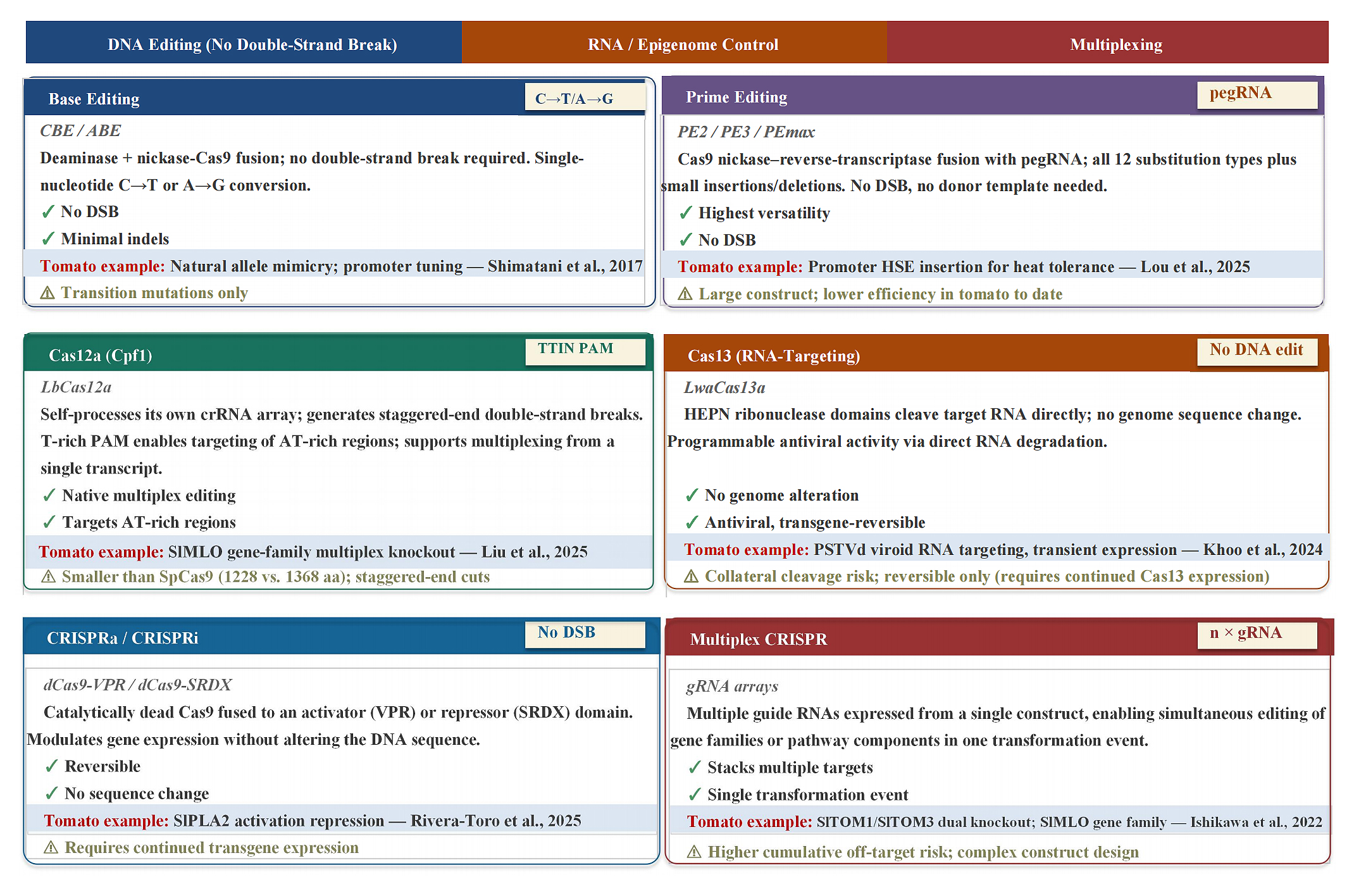 Figure 3.
Emerging CRISPR-based platforms for precision genome engineering in tomato. Six next-generation tools are presented, base editing (CBE/ABE), prime editing (PE2/PE3/PEmax), Cas12a/Cpf1, Cas13 RNA targeting, CRISPRa/CRISPRi, and multiplex CRISPR, organised by functional category: DNA editing without double-strand breaks, RNA/epigenomic control, and multiplexing strategies. For each platform, the molecular mechanism, key advantages, known limitations, and tomato-specific application example with primary reference are provided. All platforms extend the editing toolkit beyond conventional Cas9-mediated knockout, enabling precise allele engineering, transcriptional modulation, and simultaneous multi-gene editing relevant to both biotic resistance and abiotic stress improvement in tomato.
Figure 3.
Emerging CRISPR-based platforms for precision genome engineering in tomato. Six next-generation tools are presented, base editing (CBE/ABE), prime editing (PE2/PE3/PEmax), Cas12a/Cpf1, Cas13 RNA targeting, CRISPRa/CRISPRi, and multiplex CRISPR, organised by functional category: DNA editing without double-strand breaks, RNA/epigenomic control, and multiplexing strategies. For each platform, the molecular mechanism, key advantages, known limitations, and tomato-specific application example with primary reference are provided. All platforms extend the editing toolkit beyond conventional Cas9-mediated knockout, enabling precise allele engineering, transcriptional modulation, and simultaneous multi-gene editing relevant to both biotic resistance and abiotic stress improvement in tomato.
Prime editing further broadens editing capabilities by enabling precise insertions, deletions, and diverse base substitutions through a Cas9 nickase–reverse transcriptase fusion system [88]. Although editing efficiencies in tomato remain variable and require optimization, prime editing offers considerable potential for promoter modification, allele refinement, and correction of specific mutations not readily achievable with conventional CRISPR/Cas9 systems.
Alternative CRISPR nucleases, such as Cas12a (Cpf1), expand targeting scope through recognition of T-rich protospacer adjacent motifs and intrinsic crRNA processing capability, facilitating efficient multiplex editing [89]. These properties are advantageous for coordinated modification of gene families and pathway-level engineering in tomato.
RNA-targeting systems, including Cas13, further extend the editing landscape by enabling programmable post-transcriptional regulation [90]. Although still at an early stage in tomato, RNA-guided approaches provide opportunities for transient gene modulation and antiviral applications without permanent genomic alteration.
In parallel, non-traditional delivery strategies such as nanoparticle-mediated transport of genome-editing reagents are being explored to reduce reliance on tissue culture and stable transformation [24]. While applications in tomato remain largely experimental, these approaches may facilitate scalable and transgene-free editing in diverse genetic backgrounds.
Collectively, these platforms signal a transition from predominantly knockout-based genome editing toward precision allele engineering and regulatory fine-tuning. Strategic selection among editing tools guided by trait architecture, breeding objectives, and regulatory considerations will enhance the deployment of genome editing for durable and high-performing tomato cultivars.
Summary of CRISPR/Cas9-Edited Genes for Biotic and Abiotic Stress Improvement in TomatoSummary of CRISPR/Cas9-edited genes for biotic resistance and abiotic stress tolerance in tomato are listed in Tables 1 and 2, respectively. Biotic entries cover bacterial, fungal, and viral resistance targets; abiotic entries cover drought, salinity, heat, and cold tolerance targets. Phenotypic outcomes reflect the predominant edited-genotype phenotype reported in the cited study.
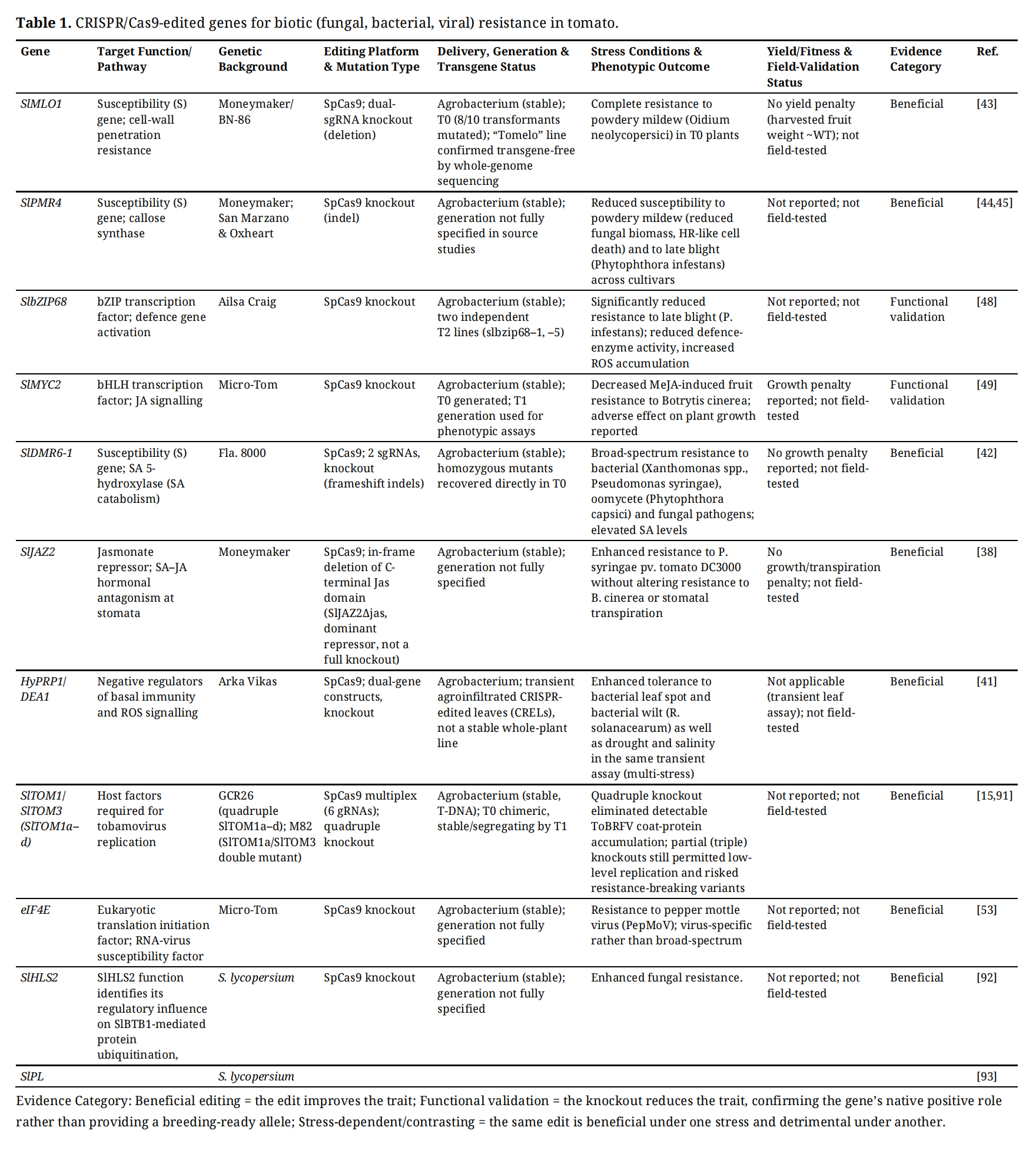 Table 1. CRISPR/Cas9-edited genes for biotic (fungal, bacterial, viral) resistance in tomato.
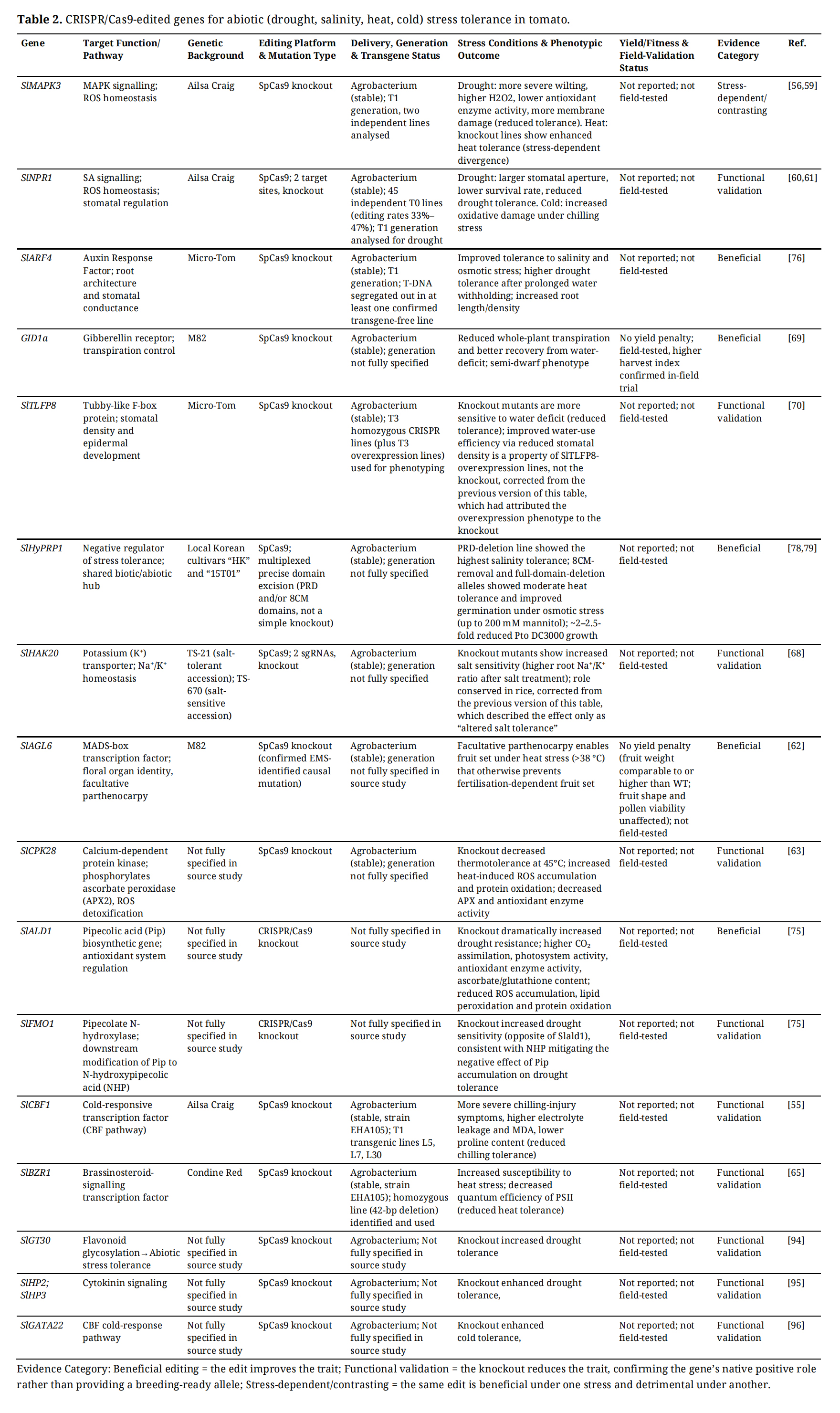 Table 2. CRISPR/Cas9-edited genes for abiotic (drought, salinity, heat, cold) stress tolerance in tomato.
The rapid evolution of CRISPR-based technologies has transformed tomato functional genomics and precision breeding. Nevertheless, several technical and translational challenges remain. Future progress will depend on enhanced editing accuracy, broader nuclease and editing platforms, efficient genotype-independent delivery systems, integration with systems biology frameworks, and clearer regulatory alignment. Addressing these factors will determine the scalability and long-term impact of genome editing in tomato improvement.
Improving Editing PrecisionAlthough CRISPR/Cas9 exhibits high targeting efficiency in tomato, minimizing off-target effects remains important for research rigor and breeding deployment. High-fidelity Cas9 variants such as SpCas9-HF1 and eCas9 have demonstrated reduced non-specific cleavage while retaining on-target activity [97,98]. Continued optimization of guide RNA design, supported by tomato-specific genomic datasets and predictive algorithms, will further enhance editing reliability.
Refinements in base and prime editing are expected to narrow editing windows, reduce bystander mutations, and increase efficiency, thereby enabling precise allele modification without double-strand breaks. Such improvements will be particularly valuable for quantitative trait optimization and promoter engineering.
Overcoming Delivery and Regeneration ConstraintsDelivery and regeneration remain critical bottlenecks, particularly for elite commercial cultivars. Advances in nanoparticle-mediated delivery, viral vectors with expanded cargo capacity, and in planta transformation strategies may reduce reliance on genotype-dependent tissue culture systems. Parallel improvements in regeneration protocols, through optimized media formulations and the use of developmental regulators, will broaden the applicability of genome editing across diverse tomato backgrounds.
Genotype-independent editing platforms will be essential for accelerating trait deployment in breeding programs.
Integration with Multi-Omics and Predictive AnalyticsFuture tomato genome engineering will increasingly operate within systems-level frameworks. Integration of CRISPR perturbation studies with genomics, transcriptomics, metabolomics, and epigenomics will refine causal links between genotype and phenotype. Such approaches will improve the identification of high-value targets for stress tolerance, fruit quality, and yield stability.
Artificial intelligence and machine-learning tools are expected to enhance candidate gene prioritization, gRNA design, pathway modelling, and phenotypic prediction. Data-integrated editing pipelines may shorten breeding cycles and increase selection efficiency.
Advancing Transgene-Free EditingTransgene-free genome editing, achieved through ribonucleoprotein delivery or transient expression systems, represents an important direction for commercial deployment. DNA-free editing approaches reduce concerns associated with foreign DNA integration and may align more closely with regulatory frameworks that distinguish certain genome-edited crops from conventional genetically modified organisms.
Optimizing such systems in tomato will facilitate broader acceptance and streamline cultivar release pathways.
Regulatory and Societal ConsiderationsRegulatory classification of genome-edited crops varies across jurisdictions, creating uncertainty for commercialization and international trade [99]. Harmonization of science-based regulatory criteria would support global collaboration and reduce deployment barriers. Transparent communication of benefits, limitations, and safety assessments will remain essential for public trust and market acceptance.
OutlookCollectively, improvements in editing precision, delivery systems, computational integration, and regulatory clarity are redefining tomato breeding strategies. Genome editing is transitioning from a predominantly functional genomics tool to an integral component of modern breeding pipelines. As technical constraints are progressively resolved, CRISPR-based approaches will increasingly enable the development of tomato cultivars that combine stress resilience, productivity, and nutritional enhancement within sustainable production systems. Stress domains not yet addressed by tomato-specific CRISPR studies at the time of writing, including insect herbivory, nematode parasitism beyond the host-factor targeting noted in Section “Introduction”, heavy-metal toxicity, and high-light/photooxidative stress, represent important frontiers for future gene-editing research as suitable target genes and phenotyping pipelines become available. For insect resistance specifically, CRISPR-based mutant-library screening has already identified candidate resistance genes in other crops (e.g., the cotton CDPK gene family; [100]), suggesting a feasible path for analogous tomato-specific studies.
CRISPR/Cas9-based genome editing has emerged as a transformative platform for both dissecting and engineering biotic resistance and abiotic stress tolerance in tomato. For disease resistance, precision disruption of susceptibility genes (SlMlo1, SlDMR6-1, SlJAZ2), negative immune regulators (HyPRP1, DEA1), and host compatibility factors (SlTOM1 homologs, eIF4E) has demonstrated that targeted editing of regulatory and defence hubs can confer durable, broad-spectrum resistance against bacterial, fungal, and viral pathogens with minimal fitness costs. For abiotic stress tolerance, precise manipulation of genes governing osmotic adjustment, ion homeostasis, hormonal signalling, ROS detoxification, and transcriptional regulation has accelerated functional validation of stress-responsive pathways and facilitated targeted improvement of drought, salinity, heat, and cold resilience. As highlighted throughout this review (Sections “Comparative Perspective” and “Overcoming Delivery and Regeneration Constraints”), the effectiveness of CRISPR-mediated engineering, whether targeting biotic resistance or abiotic stress tolerance, depends not only on target gene selection but also on delivery strategy and regeneration efficiency, with strategic platform selection critical for translating laboratory findings into stable, resistant, and stress-tolerant cultivars across diverse tomato genotypes. Importantly, the transition from single-gene knockouts toward multiplex editing, promoter modulation, and precision allele engineering is enabling more nuanced manipulation of both defence and stress-response networks. A recurring theme across biotic and abiotic contexts is the convergence of shared signalling hubs, including MAPK cascades, ROS networks, and JA/ABA crosstalk, which represent a hypothesis-generating framework for potential simultaneous improvement of resistance and tolerance, pending the combined-stress validation discussed in Section “Synthesis and Outlook”, with target prioritization to be further refined through the multi-omics integration described in Section “Integration with Multi-Omics and Predictive Analytics”. As climate variability intensifies biotic and abiotic pressures on tomato production systems alike, CRISPR-based genome editing provides a rational and scalable framework for addressing both challenges within a unified breeding strategy. Continued advances in editing accuracy, delivery systems, and regulatory clarity will be essential for deploying cultivars that combine durable disease resistance with robust stress tolerance, capable of sustaining yield and quality under increasingly challenging and variable growing conditions.
No new datasets were generated or analysed during the current study. All data discussed in this review were obtained from previously published studies and are available in the references cited throughout the article.
RY and MGKJ designed the study. XS, KW, MG, YC and YW contributed to its development. All authors contributed to editorial duties for the manuscripts. All authors contributed text for the manuscript, RY combined those contributions and led the writing and editing and MGKJ conducted the final critical review. All authors approved the manuscript.
The authors declare that they have no conflicts of interest.
This research was funded by Xi’an Science and Technology Bureau General Project on Key Agricultural Technology Research: ‘Research on Key Biological Techniques for the Secondary Salinization Improvement of Facility Vegetable Field Soil’ under Grant No. 25NJSYB00045 and Shaanxi Provincial Key R&D Program: ‘Four Chains’ Integration of Qin Chuangyuan Industrial Innovation Cluster, No. 2025CY-JJQ-79.
1.
2.
3.
4.
5.
6.
7.
8.
9.
10.
11.
12.
13.
14.
15.
16.
17.
18.
19.
20.
21.
22.
23.
24.
25.
26.
27.
28.
29.
30.
31.
32.
33.
34.
35.
36.
37.
38.
39.
40.
41.
42.
43.
44.
45.
46.
47.
48.
49.
50.
51.
52.
53.
54.
55.
56.
57.
58.
59.
60.
61.
62.
63.
64.
65.
66.
67.
68.
69.
70.
71.
72.
73.
74.
75.
76.
77.
78.
79.
80.
81.
82.
83.
84.
85.
86.
87.
88.
89.
90.
91.
92.
93.
94.
95.
96.
97.
98.
99.
100.
Sun X, Wang K, Gao M, Wang Y, Cai Y, Jones MGK, et al. Genome Editing for Biotic and Abiotic Stress Resistance in Tomato: Advances Enabled by CRISPR/Cas Systems. Crop Breed Genet Genom. 2026;8(3):e260021. https://doi.org/10.20900/cbgg20260021.

Copyright © Hapres Co., Ltd. Privacy Policy | Terms and Conditions


