Location: Home >> Detail
Adv Geriatr Med Res. 2026;8(3):e260025. https://doi.org/10.20900/agmr20260025
 ,
Liz Oliveira 2 ,
Patricia Newman 3,*
,
Liz Oliveira 2 ,
Patricia Newman 3,*
1
2
3
*
Population aging is a major global demographic shift associated with an increased prevalence of chronic non-communicable diseases, particularly cardiovascular and neurodegenerative disorders. These conditions share common pathophysiological mechanisms, including oxidative stress, chronic inflammation, and impaired cellular homeostasis. Current therapeutic approaches in older adults are often complicated by high medication burden and associated adverse effects, underscoring the need for safer, multitarget strategies. Plant-derived bioactive compounds have emerged as promising candidates due to their chemical diversity and ability to modulate multiple molecular pathways simultaneously. This review critically evaluates the common and potentially molecular mechanisms of these compounds in vascular aging, endothelial dysfunction, and neurodegenerative diseases. Evidence from experimental and clinical studies demonstrates that natural products exert antioxidant, anti-inflammatory, vasodilatory, and neuroprotective effects. These actions are primarily mediated through the reduction of reactive oxygen species, inhibition of nuclear factor kappa B (NF-κβ) signaling, enhancement of nitric oxide bioavailability, preservation of mitochondrial function, and attenuation of pathological protein aggregation, including β-amyloid and α-synuclein. A wide range of medicinal plants, such as Curcuma longa, Allium sativum, Astragalus membranaceus, Nigella sativa, Centella asiatica, Moringa oleifera, and Withania somnifera, exhibit consistent protective effects across both cardiovascular and neurological systems. These findings support the concept that antioxidant and anti-inflammatory pathways constitute a unifying framework linking aging to chronic disease progression. Despite promising evidence, challenges related to bioavailability, standardization, and clinical validation remain. Future research integrating advanced pharmacological and systems biology approaches will be essential to facilitate translation into clinical practice and promote healthy aging.
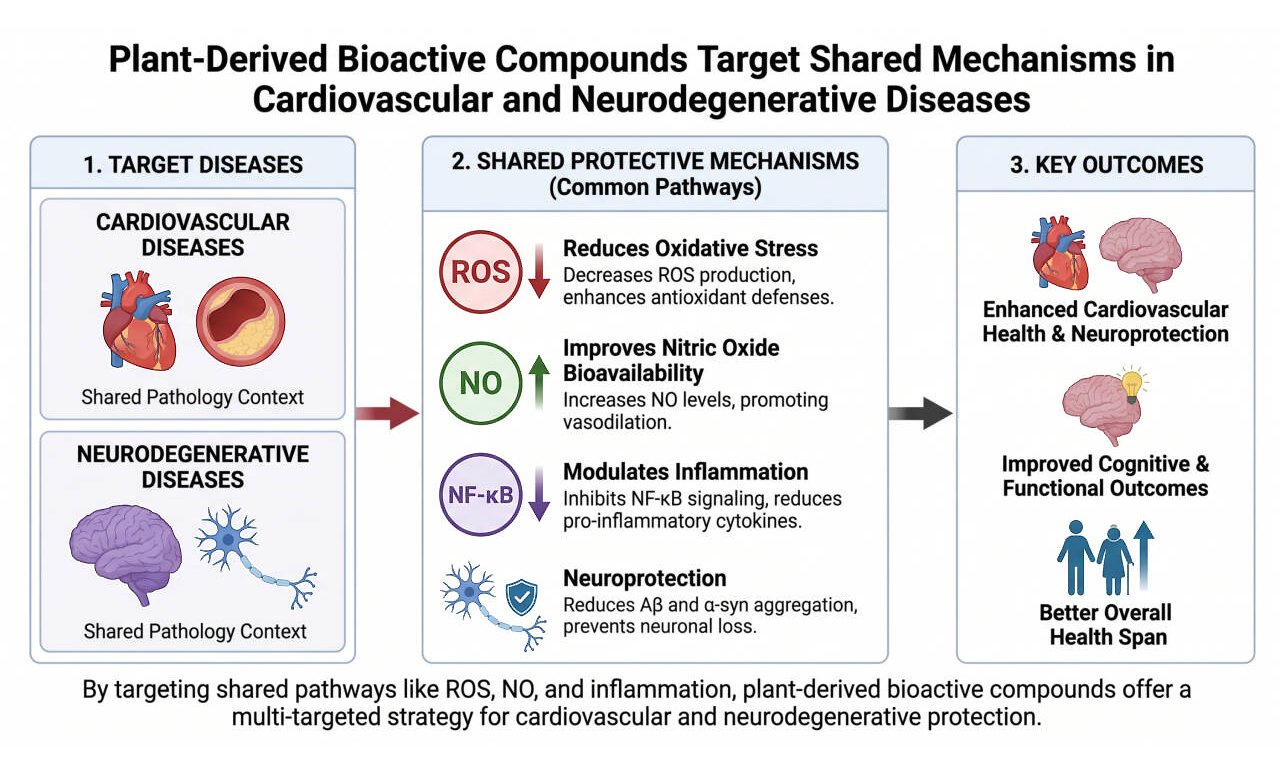
Population aging represents one of the most significant demographic transitions worldwide and is accompanied by a substantial rise in the prevalence of chronic, non-communicable diseases, particularly among older adults. According to global reports, the proportion of individuals aged ≥ 65 years continues to increase, contributing to a higher burden of cardiovascular and neurodegenerative disorders and posing major challenges for healthcare systems [1,2]. This process is characterized by a progressive decline in physiological function, including genomic instability, mitochondrial dysfunction, chronic inflammation, and oxidative stress—key mechanisms that drive the development and progression of age-related diseases. Importantly, these hallmarks of aging form a shared pathophysiological framework underlying both cardiovascular and neurodegenerative diseases, highlighting common therapeutic targets across these conditions [3].
In clinical practice, the management of age-related diseases largely relies on long-term pharmacological therapies. However, polypharmacy is highly prevalent in older populations and is associated with an increased risk of adverse drug reactions, drug–drug interactions, reduced adherence, and diminished therapeutic efficacy [4]. These limitations have stimulated growing interest in alternative and complementary strategies to prevent disease onset and to target multiple pathogenic pathways simultaneously [5].
In this context, medicinal plants and their bioactive compounds have gained considerable attention due to their chemical diversity and broad spectrum of biological activities. Unlike conventional single-target drugs, plant-derived compounds often exhibit multitarget properties, modulating several key processes involved in aging and disease progression, including oxidative stress, inflammation, mitochondrial dysfunction, and metabolic dysregulation [6,7]. This pleiotropic nature is particularly advantageous in aging, where complex and overlapping mechanisms drive disease development.
Accumulating experimental and clinical evidence supports the beneficial effects of plant-derived bioactive compounds in reducing cardiovascular risk associated with modulation of metabolic processes [8]. For instance, compounds derived from Curcuma longa, Allium sativum, and Crocus sativus have demonstrated antioxidant, anti-inflammatory, neuroprotective, and antihypertensive properties. These effects are largely mediated through the modulation of shared molecular pathways implicated in both cardiovascular and neurodegenerative diseases, reinforcing their relevance as multitarget therapeutic agents [9–12].
Therefore, this review aims to critically examine the evidence for plant-derived bioactive compounds as multitarget agents in aging, focusing on the identification of common molecular and cellular mechanisms that contribute to both cardiovascular and neurodegenerative diseases. Particular emphasis is placed on convergent pathways and on how plant-derived compounds modulate interconnected processes across cardiovascular and neurological systems. By integrating evidence from both disease contexts, this review seeks to identify shared biological targets and mechanistic patterns that may explain the broad protective effects of plant-derived bioactive compounds and inform their translational potential for the prevention and management of age-related diseases.
Vascular aging is a central component of the aging process and represents a critical link between biological aging and the development of cardiovascular diseases. Among the underlying mechanisms, endothelial dysfunction has been identified as a key early event in the pathogenesis of atherosclerosis and hypertension, serving as both a marker and mediator of vascular damage [13,14]. Given the multifactorial nature of vascular aging, therapeutic strategies that target multiple molecular pathways simultaneously are of particular interest. In this context, plant-derived bioactive compounds have emerged as promising candidates due to their effects on vascular homeostasis.
Age-related endothelial dysfunction is characterized by increased production of reactive oxygen species (ROS), reduced nitric oxide (NO) bioavailability, chronic low-grade inflammation, and activation of pro-inflammatory signaling pathways such as nuclear factor kappa B (NF-κβ) [15,16]. These alterations promote structural and functional changes in the vascular wall, including arterial stiffness, impaired endothelium-dependent vasodilation, lipid accumulation, and progression of atherosclerotic plaques, ultimately leading to elevated blood pressure and increased cardiovascular risk [17,18].
In addition, aging is associated with dysregulation of lipid metabolism, mitochondrial dysfunction, and exacerbated oxidative stress, all of which further contribute to endothelial injury and the progression of hypertension [19]. Persistent activation of inflammatory pathways, particularly NF-κβ signaling, together with redox imbalance, plays a pivotal role in the pathophysiology of age-related vascular disease [20,21].
Within this framework, plant-derived bioactive compounds have been extensively investigated for their antioxidant, anti-inflammatory, vasodilatory, and lipid-modulating properties [22,23]. The medicinal plants summarized in Table 1 demonstrate mechanisms that closely align with the pathophysiology of vascular aging, primarily through reducing oxidative stress, attenuating inflammation, improving endothelial function, and reducing blood pressure.
Several plant species—including Nigella sativa [24], Echinodorus grandiflorus [25], Cassia occidentalis [26], Allium sativum [27], Moringa oleifera [28], Punica granatum [29], Crocus sativus [12] and Rhus coriaria [30] contain bioactive compounds with well-documented antioxidant and anti-inflammatory effects that can mitigate oxidative stress–induced endothelial damage. Additional evidence also supports relevant vascular effects of Fuchsia magellanica [31].
Lipid-lowering and anti-atherosclerotic activities have been particularly described for Allium sativum [27], Rhus coriaria [30], and Curcuma longa [32] suggesting their potential role in modulating lipid metabolism and preventing atherosclerotic plaque formation.
Vasodilatory effects—essential for the regulation of vascular tone and blood pressure—have been reported for Apocynum venetum [26], Rauwolfia serpentina [33], Pinus pinaster [34], and Agelanthus dodoneifolius [35]. These effects are commonly associated with enhanced NO signaling and reduced peripheral vascular resistance. Furthermore, additional cardiovascular benefits such as cholesterol reduction and heart rate modulation have been observed for Allium sativum [27] while Bursera simaruba has demonstrated vasodilatory and cardioprotective properties [26].
Analysis of the bioactive compounds identified in these plants indicates that their beneficial effects are largely mediated by secondary metabolites with vascular protective properties. These include thymoquinone and polyphenols from Nigella sativa [24], flavonoids from Echinodorus grandiflorus [25], S-allylcysteine from Allium sativum [27], phenolic acids and glucosinolates from Moringa oleifera [28], anthocyanins and tannins from Punica granatum [29], safranal from Crocus sativus [12] tannins from Rhus coriaria [30,36], and curcuminoids from Curcuma longa [32].
Other vasoactive constituents include reserpine from Rauwolfia serpentina [33], proanthocyanidins from Pinus pinaster [34], and dodoneine from Agelanthus dodoneifolius [35]. These compounds exert antioxidant, anti-inflammatory, lipid-lowering, and vasodilatory effects, frequently through mechanisms involving inhibition of NF-κβ signaling, enhancement of NO bioavailability, and attenuation of oxidative stress.
Taken together, the evidence summarized in Table 1 demonstrates that plant-derived bioactive compounds act through multiple interconnected molecular pathways involved in vascular aging, endothelial dysfunction, hypertension, and cardiovascular disease. These mechanisms include the reduction of oxidative stress, reported for 78% of the medicinal plants evaluated; modulation of lipid metabolism, as demonstrated for Allium sativum L.; anti-inflammatory activity, reported for 71% of the plants; improvement of endothelium-dependent vasodilation, observed for 92%; and regulation of NF-κβ signaling, identified in 42.8% of the plants. Collectively, these findings support the potential of plant-derived bioactive compounds as complementary strategies for mitigating vascular dysfunction and reducing cardiovascular complications associated with aging.
Table 1 summarizes the available evidence, including the plant sources, bioactive compounds or extracts, proposed mechanisms of action, experimental models, and levels of evidence supporting their roles in atherosclerosis, cardiovascular protection, hypertension, and endothelial dysfunction.
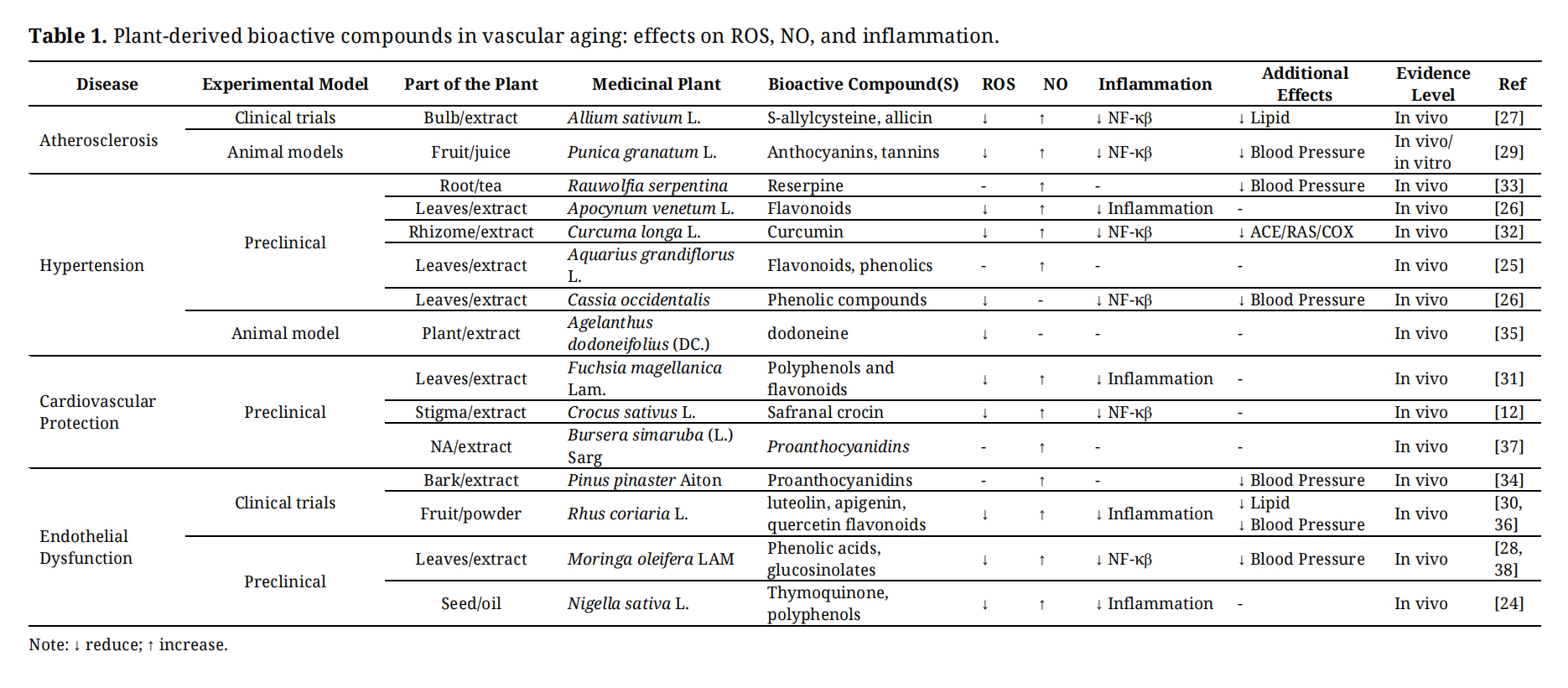 Table 1.
Plant-derived bioactive compounds in vascular aging: effects on ROS, NO, and inflammation.
Table 1.
Plant-derived bioactive compounds in vascular aging: effects on ROS, NO, and inflammation.
Aging is the principal risk factor for neurodegenerative diseases, with Alzheimer’s disease (AD) and Parkinson’s disease (PD) representing the most prevalent conditions in older adults [39]. These disorders are characterized by progressive neuronal loss driven by multifactorial and interconnected mechanisms, including oxidative stress, mitochondrial dysfunction, chronic neuroinflammation, and abnormal protein aggregation [39,40]. In AD, neuropathology is defined by extracellular β-amyloid (Aβ) plaque deposition and intracellular neurofibrillary tangles composed of hyperphosphorylated tau protein, whereas PD is primarily associated with degeneration of dopaminergic neurons in the substantia nigra and the accumulation of α-synuclein-containing (α-syn) Lewy bodies [41].
The aging brain is particularly vulnerable to oxidative damage due to its high metabolic demand and the progressive decline in endogenous antioxidant defenses [42]. This redox imbalance promotes activation of pro-inflammatory signaling pathways, notably those mediated by nuclear factor kappa β (NF-κβ), leading to increased production of cytokines such as tumor necrosis factor-α (TNF-α) and interleukin-1β (IL-1β), which exacerbate neuronal injury and accelerate disease progression [42–44].
Within this context, plant-derived bioactive compounds have emerged as promising multitarget agents capable of modulating key molecular pathways involved in neurodegeneration. These natural products exert neuroprotective effects through the attenuation of oxidative stress, preservation of mitochondrial function, regulation of neuroinflammatory responses, and inhibition of pathological protein aggregation, thereby addressing multiple aspects of disease pathophysiology simultaneously [42].
Several medicinal plants exemplify these neuroprotective mechanisms. As summarized in Table 2, studies investigating bioactive compounds in AD have identified multiple mechanisms associated with their potential therapeutic effects. All studies included in Table 2 (100%) reported antioxidant and anti-inflammatory activities, such as Galanthus nivalis sp.pl. [45], rich in galanthamine, Morinda citrifolia [46], rich in ethylacetate and Codonopsis pilosula [47], rich in polysaccharides. All these bioactive compounds were tested in animal models but were not tested directly for mitochondrial function. 50% specifically demonstrated modulation of the NF-κβ pathway and mitochondrial function, such as Rosmarinus officinalis L., Salvia officinalis L. and Prunella vulgaris var., all rich in rosmarinic acid [40,45,48,49], Withania somnifera [4,50,51], rich in withanolides; Centella asiatica L. [5], rich in triterpenes; Olea europaea L. [52] rich in oleuropein, and Taxus chinesis var. [53], rich in polysaccharides, were tested not only for antioxidant and anti-inflammatory effects but also for additional effects in cell death and acetylcholinesterase (AChE).
In addition, 92% of the evaluated bioactive compounds were associated with reduced pathological protein aggregation, such as Hypericum perforatum [49] rich in quercitrin, Andrographis paniculata Nees [54], rich in andrographolide, and Astragalus membranaceus [55] showing protection against AD. Another relevant mechanism was the inhibition of AChE, which may contribute to the management of cognitive symptoms by supporting cholinergic neurotransmission [56]. This effect was reported for 64.2% of the bioactive compounds derived from medicinal plants such as Salvia officinalis L., Prunella vulgaris var., and Withania somnifera, included in Table 2. Collectively, these findings highlight the multitarget potential of plant-derived bioactive compounds in addressing several interconnected pathological mechanisms of AD.
On the other hand, in Table 3, we found that 94% of the bioactive compounds showed an antioxidant effect, while 73% showed an increased dopaminergic effect, which is very important for treating patients with PD. 84% of the bioactive compounds showed an improvement in motor function, associated with additional effects on cell death (58%) and accumulation of α-synuclein-containing (α-syn) Lewy bodies (21%).
Few examples of bioactive compounds presented in Table 3 are Withania somnifera [4,41,50,51] rich in withanolides, which showed effects in AD; the antioxidant effect also improved motor function, and the dopaminergic effect in PD. Ginkgo biloba [4,38,44], particularly its standardized extract EGb 761, rich in flavonoids and terpenoids, demonstrates potent antioxidant activity, enhances cerebral blood flow, protects neurons against Aβ-induced toxicity, and improves motor activity.
Curcuma longa [39,49,57] Further illustrates the multitarget potential of plant-derived compounds, exhibiting antioxidant, anti-inflammatory, and anti-amyloidogenic properties. Notably, the bioactive compound curcumin can cross the blood–brain barrier and reduce amyloid plaque deposition. Additional species, including Passiflora incarnata L, Pueraria montana var., Epimedium brevicornum L. and Scutellaria baicalensis [39,49] have also demonstrated significant effects in preserving neuronal viability and improving cognitive and motor functions through an increase in antioxidant and dopaminergic effects.
At the molecular level, the neuroprotective effects of these compounds are mediated through multiple complementary mechanisms. These include reduction of reactive oxygen species (ROS) production, preservation of mitochondrial membrane potential, and maintenance of respiratory chain function [5]. In addition, these compounds inhibit lipid peroxidation, thereby protecting neuronal membranes, and modulate key signaling pathways involved in inflammation and antioxidant defense, including NF-κβ and endogenous antioxidant systems [40].
Clinical evidence further supports the investigation of these compounds; for example, randomized controlled trials of Ginkgo biloba extract (EGb 761) have demonstrated modest improvements in cognitive function in patients with dementia, although large-scale studies have reported limited efficacy in preventing disease onset [58,59].
To summarize the evidence for the neuroprotective potential of plant-derived bioactive compounds in major neurodegenerative diseases, Table 2 presents medicinal plants and bioactive compounds investigated in Alzheimer’s disease, highlighting their reported effects on reactive oxygen species (ROS), NF-κβ signaling, amyloid-β (Aβ) aggregation, mitochondrial function, and additional neuroprotective outcomes such as AChE, inhibition and cognitive improvement. In addition, Table 3 summarizes evidence from Parkinson’s disease models, focusing on mechanisms particularly relevant to dopaminergic neurodegeneration, including modulation of ROS, monoamine oxidase (MAO) and AChE activity, α-synuclein accumulation, motor function, neuronal cell death, and dopaminergic effects. Collectively, these tables demonstrate the multitarget nature of plant-derived compounds, with evidence from preclinical and human studies indicating that different plants and their bioactive constituents may influence distinct but interconnected pathways involved in neuronal dysfunction. However, the strength of evidence varies among compounds and experimental models, and the reported effects should be interpreted according to the specific endpoint and level of evidence demonstrated in each study.
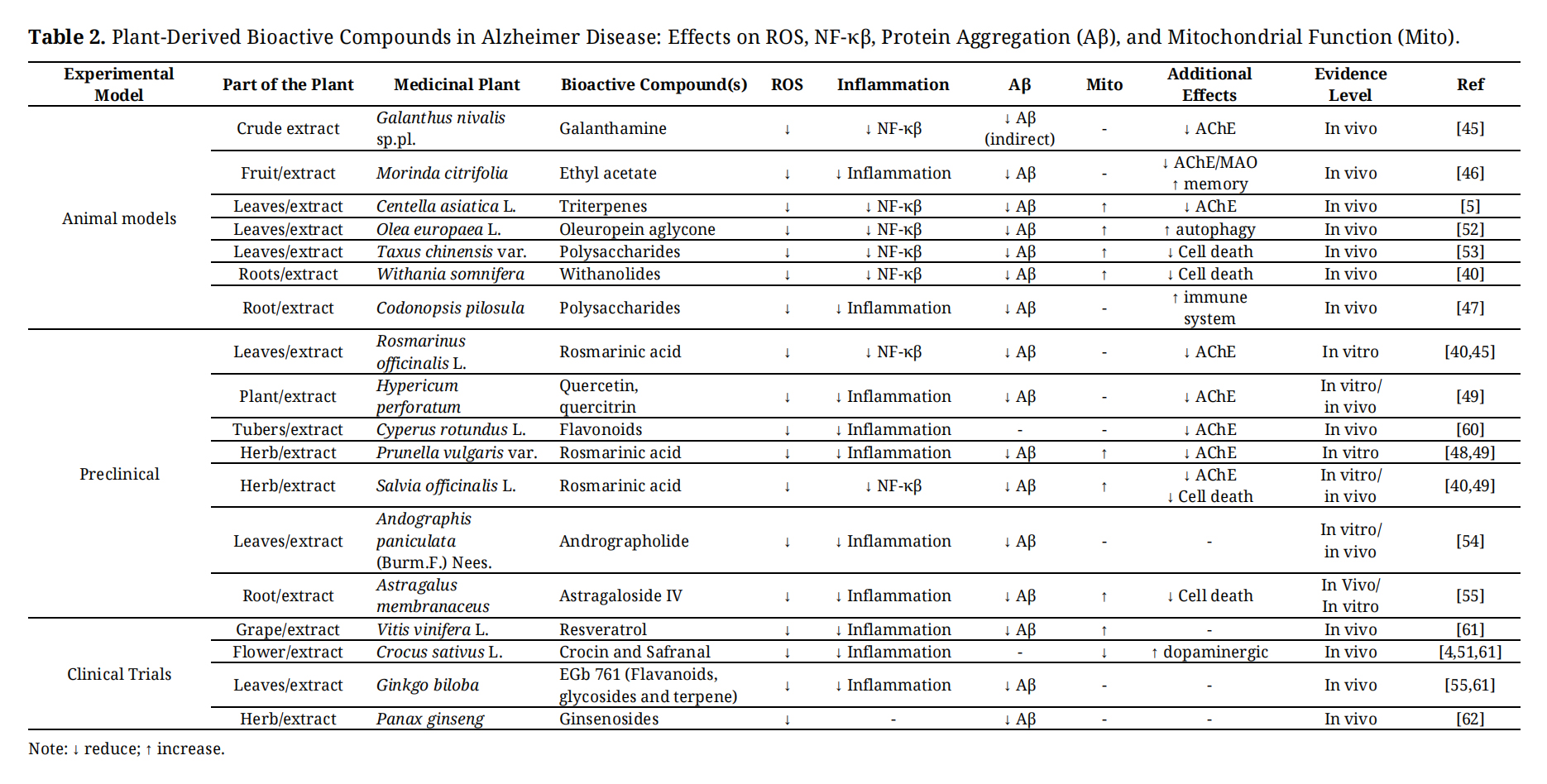 Table 2.
Plant-Derived Bioactive Compounds in Alzheimer Disease: Effects on ROS, NF-κβ, Protein Aggregation (Aβ), and Mitochondrial Function (Mito).
Table 2.
Plant-Derived Bioactive Compounds in Alzheimer Disease: Effects on ROS, NF-κβ, Protein Aggregation (Aβ), and Mitochondrial Function (Mito).
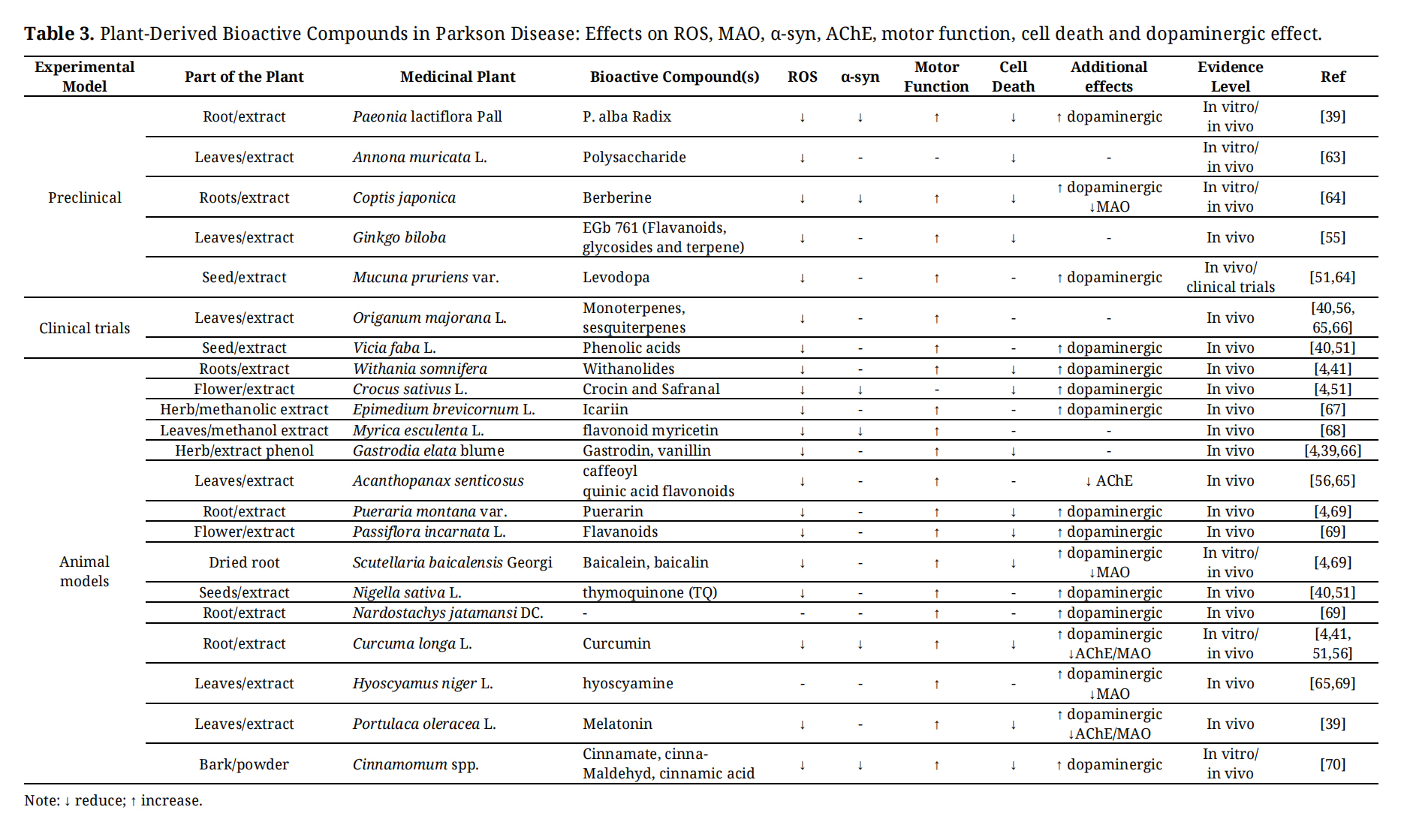 Table 3.
Plant-Derived Bioactive Compounds in Parkson Disease: Effects on ROS, MAO, α-syn, AChE, motor function, cell death and dopaminergic effect.
Table 3.
Plant-Derived Bioactive Compounds in Parkson Disease: Effects on ROS, MAO, α-syn, AChE, motor function, cell death and dopaminergic effect.
Oxidative stress is widely recognized as a central biological mechanism linking aging to the development and progression of chronic diseases. Under physiological conditions, reactive oxygen species (ROS) play essential roles in cellular signaling, especially through different interconnected sources such as mitochondrial dysfunction, NADPH oxidases, peroxisomes, endoplasmic reticulum (ER) stress, and altered metabolism [71]. Two key molecular components are associated with the modulation of oxidative stress: hydrogen peroxide (H2O2), which can act as a signaling molecule by modifying regulatory proteins, and reactive oxygen species (ROS), which, when excessively accumulated, can overwhelm antioxidant defenses and promote irreversible oxidation of cellular macromolecules, leading to oxidative damage to lipids, proteins, and particularly DNA [72]. This redox imbalance contributes to mitochondrial dysfunction, cellular senescence, and activation of regulated cell death pathways, ultimately driving tissue dysfunction. Accumulating evidence further indicates that oxidative DNA damage, strand breaks, and impaired repair mechanisms play a direct role in the pathogenesis of cardiovascular, neurodegenerative, metabolic, and neoplastic diseases, reinforcing oxidative stress as a shared and unifying pathological mechanism [50,65].
Excessive ROS accumulation promotes DNA damage, leading to telomere shortening, persistent DNA damage responses, and the induction of cellular senescence. These processes can establish a self-perpetuating cycle in which oxidative damage further compromises cellular integrity and amplifies ROS production [71,72]. Oxidative modification of mitochondrial proteins and lipid peroxidation can impair electron transport chain activity and ATP production, thereby exacerbating mitochondrial dysfunction and further increasing ROS generation. The persistence of oxidative stress, mitochondrial dysfunction, and DNA damage in aging cells contributes to the development of the senescence-associated secretory phenotype (SASP), characterized by increased secretion of pro-inflammatory cytokines and other mediators that promote chronic low-grade inflammation, or “inflammaging” [73,74]. Ultimately, the interplay among persistent oxidative stress, mitochondrial dysfunction, cellular senescence, and inflammaging contributes to the progressive loss of cellular and tissue homeostasis and increases susceptibility to age-related diseases.
Cardiovascular and neurodegenerative diseases are among the major pathological conditions associated with these interconnected mechanisms of aging [73,75,76]. In the cardiovascular system, oxidative stress promotes endothelial dysfunction by reducing nitric oxide bioavailability, increasing NADPH oxidase activity, and activating pro-inflammatory signaling pathways, leading to vascular remodeling, arterial stiffness, and hypertension [77,78]. Among the bioactive compounds tested in clinical trials, all showed effects that reduced oxidative stress and, consequently, reduced blood pressure and inflammation, and improved vasodilation by increasing NO [30,34,36]. For example, Allium sativum L., particularly its bioactive compound allicin, has been investigated in at least three clinical trials involving patients with hypertension. These studies reported reductions in blood pressure accompanied by decreased NADPH oxidase activity, supporting the role of redox modulation in its cardiovascular effects [26]. Similarly, a randomized, double-blind, placebo-controlled clinical trial evaluated Rhus coriaria L. Fruit capsules as an adjunct to captopril therapy in 80 patients with hypertension. Compared with captopril alone, the combination of Rhus coriaria supplementation and captopril significantly reduced blood pressure. These effects may be related, at least in part, to, at least in part, to the antioxidant properties of its bioactive constituents, which may enhance NO bioavailability and attenuate inflammation, ultimately contributing to improved vascular function and blood pressure control [26,36].
Similarly, in the central nervous system, excessive ROS contributes to lipid peroxidation, mitochondrial impairment, neuroinflammation, and progressive neuronal loss, thereby accelerating the development of neurodegenerative disorders such as Alzheimer’s and Parkinson’s disease [79]. In AD, a bioactive compound, Resveratrol, from Vitis vinifera L., has shown an antioxidative effect together with anti-inflammatory properties and was tested in a human supplementation study reporting promising cognitive and biomarker responses [61]. Crocus sativum L. was tested in a multicenter clinical study for 22 weeks in patients with mild AD, improving mild to moderate AD symptoms; meanwhile, Ginkgo biloba L. was tested in a phase II open-label clinical study for 24 weeks in patients with mild AD, improving executive function, attention, concentration, and non-verbal memory, as well as mood and quality of life [61]. Panax ginseng, using the red ginseng extract, was tested for 12 weeks and improved cognitive functions, with minor side effects in AD patients [62]. In Parkinson’s disease, Origanum majorana L. was evaluated in a clinical study involving 51 patients with PD and was associated with improvements in several non-motor symptoms, including depression, anxiety, gastrointestinal and urinary symptoms, restlessness, and fatigue, compared with the control group. Importantly, one month of treatment with O. majorana tea was not associated with evidence of hepatic or renal toxicity [66]. Similarly, supplementation with Vicia faba L. was associated with improved motor activity in patients with PD compared with those receiving L-dopa plus carbidopa, suggesting potential benefits of this medicinal plant as an adjunct or complementary therapeutic approach [51].
Beyond these conditions, oxidative stress also plays a dual role in cancer—promoting genomic instability and tumor initiation, while, at higher levels, inducing cell death pathways such as apoptosis and ferroptosis—and contributing to metabolic dysfunction by impairing insulin signaling and pancreatic β-cell function [80–82]. In parallel, oxidative stress is a key driver of immunosenescence and “inflammaging,” disrupting immune cell function and sustaining chronic low-grade inflammation, which further exacerbates disease susceptibility and progression [38,83,84].
Although these clinical findings provide preliminary support for the therapeutic potential of plant-derived compounds, differences in study design, sample size, treatment duration, preparations, and outcome measures limit direct comparisons and highlight the need for larger, well-controlled clinical trials to establish their efficacy, safety, and mechanistic relevance.
Key pharmacological challenges remain, particularly regarding the bioavailability and pharmacokinetics of compounds. Developing standards to avoid Variability in plant species, geographical origin, cultivation conditions, extraction methods, and phytochemical composition can substantially influence biological activity. Advances in formulation and targeted delivery systems are essential to enhance therapeutic efficacy. In parallel, standardizing plant extracts and implementing rigorous quality control protocols are critical to ensure reproducibility, safety, and regulatory acceptance. Well-designed, large-scale clinical trials are still needed to establish efficacy, safety, and optimal dosing in older populations before transitioning to large-scale trials. Additionally, issues related to bioavailability, standardization of plant extracts, variability in phytochemical composition, and long-term safety must be addressed [4,39].
Many natural compounds exhibit promising biological activities but are limited by poor aqueous solubility, chemical instability, rapid metabolism, low systemic bioavailability, and insufficient tissue exposure. Self-assembly can facilitate the organization of bioactive molecules into nanoscale or supramolecular structures, including micelles, nanoparticles, liposomal systems, hydrogels, and other carrier-free or carrier-assisted assemblies. These approaches may improve compound stability, solubility, cellular uptake, controlled release, and tissue delivery, thereby increasing the effective biological exposure of the active compound [85].
Despite growing evidence of benefit, these products are frequently used without standardized dosing, safety monitoring, or consideration of drug–herb interactions. This highlights the need for well-designed, large-scale clinical trials to establish efficacy, optimal dosing, and long-term safety, particularly in older adults exposed to polypharmacy. Real-world evidence, including studies in indigenous populations in Brazil, further illustrates the gap between traditional practices and evidence-based medicine. Cultural reliance on medicinal plants often limits adherence to conventional therapies, emphasizing the importance of integrating ethnopharmacological knowledge with clinical approaches through culturally sensitive strategies [86,87].
The clinical relevance of these findings will ultimately require validation in well-designed clinical studies that establish efficacy, appropriate dosing, bioavailability, and long-term safety, particularly in older populations with multiple age-related conditions. Although safety, toxicity, pharmacokinetics, and potential interactions with conventional therapies are important considerations for clinical translation, these aspects were beyond the primary objective of the present review, which focused on identifying pharmacological targets and convergent molecular mechanisms associated with the cardiovascular and neuroprotective effects of plant-derived bioactive compounds. Nevertheless, future translational studies should incorporate these parameters to determine whether the identified molecular targets can be safely and effectively exploited therapeutically.
The widespread use of medicinal plants among aging populations highlights their potential as sources of bioactive compounds capable of targeting multiple pathological mechanisms involved in age-related diseases. In the present review, the evidence summarized across cardiovascular and neurodegenerative diseases demonstrates a strong mechanistic convergence toward oxidative stress and redox dysregulation. Notably, 89% of the medicinal plants evaluated were associated with antioxidant activity and/or modulation of oxidative stress, identifying redox homeostasis as the most consistently represented pharmacological mechanism across the two disease categories. This finding supports the concept that antioxidant activity may represent a common mechanistic denominator through which structurally diverse plant-derived bioactive compounds exert cardiovascular and neuroprotective effects. Importantly, the potential benefits of these compounds extend beyond ROS reduction alone, as restoration of redox balance may influence mitochondrial function, inflammatory signaling, endothelial dysfunction, cellular survival, and proteostasis.
The evidence summarized in Tables 1–3 further demonstrates a convergence of interconnected mechanisms through which plant-derived bioactive compounds may exert protective effects across cardiovascular and neurodegenerative diseases. Antioxidant activity emerges as a central and unifying mechanism, with numerous compounds associated with reduced ROS generation or oxidative damage across diverse experimental models. In this context, plant-derived bioactive compounds—including polyphenols, flavonoids, terpenoids, polysaccharides, and alkaloids—act as multitarget modulators of key molecular pathways involved in aging and chronic disease progression. These compounds not only scavenge ROS and enhance endogenous antioxidant defenses such as superoxide dismutase, catalase, and glutathione, but also regulate redox-sensitive signaling pathways, suppress pro-inflammatory cytokine production, and preserve cellular integrity. Additionally, they support mitochondrial homeostasis, reduce oxidative DNA damage, and modulate immune responses, thereby attenuating immunosenescence and chronic inflammation, and inhibiting pathological protein aggregation, including β-amyloid and α-synuclein [22,23,88].
In summary, plant-derived bioactive compounds illustrated in Tables 1–3 reinforce the concept that plant-derived bioactive compounds can simultaneously modulate these pathways, supporting their potential as complementary therapeutic strategies to promote healthy aging, preserve cellular homeostasis, and slow the progression of chronic diseases.
Future research should therefore progress from the characterization of general antioxidant effects toward target-specific, dose-dependent, mechanistically validated, and pharmacokinetically informed studies. Such an approach may facilitate the identification of the most promising plant-derived compounds and molecular targets for the development of complementary strategies to prevent or attenuate age-related cardiovascular and neurodegenerative diseases. Such efforts are essential to fully harness their potential in promoting healthy aging and reducing the burden of chronic diseases.
Ethical review and approval were not required for this study because it is a literature review and did not involve human participants, animals, or the collection of primary human or animal data.
Declaration of Helsinki STROBE Reporting GuidelineThis study adhered to the Helsinki Declaration. The Strengthening the Reporting of Observational studies in Epidemiology (STROBE) reporting guideline was followed.
No data were generated from the study.
Conceptualization, RT, LO and PN; Methodology, Validation, Formal Analysis, RT, LO and PN; Writing—Original Draft Preparation, RT and LO; Writing—Review & Editing, PN; Supervision, PN.
The authors declare no conflict of interest in this paper.
Funding by the authors.
1.
2.
3.
4.
5.
6.
7.
8.
9.
10.
11.
12.
13.
14.
15.
16.
17.
18.
19.
20.
21.
22.
23.
24.
25.
26.
27.
28.
29.
30.
31.
32.
33.
34.
35.
36.
37.
38.
39.
40.
41.
42.
43.
44.
45.
46.
47.
48.
49.
50.
51.
52.
53.
54.
55.
56.
57.
58.
59.
60.
61.
62.
63.
64.
65.
66.
67.
68.
69.
70.
71.
72.
73.
74.
75.
76.
77.
78.
79.
80.
81.
82.
83.
84.
85.
86.
87.
88.
Trigueiro R, Oliveira L, Newman P. Plant-Derived Bioactive Compounds in Aging: Shared Mechanism Linking Cardiovascular and Neurodegenerative Diseases. Adv Geriatr Med Res. 2026;8(3):e260025. https://doi.org/10.20900/agmr20260025.

Copyright © Hapres Co., Ltd. Privacy Policy | Terms and Conditions


