Location: Home >> Detail
J Sustain Res. 2026;8(4):e260082. https://doi.org/10.20900/jsr20260082
 ,
Diogo Onofre Souza 1 ,
Carina Rapetti 2 ,
Josep Miquel Piqué 2,*
,
Diogo Onofre Souza 1 ,
Carina Rapetti 2 ,
Josep Miquel Piqué 2,*
1
2
*
The increasing complexity of socioenvironmental challenges requires environments capable of integrating learning, innovation, governance, and sustainability. Although urban innovation areas are widely recognized for their contribution to economic and technological development, their role as territorial platforms for sustainability-oriented learning and transformation remains underexplored. The objective of this study was to map and synthesize how the scientific literature addressed sustainability-oriented learning processes in urban innovation areas, with a focus on understanding these contexts as territorial learning ecosystems, while identifying learning mechanisms, governance and participation arrangements, institutional roles, and research gaps related to sustainability transitions. To map, systematize, and analyze the scientific production related to this topic, a scoping review based on the PRISMA–ScR protocol was conducted, combined with a thematic analysis of 26 studies selected from the Scopus and Web of Science databases. The results indicated that urban living labs, co-creation processes, collaborative networks, knowledge spillovers, and multi-actor governance structures were recurrently identified as mechanisms supporting collective learning and urban experimentation. Learning emerges as an articulating dimension between innovation, participation, and territorial governance, whereas institutions play a strategic role in creating conditions for the production, circulation, and application of knowledge. The study also highlights the challenges related to participation asymmetry, environmental justice, social inclusion, and power relations within innovation ecosystems. As a contribution to the literature, this article proposes understanding urban innovation areas not merely as spaces of economic and technological innovation, but also as territorial learning ecosystems in which governance, social participation, and knowledge circulation are articulated to support sustainability-oriented transitions. Finally, it highlights the need to develop indicators and conduct empirical research to assess their contributions to territorial transformation dynamics.
Cities constitute a large share of the world’s population and embody economic, social, and environmental dynamics of particular intensity. According to data from the World Urbanization Prospects Report [1], approximately 45% of the global population lives in cities, simultaneously positioning urban areas as epicenters of environmental crises and privileged arenas for implementing sustainable solutions and improving quality of life.
The first decades of the 21st century have been marked by an intensification of socioenvironmental crises, including climate change, encompassing, in a pronounced manner, the loss of biodiversity and degradation of ecosystems. The Sixth Assessment Report of the Intergovernmental Panel on Climate Change [2] confirmed the anthropogenic nature of global warming above pre-industrial levels, where the high concentration of greenhouse gas emissions, energy consumption, and pressures on natural resources reinforce the importance of urban ecosystems as catalysts for decarbonization, adaptation, and resilience processes in cities.
In this context, the transition to sustainable urban models requires systemic and multidimensional transformations that go beyond isolated technological interventions and involve socioeconomic, institutional, and cultural reconfigurations. The European Green Deal [3] indicates that urban transformations toward climate-neutral cities require the integration of innovation, social inclusion, and environmental sustainability while also preventing the benefits of urban transformation from being distributed unevenly.
A similar position has been advanced by the United Nations and UNESCO, which identify Education for Sustainable Development (ESD) [4] as a strategic and cross-cutting instrument for implementing the 2030 Agenda [5]. This approach is fundamental for territorializing the Sustainable Development Goals (SDGs) in urban environments and supporting planetary protection. In 2020, UNESCO updated this agenda through the ESD for 2030 Roadmap [6], a guidance document for governments seeking to establish public policies that integrate this subject across different contexts.
In their guidelines, these institutions emphasize the urgent need to transform urban lifestyles and highlight the role of ESD in fostering the skills, knowledge, and values that support the empowerment of individuals and communities, as established in SDG 4.7 [5,6]. By transcending the limits of formal education, ESD integrates social, institutional, and territorial learning processes, enabling individuals to practice in complex and uncertain contexts. These changes aim to contribute to sustainable societies through innovation, intersectoral governance, and committed and civic participation.
In contemporary urban policy, innovation districts emerge from the articulation between universities, industries, and the government, forming environments conducive to the production and circulation of knowledge [7]. This perspective was subsequently broadened to incorporate civil society and the environment [8], emphasizing sustainability as a structuring element.
In this study, innovation districts are treated as a territorial configuration within the broader analytical category of urban innovation areas [9] that articulate knowledge, governance, innovation, learning, and urban transformation within sustainability contexts. Conceived through proximity and collaboration [10], urban innovation areas respond to demands for proactivity and speed [11,12], generating knowledge and solutions applicable on a territorial scale.
Despite this conceptual evolution, there remains a significant gap in the literature. Urban innovation studies often treat learning as an externality of agglomeration processes-associated with knowledge spillovers and talent attraction-rather than as an explicitly designed process oriented toward sustainability. Consequently, the literature remains strongly focused on economic performance [11,12], competitiveness, and clustering dynamics [13], whereas the educational and learning dimensions of urban innovation areas remain comparatively underexplored, particularly regarding their capacity to sustain and diffuse learning across broader urban territories.
Given this scenario, the objective of this study was to map and synthesize how the scientific literature addressed sustainability-oriented learning processes in urban innovation areas, with a focus on understanding these contexts as territorial learning ecosystems, while identifying learning mechanisms, governance and participation arrangements, institutional roles, and research gaps related to sustainability transitions. Accordingly, a scoping review was conducted to systematically map and integrate the available evidence on the relationships among learning, sustainability, and urban innovation areas.
The article is organized as follows. Section Theoretical Framework presents the theoretical framework, Section Methodology describes the literature review method, Section Results presents the results, Section Discussion presents the discussion, and Section Conclusions presents the final considerations.
The main theoretical contribution of this study is the reinterpretation of urban innovation areas as territorial learning ecosystems. From this perspective, learning ceases to be a by-product of innovation and becomes understood as a fundamental mechanism for enabling sustainable urban transitions.
This theoretical framework is structured into two interrelated analytical dimensions. The first discusses urban innovation areas as an integrated category, differentiating closely related terminologies and situating them within debates on knowledge, experimentation, and territorial governance. The second emphasizes learning as a social, institutional, and transformative process through which actors develop the capacity to interpret complexity, reconfigure practices, and collectively respond to contemporary socioenvironmental challenges.
Areas of Urban InnovationThe literature on innovation and territorial development uses different concepts to describe urban spaces characterized by the concentration of knowledge, innovation, and interaction among multiple actors. Although frequently used synonymously, terms such as clusters, innovation ecosystems, innovation districts, and urban living labs (ULLs) have distinct theoretical origins, objectives, and analytical scales.
Clusters constitute one of the most consolidated approaches, characterized by the geographic concentration of companies and institutions that benefit from proximity, productive specialization, and knowledge spillovers [14]. From this perspective, innovation primarily emerges through economic interactions and territorial competitiveness. Innovation ecosystems broaden this perspective by emphasizing the collaborative and dynamic relationships between multiple actors, resources, and institutions involved in the production and circulation of knowledge [8,15].
Innovation districts constitute a specific territorial configuration marked by the concentration of knowledge-intensive activities, universities, research centers, innovative companies, and urban infrastructure capable of promoting entrepreneurship and economic development [10]. Recent studies have highlighted that these territories also incorporate functions related to urban regeneration, collaborative governance, and experimentation with solutions to contemporary challenges [9].
The concept of innovation districts has progressively expanded beyond a predominantly economic- and knowledge-based focus by incorporating broader urban, social, and governance dimensions [9,13]. Simultaneously, ULLs have emerged as distinct configurations of urban experimentation that may operate within or alongside innovation districts and other urban innovation contexts. These environments support experimentation, co-creation, collective learning, and knowledge dissemination aimed at urban sociotechnical transitions [16,17], enabling the testing, evaluation, adaptation, and scaling of solutions to urban challenges.
Although innovation districts and ULLs differ in scale, function, and organizational logic, they both emphasize interactions among actors, knowledge circulation, and territorially embedded innovation [9,13,16,17]. In turn, innovation ecosystems follow a predominantly relational logic structured through interactions among actors, resources, and institutions and may extend beyond the spatial boundaries of a specific urban configuration [8,15].
The studies reviewed indicate that these concepts are not mutually exclusive. Rather, they describe the related territorial arrangements in which learning, experimentation, governance, and sustainability are increasingly interconnected. This convergence reinforces the need for an integrative analytical category capable of capturing the diverse configurations identified in the literature.
Recent peer-reviewed studies have advanced this debate toward a more comprehensive and structured understanding, including typologies and classification frameworks for innovation districts. Examples include the scoping review and typology developed by Yigitcanlar et al. (2020) [13], multidimensional validation proposed by Adu-McVie et al. (2021) [18], and strategic planning perspectives that treat innovation districts as urban projects developed by Kalliomäki et al. (2024) [19].
Given this conceptual diversity, this study adopts the term “urban innovation areas” as an integrating category, following the proposition of Piqué et al. (2019) [9]. This choice provides an analytical framework for interpreting the different territorial configurations identified in the corpus, including innovation districts, living labs, innovation ecosystems, and other forms of urban experimentation, without restricting the analysis to a specific development model. Therefore, this approach allows differences in scale, function, and organization among these configurations to be recognized while also enabling their interconnections with innovation, governance, participation, knowledge production, and learning to be examined.
Learning for the Development of SustainabilityThe methodological choice of the term “learning” as a search descriptor in international databases is grounded in the understanding that the object of investigation is not restricted to education as an institution, policy, or specific method for acquiring knowledge. Rather, it focuses on the process through which ways of understanding, acting, and governing are transformed to develop sustainability. In this context, learning becomes a transversal concept that articulates education, ESD, sustainability transitions, and innovation systems.
Researchers have warned that the traditional education system alone cannot encompass the social transformations required in complex contexts, particularly in the post-war economic scenario [20]. At that time, the author and collaborators later systematized the tripartite categories of learning analysis in the report “New Paths to Learning for Rural Children and Youth” [21]. These categories remain timeless and relevant: formal learning, linked to curricula, programs, admission requirements, and certificates; non-formal learning, associated with community projects, civic or popular education, curricular flexibility, and training; and informal learning, produced through daily practices, social networks, or work. These concepts broaden our understanding of the fundamental modalities of educational formation, indicating that the term “learning” is methodologically more comprehensive than “education.”
Although they work in distinct fields, different authors share the view that learning is a transformative and relationship-dependent process through which individuals question established assumptions, reinterpret reality, and develop the capacity to act in complex contexts [22]. Thus, learning is not reduced to the acquisition of information or competence in specific instruments; it is a process of transforming “frames of reference” [23], through which individuals interpret situations, seek meaning in lived experience, and guide their decision-making. A similar perspective was advanced by Freire (2005) [24], who understood education as a critical, dialogical, and political praxis. From this perspective, learning does not correspond to the passive reception of information, but rather to an experience of conscientization, problematization, and transformation of lived realities.
When analyzing complex urban dynamics and learning for sustainability, researchers such as Sterling (2024) [25] argue that learning leads to an urgent and profound social transformation, moving beyond merely adaptive responses to the complexity, uncertainty, and unsustainability of lived reality. This view resonates with the works of Freire (2005) [24] and Leff (2009) [26], which provide a foundation for critical environmental education by arguing that systemic, epistemological, and civilizational problems require criticality, complexity, transdisciplinarity, and justice.
Morin et al. (2003) [27] situated learning within complex thought as the capacity to form proactive citizens capable of reconnecting fragmented knowledge and promoting transformative solutions to overcome disciplinary fragmentation. For Morin, learning for sustainability is based on understanding the complexity, uncertainty, interdependence, and responsibility toward planetary limits. This analysis reinforces the importance of learning as a socioenvironmental crisis requires questioning paradigms and revising certainties. Therefore, learning is not only about acquiring more information, but also about developing the ability to contextualize, connect, problematize, and create solutions [28].
Social learning for sustainability broadens and reinforces argumentative analysis, proposing a concept rooted in the relationships among multiple actors. This creates transitions that demand more structured and reflective ways of thinking and acting, seeking innovative solutions to uncertain and complex problems [29]. These characteristics are present in urban innovation areas, which enable talent development through collaboration, experimentation, and participation [11,12], thereby creating and sharing pathways for producing sustainable solutions.
From the perspective of ESD, learning acquires a normative and strategic role, expressing a commitment to the 2030 Agenda. SDG 4, “Quality Education,” aims to ensure inclusive and equitable quality education and promote lifelong learning opportunities for all [5]. SDG 4.7 expands the concept of environmental sustainability; it determines that students should develop knowledge, values, and skills to promote sustainable practices, encompassing human rights, gender equality, a culture of peace, global citizenship, cultural diversity, and sustainable lifestyles.
In 2020, UNESCO updated its ESD agenda through the publication of Education for Sustainable Development: A Roadmap (ESD for 2030). This document outlines strategic priorities and implementation pathways to strengthen ESD as a key enabler of the achievement of the SDGs by 2030.
In conclusion, learning is the process of developing the capabilities to interpret complex systems, anticipate scenarios, critically reflect on values, act collectively, and solve interdependent problems. Regardless of whether learning is approached individually or collectively and whether knowledge is refined at the individual, collective, systemic, or institutional levels, theories converge in understanding learning as a transformative, reflective, and social process in complex systems such as urban innovation areas and in the broader transformations required by sustainability.
This study follows the Preferred Reporting Items for Systematic Reviews and Meta-Analyses Extension for Scoping Reviews (PRISMA–ScR) guidelines [30], which are suitable for mapping and integrating emerging and multidisciplinary fields [31]. The methodological choice is guided by the structural diversity and complexity of the set of texts analyzed, whose distinct and complex structures [32] require a strategy capable of encompassing multiple analytical and contextual perspectives.
The methodology began by defining the research questions and objectives. Considering the interdisciplinary yet fragmented nature of the topic and the need to select terms aligned with the research scope, different combinations and refinements of keywords were tested for bibliographic searches. In the search strategy, “innovation districts” was used as the territorial entry descriptor, whereas “urban innovation areas” was employed as the integrative analytical category guiding the interpretation of the selected studies.
Descriptors were tested in multiple associations, combining Boolean operators (AND and OR), parentheses for logical grouping of terms, and double quotation marks to delimit exact expressions according to the specific syntax of each database, such as “ESD,” “education for sustainability,” “innovation districts,” “innovation urban,” “learning,” “environmental education,” “sustainability,” and “urban living labs.”
Several combinations showed low thematic adherence or returned no results, whereas the other isolated terms produced results that were either disconnected from the analytical focus of the research or were excessively broad. After successive adjustments and validations, the final keywords were defined as “learning, sustainability, innovation districts.” The Boolean operator “and” was used, as shown in Figure 1, which presents the stages followed by the scoping review presented.
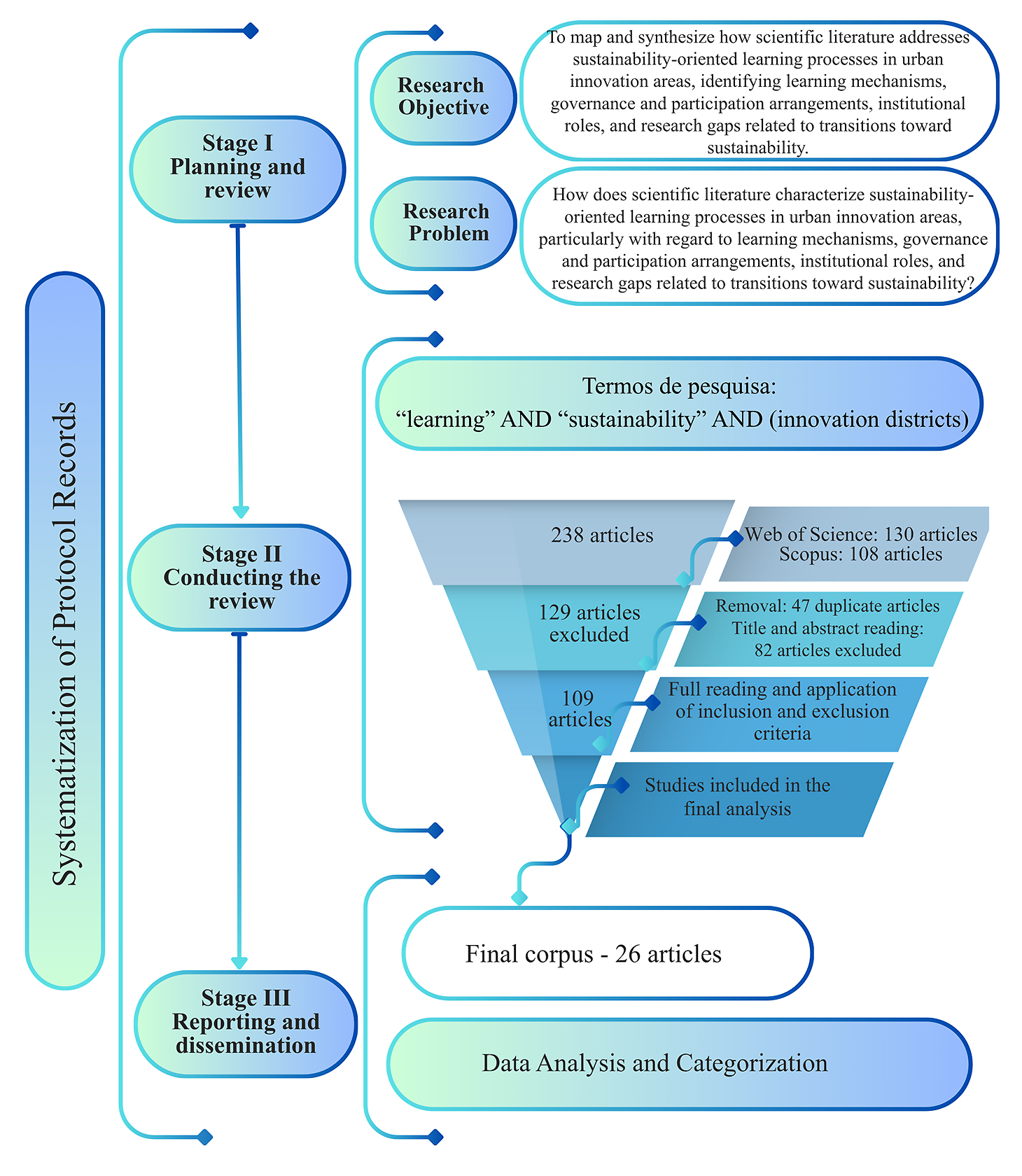 Figure 1. Flowchart of the review.
As illustrated in Figure 1, the literature identification stage was conducted through a systematic search of two international scientific databases, Scopus and Web of Science, in March 2026. The eligibility criteria were defined. Regarding the temporal scope, no limits were imposed on the publication period, nor were restrictions applied based on language, country, authorship, or open-access status. This decision aligned with the purpose of the study, which was to examine the temporal and geographical distribution of the published literature. Study selection was guided by the degree of alignment with the review objective and by the eligibility criteria established in advance.
The selected texts were restricted to articles as they allowed for greater analytical consistency and comparability between studies, reducing biases associated with non-peer-reviewed literature or institutional documents [33–35]. The decision to exclude gray literature stems from the need to map how the phenomenon has been conceptualized and analyzed within the scope of international scientific literature [30,31]. Considering that the research will subsequently advance to case studies and document analysis, institutional documents and technical reports will be incorporated in later stages without compromising the objective of this review, which is to identify the main concepts, theoretical approaches, and empirical evidence available in the academic literature.
As presented in Table 1, the search yielded 238 articles.
 Table 1. Search string.
Subsequently, the Rayyan Advanced Platform was chosen as the source of evidence for the PRISMA–ScR protocol stages to maintain robustness in the methodological and conceptual parameters. Rayyan is a platform developed to accelerate the screening of titles and abstracts through classification, filtering, tagging, and conflict resolution tools among reviewers, contributing to greater efficiency and methodological traceability [36]. This platform also supports categorization, thematic tagging, and collaborative analysis, which are essential for qualitative and scoping reviews involving multiple analytical dimensions, as planned in this study.
The initial work on the platform involved identifying and sharing the review with a second reviewer. The second reviewer contributed through a joint discussion of questions that arose during the selection process, helping to clarify the application of the eligibility criteria and reach a consensus on the cases discussed.
This was followed by the screening and removal of duplicate records to avoid inaccurate data analysis [37]. A total of 94 records corresponding to 47 duplicate pairs were identified, and one record from each pair was removed (n = 47), leaving 191 records for screening. Title and abstract screening was conducted by applying the exclusion criteria and considering thematic relevance, conceptual alignment, and document type. At this stage, a further 82 articles were excluded.
Subsequently, 109 full-text articles were assessed for eligibility using the inclusion and exclusion criteria. Studies were included if they suggested a substantive relationship among learning processes, sustainability, and urban innovation contexts, including approaches related to territorial learning, innovation areas or districts, sustainability transitions, and urban learning ecosystems. Studies with a predominantly sectoral focus or without a direct relationship with urban innovation contexts and sustainability-related learning processes were excluded, including studies conducted in clinical, rural, or agricultural settings, as well as formal education approaches unrelated to the scope of the review.
Studies centered on machine learning, artificial intelligence, or computational modeling were also excluded if their primary focus was algorithmic performance, data prediction, optimization, or technical modeling, without a substantive connection to the territorial, institutional, or socioeducational processes examined in this review [38,39]. This analytical delimitation is consistent with studies on sustainable urban transitions that emphasize the need for integrated and multidimensional approaches capable of accounting for the interactions among social, institutional, territorial, and political factors [40,41].
Following application of the inclusion and exclusion criteria, 83 studies were excluded, resulting in a final corpus of 26 studies that proceeded to the data extraction, categorization, and coding stages. Flowchart: 238 records identified → 47 duplicate records removed → 191 records screened → 82 excluded → 109 full texts assessed → 83 excluded → 26 included.
A structured data extraction matrix, specifically developed for this study, enabled the systematic organization and comparison of the included studies. After prior readings of the subject, categories were created to identify patterns, relationships, and interpretative structures within a set of information, grouping elements under a common title, representing their convergent characteristics. Categorization is a fundamental step in content analysis and is defined as a process that allows for the transformation of dispersed data into comparable and interpretable analytical dimensions [42–44]. The matrix included an analysis of the following categories with data extraction, as shown in Figure 2.
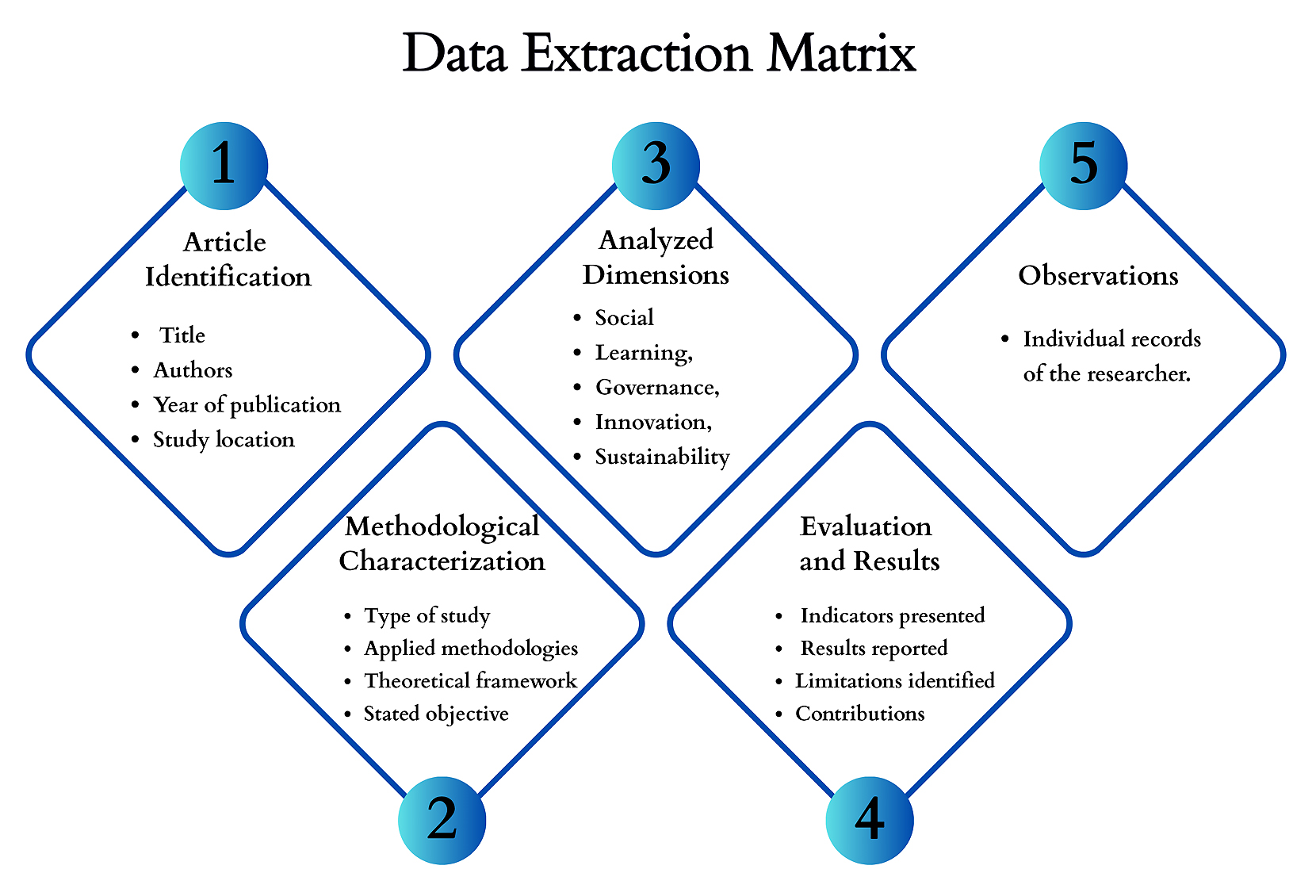 Figure 2. Data extraction matrix.
The structure presented in Figure 2 enables a consistent comparative analysis of studies with different methodological approaches and categories, allowing the identification of recurring patterns, learning mechanisms, governance structures, sustainability dimensions, and relationships between territorial innovation and learning for sustainability. In the third stage (Figure 1), the ATLAS.ti software (version 24) [45] was used for qualitative data analysis, supporting data organization and categorization. According to Forte et al. (2017) [46], ATLAS.ti is an important tool that facilitates data storage and analysis, contributing to the quality and credibility of qualitative studies. The software provided insights and visual references for comparative analysis of the proposed dimensions, whereas the documentary corpus was analyzed in its entirety by the authors. Consistent with the mapping purpose of this scoping review, no formal critical appraisal of the methodological quality or risk of bias was conducted.
The results presented in this section highlight the integration between the scoping review and thematic synthesis, allowing us to analyze how the literature has addressed urban innovation areas as territorial learning ecosystems for sustainability transitions through consolidated evidence.
Valuing scientific rigor in qualitative research [47] and employing a combined approach, the thematic analysis follows the six phases proposed by Braun and Clarke (2006) [48]. These steps include familiarization with the data; generation of initial codes; searching for and reviewing the themes, which are treated here as dimensions in the data matrix; defining and naming the themes; and producing the results presented below. Based on the findings, the discussion synthesizes the main evidence from this study and addresses the challenge of articulating learning to promote sustainable transitions.
Characterization of the StudiesAlthough thematic analysis does not explicitly require the geographical, temporal, and methodological characterization of studies, the data familiarization stage [48] makes it possible to situate the production contexts of the reviewed articles by identifying qualitative information in matrices [43]. The characterization of the selected studies made it possible to visualize the configuration of the research field, showing that scientific production in the learning, sustainability, and innovation areas was distributed between 2014 and 2026 (Figure 3), indicating a recent but growing and sustained interest, with peaks of publication concentration.
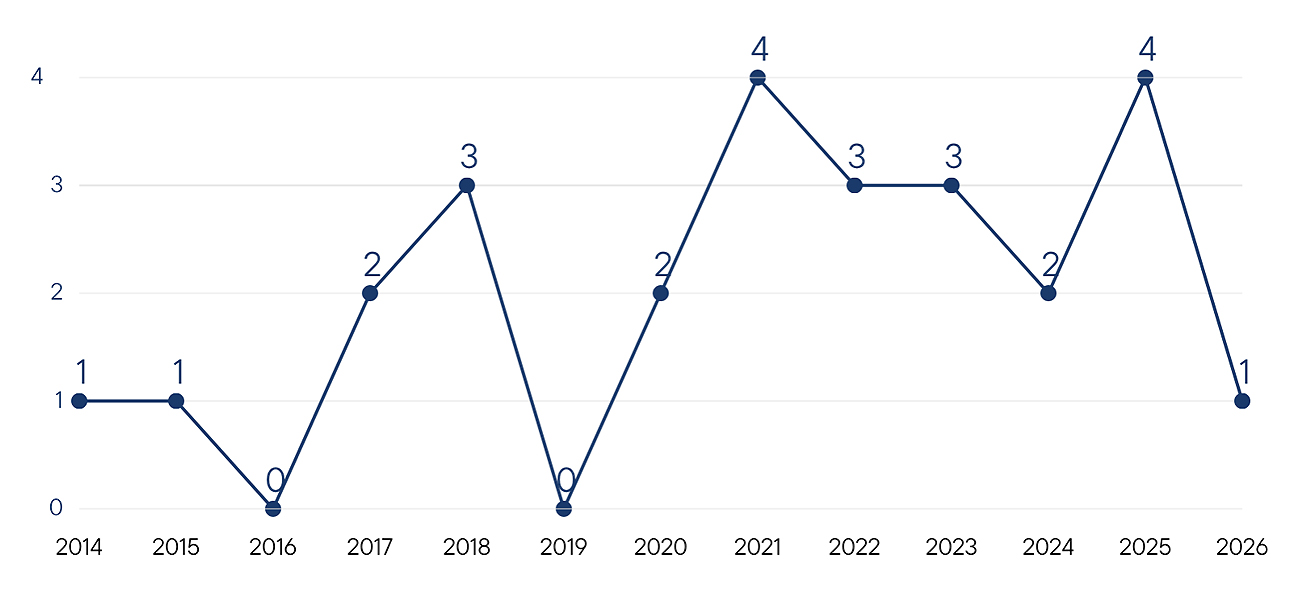 Figure 3. Timeline of the analyzed publications.
Reiterating the innovative approach of this study, Figure 3 shows that before 2014 and in 2016 and 2019, no studies compatible with the established criteria were identified in the selected databases. This reinforces the recent emergence of the topic. Following the thematic analysis characterization of the study, Figure 4 presents the geographic distribution of the analyzed research.
The geographic distribution presented in Figure 4 was constructed from the research locations identified in the studies rather than solely from the origin of the articles or the affiliation of the authors. This approach follows the scoping review guidelines, in which the extracted data are organized according to the nature of the evidence and objectives of the review [30,31,49].
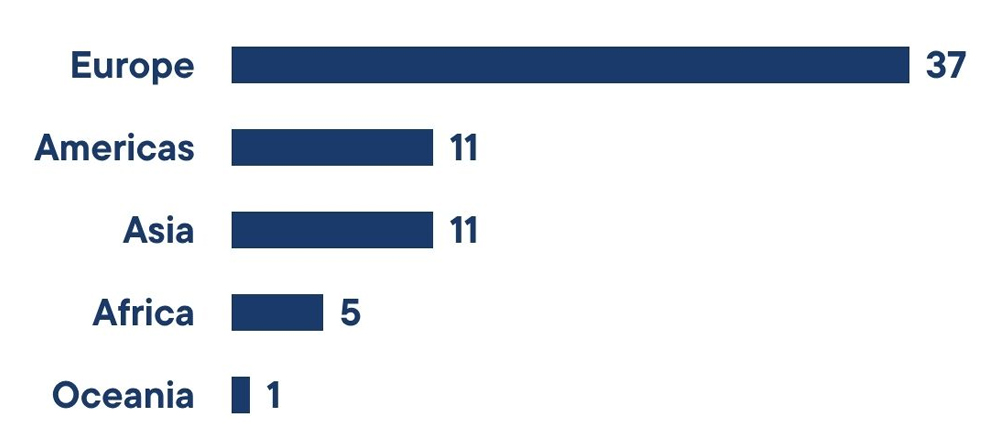 Figure 4. Geographic distribution of research locations identified in the analyzed studies.
Thus, when a single article analyzed more than one city, country, or region, each location was counted as a specific geographic location. This approach enables a more precise representation of the territorial scope of the corpus. Sixty-five specific localities and municipalities were identified, distributed across 56 countries and 5 continental regions. Although the corpus analyzed in this study contains 26 texts, the number of urban areas impacted is greater, with articles addressing research developed in different countries simultaneously, whereas others address the spillover of research in nearby cities and regions, encompassing networks of cities on a macro scale and even districts and neighborhoods on a micro scale.
It is important to highlight the greater concentration of publications and academic visibility in Europe in the debate on learning for sustainability. However, this result should be understood as a mapping of the available evidence [49] rather than as a direct measure of the number of actions effectively implemented in each region. Therefore, the analysis suggests that Europe has a greater indexed scientific production on this topic, without necessarily implying a higher number of learning-for-sustainability practices.
Finally, the study corpus is predominantly composed of academic and technical-applied studies, including empirical articles, case studies, theoretical reviews, and pilot project reports. In methodological terms, the texts combined quantitative, qualitative, and mixed methods (Table 2), highlighting the multidimensional nature of the investigated field.
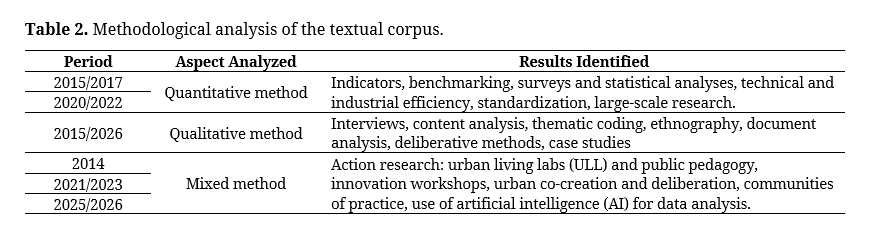 Table 2. Methodological analysis of the textual corpus.
The methodological analysis in Table 2 suggests that the literature seeks to understand not only the measurable technical results of urban learning initiatives, but also social learning, urban experimentation, co-creation, and the institutionalization of sustainable practices. This conclusion emerges when temporal and methodological information is cross-referenced. Recent publications in this corpus display a broader presence of qualitative and mixed methodological approaches.
Innovation Areas as Territorial Learning InfrastructuresThe literature suggests that urban ecosystems operate through continuous territorial synergies among universities, governments, businesses, and society [9], acting through social organizations and local communities. These ecosystems can implement collaborative mechanisms for experimentation, knowledge sharing, and multi-stakeholder governance [7,8,10], disseminating solutions to environmental, social, and economic challenges.
Among the recurrent mechanisms identified in this review, ULLs and city labs stand out as real environments for collective experimentation, in which innovation, participation, and learning occur simultaneously [16], favoring the diffusion and scalability of sustainable solutions in complex urban contexts [17]. The analyzed studies present emblematic cases, such as the BlueCity Lab 010 in Rotterdam, which focused on the circular economy; the Hiedanranta ULL in Finland, which was used as a testing platform for urban circular solutions; and UbiGo in Gothenburg, which focused on integrated mobility and sustainable urban services. These urban laboratories function as applied learning infrastructures, allowing for the experimentation, continuous evaluation, and adaptation of solutions in real urban contexts.
The analyzed studies also highlight the role of municipal governance in sustaining these experimental processes. Local governments contribute to actor coordination, strategic direction, the facilitation of experimentation, and the dissemination of outcomes. In this context, experimental learning can extend beyond isolated projects through knowledge circulation, scaling of practices, and progressive incorporation into institutional structures and processes.
Another central mechanism identified was co-creation (co-production), characterized by the collaborative production of knowledge among multiple actors of the quadruple or quintuple helix. Studies have revealed that initiatives such as the Innovation Ateliers of the European Atelier project, the Community Studio in Canada, and Deliberative Walks in Germany promote collective learning, citizen participation, and the shared construction of sustainable urban solutions. In this context, co-creation ceases to be a mere participatory methodology and becomes a structuring mechanism for territorial learning and collaborative governance, creating opportunities for belonging and social legitimacy in urban solutions [50,51].
The thematic analysis of the literature also highlights the role of networks as a fundamental infrastructure for the circulation of knowledge, mobility of public policies, and exchange of institutional capacities. The literature on sustainable transitions indicates that systemic change processes depend on the formation of multi-scalar networks capable of connecting innovation, learning, and institutional change [40,52]. In this context, international networks such as the UNESCO Global Network of Learning Cities, PED-EU-NET, and Malmö Innovation Platform facilitate the diffusion of experiences, transfer of institutional capacities, and dissemination of solutions among different cities and innovation districts. These networks expand the capacity for collective learning on a multi-territorial scale, strengthening the diffusion and scalability of urban innovations.
Furthermore, the analyzed studies reinforce the relevance of knowledge spillovers, including both technology transfer and the circulation of tacit knowledge between geographically close organizations, as well as the dissemination of urban policies, governance models, and sustainable solutions among territories. The classic literature on clusters and innovation geography argues that spatial proximity favors the circulation of tacit knowledge, relational learning, and collaborative innovation [14,53]. The analyzed cases demonstrate technological, institutional, and political spillovers, including industrial symbiosis processes in Mexico, industrial clusters in Taiwan, and the international diffusion of urban governance models conducive to relational learning and the circulation of institutional capacities, such as business improvement districts.
The analyzed studies show that experimentation, co-creation, collaborative networks, multi-actor governance, and knowledge circulation appear in an articulated manner across different urban innovation contexts. These dimensions shape the environment in which actors, practices, and institutions continuously interact, creating conditions for the production, sharing, and application of knowledge.
Within this set of relationships, learning assumes a relevant role in understanding how knowledge is constructed, mobilized, and incorporated into urban practices. The following section examines this dimension in greater depth, focusing on learning as an articulating element of urban innovation and sustainability.
Learning as the Core Articulating Element of SustainabilityLearning is a strategic element for integrating urban governance, ESD, and collaborative processes of territorial transformation. As a resource complementary to the thematic analysis [48], Figure 5 presents an exploratory lexical representation of the recurrent terms identified in the reviewed studies. This visualization provides a descriptive synthesis of the vocabulary most frequently mobilized across the corpus and supports the identification of thematic proximities among concepts addressed in the studies [54]. Therefore, the figure is not used as evidence of conceptual centrality, hierarchy, or causal relationships among terms, but as a complementary descriptive resource to support the interpretation of the categories developed through thematic analysis.
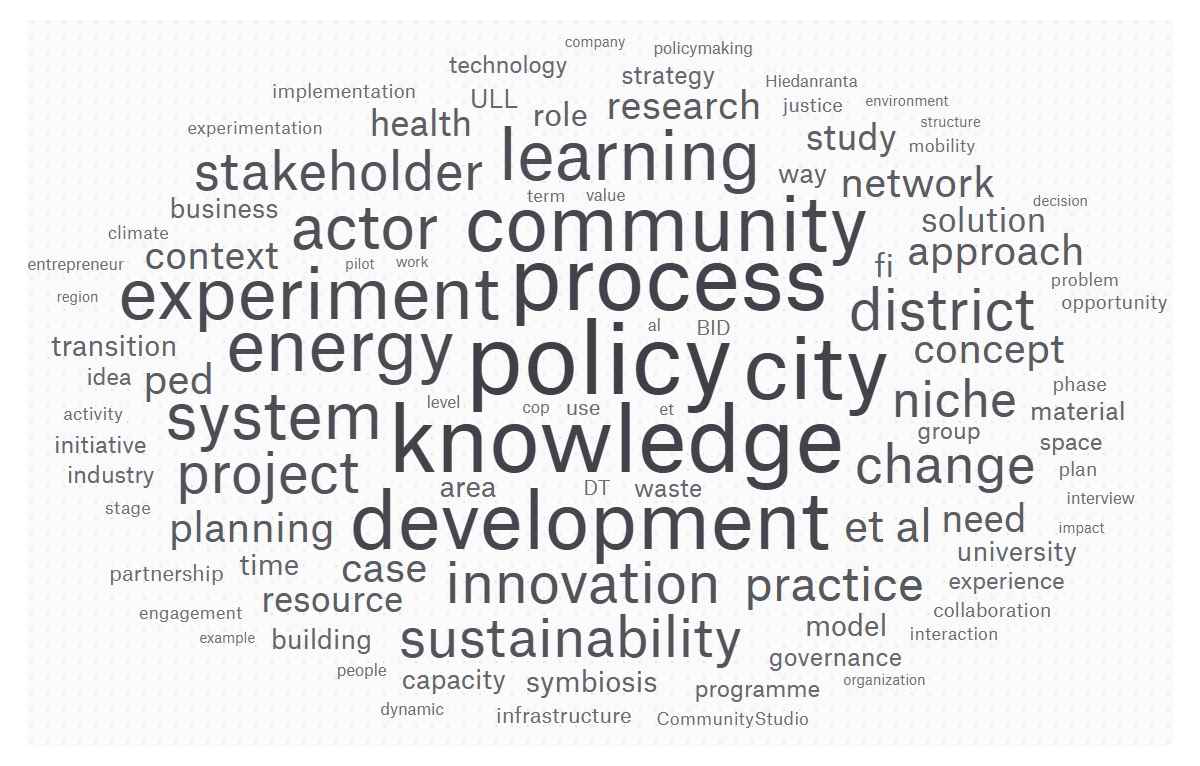 Figure 5. Exploratory lexical representation of the terms recurrently identified in the reviewed studies.
As shown in Figure 5, the term “learning” appears among the recurrent terms in the corpus, together with “community,” “knowledge,” “policy,” “innovation,” “network,” “experiment,” “development,” and “sustainability.” This recurrence is consistent with the presence of processes related to knowledge production and circulation (identified through the thematic analysis), development of institutional capacities, and collective construction of sustainability-oriented practices. Terms such as “learning,” “community,” and “knowledge” reflect the emphasis observed across the corpus on collaborative and territorially situated forms of learning [55].
The thematic analysis further shows that elements associated with policy, city, network, and experiment appear in studies addressing living labs, collaborative networks, and co-creation environments. In this context, experimentation is a mechanism by which urban policies, technologies, and practices can be tested, evaluated, and adapted.
Similarly, the presence of terms related to sustainability, energy, development, and change reflects the incorporation of sustainability issues into the analyzed studies. The literature on sociotechnical transitions emphasizes that transformations in urban systems involve processes of experimentation and the development of collective and institutional capacities, articulated with technological and social change [40].
The recurrence of terms such as “stakeholder,” “governance,” “practice,” and “collaboration” is also consistent with the importance attributed in the studies to the articulation among different actors. These terms align with the findings of the thematic analysis, which highlight the relevance of collaborative networks, participation, and multi-actor coordination in urban innovation processes.
By contrast, the lexical representation does not reveal a marked recurrence of terms related to the temporal dimension of learning. The limited recurrence of this dimension is particularly relevant given that the processes of social learning and territorial transformation unfold over time through participation, interaction, and sharing of practices among different actors [22]. This perspective is consistent with the sustainability-oriented approaches to social learning discussed by Wals (2015) [56], in which learning is understood as a continuous and reflective process for addressing complex problems characterized by uncertainty.
Regarding the learning dynamics identified in the studies, multiple learning dimensions were observed, including cognitive, territorial, institutional, transformative, and social aspects. A thematic analysis of the corpus identified the following dimensions:
•
•
•
•
In addition to the previously identified learning dimensions, another study revealed an explicit relationship between education and knowledge-based urban development. In this case, higher education and skill development are directly linked to regional productive capacities, urban context characteristics, and innovation district planning through interactions among universities, firms, and the government. Therefore, the educational dimension is embedded in the district’s territorial development logic, in close articulation with its productive and urban dimensions.
The distinction made by Jensen et al. (2007) [58] should be noted in the context of learning mechanisms. The authors differentiate between innovation modes based on formal scientific and technical knowledge (Science, Technology and Innovation) and those based on practical experience, interaction, and learning through doing and using (Doing, Using, and Interacting).
In clusters and industrial districts, regional learning and knowledge spillovers emerge as strategic factors in competitiveness, regional adaptation, and sustainable innovation. Regional learning is described in the literature as a territorially embedded process supported by continuous collaboration, institutional interaction, and knowledge exchange among regional actors. [59]. The analysis highlights the spillover effect and the transfer of knowledge that occur within a specific geographic area, constituting one of the central mechanisms for the territorial concentration of innovation [60].
Learning processes and knowledge circulation become more relevant when they are associated with the social and relational dimensions of sustainability. When learning is based on belonging, active participation in experiences strengthens the capacity for the practical transformation of individuals and organizations, favoring the incorporation of sustainability into the territorial, institutional, and social dynamics of urban innovation ecosystems [22]. From this perspective, governance and social reflection emerge as central elements in understanding how actors, institutions, and territorial networks coordinate innovation, learning, and sustainability processes in innovation areas.
Analysis of Social and Institutional Aspects for Sustainable TransitionsThe analysis of the 26 studies shows that the sustainable transformation of urban territories does not occur exclusively through the adoption of environmental technologies; it involves collective processes of experimentation, institutional adaptation, social participation, and shared knowledge building. From this perspective, research on sociotechnical transitions [40] explains that long-term structural transformation processes in social, technological, economic, and institutional systems require changes in social practices, public policies, governance models, culture, behavior, and forms of social organization, representing an interdisciplinary approach focused on understanding systemic transformations toward sustainability.
Based on this understanding, this section analyzes the social and institutional aspects of urban innovation areas. It first examines social participation as a dimension of collective learning and then focuses on the role of institutions in the coordination, continuity, and institutionalization of practices oriented toward sustainability.
According to the reviewed studies, social participation is a collaborative process based on dialogue and the collective construction of knowledge, operationalized through distinct participatory mechanisms, such as:
•
•
•
•
Thus, social participation is a fundamental requirement of collective learning for sustainability. By encouraging different actors to share experiences, build trust, and articulate multiple forms of knowledge in the context of uncertainty [29], it enhances the expansion of knowledge and shifts in understanding [61]. Sustainable transition processes require technical, institutional, and political investments, establishing a complementary relationship. As indicated in the thematic analysis, in addition to citizens, the effective participation of public or private institutions is essential for the consolidation of sustainability transition projects.
Only four of the analyzed texts did not directly address specific relationships with public or private institutions; instead, they presented aspects of organizational learning, social pedagogy, or technical metrics without emphasizing institutional relationships. In the remaining studies, different institutional mechanisms for coordinating sustainable learning in urban innovation areas emerged.
This phase of the analysis begins by exploring the role of institutions in the coordination, continuity, and institutionalization of sustainability-oriented practices. The analyzed texts point to collaborative governance [62] and multi-actor governance as network structures with shared decision-making [63,64] capable of articulating the government, universities, the private sector, and civil society in continuous processes of coordination, deliberation, and collective knowledge building. Projects such as community studio, a partnership between the university and community; PEDs, which worked with collaborative governance to integrate technical, social, and financial systems; and UbiGo, which had the municipality as a strategic partner in the experimental phase of the project, exemplify partnerships that assume distinct roles as promoters, facilitators, or partners.
Institutional learning is a strategic element in organizational adaptation and overcoming obstacles. It requires the ongoing review of practices, routines, and coordination models [65], as well as the capacity to learn, adapt, and reorganize organizational structures in complex and dynamic contexts [66]. Among the identified contributions, institutional learning appears in the analyzed corpus through SWAP IT CoP, which supports reflective practice and organizational networking; the Thanyaburi Learning City, based on local socioeconomic understanding that enables appropriate development strategies; and Walk-centric Deliberations, an urban pedagogical methodology that uses urban walks to train future decision-makers through civic learning.
Another important mechanism for innovation is the quadruple helix and innovation ecosystem, with articulation between the government, academia, the private sector, and civil society, in which collaborative processes favor institutional adaptation, knowledge circulation, and sustainable urban transformation [7,8]. Examples include the Innovation Ateliers methodology, which uses the quadruple helix structure to co-create PEDs; the Macquarie Park Innovation District, which aims to activate urban vitality and attract knowledge industries; and the By-Product Synergy Project, an initiative mediated by an industry association to coordinate the exchange of resources between companies and the government.
Protected experimentation niches allow sociotechnical innovations to be tested in real-world contexts, favoring the maturation of innovative practices before they are incorporated into urban systems [16]. The mechanisms presented in the texts include the Hiedanranta ULL, which tests next-generation sanitation conditions with dry toilets; Eva Lanxmeer, which works on the integration of water, energy, and waste systems in a residential district; Hammarby Sjöstad, which contributed to the development of the Eco-cycle Model; and Enstadt Pfaff, which functions as a living laboratory for testing energy and digitalization technologies and incorporates concepts related to eco-neighborhoods or eco-villages.
Finally, the international circulation of urban models requires institutions to translate and adapt their innovation policies and practices to local specificities [67]. The analyzed texts include Business Improvement District Pilot Programs before their legislative approval; the implementation of industrial clusters that facilitate the spillover of knowledge between nearby companies; digital business districts; and the Drake Landing Solar Community, an international study for replicating solar energy use in net-zero settlements. These mechanisms and dimensions identified in the analysis are synthesized in Figure 6, which provides a conceptual organization of the main elements associated with learning for sustainability in urban innovation areas.
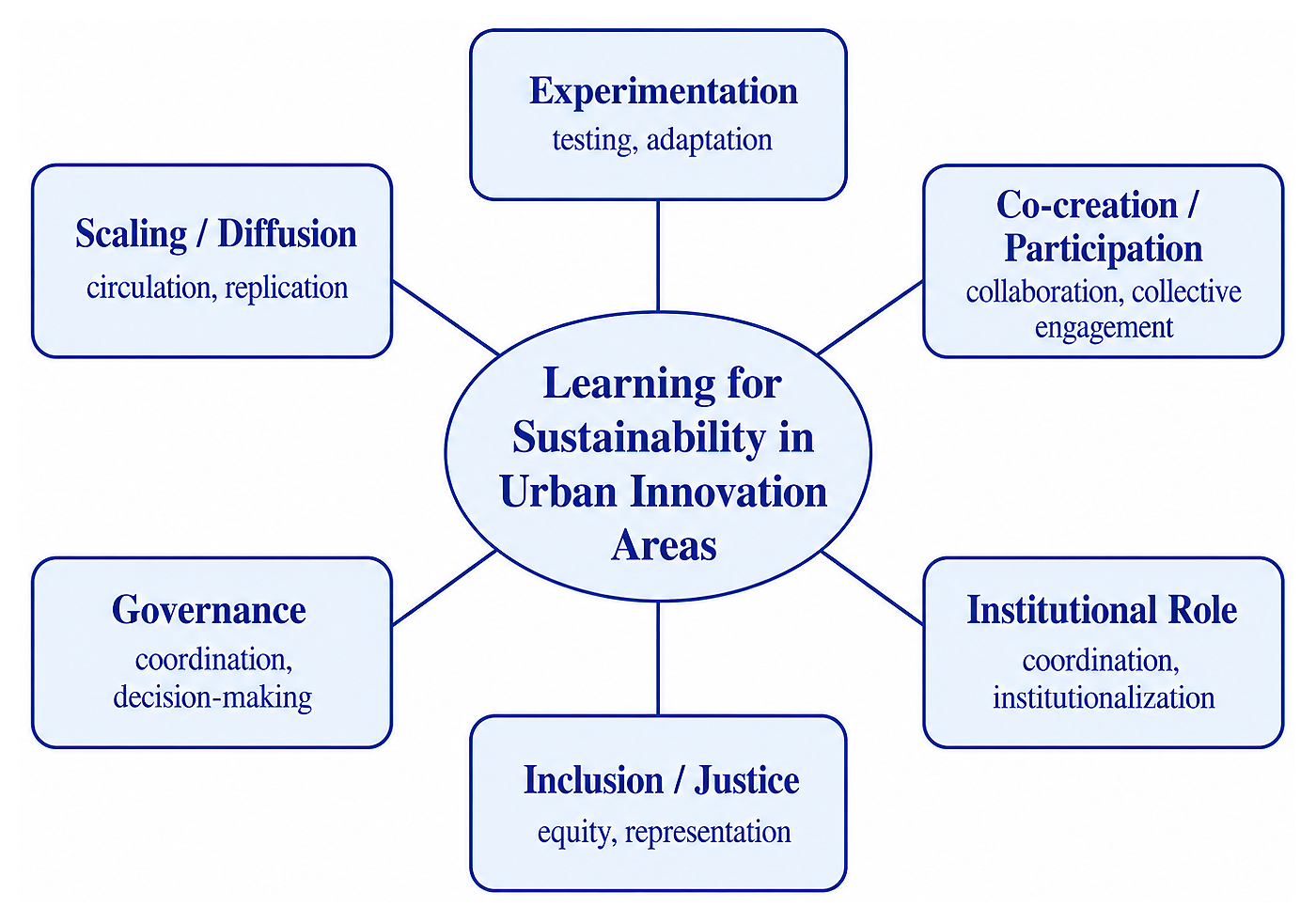 Figure 6.
Conceptual synthesis of the main dimensions associated with learning for sustainability in urban innovation areas.
Figure 6.
Conceptual synthesis of the main dimensions associated with learning for sustainability in urban innovation areas.
As synthesized in Figure 6, these dimensions interact in shaping urban innovation areas as territorial environments for sustainability-oriented learning. Data analysis enabled the identification of consistent patterns in the corpus, especially regarding the structuring dimension of learning, relevance of social participation, existence of institutional governance mechanisms, and strategic function of urban innovation areas as spaces for experimentation with sustainability. The following discussion deepens these results, articulating them within the theoretical framework and examining their contributions, limitations, and implications for understanding urban innovation areas as territorial learning ecosystems for sustainability transitions.
This scoping review, together with an integrated analysis of the findings, made it possible to identify projects that made significant contributions to a sustainable transition in urban areas. The themes presented show that social participation, institutional arrangements, experimentation processes, and the capacity for collective learning are fundamental elements in understanding how these territories contribute to sustainable urban transitions.
The dataset shows that the concept of urban innovation areas is being broadened, moving beyond their understanding as spaces dedicated exclusively to economic and technological development and toward their interpretation as territorial learning ecosystems [9], incorporating dimensions related to collaborative governance, collective learning [56], sustainability, and urban transformation [52].
Research has revealed growing societal engagement through continuous participation in ULLs, collaborative networks, co-creation processes, social learning mechanisms, and communities of practice within urban innovation areas [68]. These collaborative environments foster the construction of collective intelligence through the distributed circulation of knowledge among different social actors [69] and indicate that these territories operate as learning ecosystems [56] capable of addressing environmental, social, and institutional challenges.
Within this environment of interaction and co-production of knowledge, the necessary conditions emerge for the construction of transformations oriented toward sustainability, resulting from the capacity of territories to learn, experiment, adapt, and reorganize themselves continuously in the face of complex challenges [22,40,56]. This interpretation broadens the debate on areas of urban innovation and brings it closer to research on social and collective learning, ESD, and sociotechnical transitions [52], orienting these ecosystems toward the development of capacities and skills for sustainability.
Along with this convergence, there is a growing need for investment in sustainable transitions, given the multiple transformations experienced by increasingly complex urban environments. The results of the analyses revealed that the learning observed in the studies did not occur spontaneously; rather, it depended on the existence of governance structures capable of articulating actors, resources, interests, and knowledge distributed throughout the territory. The recurrence of models based on the quadruple helix, ULLs, PEDs, innovation workshops, and collaborative networks suggests that territorial governance acts as an institutional infrastructure for learning.
These initiatives foster the development of collective capacity for institutional adaptation and sustainable innovation. An analysis of the study’s corpus indicates that the recent role of institutions in the projects examined requires new configurations of practices, norms, and governance models oriented toward sustainability and resilience. Organizational learning enables a critical review of assumptions and the transformation of established institutional patterns [70], challenging institutions to learn continuously, reorganize, and respond collaboratively to environmental and social changes [66].
Despite their potential, learning processes face substantial obstacles, including institutional inertia, rigid models that confine new practices to the experimental stage and prevent deeper transformations, and a lack of clarity regarding stakeholder expectations, which may lead participants to abandon innovation before systemic learning occurs [40,52]. According to previous studies, a lack of sustained community involvement and community opposition emerged as common barriers to the success of sustainable projects. These barriers may be compounded by poorly managed participatory processes, captured by dominant political or economic interests, thereby neutralizing the transformative potential of community engagement. Another limiting factor stems from learning being a slow and continuous process, which may conflict with the rapid cycles of experimental projects or discontinued public policies. The time and resources needed for genuine participation may conflict with the urgent timelines for climate goals.
This finding shifts the interpretative axis of traditional governance approaches, which are often aligned with centralized administrative coordination, and repositions governance as the creation of conditions that enable different actors to learn collectively [56], build shared visions, and produce territorially contextualized solutions [22]. From this perspective, territorial governance assumes a strategic role in a sustainable transition by connecting scientific knowledge, local knowledge, institutional capacity, and citizen participation [9,66].
According to Markard et al. (2012) [40], sustainable transitions involve multidimensional and long-term processes supported by learning, experimentation, and interactions among institutional actors. In this context, social participation, collaborative governance, and local knowledge emerge as relevant factors in advancing the SDGs [5,56]. The results indicate that urban innovation policies should prioritize permanent mechanisms for collective learning, participation, and experimentation rather than focusing solely on investments in physical or technological infrastructure.
Thus, for urban transformations to become a reality and learning for sustainability to be effective, it is fundamental that learning be understood as inseparable from practice, experience, and collective action [24,71] rather than as a transfer of knowledge restricted to theoretical concepts. Learning for sustainability involves the development of collective capacities to deal with the complexity and uncertainty of contemporary socioecological challenges, in which knowledge, participation, and governance are articulated around real sustainability challenges [22,56,72].
Research on sustainability transitions emphasizes the need for integrated and multidimensional approaches capable of accounting for the interactions among social, institutional, territorial, and political factors [40,41]. This perspective is particularly relevant to the findings of this review, which indicate that the learning and sustainability processes in urban innovation areas cannot be understood independently of governance, participation, and institutional dynamics.
Although the analyzed studies express the potential of urban innovation areas to promote collective learning, the findings challenge overly optimistic interpretations of sustainable transitions. The literature includes contributions by Geels (2002) [52] and Markard et al. (2012) [40], who pointed out scenarios marked by social inequalities, asymmetrical institutional capacities, and disputes over the definitions of problems and legitimate solutions.
For solutions to be considered legitimate, participation must be guaranteed through formal mechanisms for the involvement of actors, ensuring equality in influencing decisions, accessing resources, and structuring the territorial agenda. Innes and Booher (2004) [73] argue that collaborative processes lead to transformative results when different groups have real conditions for participation and deliberation. Similarly, Fraser (2008) [74] confirms that social justice depends on the recognition and political representation of the groups involved in decision-making processes, in addition to equitable access to the distribution of resources.
The literature on environmental justice allows us to ground sustainability as an inseparable element of social equity, emphasizing fair treatment in the formulation and implementation of environmental laws and the need to confront environmental degradation alongside racial and class discrimination [75]. According to Schlosberg (2007) [76], environmental justice articulates the dimensions of recognition, participation, and fair distribution of environmental benefits and risks in an integrated manner, requiring that different groups have access to decision-making processes and the benefits produced by environmental policies. The results of this review suggest that urban innovation areas need to be analyzed for their capacity to promote inclusion and expand opportunities for the co-production of knowledge.
Although the importance of collaborative spaces such as ULLs, PEDs, and quadruple helix structures is recognized, the literature and experience show that actors in innovation ecosystems possess different levels of power, resources, technical knowledge, and capacity for influence. Therefore, territorial governance processes are inevitably permeated by power relations that determine the processes of exclusion, legitimation of knowledge, and distribution of opportunities for participation [74,77].
These power relations constitute an inherent dimension of social processes. On one hand, they can enable democratic forms of coordination and participation; conversely, they can legitimize structures of domination [78]. Thus, power relations may redirect sustainability from a collective agenda toward the defense of particular or economically dominant objectives [74,76], structuring sustainable enclaves [79]. Hence, urban initiatives focused on sustainability may generate benefits that are concentrated in certain territories or social groups, producing ecologically qualified spaces that remain disconnected from the broader needs and access rights of the urban population [80]. These sustainability “islands” function as mechanisms for sociospatial differentiation.
Associated with this phenomenon is green gentrification, understood as the process by which environmental interventions and urban improvements can contribute to increased property values and the gradual replacement of historically vulnerable populations [81]. Although this issue appears only incipiently in the studies analyzed, it represents an important agenda for future research on urban innovation and sustainability.
The analyzed evidence converges with the understanding that sustainable transitions are not exclusively technical or consensual processes. As highlighted by Geels (2002) [52] and Markard et al. (2012) [40], sociotechnical transformations involve disputes between different visions of the future, institutional interests, and development models. In light of this evidence, understanding urban innovation areas as territorial learning ecosystems requires recognizing that the processes of building sustainability are simultaneously educational, political, and territorial.
An integrated reading of the analyzed studies allows us to identify points of convergence between the urban innovation processes described in the literature and the principles of ESD, suggesting a still underexplored field of dialogue between these approaches. Elements such as social learning, co-creation, critical reflection, collective knowledge building, and active participation constitute the central components of both ESD and urban innovation ecosystems observed in the corpus. This convergence is also consistent with research published in the Journal of Sustainability Research, which highlights the expanding connections between ESD and broader sustainability domains [82], as well as the role of experiential and community-based learning in developing competencies for sustainability [83]. From a territorial and environmental perspective, this agenda also requires attention to the physical conditions and vulnerabilities of urban territories as urban development is conditioned by environmental hazards and territorial suitability [84].
The advancement of this agenda requires recognizing that sustainable transitions are not consolidated solely through the adoption of technical solutions or the implementation of innovation projects, but through the capacity of territories to articulate learning, governance, and social participation in continuous processes of transformation. The results indicate that urban innovation areas can function as strategic spaces for such articulation by combining experimentation, co-creation, knowledge circulation, and multi-actor governance.
However, the transformative potential of these areas depends on the institutional conditions that sustain these processes over time. This implies broadening inclusion, strengthening social participation, addressing power asymmetries, and orienting innovation toward public sustainability goals. Thus, the contribution of urban innovation areas should be understood not only in terms of the projects they implement or the solutions they test, but also in terms of the collective capacities they produce, institutional relations they reorganize, and modes of learning they enable within the territory.
The objective of this study was to map and synthesize how the scientific literature addressed sustainability-oriented learning processes in urban innovation areas, with a particular emphasis on understanding these contexts as territorial learning ecosystems. This review aimed to identify learning mechanisms, governance and participation arrangements, institutional roles, and research gaps related to sustainability transitions. The analysis of a corpus comprising 26 articles selected from the Scopus and Web of Science databases enabled the identification and systematization of the main dimensions through which learning, sustainability, and urban innovation areas were articulated.
As highlighted in the literature, innovation districts, innovation ecosystems, and ULLs are often studied separately; however, an integrated understanding of these spaces as learning environments focused on sustainability is still lacking.
Based on the thematic analyses, it was observed that the studies comprising the corpus of this research addressed issues related to learning for sustainability in connection with other themes, such as social participation and the role of institutions. Taken together, these results suggest that urban innovation areas constitute more than just spaces for economic and technological innovation. They can be understood as territorial learning ecosystems that articulate sustainability through territorial governance, multi-stakeholder participation, and knowledge production.
From this perspective, sustainable transitions fundamentally depend on the capacity of territories to build continuous processes of collective learning and transform territorial governance mechanisms, enabling them to address power asymmetries, promote more inclusive participatory processes, and ensure that the benefits of innovation are distributed in a socially and environmentally just manner. This understanding significantly broadens the field of urban innovation studies and opens new possibilities for dialogue between territorial governance, social justice, ESD, and urban sustainability.
Although the approach adopted was adequate for the exploratory and integrative nature of this scoping review, some limitations should be considered. The analysis focused on studies identified from the selected databases and established inclusion criteria, which may have restricted the incorporation of relevant publications available in other databases, gray literature, or institutional documents frequently used in the fields of urban innovation and transitions to sustainability. The databases consulted brought together a significant portion of the high-impact international scientific production on the subject, thereby providing consistency to the analyzed corpus.
Furthermore, although the review allowed for the systematization and integration of evidence on learning, participation, and governance mechanisms present in urban innovation areas and proposed an interpretation that repositions these environments as territorial learning ecosystems, the nature of the analyzed studies does not allow for establishing causal relationships between these elements or evaluating their effectiveness in different territorial contexts. Similarly, this study does not allow us to determine the mechanisms that have the greatest influence on the processes of transitioning to sustainability or how their interactions evolve over time.
Future research can advance through comparative case studies, longitudinal analyses, and empirical investigations to examine how learning capacity, territorial governance, and sustainability are built and consolidated in specific contexts. The need to develop and validate indicators that allow the evaluation of the contribution of urban innovation areas as territorial learning ecosystems to sustainability is also highlighted, thereby expanding the possibilities for monitoring and comparing different experiences.
The data supporting the findings of this study are available within the article and its supplementary materials. No additional datasets were generated or analyzed beyond those included in the scoping review process.
Conceptualization, MEVJ, DOS, CR and JMP; methodology, MEVJ, DOS, CR and JMP; software, MEVJ, DOS, CR and JMP; validation, MEVJ, DOS, CR and JMP; formal analysis, MEVJ, DOS, CR and JMP; investigation, MEVJ, DOS, CR and JMP; resources, MEVJ, DOS, CR and JMP; data curation, MEVJ, DOS, CR and JMP; writing—original draft preparation, MEVJ, DOS, CR and JMP; writing—review and editing, MEVJ, DOS, CR and JMP; visualization, MEVJ, DOS, CR and JMP; supervision, MEVJ, DOS, CR and JMP; project administration, MEVJ, DOS, CR and JMP; funding acquisition, MEVJ, DOS, CR and JMP. All authors have read and agreed to the published version of the manuscript.
The authors declare no conflicts of interest.
This study was financed in part by the Coordenação de Aperfeiçoamento de Pessoal de Nível Superior—Brasil (CAPES)—Finance Code 001.
The authors gratefully acknowledge the support of the Coordenação de Aperfeiçoamento de Pessoal de Nível Superior—Brasil (CAPES) and La Salle—Ramon Llull University, whose academic environment and institutional support enabled the international research experience that contributed to this study. The authors thank Devi Chithran for reviewing the manuscript and contributing to the improvement of the text.
1.
2.
3.
4.
5.
6.
7.
8.
9.
10.
11.
12.
13.
14.
15.
16.
17.
18.
19.
20.
21.
22.
23.
24.
25.
26.
27.
28.
29.
30.
31.
32.
33.
34.
35.
36.
37.
38.
39.
40.
41.
42.
43.
44.
45.
46.
47.
48.
49.
50.
51.
52.
53.
54.
55.
56.
57.
58.
59.
60.
61.
62.
63.
64.
65.
66.
67.
68.
69.
70.
71.
72.
73.
74.
75.
76.
77.
78.
79.
80.
81.
82.
83.
84.
Jotz MEV, Souza DO, Rapetti C, Piqué JM. Learning for Sustainability in Urban Innovation Areas: A Scoping Review. J Sustain Res. 2026;8(4):e260082. https://doi.org/10.20900/jsr20260082.

Copyright © Hapres Co., Ltd. Privacy Policy | Terms and Conditions


