Location: Home >> Detail
J Sustain Res. 2026;8(4):e260083. https://doi.org/10.20900/jsr20260083
 ,
Raghu KC ,
Tapio Ranta
,
Raghu KC ,
Tapio Ranta
Laboratory of Bioenergy, LUT School of Energy Systems, Lappeenranta–Lahti University of Technology LUT, Lönnrotinkatu 7, 50100 Mikkeli, Finland
* Correspondence: Jarno Föhr.
Farms in many regions can have difficulty obtaining affordable bedding for animals. Many farms have turned their attention to the potential use of manure itself as bedding, but its safe use would first require hygienization. This study tested the farm-specific ManPas hygienization system on a local horse farm in Eastern Finland. The principle of the system is that manure is heated for a specified time, which can destroy pathogens and reduce seed germination. The purpose was to investigate the suitability of the system for hygienizing bedding manure to meet the requirements set by the EU and examine its benefits within the framework of a sustainable circular economy based on farm-specific materials. The study determined the bacterial amounts of E. coli and Salmonella, growing medium suitability, and the degree of maturity of three different types of bedding manure before and after hygienization. The hygienized material batches consisted of wood- and peat-based bedding manures from horses and reed canary grass-based bedding manure from cattle. Before hygienization, the bedding manures had a high E. coli concentration, ranging from 120,000 to 7,000,000 CFU/g. Immediately after processing, the bedding manures contained no E. coli or had a concentration below 100 CFU/g. Salmonella was not detected in any samples. Reusable wood-based bedding manure was the most suitable growing medium, as it had a low bulk density of 270 kg/m3 and a moderate compost activity of 4.89 mg CO2-C/g VS/day. However, its high pH of 9.2 requires acidification treatment before it can be used as a growing medium. The ManPas system plays a key role in the sustainable circular economy, as it enables the reuse of bedding manure as bedding, a soil conditioner material, and a potential growing medium. The system can reduce manure-related costs on farms.
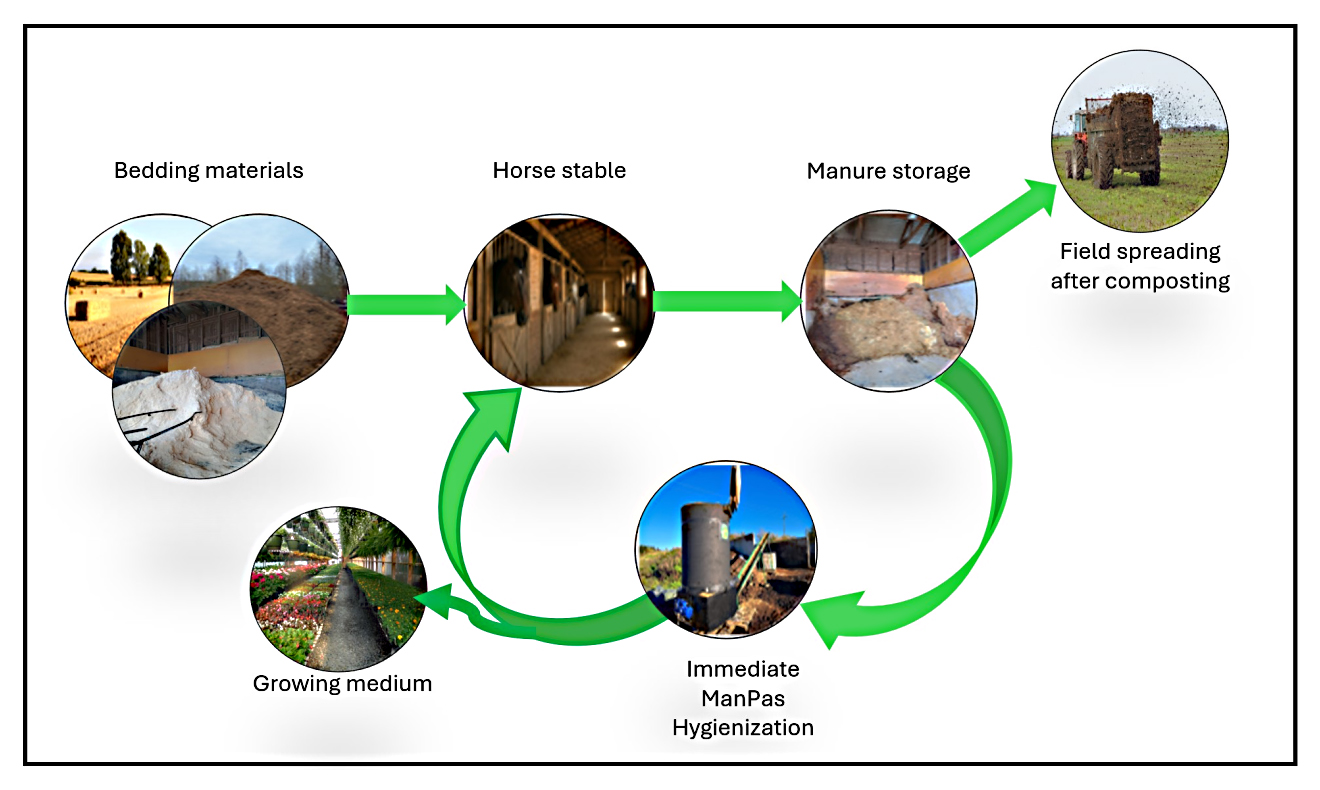
Environmental friendliness, a sustainable circular economy, and the efficient use of resources have become important issues in Finland’s agricultural sector [1]. One current challenge in agriculture is related to the availability, use, and final disposal of animal bedding. This is particularly true given that traditional peat has been the dominant source of bedding and is currently being phased out [2]. In Finland, the most commonly used animal bedding is peat (40%), which has been inexpensive and easily available [3]. In addition, straw (24%), wood-based sawdust (18%), and other materials (18%)—such as reed canary grass (RCG), hemp, etc.—have been used. Another challenge is that peat is no longer considered a renewable natural resource in Finland, and its use for energy purposes is declining due to government measures [4,5]. This also directly affects the availability and use of bedding, as animal bedding is often only a by-product of energy-based peat production. The next options for replacing peat bedding would be straw and sawdust, but their availability and competition with the energy industry put pressure on the costs of farms that use these materials.
However, sales volume of peat bedding is predicted to halve between 2024 and 2028 [3,6]. As total peat production decreases, there is a real need for the availability of animal bedding. In addition, due to the energy crises of recent years, competition for wood-based materials—both as bedding and as a source of energy—has increased [7]. The problem has been that sawdust or cutter shavings are not widely available as bedding, or if they are, they are generally more expensive [8]. In addition to issues obtaining bedding, another major problem on a farm-by-farm basis has been the final disposal of the manure resulting from the bedding, which consists of animal feces and urine [9]. Manure may contain weeds and waste oats, so it should be composted in a pile for an extended period before being spread on the fields. The utilization options for wood-based bedding manure are limited, and transporting it over long distances is costly [10,11].
Due to the above-mentioned problems, the focus has shifted to the bedding manure itself. This article discusses the possibility of hygienizing or pasteurizing bedding manure. After pasteurization, it could potentially be reused as recycled bedding and quickly spread over fields or gardens [12]. In terms of timing, the bedding manure would be spread on the farm immediately, rather than only after a year of storage in the compost heap. However, reusing bedding manure as bedding without pasteurization can be dangerous for animals, as it can cause, among other things, mastitis in dairy cattle. Some studies have shown that pathogen loads are a cause for concern due to the nature of the material, as pathogens have been isolated from both fresh and recycled manure [13,14].
Pasteurization, which is the same as hygienization, generally refers to a process that normally takes place at temperatures below 100 °C [15,16]. Hygienization either destroys or deactivates microorganisms, i.e., bacteria, that could contaminate materials or pose a risk of disease [17]. Among these bacteria, Escherichia coli (E. coli) stands out; it is found in the intestines of humans and animals. E. coli is, mainly, a beneficial bacterium that forms part of the normal intestinal flora of humans and animals, preventing disease-causing microbes from infecting or multiplying in the host’s intestine [18]. Some E. coli bacteria have developed properties that allow them to cause intestinal infections in humans, which manifest as diarrhea.
Another very common intestinal bacterium is Salmonella, which can grow in both acidic and anoxic conditions [19]. Salmonella is one of the most common causes of food poisoning worldwide and poses a significant public health problem in many countries. There are over 2600 types of Salmonella, all of which can cause disease in humans [20]. Salmonella can also survive outside the intestine. Mammals, birds, and reptiles can act as asymptomatic carriers of Salmonella, which is spread into the environment through their feces. Animals can become infected through contaminated feed or drinking water. Salmonella can cause serious systemic infections, such as typhoid fever and dysentery, but also febrile diarrhea [21].
Hygienization destroys harmful bacteria in the bedding manure, but also all germinating weed seeds and the much-feared waste oats. After treatment, the bedding manure can be reused as a circulated bedding. In this case, the treated bedding manure can be mixed with the unused original bedding. In addition, after hygienization, the bedding manure can be used immediately as a soil conditioner for fields or gardens, or as mulch. Leppäkoski et al. (2025) [12] had previously studied the hygienization of horse bedding manure using the ManPas 1000 hygienization system, which effectively destroys bacteria and reduces seed viability. Their research focused on the use of bedding manure as a growing medium after hygienization.
The main goal of this study is to test the ManPas 300 hygienization system (Figure 1) and investigate whether it meets the hygiene requirements [22] set by the EU for bedding manure. The EU hygiene requirement for treated manure involves heat treatment at a minimum of 70 °C for at least 60 min, unless a validated alternative process is approved by the competent authority. This goal constitutes the first research question of the study. The second research question is whether the ManPas system improves the sustainable circular economy of materials on a farm-by-farm basis. The ManPas hygienization system is one of the first prototypes from the manufacturer Manpas Oy [23]. The study will hygienize horse manure, which has been used with wood- and peat-based bedding, and cattle manure, which has been used with RCG-based bedding. To support the study, bedding manure samples will be collected in sampling bags for laboratory analysis. The purpose of the sampling is to determine the quantities of bacteria (E. coli and Salmonella), the growing medium properties, and the maturity (CO2 production) of the bedding manure before and after hygienization.
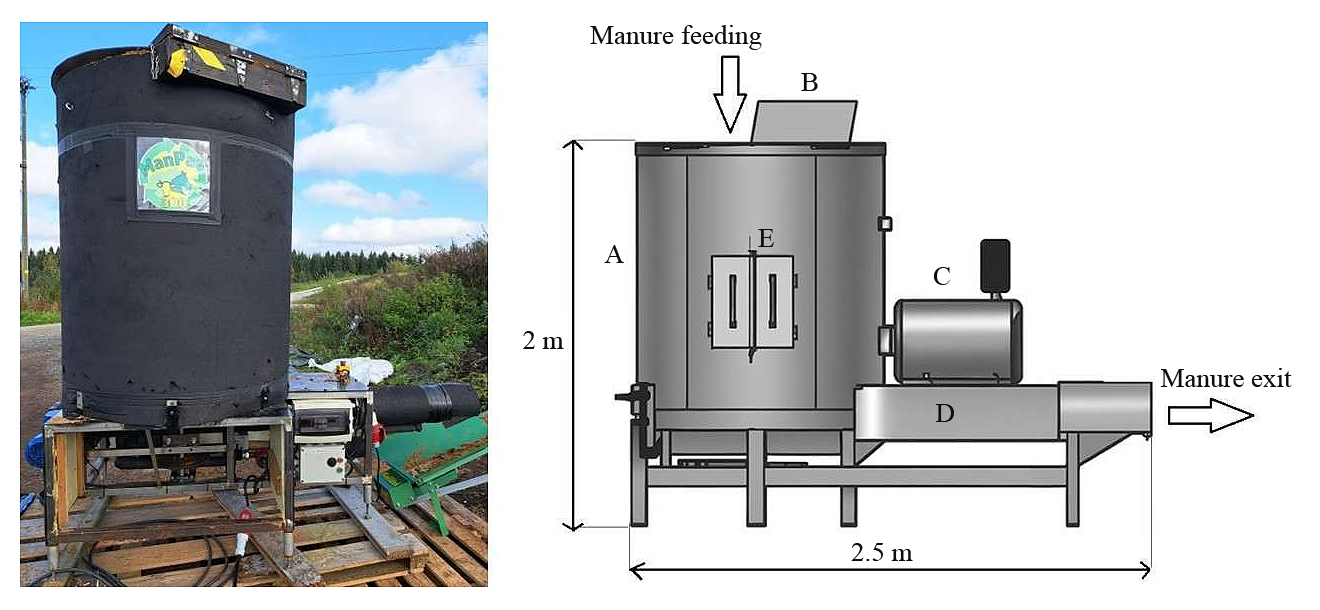 Figure 1.
On the left is the ManPas 300 hygienization system. On the right is a schematic diagram of this system: (A) silo, (B) opening for manure feeding, (C) electronic control station for heating elements and motors, (D) screw with heating element, and (E) maintenance opening.
Figure 1.
On the left is the ManPas 300 hygienization system. On the right is a schematic diagram of this system: (A) silo, (B) opening for manure feeding, (C) electronic control station for heating elements and motors, (D) screw with heating element, and (E) maintenance opening.
The ManPas hygienization system is a cylindrical batch reactor that is 2.5 m long, 1 m wide, and 2 m high. All self-heating biomass that requires hygienization is suitable for the system. Fresh biomass, in particular, is best suited to the system’s process and the system is more suitable for small biomass fractions than for long stalks.
The most visible parts of the ManPas system consist of a silo and a heating screw (Figure 1). In the process itself, the bedding manure is first fed into the silo, from the bottom of which it is transported to the system’s heating screw. This is made possible by a rotating agitator blade at the bottom of the silo, which breaks up the manure lumps, prevents buckling, and actively guides the bedding manure toward the opening of the heating screw. The principle is that the bedding manure is heat-treated in the heating screw at a temperature of at least 70 °C for one hour, which means that the process meets EU hygiene requirements [22].
The system features an automatic manure handling process, which is controlled by an electronic control unit. Thanks to this electronic control, the bedding manure is transported from the silo to the heating screw. Both the agitator blade and the heating screw rotate simultaneously during the operating phase. When the desired temperature has been reached and maintained in the screw for a sufficient period of time, the bedding manure is removed from the screw. TEAT PT1000 temperature sensors, manufactured by Produal Oy, continuously monitor the hygienization phase, and the bedding manure is not removed from the screw unless the temperature has risen above the set value.
The electricity consumption for heating the bedding manure is 40 kWh/m3, and the system operates on three-phase current [24]. Electricity is used to heat the liquid jacket that frames the screw. Even before the power is turned on, the natural decomposition of the bedding manure, due to microbial activity, raises its temperature to approximately 40–60 °C in the silo, depending on the conditions of the manure. The system’s capacity ranges from 300–1000 L/day, depending on the desired processing temperature [24]. At a capacity of 300 L/day, the processing temperature is 70 °C, and the capacity increases as the temperature is raised.
Once a 1 m3 silo is full, it takes between one and three days to empty through the system, but it takes only 18–60 min to pass through the heating screw. The system’s capacity corresponds to the processing of the bedding manure output of 6–20 horses daily, assuming that one horse produces about 50 L of bedding manure per day, as reported by Manni et al. (2023) [3] in their study. The farm-specific hygienization system enables a new storage format for bedding manure, as traditional storage can be replaced by a product warehouse [25].
Test SetupIn the tests, a separate, 7.5-m-long Kellfri firewood belt conveyor [26] was used to transport the bedding manure from the screw outlet, which in turn conveyed the hygienized bedding manure to an IBC container (Figure 2). The conveyor was synchronized to operate simultaneously with the rotations of the silo’s agitator blade and heating screw.
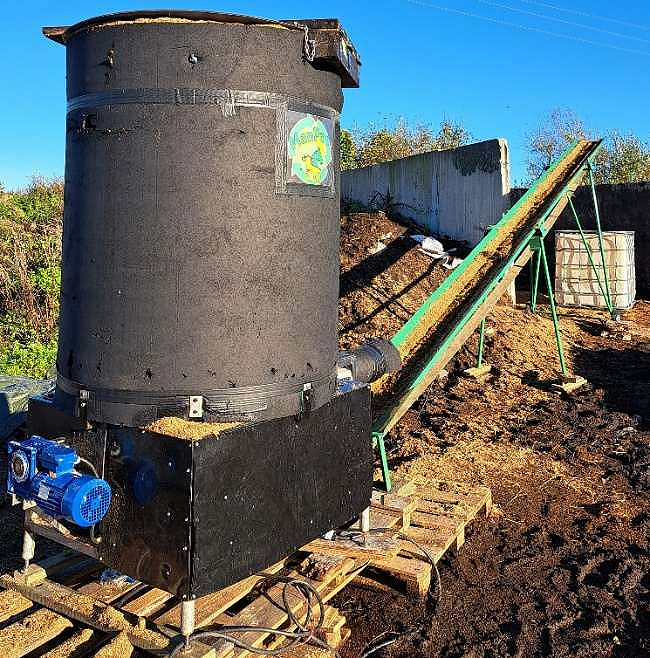 Figure 2.
Test setup: a belt conveyor connected to the ManPas system that transfers manure from the screw to the IBC container.
Figure 2.
Test setup: a belt conveyor connected to the ManPas system that transfers manure from the screw to the IBC container.
The hygienization tests were performed using the ManPas system on horse and cattle bedding manure in a stable yard in Eastern Finland. The horse manure to be processed was fresh, no more than two weeks old. The cattle manure had been in the yard for about six months prior to processing. The ManPas system was used to perform test runs for the following types of bedding manure:
-
-
-
In the study, one independent test run was conducted for each type of bedding manure, and all tests proved to be reproducible. Since only one independent test run was conducted for each bedding manure type, inferential statistical tests were not applied in this study. The operating settings of the ManPas system were the same in each test, with a temperature of 82 °C and a residence time of 26 min on the heating screw. The study did not include spatial temperature mapping or particle-level residence-time-distribution measurements. The reported residence time therefore represents the nominal operating value rather than the measured residence time of individual material particles.
In the next phase, the bedding manure remained on the belt conveyor for 13 min, where it cooled to ambient temperature, before finally ending up in an IBC container. The purpose of these tests was to perform rapid hygienization of the bedding manure that meets the hygiene requirements set by the EU in Regulation (EU) 2019/1009 [22] for higher temperatures. At the same time, it was investigated whether a shorter holding time is sufficient to hygienize bedding manure.
The manual collection of samples from the bedding manure followed, in accordance with the SFS-EN ISO 18135:2017 [27] standard for solid biofuel sampling. Samples were collected from the silo (initial condition), the screw outlet (before contact with the belt conveyor), and the IBC container (final condition). The properties and bacterial counts of the bedding manure were determined for the samples from the silo and the IBC container, while only the bacterial counts were determined for the sample from the screw outlet. In addition, two samples were collected from all test run beddings, which were located in the farm’s bedding storage areas, to determine the bacterial counts. The bedding had not been used and had been in storage for a couple of months.
The samples were examined according to the analysis plan:
-
-
-
The combined sampling and analysis plan for each test run is shown in Table 1.
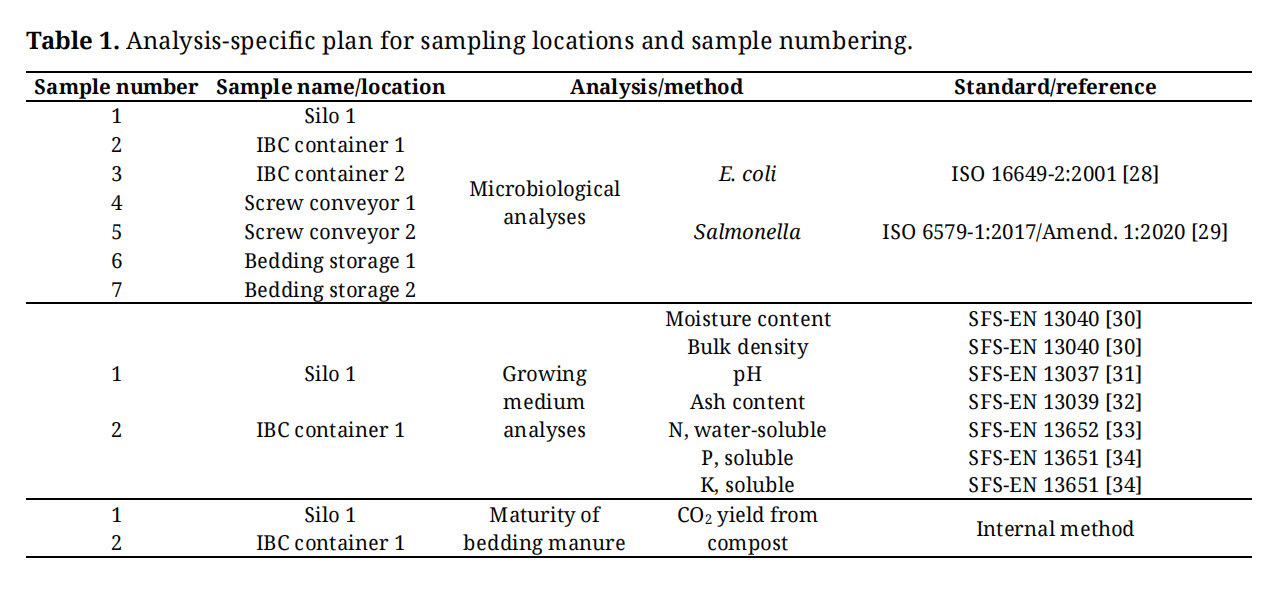 Table 1. Analysis-specific plan for sampling locations and sample numbering.
Figure 3 shows the visual appearance of the bedding manure before and after the hygienization processes. The bedding manure contained a minimal amount of hay. After hygienization, the bedding manure became more homogeneous, so it no longer had many lumps or clumps. The hygienized bedding manure was virtually odorless, so it no longer had the characteristic smell of manure.
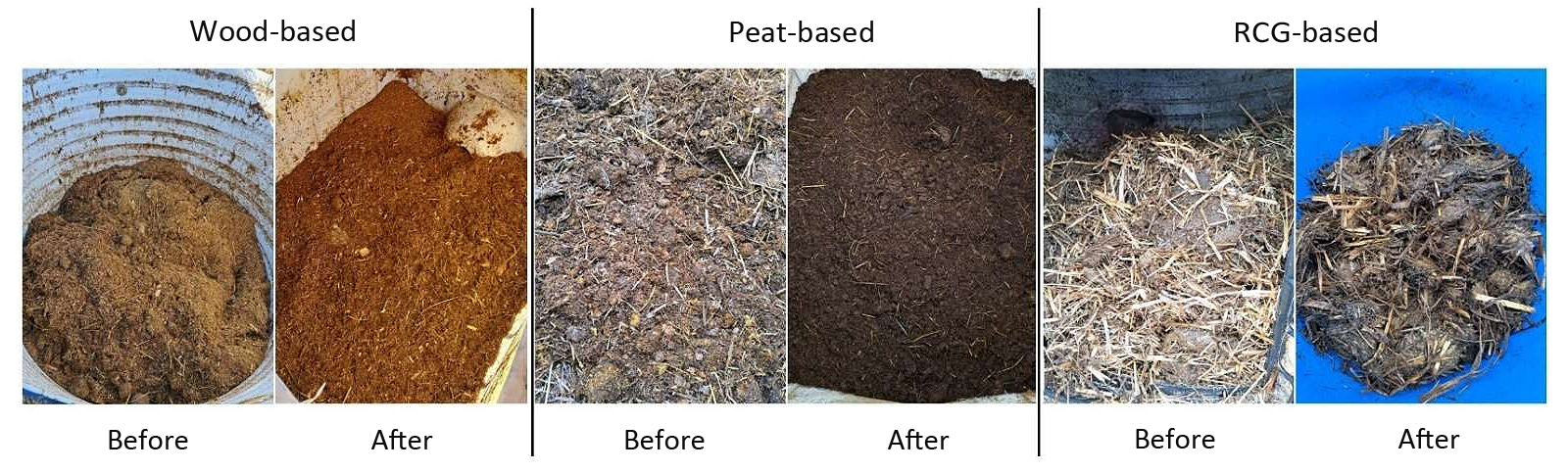 Figure 3.
Visual observations of wood-, peat-, and RCG-based bedding manures before and after hygienization.
Figure 3.
Visual observations of wood-, peat-, and RCG-based bedding manures before and after hygienization.
Table 2 presents the results of the growing medium analyses and the maturities (CO2 yields) of the bedding manures, which were highly characteristic of this type of material. Table 3 also presents the results of Table 2 as relative percentage changes.
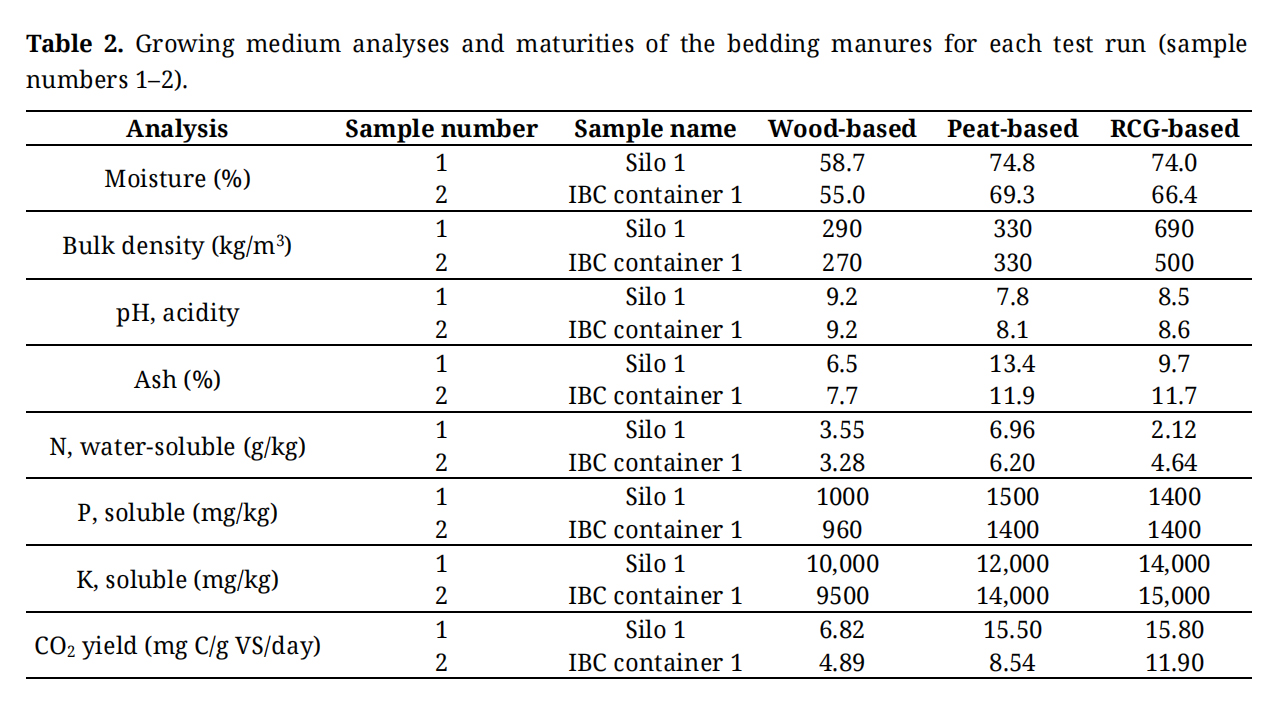 Table 2.
Growing medium analyses and maturities of the bedding manures for each test run (sample numbers 1–2).
Table 2.
Growing medium analyses and maturities of the bedding manures for each test run (sample numbers 1–2).
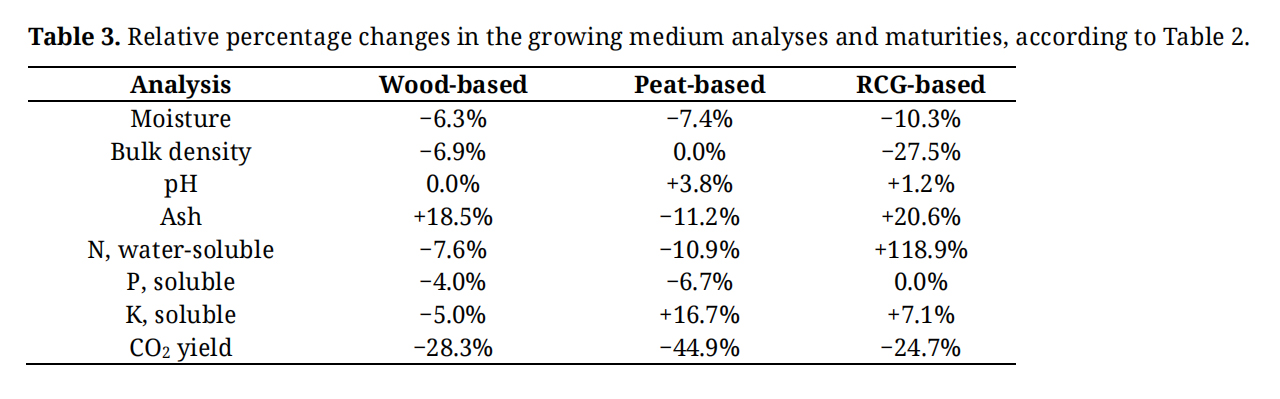 Table 3. Relative percentage changes in the growing medium analyses and maturities, according to Table 2.
The moisture content of the bedding manures decreased by 3.7%–7.6% after hygienization, corresponding to relative reductions of 6.3%–10.3%. The 118.9% increase in water-soluble nitrogen in the RCG material is large, but it cannot be concluded from a single observation whether this is due to processing, sample heterogeneity, or analysis variation. CO2 production consistently decreased by 24.7%–44.9%, indicating a decrease in biological activity and material maturation activity. It is noted that the bulk density of the RCG-based bedding manure, ranging from 500–690 kg/m3, was significantly higher than that of the wood- and peat-based manures, which ranged from 270–330 kg/m3. The RCG-based bedding manure was produced by cattle, while the wood- and peat-based manure was produced by horses.
Table 4 below presents the results of the E. coli and Salmonella analyses of the bedding manure from the test runs and from the bedding storage facilities.
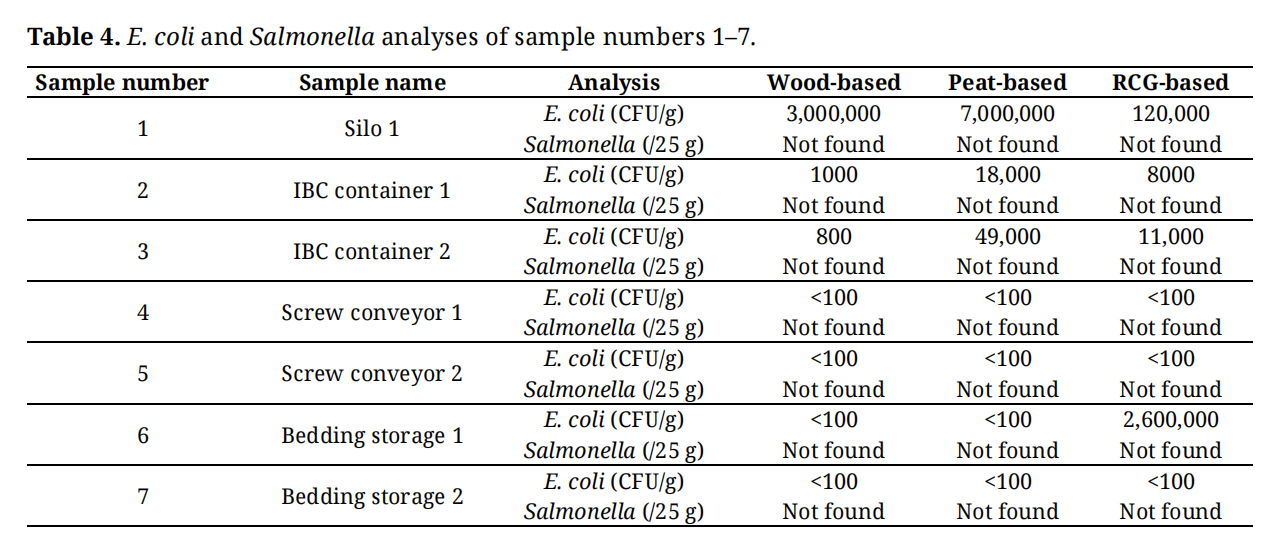 Table 4. E. coli and Salmonella analyses of sample numbers 1–7.
For E. coli analyses, a result of <100 CFU/g (where CFU stand for “colony-forming unit”) means that the hygienization system eliminates or deactivates E. coli to well below the threshold. Table 4 shows that the bedding manure samples taken from the silo contained high levels of E. coli, ranging from 120,000 to 7,000,000 CFU/g. After rapid hygienization, the samples taken from the screw outlet did not contain E. coli or contained less than 100 CFU/g. According to Decree 964/2023 of the (Finnish) Ministry of Agriculture and Forestry on fertilizer products [35], the amount of E. coli in an organic soil improver must not exceed 1000 CFU/g; therefore, all bedding manures processed directly from the screw outlet met the criteria of the decree.
After the belt transport phase, samples taken from the IBC container contained E. coli at levels of 800–49,000 CFU/g. This indicates that contamination occurred during or after downstream handling, with the belt conveyor representing a plausible, but unconfirmed, contamination source. However, no surface or environmental samples were collected, and the exact contamination source cannot therefore be confirmed. The belt was cleaned between test runs only by brushing, so it was not sterilized. According to Table 4, the bedding did not contain E. coli, except in the case of the RCG-based bedding, where sample number 6 contained E. coli at 2,600,000 CFU/g, while sample number 7 gave a result of <100 CFU/g. It can be assumed that the bedding material in sample number 6 was contaminated due to improper sampling or storage treatment.
All samples (1–7) were also tested for Salmonella. Table 4 shows that none of the microbiological analysis samples contained the bacteria in any of the test runs or in any of the bedding storage areas. In this case, no Salmonella was detected at all, either in start or end conditions; therefore, the criterion of Decree 964/2023 [35] regarding zero tolerance for Salmonella was also met.
The ManPas system heated the manure to the required temperature within the established time frames and significantly reduced the amount of E. coli bacteria present in the manure. Minor cross-contamination occurred from the belt transport phase onwards, when the hygienized manure was transported on the belt to the final storage container. During this phase, the hygienized manure can become contaminated with material from previous processing batches present on the belt. However, it should be noted in particular that the bedding manure that came directly from the heating screw outlet did not contain E. coli. In this case, it can be stated that the ManPas system itself operated as intended, i.e., it destroyed the E. coli bacteria. Leppäkoski et al. (2025) [12] had also obtained similar results for peat bedding manure, where one hour of hygienization at a temperature of 70 °C reduced the amount of E. coli to a level of 103–131 CFU/g. Salmonella was not found in any of the samples. Since no Salmonella was detected in the untreated samples, the results neither confirm nor disprove the system’s effectiveness in inactivating that bacteria. Validation using naturally contaminated material or an appropriate challenge test would be required. However, the first research question is answered in the affirmative, even though rapid hygienization was used in the test runs.
The ManPas system worked most effectively with peat- and sawdust-based bedding manures. It is advisable to separate any hay that the animals have not eaten from the bedding manure to prevent problems in the heating screw. For example, if straw or RCG bedding is used, it must be machine-crushed beforehand. In addition, very wet bedding manure that clumps can cause blockages at the outlet of the screw. It is recommended to use only horse manure with this initial prototype of the ManPas 300 hygienization system.
Hygienization can enable sales to consumers, thereby transforming the problem of bedding manure into a profitable end product. In order for a farm to make consumer sales, it must obtain establishment approval. Establishment approval is required for farms or establishments that process animal by-products or store products made from them [36]. In addition, establishment approval is specific to each establishment or production line. Animal by-products must be processed in an establishment approved under by-product legislation [37], using a method that complies with the ManPas system’s hygienization method. The hygienized manure can then be delivered to a plant that manufactures fertilizer products.
Hygienization of bedding manure enables new farm-specific usage and sales solutions that can be harnessed in a sustainable and cost-effective manner in the future. Furthermore, when the electricity consumption (40 kWh/m3) required by the ManPas system is taken into account and multiplied by the average electricity price in Finland, 5.08 cent/kWh [38], the price of bedding manure on the farm is 2.03 €/m3. This is lower than the price of new, unused sawdust bedding supplied, which is 40 €/m3 [25]. However, the estimated electricity cost provides only a preliminary indication of the system’s operating cost and should not be interpreted as a comprehensive assessment of economic feasibility. A complete techno-economic evaluation would also require consideration of capital investment, maintenance, labor, processing capacity, product revenues, and payback period.
The second research question was whether the ManPas system improves the sustainable circular economy of materials on a farm-specific basis. Based on the arguments discussed above, this question can also be answered in the affirmative.
Potential for Use as a Growing MediumIn their study, Cacini et al. (2021) [39] recommended a pH of 5.5–6.5 for growing media intended for plant nursery use. Fresh bedding manure contained ammonium, which raised the pH of the hygienized bedding manure to a level of 8.1–9.2, which is in itself too high for use as a growing medium. In this case, the dry manure should be acidified with a mixture partner, such as light peat, or through acid treatment. This should be done especially during the cutting and seedling stages. Peat- and RCG-based samples had a higher ash content (11.7%–11.9%) than wood-based samples (7.7%). The higher ash content indicates a greater proportion of mineral constituents, which may contribute to elevated soluble nutrient concentrations and electrical conductivity [40].
Overall, peat- and RCG-based hygienized bedding manures stood out for having the highest soluble nutrient levels compared to wood-based manures. This is consistent with other studies on horse bedding manure, as peat bedding in particular binds ammonia and holds water, but is more susceptible to P leaching [41,42]. In addition, fresh bedding manure immobilizes N due to a potentially high C:N ratio prior to composting, but after this process, the C:N ratio decreases and the fertilizing effect increases [43].
The carbon dioxide yield from soil improvement compost should be less than 6 mg CO2-C/g VS/day. Table 2 shows that, after hygienization, wood-based bedding manure met the criteria for soil improvement compost according to Decree 964/2023 [35], unlike peat- and RCG-based bedding manures, which appeared to still be in an active and immature state. For peat- and RCG-based bedding manures, it would be advisable to further mature them for about two weeks to stabilize the material, or to use them only in small mixture proportions in the growing medium. Wood-based is the closest to being suitable as a growing medium, as it has a light structure and the most moderate composting activity; however, its pH of 9.2 requires acidifying treatment.
A New Value-Added Chain for the Regional Circular EconomyThe implementation of the ManPas hygienization system as a decentralized solution can help create a new value‑added chain on farms by transforming untreated bedding manure—which traditionally poses a costly disposal problem—into a hygienized usable product. It can be recirculated as recycled bedding, applied directly as a soil improvement, or prepared for consumer markets as a value‑added bio-based material—for example, as a growing medium for horticulture, which is one of the industries most affected by peat supply shortages. However, hygienized bedding manures still need to be studied and refined in the longer term so that they can be fully utilized as a growing medium. By enabling on‑farm processing, the system reduces dependence on externally sourced bedding materials, lowers manure handling costs, and strengthens self-sufficiency in nutrient recycling. These changes will reduce transportation needs and support regional circular economy goals.
Implications and Future ResearchThe results indicate that the ManPas hygienization system can substantially improve farm‑level sustainable circularity by converting bedding manure into a safe, reusable material, thereby reducing manure handling costs and dependence on external bedding resources. At the same time, the minor contamination observed during belt conveyor transport highlights the need for improved handling practices and possible design refinements. The observed post-treatment contamination also highlights the importance of hygienic equipment design and downstream handling. Further validation should include microbiological sampling of the conveyor before and after cleaning, sampling at successive transfer points, and a comparison of brushing with validated cleaning and disinfection procedures.
Future work should therefore examine optimal storage conditions, the safe proportion of recycled bedding manure that can be reused in stalls, and the performance of hygienized manure as a growing medium. Further research on process optimization, energy efficiency, and suitability for different bedding types would strengthen the system’s applicability and support broader and sustainable regional uptake.
One limitation of the study is that each bedding manure type was represented by a single, independent test run. Therefore, the observed changes demonstrate the process performance under the conditions analyzed but do not permit an estimation of between-run variability, confidence intervals, or statistical significance. Future validation should include several independent treatment batches for each material type. In addition, the microbiological assessment was limited to E. coli and Salmonella and therefore does not represent a comprehensive evaluation of pathogen inactivation. A broader validation should include additional bacterial pathogens and, where relevant, other microbial hazards. Such an assessment would require more extensive sampling and pathogen-specific analytical methods and should be addressed in a dedicated follow-up study.
The ManPas hygienization system is a potential solution for the sustainable circular economy, as it hygienizes bedding manure on-site at the farm and converts it into a valuable natural resource for reuse. It is suitable for both large and small farms. After hygienization, the bedding manure can be reused as recycled bedding in stalls, and as a soil conditioner in fields or gardens. In addition, it could be used as a growing medium, although further research is needed on this application. Further research is also needed on recycled bedding and, especially, on what proportion of it can be mixed with unused original bedding, since the hygienized recycled bedding becomes more concentrated with each treatment cycle. Hygienization of the bedding manure resulted in a practically stable product in terms of E. coli levels, meaning the product can potentially be stored without deterioration for long periods of time. In the future, a broader study of pathogenic spectrum inactivation should also be indicated to ensure the sustainable and safe circulation of the product on farms and in resale.
The dataset of the study is available from the authors upon reasonable request.
JF: Research, writing, conceptualization, methodology, data curation, and formal analysis. RKC: Research, writing, conceptualization, methodology, data curation, and visualization. TR: Study design, writing, conceptualization, formal analysis, and visualization.
The authors declare that they have no conflicts of interest.
This study was supported by the research project “Utilization of bedding material residues in biogas production and as biofertilizer” (KUPELA), project number J10480. The project was primarily funded by the Regional Council of South Savo through the Just Transition Fund (JTF) in Finland. Co-funding was also provided by the Suur-Savon Energiasäätiö sr.
The authors would like to thank Vesa Kukkamo and Ilpo Pölönen for the valuable information they provided regarding the hygienization system from ManPas Oy.
1.
2.
3.
4.
5.
6.
7.
8.
9.
10.
11.
12.
13.
14.
15.
16.
17.
18.
19.
20.
21.
22.
23.
24.
25.
26.
27.
28.
29.
30.
31.
32.
33.
34.
35.
36.
37.
38.
39.
40.
41.
42.
43.
Föhr J, KC R, Ranta T. Farm-Scale Hygienization of Bedding Manure Using the ManPas System: Implications for A Sustainable Circular Economy. J Sustain Res. 2026;8(4):e260083. https://doi.org/10.20900/jsr20260083.

Copyright © Hapres Co., Ltd. Privacy Policy | Terms and Conditions


