Location: Home >> Detail
Adv Geriatr Med Res. 2026;8(4):e260034. https://doi.org/10.20900/agmr20260034
 ,
Desale Habtezgi 2 ,
Jeffrey Kwame Owusu Ansah 3 ,
Bolanle Olayeni 3 ,
Saravanan Subramanian 4 ,
Yujun Liu 3 ,
Anitha Saravanan 5,*
1
2
3
4
5
*
Background: Among adults reporting worsening or more frequent difficulties with thinking or memory, worry about these difficulties may identify individuals experiencing greater interference with everyday activities. This study examined associations between worry about thinking or memory difficulties and interference with day-to-day activities and the ability to work or volunteer. Methods: This cross-sectional study used the 2023 Behavioral Risk Factor Surveillance System Cognitive Decline Module administered in 36 participating jurisdictions. Analyses were restricted to adults aged ≥45 years reporting worsening or more frequent thinking or memory difficulties (CIMEMLO1 = Yes). The primary analytic sample included 20,660 respondents. Survey-weighted Poisson regression models with a log link and design-based variance estimation were used to estimate prevalence ratios for day-to-day activity interference (CDHOUS1) and work/volunteer interference (CDSOCIA1) according to worry status (CDWORRY), adjusting for sociodemographic characteristics, general health, depression, stroke, hearing and vision difficulties, and employment status. Results: The weighted prevalence of worry was 59.8% (95% CI, 58.2%–61.4%). Day-to-day activity interference was reported by 36.6% (95% CI, 35.1%–38.1%), and work/volunteer interference by 26.4% (95% CI, 24.8%–28.0%). Worry was associated with a substantially higher prevalence of day-to-day activity interference (adjusted prevalence ratio [aPR], 2.12; 95% CI, 1.89–2.38) and work/volunteer interference (aPR, 1.98; 95% CI, 1.67–2.34). Associations remained significant after additional adjustment for cognitive disability. Conclusions: Among adults aged ≥45 years reporting worsening or more frequent thinking or memory difficulties in participating jurisdictions, worry about these difficulties was associated with a higher prevalence of concurrent interference with day-to-day activities and work or volunteering. These cross-sectional findings do not establish temporal directionality or causality.
Population aging has increased the importance of maintaining cognitive health and identifying cognitive changes that may affect everyday functioning. Cognitive decline and dementia can have substantial consequences for individuals, families, health systems, and communities, underscoring the importance of population-based surveillance of cognitive health and its functional consequences [1–5]. Subjective cognitive decline (SCD), broadly characterized as a self-perceived decline in cognitive functioning, has therefore received increasing attention as a potentially meaningful indicator of cognitive health in community-dwelling adults [6–9].
An important distinction within the SCD literature is whether individuals are concerned or worried about the cognitive changes they perceive. Concern or worry is not equivalent to the presence of SCD; rather, it represents an additional characteristic reported by some individuals who perceive cognitive decline [6,8,9]. Contemporary SCD frameworks identify concern associated with perceived cognitive decline as an SCD-plus characteristic that may provide additional information about the significance of subjective cognitive experiences [6–8]. Population-based research has also examined SCD-related worry separately from SCD itself and identified distinct biopsychosocial correlates of worry [10]. However, less is known about whether worry distinguishes individuals experiencing greater concurrent interference with everyday functioning among adults who already report worsening or more frequent thinking or memory difficulties.
Functional consequences are particularly important when evaluating self-reported cognitive difficulties because cognitively demanding activities are integral to everyday functioning [11,12]. The 2023 Behavioral Risk Factor Surveillance System (BRFSS) Cognitive Decline Module distinguishes among worsening or more frequent thinking or memory difficulties, worry about those difficulties, and perceived functional interference [13]. Among respondents reporting worsening or more frequent thinking or memory difficulties, CDHOUS1 assesses whether these difficulties interfere with day-to-day activities, with examples including managing medications, paying bills, and keeping track of appointments [13]. These activities overlap conceptually with instrumental activities of daily living (IADLs), which include cognitively demanding activities important for independent functioning [11,12]. However, CDHOUS1 should not be interpreted as a validated multi-item IADL measure because it does not systematically assess performance or independence across a defined set of activities.
The second functional item, CDSOCIA1, assesses whether thinking or memory difficulties interfere with the ability to work or volunteer [13]. This item therefore captures interference with productive or volunteer roles rather than general social participation. This distinction is important because work and volunteering represent a different functional context from the day-to-day activities assessed by CDHOUS1. Examining the two outcomes separately allows assessment of whether worry is associated with functional interference across distinct contexts among adults already reporting cognitive change.
BRFSS provides a useful population-based surveillance framework for examining these relationships. The Cognitive Decline Module measures self-reported cognitive decline and associated effects among community-dwelling adults and permits examination of cognitive experiences and functional consequences within a large population-based survey [7,13]. BRFSS also incorporates a complex sampling design and survey weights, allowing estimates to account for the underlying sampling structure [13]. Because the optional Cognitive Decline Module was administered only in participating jurisdictions, however, estimates from the present study represent those jurisdictions and should not be interpreted as nationally representative estimates of all U.S. adults.
The purpose of this study was to examine whether worry about worsening or more frequent thinking or memory difficulties was associated with two concurrent functional outcomes: interference with day-to-day activities and interference with the ability to work or volunteer. We hypothesized that, among adults aged ≥45 years who reported worsening or more frequent thinking or memory difficulties, those reporting worry would have a higher prevalence of both forms of functional interference after adjustment for sociodemographic characteristics, general health, depression, stroke, sensory limitations, and employment status.
This cross-sectional study used data from the 2023 Behavioral Risk Factor Surveillance System (BRFSS), an annual survey of adults conducted by the Centers for Disease Control and Prevention (CDC). BRFSS uses a complex sampling design that incorporates stratification, clustering, and survey weighting. The present analysis used the optional 2023 Cognitive Decline Module, which was administered in a subset of participating jurisdictions [14].
Because the Cognitive Decline Module was administered through different 2023 BRFSS questionnaire versions, data were obtained from three BRFSS files and combined according to the module-specific sampling structure [15]. The Cognitive Decline Module was available in the primary LLCP2023 file for 28 jurisdictions using the _LLCPWT survey weight: Alabama, Arkansas, Connecticut, Delaware, Florida, Georgia, Hawaii, Illinois, Indiana, Louisiana, Minnesota, Mississippi, Missouri, Montana, Nevada, New Jersey, New Mexico, North Dakota, Oregon, Puerto Rico, Rhode Island, South Dakota, Tennessee, Texas, Virginia, Washington, Wisconsin, and Wyoming. Six additional jurisdictions—Colorado, Kansas, Maryland, Nebraska, Ohio, and Oklahoma—were included from the LLCP23V2 file using _LCPWTV2, and Massachusetts and New York were included from the LLCP23V3 file using _LCPWTV3.
The appropriate version-specific survey weight (_LLCPWT, _LCPWTV2, or _LCPWTV3) was assigned to a common analysis-weight variable within each source file before the three files were appended. The corresponding BRFSS primary sampling unit (_PSU) and stratum (_STSTR) variables were retained, and all analyses incorporated the complex survey design. Version-specific weights were used only for respondents originating from the corresponding questionnaire-version file. Weighted estimates therefore represent adults aged ≥45 years in the 36 jurisdictions that administered the 2023 Cognitive Decline Module and should not be interpreted as nationally representative estimates of all U.S. adults aged ≥45 years.
Since BRFSS data are publicly available and deidentified, the study was considered exempt from institutional review board review. Participant flow for the analytic sample is shown in Figure 1.
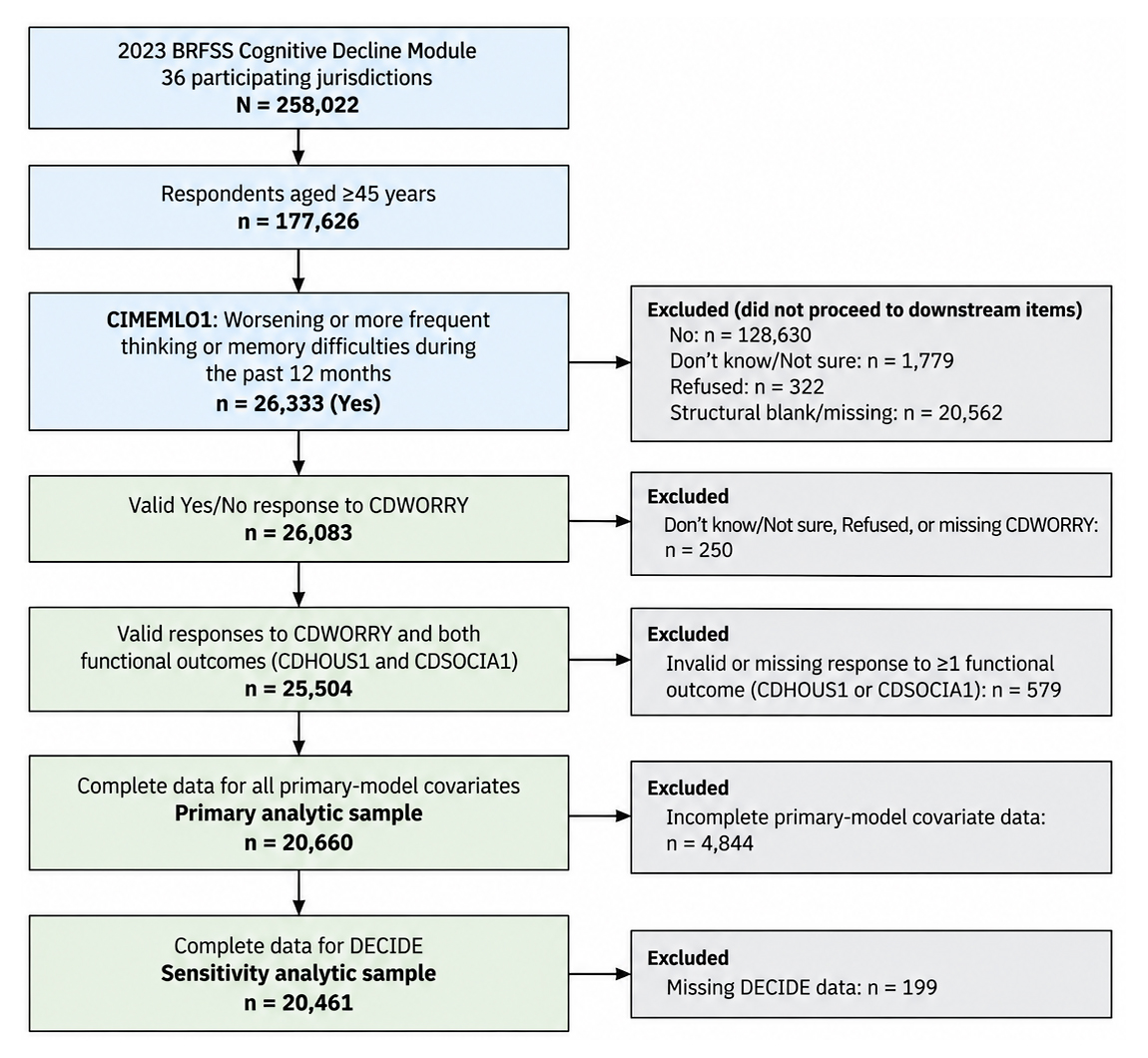 Figure 1. Participant flow for the 2023 BRFSS Cognitive Decline Module analysis. Note. BRFSS = Behavioral Risk Factor Surveillance System; CIMEMLO1 = worsening or more frequent thinking or memory difficulties; CDWORRY = worry about those difficulties; CDHOUS1 = interference with day-to-day activities; CDSOCIA1 = interference with ability to work or volunteer; DECIDE = serious difficulty concentrating, remembering, or making decisions. Respondents answering No, Don’t know/Not sure, or Refused to CIMEMLO1 did not proceed to the downstream Cognitive Decline Module items. Structural blanks resulting from the questionnaire skip pattern were treated as missing and were not recoded as negative responses. The primary analytic sample included respondents with valid responses to CDWORRY and both functional outcomes and complete data for all primary-model covariates. The sensitivity analysis additionally required valid DECIDE data.
The Cognitive Decline Module was administered to adults aged ≥45 years. The index item, CIMEMLO1, assessed whether respondents had experienced worsening or more frequent difficulties with thinking or memory during the previous 12 months. Respondents answering Yes continued to the subsequent Cognitive Decline Module items, whereas respondents answering No, Don’t know/Not sure, or Refused were directed out of the remaining module items.
Accordingly, the primary analytic population was restricted to adults aged ≥45 years who answered Yes to CIMEMLO1. This restriction was necessary because subsequent questions concerning worry and functional interference were administered only to respondents reporting worsening or more frequent thinking or memory difficulties. Structural blanks resulting from the module skip pattern were retained as missing and were not recoded as negative responses.
A common complete-case sample was used for the primary regression analyses. Respondents were included if they had a valid Yes/No response for CDWORRY, valid data for both functional outcomes examined in that model, and complete data for all covariates included in the primary model. Don’t know/Not sure, Refused, and missing responses were excluded from the corresponding analysis. Consequently, analytic sample sizes could differ between day-to-day activity interference and work/volunteer interference models.
CIMEMLO1 was used to identify respondents who reported worsening or more frequent difficulties with thinking or memory during the preceding 12 months. This item defined eligibility for the primary analytic cohort rather than serving as the primary explanatory variable in the regression models. For descriptive purposes, the survey-weighted prevalence of a positive CIMEMLO1 response was estimated among adults aged ≥45 years with valid Yes/No responses.
Worry about Thinking or Memory DifficultiesThe primary explanatory variable was worry about reported thinking or memory difficulties (hereafter, worry), measured using CDWORRY. Among respondents with CIMEMLO1 = Yes, CDWORRY was coded as worried (Yes = 1) or not worried (No = 0). Don’t know/Not sure, Refused, and missing responses were excluded. Worry was treated as a characteristic of respondents already reporting worsening or more frequent thinking or memory difficulties rather than as a measure of the presence or absence of subjective cognitive decline.
Functional OutcomesTwo functional outcomes were examined separately. Day-to-day activity interference was measured using CDHOUS1, which assessed whether respondents’ thinking or memory difficulties interfered with day-to-day activities such as managing medications, paying bills, or keeping track of appointments. Work/volunteer interference was measured using CDSOCIA1, which assessed whether thinking or memory difficulties interfered with the respondent’s ability to work or volunteer. For both outcomes, Yes was coded as 1 and No as 0; Don’t know/Not sure, Refused, and missing responses were excluded.
These labels reflect the content of the 2023 Cognitive Decline Module. The work/volunteer item was not interpreted as a general measure of social participation, and the day-to-day activity item was not interpreted as a measure of household assistance or household-task dependence. CDDISCU1 was retained only for descriptive verification of module response patterns and was not included as a primary explanatory variable or outcome.
Because CDWORRY, CDHOUS1, and CDSOCIA1 are follow-up items administered to respondents reporting worsening or more frequent thinking or memory difficulties, they represent related dimensions of respondents’ concurrent experiences rather than temporally ordered exposure and outcome measures. Accordingly, worry was not conceptualized as a cause of functional interference, and the analyses were designed to estimate cross-sectional associations only.
CovariatesCovariates were selected based on their potential relationships with cognitive concerns and functional interference and included sociodemographic characteristics, health status, relevant chronic conditions, sensory limitations, and employment status.
Age was categorized as 45–54, 55–64, 65–74, and ≥75 years. Sex was categorized as female or male. Race and ethnicity were categorized as non-Hispanic White, non-Hispanic Black, Hispanic, non-Hispanic Asian, non-Hispanic American Indian or Alaska Native, and non-Hispanic other race. Educational attainment was categorized as less than high school, high school graduate, some college, or college graduate. Household income was categorized as <$25,000, [$25,000, $50,000), [$50,000, $100,000), [$100,000, $200,000), and ≥$200,000. Marital status was categorized as married/partnered, divorced/separated, widowed, or never married.
Additional health-related covariates included self-rated general health (excellent, very good, good, fair, or poor), history of depression (yes/no), history of stroke (yes/no), hearing difficulty (yes/no), and vision difficulty (yes/no). Employment status was categorized as employed/self-employed, unemployed, homemaker/student, retired, or unable to work. Employment status was included because of its particular relevance to the work/volunteer interference outcome.
The BRFSS DECIDE variable, indicating serious difficulty concentrating, remembering, or making decisions, was not included in the primary models because of its conceptual overlap with the thinking or memory difficulties used to define the analytic cohort. DECIDE was added to the fully adjusted models in a sensitivity analysis to evaluate whether the associations remained after accounting for cognitive disability.
Statistical AnalysisUnweighted frequencies were examined for CIMEMLO1, CDWORRY, CDDISCU1, CDHOUS1, and CDSOCIA1 to verify the Cognitive Decline Module skip pattern and distinguish structural missingness from item nonresponse. Participant flow was documented from the combined Cognitive Decline Module dataset through the CIMEMLO1 = Yes cohort and the final outcome-specific complete-case analytic samples.
Descriptive statistics were calculated using the complex BRFSS survey design. Participant characteristics are reported as unweighted counts and survey-weighted percentages with 95% confidence intervals (CIs). Survey-weighted Rao-Scott chi-square tests were used to compare categorical characteristics by worry status. Survey-weighted prevalence estimates with 95% CIs were calculated for worry, day-to-day activity interference, and work/volunteer interference.
Because both functional outcomes were common, prevalence ratios were selected in preference to odds ratios. Survey-weighted Poisson regression models with a log link and design-based variance estimation were fitted separately for day-to-day activity interference and work/volunteer interference. The outcomes were coded as Yes = 1 and No = 0. Unadjusted models included worry status as the only explanatory variable. Fully adjusted models included worry status, age, sex, race and ethnicity, educational attainment, household income, marital status, general health, depression, stroke, hearing difficulty, vision difficulty, and employment status. Results are presented as prevalence ratios (PRs) or adjusted prevalence ratios (aPRs) with 95% CIs.
Reference categories were not worried, age 45–54 years, female sex, non-Hispanic White race/ethnicity, college graduate, household income ≥$200,000, married/partnered, excellent general health, no depression, no history of stroke, no hearing difficulty, no vision difficulty, and employed/self-employed.
A sensitivity analysis additionally adjusted each fully adjusted model for cognitive disability (DECIDE). Because worry and functional interference were measured concurrently, estimates were interpreted as associations and not as causal or temporally ordered effects. Statistical significance was evaluated using two-sided tests with p < .05. Analyses were conducted in R using survey procedures incorporating the appropriate BRFSS sampling weights, strata, and primary sampling units.
The combined Cognitive Decline Module dataset included 258,022 respondents from 36 participating jurisdictions, of whom 177,626 were aged ≥45 years. Among adults aged ≥45 years, 154,963 provided a valid Yes/No response to CIMEMLO1: 26,333 answered Yes and 128,630 answered No. An additional 1779 responded “Don’t know/Not sure, 322 refused, and 20,562 had a structural blank or missing response.
Among adults aged ≥45 years with valid Yes/No responses, the survey-weighted prevalence of worsening or more frequent thinking or memory difficulties (CIMEMLO1 = Yes) was 17.1% (95% CI, 16.6%–17.5%).
The questionnaire skip pattern was evident in the raw data. None of the 128,630 respondents answering No to CIMEMLO1 had nonmissing responses to CDWORRY, CDDISCU1, CDHOUS1, or CDSOCIA1. Accordingly, downstream functional outcomes were analyzed only among respondents with CIMEMLO1 = Yes, and structural blanks were not classified as negative responses. Unweighted response distributions for the Cognitive Decline Module items are presented in Table S1.
Among the 26,333 respondents with CIMEMLO1 = Yes, 26,083 had a valid Yes/No response to CDWORRY, and 25,504 had valid responses to CDWORRY and both functional outcomes. After requiring complete data for all primary model covariates, the final primary analytic sample included 20,660 respondents. The sensitivity analysis additionally including cognitive disability (DECIDE) included 20,461 respondents.
Participant CharacteristicsWithin the primary analytic sample, the survey-weighted prevalence of worry about thinking or memory difficulties was 59.8% (95% CI, 58.2%–61.4%). Overall, 36.6% (95% CI, 35.1%–38.1%) reported day-to-day activity interference, and 26.4% (95% CI, 24.8%–28.0%) reported work/volunteer interference.
Day-to-day activity interference was reported by 48.7% (95% CI, 46.7%–50.7%) of respondents who were worried compared with 18.5% (95% CI, 16.8%–20.3%) of those who were not worried (Rao-Scott p < 0.001). Work/volunteer interference was reported by 35.1% (95% CI, 33.1%–37.0%) of respondents who were worried compared with 13.5% (95% CI, 10.4%–16.7%) of those who were not worried (Rao-Scott p < 0.001). Complete participant characteristics are presented in Table 1.
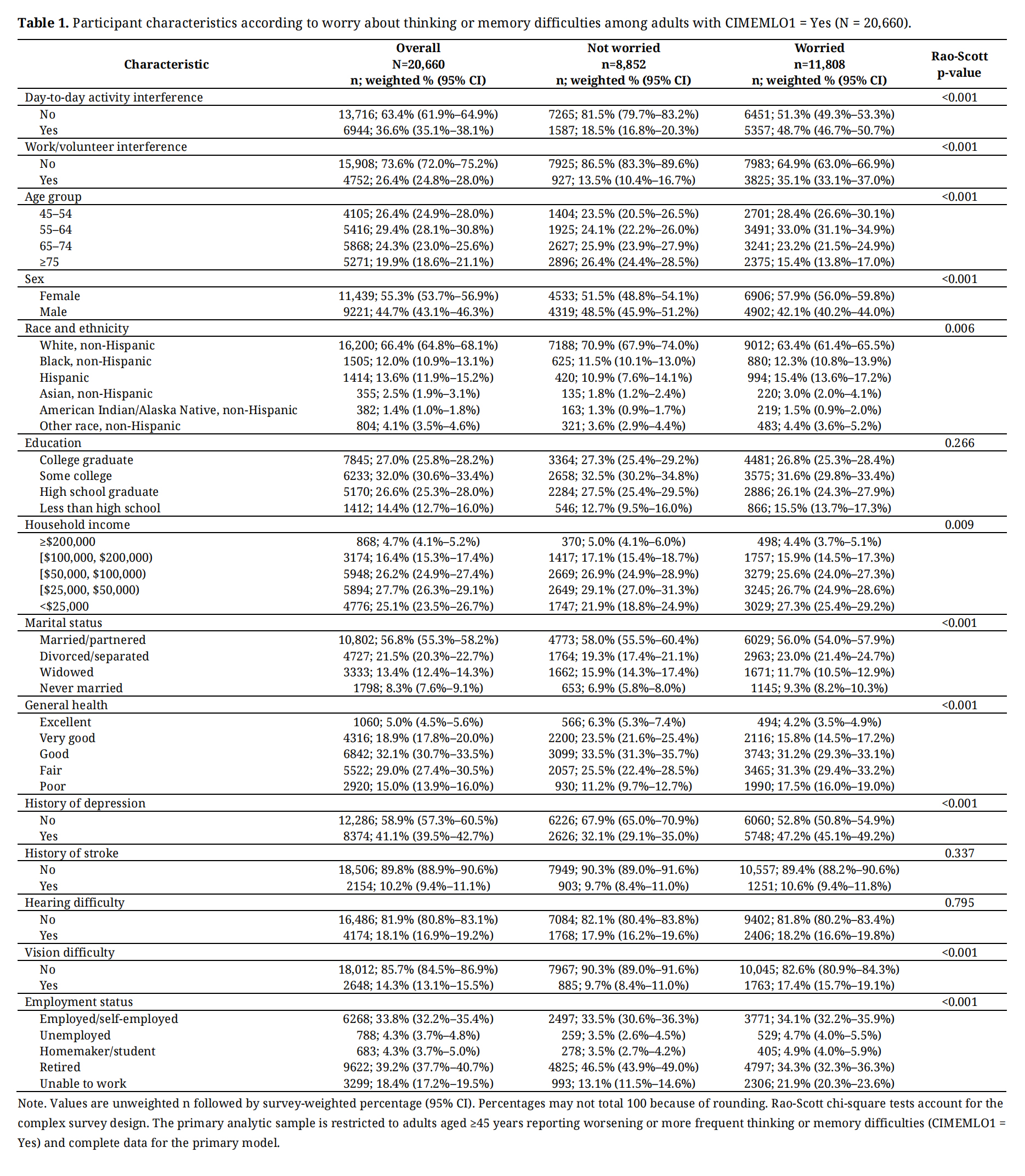 Table 1. Participant characteristics according to worry about thinking or memory difficulties among adults with CIMEMLO1 = Yes (N = 20,660).
In the unadjusted survey-weighted model, worry about thinking or memory difficulties was associated with a higher prevalence of day-to-day activity interference compared with not being worried (PR, 2.62; 95% CI, 2.37–2.91; p < 0.001). After adjustment for sociodemographic characteristics, general health, depression, stroke, hearing and vision difficulties, and employment status, the association remained statistically significant (aPR, 2.12; 95% CI, 1.89–2.38; p < 0.001). Full covariate estimates are presented in Table 2.
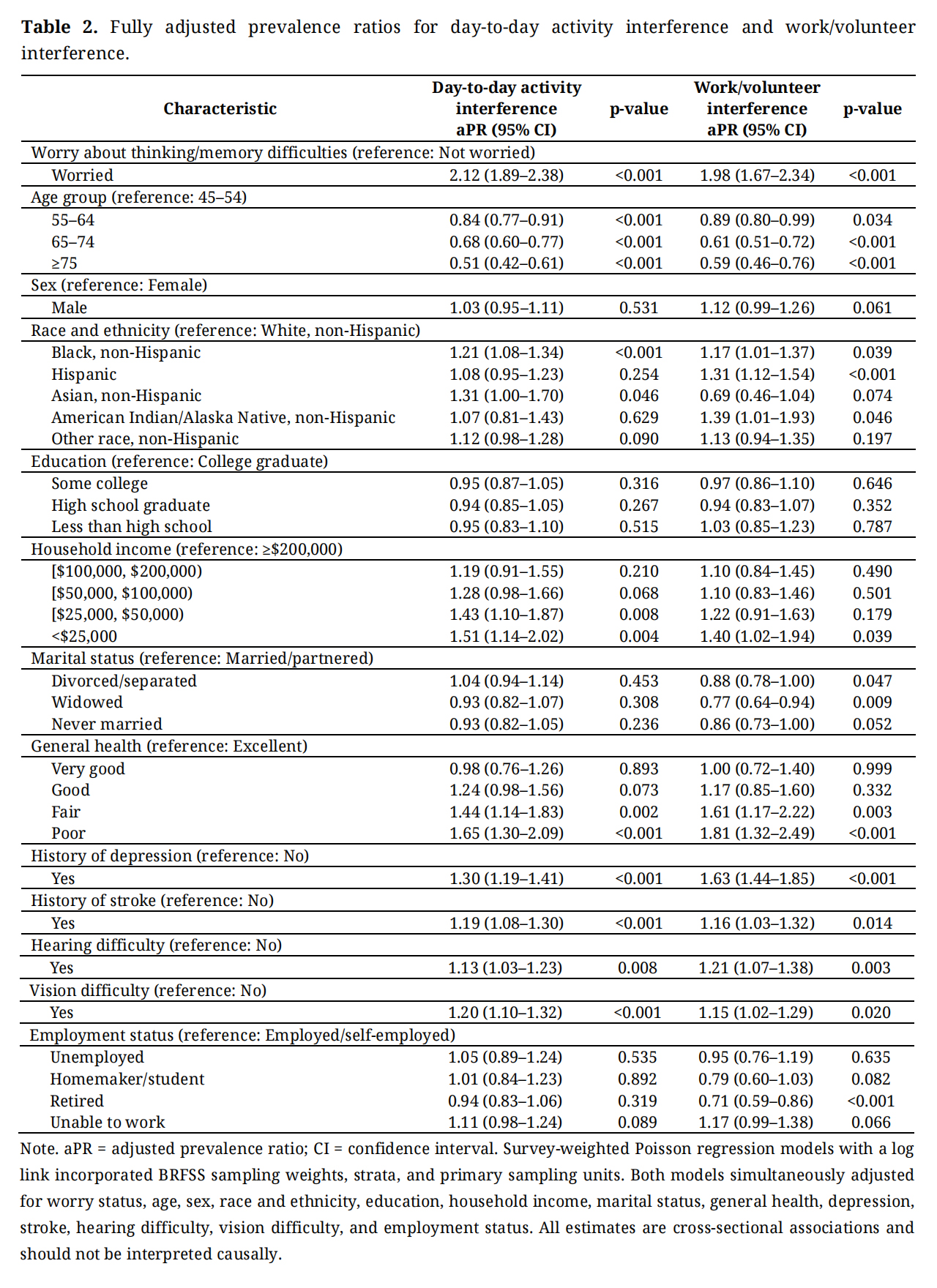 Table 2. Fully adjusted prevalence ratios for day-to-day activity interference and work/volunteer interference.
In the unadjusted survey-weighted model, worry about thinking or memory difficulties was associated with a higher prevalence of work/volunteer interference compared with not being worried (PR, 2.59; 95% CI, 2.04–3.30; p < 0.001). Following full adjustment, worry remained associated with a higher prevalence of work/volunteer interference (aPR, 1.98; 95% CI, 1.67–2.34; p < 0.001). Full covariate estimates are presented in Table 2.
Sensitivity AnalysisAmong the 20,461 respondents included in the sensitivity analysis, additional adjustment for serious difficulty concentrating, remembering, or making decisions (DECIDE) attenuated but did not eliminate the observed associations. Worry remained associated with a higher prevalence of day-to-day activity interference (aPR, 1.92; 95% CI, 1.69–2.17; p < 0.001) and work/volunteer interference (aPR, 1.79; 95% CI, 1.54–2.09; p < 0.001).
Among adults who reported worsening or more frequent thinking or memory difficulties, worry about those difficulties was associated with approximately twice the prevalence of both day-to-day activity interference and work/volunteer interference after adjustment for sociodemographic characteristics, general health, depression, stroke, sensory limitations, and employment status. These findings do not indicate that worry causes functional interference. Rather, they identify a subgroup reporting greater concurrent functional burden among adults who already acknowledge cognitive change.
The magnitude and direction of the associations were similar across the two item-specific outcomes. Worry was associated with day-to-day activity interference (aPR, 2.12) and work/volunteer interference (aPR, 1.98). We do not interpret the modest numerical difference between these estimates as evidence that one association is stronger because the outcomes were modeled separately and no formal comparison between the estimates was conducted. These findings extend prior literature identifying concern or worry as a potentially meaningful characteristic accompanying subjective cognitive decline [6,8–10]. Previous studies have also shown that greater severity or specific characteristics of subjective cognitive decline may be associated with objective cognitive differences and subsequent cognitive impairment [16–18]. The present findings add to this literature by demonstrating that, among adults already reporting worsening or more frequent thinking or memory difficulties, worry is associated with greater concurrent interference across two distinct functional contexts.
Several explanations may account for these cross-sectional associations. Worry may arise in response to perceived functional interference; conversely, individuals who are more concerned about cognitive changes may be more likely to perceive or report their effects on everyday functioning. Worry and functional interference may also reflect greater underlying severity of perceived cognitive difficulty or shared psychological and health-related factors [8,10,19]. Prior research supports a biopsychosocial perspective in which subjective cognitive experiences may be shaped by interacting cognitive, psychological, health, and social factors [10,20]. In the present study, poorer general health, depression, stroke, hearing difficulty, and vision difficulty were independently associated with one or both functional outcomes. Although adjustment for these factors reduced potential confounding, unmeasured factors, including anxiety, severity of cognitive change, physical disability, medication effects, and social circumstances, may contribute to the observed associations.
Additional adjustment for serious difficulty concentrating, remembering, or making decisions (DECIDE) attenuated the associations while preserving their direction and statistical significance. This pattern suggests partial overlap among self-reported cognitive disability, worry, and functional interference. Subjective cognitive experiences do not necessarily correspond directly with objective cognitive performance and may reflect differences in cognitive awareness, metacognition, psychological factors, and health status [8,9,19]. Accordingly, persistence of the associations after adjustment for DECIDE should not be interpreted as evidence that worry independently contributes to subsequent disability. Because worry, cognitive disability, and functional interference were assessed concurrently, they may capture related dimensions of the respondent’s subjective cognitive and functional experience.
An inverse age gradient was observed for both functional outcomes. Compared with adults aged 45–54 years, adults aged ≥75 years had a lower prevalence of day-to-day activity interference and work/volunteer interference after adjustment for sociodemographic and health characteristics, including employment status. This finding should be interpreted cautiously and should not necessarily be viewed as evidence of better functional adaptation among older adults. In particular, the work/volunteer item may have different relevance across age and employment groups because older adults are more likely to be retired and may have fewer work-related activities in which cognitive difficulties can manifest as interference. Consistent with this possibility, retirement was independently associated with a lower prevalence of reported work/volunteer interference but not day-to-day activity interference. Thus, the inverse age association may partly reflect differences in role exposure, expectations, selective participation, or interpretation of the work/volunteer item rather than age-related differences in the underlying functional consequences of cognitive difficulties [21–23]. Further research using functional measures that are equally applicable across employment and retirement contexts is warranted.
Education, socioeconomic circumstances, and cognitive reserve may also influence how cognitive difficulties are experienced and reported. Prior research has linked educational attainment, occupational characteristics, and socioeconomic conditions with cognitive performance and cognitive reserve [24–27]. These factors may shape both the cognitive demands encountered in everyday roles and individuals’ opportunities to compensate for perceived cognitive changes. Although the present models adjusted for education and household income, these measures may not fully capture differences in occupational complexity, cognitive reserve, or broader socioeconomic experiences that could influence cognitive and functional outcomes.
Clinical and Public Health ImplicationsWhen adults report worsening or more frequent thinking or memory difficulties, asking whether they are worried about those changes and whether the difficulties interfere with everyday or productive roles may provide useful context for further assessment. Concern associated with subjective cognitive decline has been identified as a potentially informative characteristic in SCD frameworks [6,8,9], and population-based research supports distinguishing SCD-related worry from the presence of subjective cognitive concerns alone [10]. However, the BRFSS Cognitive Decline Module items are surveillance measures rather than diagnostic tests and should not replace validated cognitive or functional assessment [7,13]. In individuals reporting both worry and functional interference, further assessment may help clarify cognitive, emotional, sensory, physical, and other factors that could contribute to their reported difficulties.
Functional assessment should also be interpreted according to the construct being measured. Everyday functioning involves cognitively demanding activities, but individual survey items are not equivalent to comprehensive assessment of instrumental activities of daily living [11,12]. Likewise, interference with the ability to work or volunteer represents a specific productive-role context rather than general social participation. Research examining cognitive function and engagement in later life demonstrates that cognitive functioning, social engagement, and participation are related but distinct constructs [21,28–31]. These distinctions are important when interpreting population surveillance measures and when determining whether additional clinical or functional assessment is warranted.
From a public health surveillance perspective, the findings underscore the importance of maintaining item-accurate distinctions among reported cognitive change, worry, cognitive disability, and functional interference. Population measures of subjective cognitive decline can contribute to cognitive-health surveillance and public health planning when their constructs are clearly defined [7]. Previous BRFSS research has also demonstrated the utility of population-based cognitive decline measures for characterizing heterogeneity among adults reporting cognitive concerns [31]. The 2023 BRFSS Cognitive Decline Module uses skip patterns in which downstream questions are administered only to respondents reporting worsening or more frequent thinking or memory difficulties [13]. Consequently, structural blanks should not be interpreted as negative responses. Similarly, interference with work or volunteering should not be characterized as general social participation because these constructs are not equivalent. Longitudinal studies incorporating objective cognitive testing, validated functional measures, and repeated assessments are needed to clarify temporal ordering and determine whether worry and concurrent functional interference have prognostic significance.
Strengths and LimitationsThis study has several strengths. The analysis used a large population-based sample from 36 participating jurisdictions and explicitly verified the 2023 Cognitive Decline Module skip pattern before defining the analytic population. Version-specific survey weights and BRFSS design variables were incorporated, and two item-specific functional outcomes were analyzed separately. The models also accounted for relevant sociodemographic, health, sensory, and employment characteristics. Reporting unweighted module frequencies and participant flow improves transparency regarding structural missingness and analytic eligibility. In addition, survey-weighted Poisson regression was used to estimate prevalence ratios, avoiding reliance on odds ratios for outcomes that were common in the analytic population.
Several limitations should be considered. First, the cross-sectional design prevents determination of temporal ordering or causality. Worry could precede, accompany, or result from perceived functional interference. Second, the focal measures were self-reported and may be influenced by recall, attribution, common-method, and reporting biases. Subjective cognitive reports can reflect cognitive as well as psychological, health, and contextual factors [8–10,19]. Third, CDHOUS1 and CDSOCIA1 are single-item measures and should not be interpreted as validated multi-item measures of IADLs, social participation, or work capacity. Although CDHOUS1 provides examples of day-to-day activities such as managing medications, paying bills, and keeping track of appointments, it does not assess these activities individually or systematically measure independence across IADL domains [11–14].
Fourth, the work/volunteer interference item may also have differential relevance across age and employment groups. Although employment status was included in the adjusted models, retired adults may have fewer opportunities to experience or report work-related interference, potentially contributing to the inverse age association observed for this outcome. Importantly, the item combines work and volunteering and does not establish whether respondents were actively engaged in either role. Thus, a response indicating no interference could reflect absence of interference, limited exposure to the relevant role, or differences in how respondents interpret the item. Lower reported work/volunteer interference, particularly among older or retired adults, should therefore not necessarily be interpreted as better functional capacity.
Among adults aged ≥45 years reporting worsening or more frequent thinking or memory difficulties in the 36 participating jurisdictions, worry about these difficulties was associated with approximately twice the prevalence of concurrent day-to-day activity interference and work/volunteer interference. These cross-sectional findings do not establish temporal directionality or causality. Nevertheless, worry about thinking or memory difficulties may help identify adults reporting greater concurrent functional burden and may provide useful context for further assessment using validated cognitive and functional measures.
Ethical review and approval were not required for this study because it involved secondary analysis of publicly available, deidentified data from the 2023 Behavioral Risk Factor Surveillance System (BRFSS). The researchers had no access to personally identifiable information, and the analysis did not involve direct interaction with human participants.
Informed consent was obtained by the original BRFSS data collection program in accordance with its established survey procedures. No additional informed consent was required for this secondary analysis of publicly available, deidentified data.
Declaration of Helsinki STROBE Reporting GuidelineNot applicable.
The following supplementary materials are available online, Table S1: Unweighted response frequencies for the 2023 BRFSS Cognitive Decline Module among adults aged ≥45 years in participating jurisdictions.
This study analyzed publicly available, deidentified data from the 2023 Behavioral Risk Factor Surveillance System (BRFSS). The dataset and supporting documentation are publicly available from the Centers for Disease Control and Prevention (CDC) through the BRFSS Annual Survey Data repository.
Conceptualization, AS; methodology, AS; formal analysis, PB and DH; writing - original draft preparation, AS; writing - review and editing, JKOA, YL, BO and SS. All authors have read and agreed to the published version of the manuscript.
The authors declare that they have no conflicts of interest. The authors used ChatGPT (OpenAI) to assist with language editing, organization, and refinement of the manuscript. The authors critically reviewed and revised all AI-assisted content and took full responsibility for the accuracy, integrity, and final content of the manuscript. Generative artificial intelligence was not used to conduct statistical analyses or generate the study findings.
This work was supported by a Seed Grant from Northern Illinois University. The funder had no role in the study design, data analysis or interpretation, preparation of the manuscript, or decision to submit the manuscript for publication.
1.
2.
3.
4.
5.
6.
7.
8.
9.
10.
11.
12.
13.
14.
15.
16.
17.
18.
19.
20.
21.
22.
23.
24.
25.
26.
27.
28.
29.
30.
31.
Banik P, Habtezgi D, Ansah JKO, Olayeni B, Subramanian S, Liu Y, et al. Worry about Thinking or Memory Difficulties and Functional Interference among Adults Aged 45 Years or Older: 2023 BRFSS. Adv Geriatr Med Res. 2026;8(4):e260034. https://doi.org/10.20900/agmr20260034.

Copyright © Hapres Co., Ltd. Privacy Policy | Terms and Conditions


