Location: Home >> Detail
Crop Breed Genet Genom. 2026;8(4):e260027. https://doi.org/10.20900/cbgg20260027

Grasslanz Technology Ltd., Private Bag 11008, Palmerston North, New Zealand
Phenotypic plasticity results from an organism responding to its environment. Its importance (or not) in evolutionary development and its association with fitness of an organism in a given environment has been debated. As a result, there has been little effort to knowingly integrate the degree of phenotypic plasticity for adaptive traits into crop and forage breeding programmes. The aim here is to review how the degree of phenotypic plasticity is measured and observed, determine if it is an adaptive trait and discuss how it might be genetically (or non-genetically) controlled and inherited. Further understanding is required of the physiological and genetic mechanisms controlling plasticity. Recent studies have shown some linkage between high plasticity for some traits with improved yield under favourable conditions stimulating interest in this trait for selection in breeding programmes. However, adaptive plasticity is not universally favourable, it is under polygenic control and heritability may be low. To integrate appropriate levels of plasticity for adaptive traits into crop and forage cultivars will require testing replicated genotypes or inbred lines across target environment, selection for varying degrees of phenotypic plasticity, development of breeding populations, followed by progeny testing in real world environments to verify improved yield and persistence.
AMF, arbuscular mycorrhizal fungi; DNA, deoxyribonucleic acid; CV, coefficient of variation; GWAS, Genome-Wide Association Studies; MVPi, multivariate phenotypic plasticity index; N, nitrogen; QTLs, quantitative trait loci; RDPI, Relative Distances Plasticity Index; SNP, Single Nucleotide Polymorphism; WSC, water soluble carbohydrate
Phenotypic plasticity has been defined as the morphological or physiological expression of an individual genotype as it is modified by and in response to its environment [1–15]. As such variation for phenotypic plasticity needs to be ideally measured at the genotype level and not at the species or cultivar level. However, an indication of the degree of plasticity between populations could be achieved by examining the changes in means for a defined trait of populations across variable environments (e.g., [16–26]). Phenotypic plasticity can be categorised as either adaptive phenotypic plasticity where the plasticity results in increased fitness of the organism in a given environment or non-adaptive and the result of either:
It is considered that active plasticity is likely to be adaptive, while passive plastic effects may often be non-adaptive [27–29]. Passive plasticity is not the intended focus of the current review. It has been considered that “proven adaptive plasticity in plants are scarce and most plastic responses actually may be ‘passive’ rather than adaptive” [30,31]. Some surveys [32,33] have found that adaptive plasticity was found in less than half of measured traits. It is argued that trait plasticity used to be present in a lineage, but the trait evolved to be non-plastic due to ‘genetic assimilation’ (i.e., where a plastic change in the trait value is followed by the loss of plasticity) [31,34] or non-selective processes, including genetic drift or mutational degradation [35]. However, other studies over the past 20 years appear to indicate a different perspective where phenotypic plasticity of at least some traits improved plant fitness (Table 1) (e.g., [36–42]). Perhaps the compromise here is that not all observed phenotypic plasticity, resulting from environmental changes, of traits considered adaptive, will necessarily result in improved plant fitness.
Phenotypic plasticity has been observed in both animals [8] and plants [43], but the focus here will be the value of phenotypic plasticity as a trait in the future breeding of crop and forage plants of agricultural importance. Conceivably, a high degree of phenotypic plasticity will have more importance for plants which, when growing, are unable to move to seek out a more amenable environment as can occur for most animals.
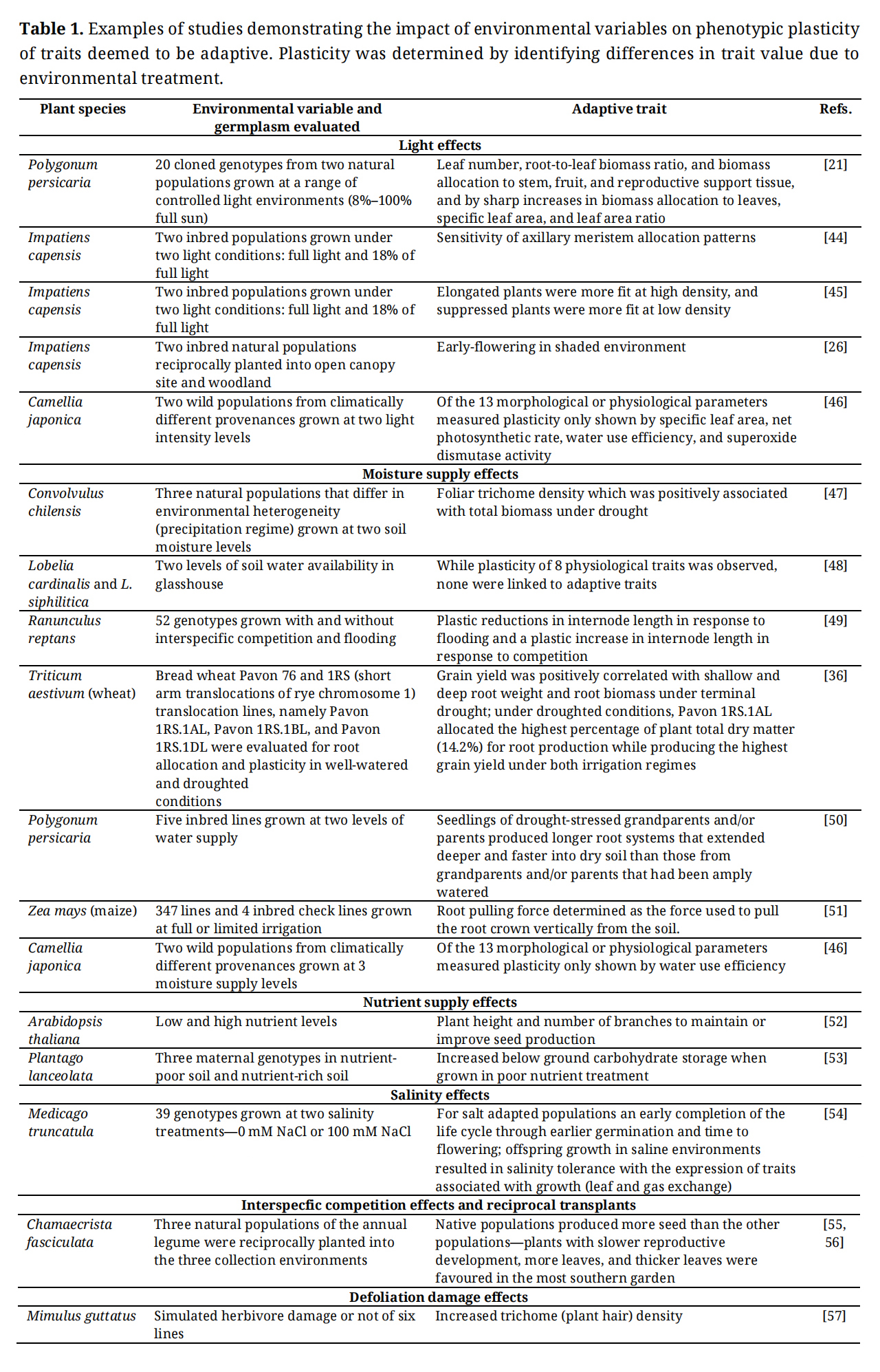 Table 1. Examples of studies demonstrating the impact of environmental variables on phenotypic plasticity of traits deemed to be adaptive. Plasticity was determined by identifying differences in trait value due to environmental treatment.
Bradshaw (1965 & 2006) [1,58] noted, and it was confirmed by Scheiner and Lyman (1991) [59] that phenotypic plasticity is under genetic control and able to be radically altered by selection indicating that plasticity has considerable adaptive value in variable and changing environments. Phenotypic plasticity is considered one of the major means by which plants can cope with environmental variability [4,43,60] and can be the origin of novelty and as a result play an important role in evolution [12,61]. Indeed, it has been concluded that phenotypic plasticity can be specific for individual characters, specific in relation to particular environmental influences, specific in pattern and direction, and under genetic control not necessarily related to heterozygosity [58]. It is becoming understood that through exploiting phenotypic plasticity it may be possible to maintain or increase yield of crop and forage plants in response to environmental change [15]. It has been argued that selective forces beyond where a species or population is naturally adapted could lead to either extinction or rapid divergence. The latter could result in some degree of phenotypic plasticity being expressed which may not be due to exposure of recessive alleles or through recombination but rather is the product of genetic change of poorly buffered or developmentally unstable genotypes [62]. This has been observed in inbred populations where a “rise in homozygosity often decreases the ability of organisms to buffer against environmental flux, and increase the probability of developmental accidents not induced by environmental stimuli” reflecting a positive relationship between homozygosity and developmental instability [62]. But as a new adaptive form is established, and gene exchange is restricted then a novel discrete population could arise. The same may not apply to clonally replicated genotypes from outcrossing plant species, which is the reproductive mode for many perennial pasture plants.
Use of variable terminology, at times imprecise or ambiguous, when describing or reviewing phenotypic plasticity has been acknowledged as holding back the understanding and possible application in plant physiology and breeding [63]. The importance of phenotypic plasticity for plants which by and large are sessile (and therefore unable to move away from less-than-optimal environmental impacts) and animals which are generally mobile is also generally not considered. The debate on whether phenotypic plasticity will promote or retard species’ rates of adaptation to ever-more stressful environmental conditions appear to be ongoing [64]. Persistence/survival of genotypes within a species in changing environments will require both some degree of phenotypic plasticity, as well as the capacity for adaptation to occur at the population level. These two drivers for evolutionary success while often considered independently should be viewed synergistically [64]. Species can respond to a variable environment by becoming both more genetically variable and more plastic, with both mechanisms not being mutually exclusive [65]. However, it is important to not confuse these two mechanisms of adaptation of plants to a changing environment [66]. One is about the extent of genetic variability for trait expression between genotypes and the other about the extent to which trait expression can vary within a genotype in response to environmental changes (the latter being phenotypic plasticity). The former ensures the adaptation of a species and the latter the adaptation of a genotype within a species to environmental changes, which in turn may also ensure the ongoing adaptation of the species. The degree of phenotypic plasticity should not be considered the property of an organism but rather of a defined characteristic or phenotypic attribute that changes in response to environmental change [14].
The ability of a plant to produce highly differentiated life-stage variants leading to distinctive juvenile and adult forms is not considered here as phenotypic plasticity [67] and is more akin to the concept of developmental plasticity. Developmental plasticity refers to situations in which an individual’s environment induces an irreversible, environmentally specific phenotype [68]. Developmental plasticity may be considered by some as a specific subset of phenotypic plasticity where physical changes occur during growth and permanently shape the organism’s traits (e.g., referred to by Ghalambor et al. (2007) [69] as adaptive plasticity; and [70–72]), but is considered by others as most likely a separate phenomenon [73]. Intraspecific population variability in phenology (i.e., recurring biological lifecycle events) have suggested genetic differentiation in phenotypic plasticity (e.g., [18–20,24,25,74]). Phenotypic plasticity in this review will be confined to situations in which an individual can reversibly and repeatedly modify its phenotype in response to environmental conditions. In other studies, this may be referred to as phenotypic flexibility, reversible plasticity, reversible acclimation, activated plasticity or contextual plasticity [71,75,76].
Phenotypic plasticity is perhaps of similar or even greater importance than genetic variation for perennial plant species than for annual species which renew their population each year through reseeding. It has been argued that phenotypic plasticity can serve as an initial adaptive strategy for populations in response to environmental stress, providing the time needed for slower genetic adjustments to occur across generations [77,78]. Most temperate pastures consist of perennial outcrossing species and while they have the ability to also reseed this can be reduced when grown in defoliated pastures (either through grazing or cutting) where nutritive value of the feed being maintained [79] and therefore the chances of reestablishing new populations through reseeding is low [80,81].
Phenotypic plasticity may contribute more than just allowing a genotype to adapt to its current environment but may act to facilitate and accelerate major processes in evolution in terms of being linked to being the origin of novelty, speciation and macro evolution [67]. However, adaptive phenotypic plasticity in a particular trait does not necessarily indicate improved adaption, unless the change is appropriate to ensure enhanced plant fitness [65,69,82]. Similarly, Schlichting (1986) [82] also understood that “an absence of morphological response to the environment does not necessarily mean that a plant lacks plasticity”. It is possible that a plant may respond to the environment by altering growth rate but not morphological phenotype, but this could be considered passive plasticity and not necessarily adaptative. It is important to distinguish between phenotypic plasticity of traits that enhance the adaptation and fitness of the plant to the changed environment rather than simply reducing growth [28]. Indeed, it has been argued that to infer adaptive evolution based on observations that mean phenotypes have changed in ways that intuition suggests are adaptive is not enough to confirm that the phenotypic plasticity improved adaptation to a changed environment [65]. Further to that it has been propositioned that while “phenotypic plasticity may serve as an emergency response to a new environment that is necessary for survival, it does not generally facilitate genetic adaptation by bringing the organismal phenotype closer to the new optimum” [83]. Their review, which focused only on unicellular microbes, found that genetic changes more frequently reverse than reinforce plastic phenotypic changes in virtually every adaptation.
While considerable written debate and theoretical thinking has resulted in understanding the concept of phenotypic plasticity, mechanisms associated with its function, the resulting consequences in natural environments and its place in evolution [2,6,84,85] and ecology [27], there has been little direction or momentum on how this could be exploited through plant breeding to improve adaptation of important crop and forage species in agricultural production systems. Is degree of phenotypic plasticity a heritable trait that could provide benefit through plant breeding in cultivar development and success across changing environments? The focus here is to review the ability of genotypes within a species to change their phenotype in response to external variables, be they biotic or abiotic. The research questions posed are:
1.
2.
3.
4.
5.
6.
The focus here will be solely on the exploitation through breeding of phenotypic plasticity as a plant trait, in its own right, and how this could be employed for benefit in crops and forages of agricultural value.
The described research tool for measuring phenotypic plasticity is termed the reaction norm which is “the function that links the environments a particular genotype can face and the phenotypes that can be produced by this genotype” [86]. Phenotypic plasticity is most often both trait-specific and environment-specific [1] and has been argued to be an adaptive feature that can be changed by selection [1,9,87,88]. This has been likened to ‘genetic assimilation’ [34] which is on old term referring to environmentally induced phenotypes becoming genetically fixed and no longer requiring the original environmental stimulus to maintain their phenotype [89,90]. Waddington (1961) [91] defined genetic assimilation as ‘‘a process by which characters which were originally ‘acquired characters’ may become converted, by a process of selection acting for several or many generations on the population concerned, into ‘inherited characters.’” There is a view that genetic assimilation as a biological phenomenon has potential importance in understanding of evolution and as result could be employed in breeding of better adapted plants.
The diversity of reaction norms which identify phenotypic plasticity and difference in degree of plasticity are shown in Figure 1. When genotypes have similar trait values across two environments there is no plasticity (i.e., no environmental effect), but there can be genetic effects due to difference in the magnitude of the trait (Figure 1A). A difference in trait value across environments indicates plasticity but when the response (slopes) are the same for genotypes then there is no difference in degree of plasticity between the genotypes (i.e., no genotype × environment interaction) (Figure 1B). A difference in trait value that is different between environments demonstrates a difference between genotypes in degree of plasticity (i.e., a significant genotype × environment interaction) (Figure 1C,D) which may also indicate an environmental effect because the overall average slope is positive (Figure 1C). But because the marginal mean phenotypes do not differ between genotypes there is no primary genetic effect (i.e., no genetic main effect). When the marginal means are the same for both genotypes, but the genotypes have opposite reactions to the environment indicating a difference in degree of plasticity between genotypes (i.e., a significant genotype × environment interaction), but there will be no significant genetic or environmental effects (Figure 1D).
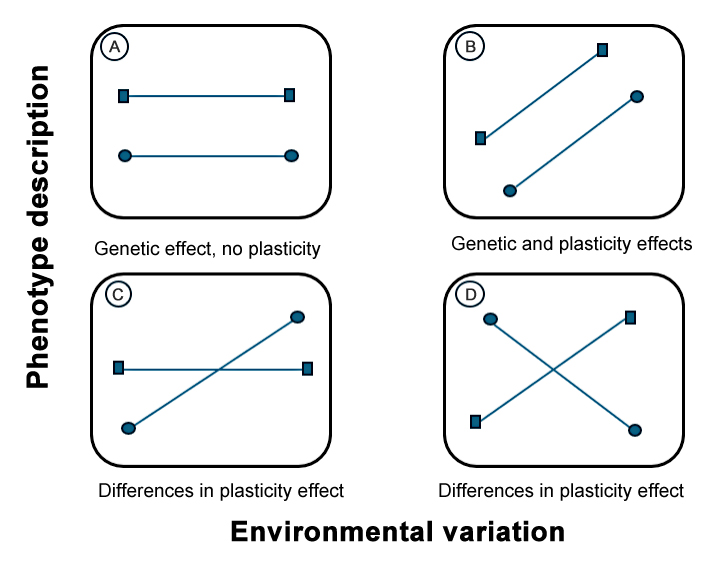 Figure 1. Phenotype of two genotypes grown in two environments demonstrating (A) flat reaction norms indicating no phenotypic plasticity, but a genetic difference between the genotypes; (B) sloped and parallel reaction norms indicating both a genetic and environmental effect but a plasticity effect that is similar for both genotypes; (C) differentially sloped reaction norms, indicating for one no plasticity effect and for the other a plasticity effect, so a difference in degree of plasticity between the two genotypes (i.e., a genotype × environment interaction), but no genetic difference in genotype means; and (D) differentially sloped reaction norms, indicating a difference in degree of plasticity between the two genotypes (i.e., a genotype × environment interaction), but no overall mean plasticity effect for the trait due to environment or genetic difference between genotypes means. Developed from Figure 1.1 from [6] and see [13,15].
When genotypes are compared in two different environments (for example different levels of phosphorus supply [92] or different levels of light [21]) then the slope of the line for traits between those two environments is the reaction norm. For comparisons across more than two environments that might result in a curvilinear relationship more complex analyses may be required to compare degree of plasticity. As explained by Scheiner [66] confusion over terminology has been unhelpful. To be clear “phenotypic plasticity refers to the general effect of environment on phenotypic expression (including a lack of response), while norm of reaction refers to the specific form of that effect; however, these terms can be used interchangeably” [66]. Additionally, plasticity displayed by a genotype is for a specific trait across at least two environmental conditions. And differences in degree of plasticity among genotypes are again related to variation in a specific trait due to changes in environmental conditions. Modelling of gene regulation has demonstrated that a history of phenotypic plasticity can increase the rate of adaptation in a new environment, but this was dependent on the strength of selection in the original environment [93].
The challenge of demonstrating that degree of phenotypic plasticity is a heritable trait, is managing the control of environments, the identification of appropriate phenotypic traits and interpreting the adaptive significance of non-genetic variation [94]. But a few limited studies have demonstrated that degree of phenotypic plasticity can be heritable. For example, regression of genetic variation between-families against within-families showed significant regression coefficients for days to flowering and panicle length, but not culm height for population of the annual grass, Bromus mollis, grown under 8 different environments which included sandy loam versus clay loam soils, 2 levels of fertiliser application and 2 photoperiods of 8 and 12 h [94]. Importantly, days to flowering and panicle length are viewed as adaptative traits since both are directly correlated with the relative reproductive rates of populations.
Yet in another study with Linum usitatissimum (flax or linseed) no evidence for the induction of heritable changes due to growing plants at two different spaces was observed [95]. While genetic correlations between measured phenotypic traits were trait and cross-dependent there was no evidence of general stability of the genotypes. This would suggest that the stability of an organism with regard to degree of plasticity is determined by non-additive effects [95]. However, there is the consideration that “plant parents may respond to environmental conditions such as resource stress by altering traits of their offspring via heritable non-genetic effects” [96] and in so doing provide a critical source of adaptive adjustment over very short timescales [9,60,65]. Transgenerational effects have been demonstrated, although “their potential contribution to adaptive rescue will depend on the precise distribution of environmental states, both spatially (with respect to dispersal) and temporally” [96]. In that study with the annual plant, Polygonum persicaria, a strong adaptive and maladaptive effect of shade on parental plants on both the competitive performance and the lifetime reproductive output of progeny, depended on whether the progeny were themselves growing in shaded or sunny, dry conditions. Transgenerational plasticity refers to nongenetic inheritance (or parental effects in the broadest sense) involving effects of ancestors on descendants that are not mediated by the transmission of genetic alleles [97].
Degree of phenotypic plasticity may result from parental effects, resulting in adaptive and context-dependent transgenerational transmission of phenotypic strategies [98]. Studies have shown the influence of the maternal environment on seed germination [99–103]. These parental effects are thought to provide important insights into the origin and evolution of adaptation under variable environmental conditions [98]. A comparison of 11 populations of Arrhenatherum elatius grown at varying temperatures and levels of precipitation supported the perception that degree of phenotypic plasticity increases in populations derived from temporally more variable environmental conditions [104]. This is also a position, where degree of plasticity is positively related to the variability of the environment from which the population is derived, has been observed in other studies [13,105–108].
Understanding the impact of phenotypic plasticity in pasture species may become important from the perspective that pasture resilience could be dependent on diverse species pastures when functional stability is achieved through compositional change [109,110] or perhaps be maintained effectively by increased phenotypic plasticity of fewer species. It might be expected that a genotype or cultivar exhibiting high phenotypic plasticity would be a superior competitor in variable environments compared with a less plastic plant of the same species. This was the case for two inbred lines of Plantago major with differing levels of phenotypic plasticity where with increasing frequency of fluctuations in nutrient level, the highly plastic line outcompeted the less plastic line [111].
It has been considered that genetic variation and phenotypic plasticity are alternative strategies influencing a plant species ability to adapt to environmental variation and should therefore be negatively related [94,112]. However, more recent evidence suggests this is not the case. Quinn and Wetherington (2002) [113] in a comparison of two plant species (the inbreeding Sporobolus cryptandrus and the outbreeding Panicum virgatum) with different ecological histories of environmental quality and predictability, found no consistent relationship between amounts of clonal genetic variation and plasticity. Similarly, Neuffer and Hurka (1986) [18] found no consistent relation between amount of genetic variation and the amount of plasticity, and in some cases, plasticity increased with greater amounts of genetic variation in a study of Capsella bursa-pastoris populations in Europe. A comparison of phenotypic plasticity and genetic variation among genotypes of five populations of the grass Danthonia spicata from a set of habitats of different successional age also indicated no significant correlation, either negative or positive, in amounts of genetic variation and plastic variation [112]. It was deemed that phenotypic plasticity of D. spicata may be more important than genetic adaptation in explaining the persistence of this species along the successional gradient [19]. In the comparison of phenotypic plasticity of 11 populations of Arrhenatherum elatius for changes in temperature and precipitation it was noted that phenotypic plasticity was not related to neutral genetic diversity [104]. Studies have shown that the extent or degree of phenotypic plasticity of some plant traits is genetically determined [43,92,112] and can be affected by selection [2,28,59,66,67,82,114,115] and refer to Table 1.
Epigenetic modifications and phenotypic plasticity should not be confused. While phenotypic plasticity events may involve epigenetic mechanisms, they are not the only ones [116,117], and moreover, epigenetic mechanisms may be involved in many other processes besides phenotypic plasticity [86,118]. However, epigenetic modifications in plants can allow them to adjust to variations in environmental stresses to ensure quality and yield of crops is maintained [119]. Epigenetic shifts have been likened to genomic plasticity by some commentators [14]. Epigenetics can refer to either the study of chemical tags on DNA that have the potential to affect gene expression in response to developmental and environmental triggers, such as histone and chromatin modifications, but are not heritable, or changes in relatively stable chemical DNA tags, such as DNA methylation, with potential for transgenerational persistence ([120] and references therein), also referred to as maternal effects [50,120–122]. Maternal effects involve the influence of the maternal genotype or phenotype on the offspring’s phenotype, often through non-genetic means, while epigenetic inheritance refers to changes in gene expression influenced by environmental factors that do not involve alterations to the DNA sequence itself, but that can be passed to subsequent generations [123,124]. However, both may contribute to transgenerational transmission of phenotypic traits.
Epigenetic effects are often called non-genetic because they change how an organism reads its DNA without changing the actual genetic code sequence. Non-genetic inheritance is recognised as any effect on offspring phenotype brought about by the transmission of factors other than DNA sequences from parents or more remote ancestors [116]. It has been proposed that “when natural selection acts on pure epigenetic variation in addition to genetic variation, populations adapt faster, and adaptive phenotypes can arise before any genetic changes” [125]. Epiallelic (i.e., identical genes that have different chemical marks, such as DNA methylation) variants that contribute to heritable variation in complex traits using linkage or association studies have demonstrated that numerous epialleles across the genome can be stable over many generations [126,127]. It has been concluded that variation in DNA methylation can cause substantial heritable variation of important plant traits and that rapid evolution based on epigenetic variation alone should be possible [118].
Adaptive transgenerational plasticity has been observed and is reviewed by Herman and Sultan (2011) [128] and Salinas et al. (2013) [129]. They conclude that transgenerational plasticity is widespread across a range of taxa as a mechanism for species or populations to adapt to rapid environmental changes (e.g., [130]). A transcription factor that reduces trichome development in Mimulus guttatus can be down regulated through epigenetic effects in response to simulated herbivore damage indicating the potential for epigenetic inheritance of an induced defence to evolve [57]. Transgenerational plasticity may allow long-lived and perennial taxa to better tolerate novel stressful environments, since adaptation by selective evolution is unlikely to keep pace with rapid environmental changes. Further work is required to understand the mechanisms of transmission of adaptive phenotypic changes and the association between specific epialleles [127] and adaptive traits [128]. Notably closely related taxa may express substantially different outcomes of transgenerational plasticity in response to environmental stress such as drought [130]. Adaptive transgenerational effects of different nutrient conditions on the phenology, biomass production and carbon storage of Plantago lanceolata have been demonstrated [53]. Maternal environments affected carbohydrate storage below ground and was viewed as a proxy for plant survival and long-term success, and thus also fitness of the offspring in an adaptive manner. However, there is an alternative view that non-genetic inheritance and phenotypic plasticity are not clearly demonstrated as prominent planks in the platform of the ‘extended evolutionary synthesis’ [131]. That argument stresses that the evolved characters of a species, including various forms of plasticity, do influence its effective environment and selective pressures, but it is still genes and selection that make the lasting difference. This is countered by the observation that a single genotype can produce multiple phenotypes, and each of those phenotypes will have its own environment-dependent fitness [61].
Assuming that “genotypes with broad, adaptive plasticity, or a mosaic of reaction shapes, are better equipped to cope with novel or shifting environments” [78] when would this be an adaptive advantage? It has been hypothesised that plant species that would benefit most from a high degree of phenotypic plasticity would include those that:
| 1. | Have a long juvenile period and/or a low rate of increase or population turnover such that changes through genetic selection for trait variability would be very slow [1,66]; |
| 2. | Have the capability to grow across a range of heterogeneous environments [66,85,115,132,133]; and/or |
| 3. | Respond to and prosper in a rapidly changing environment [9,10,134,135]. |
A review by Matesanz et al. (2010) [9] listed numerous examples showing evidence of adaptive plasticity as a response to different environmental factors, now summarised along with others in Table 1. While plasticity for noted adaptive traits was generally observed, in one study [48] the conclusion was that much of the observed plasticity was either adaptively neutral or maladaptive. Caruso et al. (2006) [48] measured physiological traits related to carbon and water uptake in wildflowers Lobelia cardinalis and L. siphilitica grown at two levels of water supply in a glasshouse study. L. cardinalis plants with restricted water provision were characterised by lower stomatal conductance but did not have higher fitness under drought conditions. Alternatively, well-watered L. cardinalis that had higher stomatal conductance had higher fitness. For L. siphilitica maximum photosynthetic rate responded plastically to drought but this response was deemed adaptively neutral. It has also been noted that while plasticity may indeed play an important role in the adaptiveness of many species the breadth of relevant factors and traits involved may reduce the likelihood of detecting robust general patterns [136].
Transgenerational inheritance of environmentally induced phenotypes has been demonstrated in Polygonum persicaria across 3 generations indicating that stresses experienced by grandparent and parent plants can ‘‘preadapt’’ offspring for functioning under the same stresses [50] (Table 1). Notably, the effects of drought were cumulative over the course of two generations such that when both grandparent and parent plants were drought-stressed, offspring had the greatest provisioning, germinated earliest, and developed into the largest seedlings with the most extensive root systems.
However, there are situations when high phenotypic plasticity is not beneficial. For example, the degree of phenotypic plasticity of four cool temperate-Mediterranean forest tree species when grown under four irradiance treatments (1%, 6%, 20% and 100% of full sunlight) was inversely correlated with survival in deep shade [137]. In this study phenotype measurements included morphological and structural variables. This result does differ from others which found that morphological plasticity led to an enhanced capacity to survive and grow in the understory (due to plasticity in crown morphology and chlorophyll content) while physiological plasticity (i.e., plasticity in gas exchange, photochemical efficiency and water relations) can result in an enhanced capacity to colonise gaps and grow in high irradiances [138,139]. Similarly, in another review the plasticity of morphological traits in shade tolerant species in general appeared to be slightly higher than for the shade intolerant species (refer to Table 2 in reference [43]).
The development of a large database of phenotypic observations across various environmental variables has been achieved with the aim of providing a quantitative method to construct response curves (i.e., reactive norms) [140]. The approach has been termed ‘meta-phenomics’ and is an attempt to understand the integrated response of plants to their environment and develop benchmarks for future phenotyping efforts as well as for modelling global change effects on both wild species and crops. This has led to identifying that shade-tolerant and light-demanding species showed differences in the plasticity to light intensity, differences in dose response curves (i.e., reactive norms) for plant traits were generally small relative to the overall dose response curve [141]. The practical use of this type of analysis will be to identify adaptive traits for which phenotypic plasticity might be sought.
Methods for quantifying trait stability or plasticity have been extensively reviewed recently [142]. Differences in degree of phenotypic plasticity between genotypes or inbred lines can be identified through significant genotype × environment interactions from an analysis of variance analysis or regression of the plant traits across a continuum of environmental variation [38,41,82,92,112,143]. This allows determination of the extent of phenotypic plasticity that can be observed within a species or with cultivars within a species as occurred in a study comparing 10 genotypes from 11 white clover (Trifolium repens) cultivars for degree of phenotypic plasticity across 14 plant characters with seven levels of phosphorus supply [92]. Similarly, Scheiner and Goodnight (1984) [112] compared 29 or 30 individual genotypes from 5 populations of Danthonia spicata for 12 plant characters with varying light and water supply. Coefficients of relative plasticity as an index have been measured as the variance for an individual genotype divided by the variance of all genotypes [40,144]. In this case the higher the calculated coefficient the higher the degree of plasticity.
Coefficients of variation (CV) have also been commonly used to estimate the magnitude of plastic response of plant traits when grown in different environments [82,145–148]. While standard errors have also been used to determine degree of phenotypic plasticity it is a simply a measure of spread or dispersion [149], but unlike CV is not standardised by the mean measurement. CV and standard deviation are measures of random variation and may therefore not be appropriate for quantifying responses to a fixed-effect factor.
Calculation of a ‘plasticity index’ has been attempted but most cannot be standardised across traits or compared among different species [43]. The Relative Distances Plasticity Index (RDPI) is derived from the absolute phenotypic distances between individuals of same group and different environments, divided by the bigger of the two phenotypic values for two environments [104,137]. The index ranges from 0 (no plasticity, meaning the trait stays the same across all environments) to 1 (maximum plasticity). Alternatively, variation for phenotypic plasticity has been defined as the deviation of the mean phenotype of a genotype within an environment from the mean phenotype of that genotype across all environments [112]. It has been noted that many of the methods of calculating plasticity indices assess the response and variation of plasticity in multiple steps, first by analysing variation at the genotype level by extracting indices and then analysing the indices, which can make biological interpretation challenging [63].
Regression analysis of changes in a plant phenotypic trait across varying environments is most effective when response to an environmental variable is curvilinear but can also provide an effective measure of phenotypic plasticity when the response is linear [4]. Indeed, the slope of reaction norms which relates the phenotype change with a change in environment has been used as a plasticity index [6,150,151]. The Finlay–Wilkinson regression [151] which estimates the slope of the linear regression between the trait of a single genotype in a specific environment and the mean of all genotypes in that environment indicates an above-average plasticity (slope > 1), and a below-average plasticity (slope < 1) has also been used in some studies and a measure for degree of plasticity [40,63,152,153]. However, this method has not been considered as an appropriate measure because means and regression coefficients of genotypes tend to be positively correlated, and the assumption that responses are linear is troublesome [82,154]. Despite this concern the Finlay–Wilkinson regression is frequently used to quantify phenotypic plasticity [41,155–157]. In some studies, slopes of reaction norms and variance ratios [144] have returned the same ranking of lines for phenotypic plasticity [158,159].
Phenotypic plasticity has also been quantified using phenotypic distances among individuals exposed to different environments, which provides a relative distance plasticity index (RDPI) [160]. This index ranges from 0 (no plasticity) to 1 (maximum plasticity). A multivariate phenotypic plasticity index (MVPi), calculated on the Euclidian (i.e., the straight-line distance between two points in multi-dimensional space) distance between scores of a multivariate statistical analysis, consolidates multiple phenotypic characteristics into a single plasticity marker [161]. It has been identified as a promising tool to predict genotype performance across diverse climatic conditions for both crop and ecological research. This was demonstrated through a positive correlation between MVPi values and patterns of total biomass loss in the shoot and root parts between control and water deficit plants [162].
Comparison of a wide range of methods for calculating degree of phenotypic plasticity has been undertaken by Valladares et al. (2006) [160]. They identified the complexity of calculation, potential weaknesses of each and how they ranked four species for their plastic shoot–root ratio response to light level. The choice of estimator to calculate degree of phenotypic plasticity should be aligned to the objective of the study depending on whether it is simply a description of the phenotypic response to the environment through to ranking of genotypes according to their degree of plasticity.
To determine if an observed phenotypic shift has a genetic basis that then infers improved adaptation it has been considered that “reciprocal transplants are the most direct approach for inferring adaptive change and should be employed whenever possible” [65]. This is achievable for comparison of plants demonstrating varying degrees of phenotypic plasticity (e.g., [26,163]). In this way the improved adaptation or fitness of genotypes found growing in one environment can be judged as superior to those taken from other environments. However, a word of caution about the so called ‘carry over effects’ often seen in transplant studies [164] and some of these can last for at least a year [165,166]. Because carryover effects have been considered temporary, they have often been considered unimportant. But others suggest that “carryover itself and genotypic differences in carryover may be important in maintaining genotypic diversity” [164]. Carryover effects are likely to be an indicator of phenotypic plasticity, but if they do not last when moved to another environment is that because they no longer have any adaptive value in that new environment? It has been recommended that evaluating phenotypic plasticity responses to selection should only occur after all selected and control lines have been grown in a uniform environment for at least one generation [167].
The number of trial/experiments that have measured phenotypic plasticity across genotypes within a species is substantial (Table 2). The overwhelming conclusion is that a significant degree of plasticity of phenotypic traits seems to be relatively universal with traits demonstrating little or no plasticity being rare. This has also been noted in other reviews which have noted that “timing, specificity and duration of plasticity are critical to their adaptive value for plant fitness” [63]. An interesting study on the effect of high versus low levels of endophytic fungi (Epichloë) on the phenotypic plasticity of cloned genotypes of perennial ryegrass (Lolium perenne) indicated phenotypic plasticity for tiller number, leaf area and mass at 11 weeks but not 25 weeks growth ([168] and Table 2). Interestingly after the 11-week measurement plants were cut back and allowed to regrow. Notably the effect of the fungicide reduced the level of endophyte infection, but it did not eliminate the fungus in all plants that were treated. There was considerable variability in infection level among the six ryegrass genotypes due to the fungicide treatment. This may have explained the significant genotype × fungicide treatment at 25 weeks for degree of plasticity for all measurements—tiller number, leaf area and mass. Another study with Epichloë demonstrated the impact of the host plant on the phenotypic plasticity of the endophyte itself [169]. Isolates of Epichloë known to induce dwarfing of L. perenne and suppresses floral meristem development with some host genotypes when isolated from normally growing plants had a typical cottony mycelium growth in culture whereas mycelium from dwarfed plants appeared mucoid. Cottony colonies could be induced to turn mucoid after prolonged incubation and seedlings inoculated with this mucoid mycelium formed dwarfed plants. Mucoid colonies on the other hand could be induced to form cottony colonies through additional further incubation, and these did not induce dwarfing. The authors concluded that the reversibility of colony morphology indicates that the mucoid dwarfing phenotype was not the result of mutation.
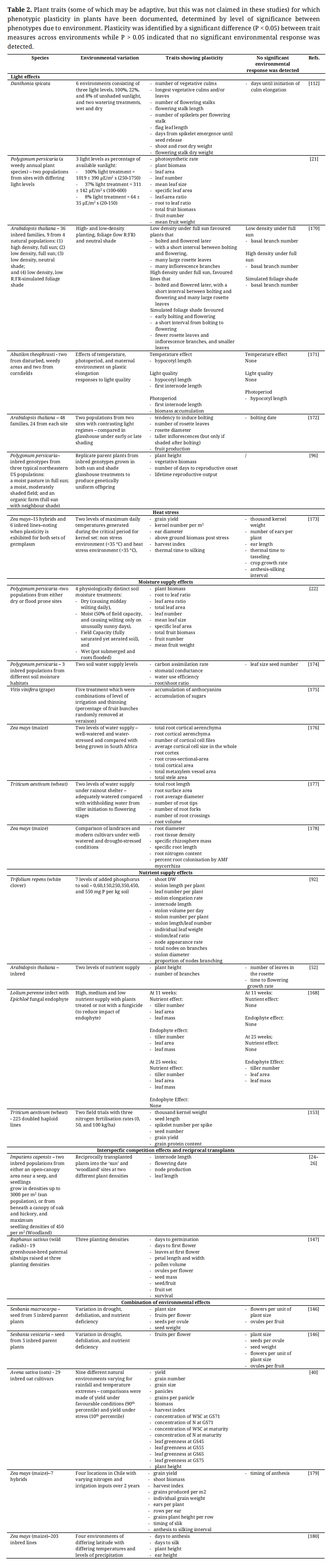 Table 2. Plant traits (some of which may be adaptive, but this was not claimed in these studies) for which phenotypic plasticity in plants have been documented, determined by level of significance between phenotypes due to environment. Plasticity was identified by a significant difference (P < 0.05) between trait measures across environments while P > 0.05 indicated that no significant environmental response was detected.
One of the major reasons why phenotypic plasticity has been rarely evaluated or included in breeding programs, as a heritable trait of important crop and forage plants is the issue of logistics. To ensure good replication and statistical power for the comparison of a range of genotypes within cultivars or populations across a range of defined environments then trials soon become very large making their management and data collection time consuming and possibly expensive (an issue recognised over 2 decades ago by Pigliucci (2003) [181]). However, the use of robotics and artificial intelligence, which might include deep learning, time-series prediction models and may now make undertaking these trials [182,183] more possible and affordable. This might also include the use of specialised sensors such as hyperspectral imaging, on either unmanned ground or aerial vehicles [184–187] and then combined with the use of computer vision, multimodal data fusion and predictive plasticity modelling [142,188–190], and potentially linking phenotype with the plant’s genotype [191,192]. Non-invasive automated methods for phenotyping both shoot and roots systems simultaneously are now possible [193]. High-throughput phenotyping technologies might also include automated phenotyping platforms, and time-series phenotypic monitoring [194–197]. This does not suggest that artificial intelligence will supplant the expertise, intuition, and creative vision of the plant breeder but rather supplement their expertise through providing new/novel information to precisely quantify reaction norms, decipher complex environmental response patterns, and facilitate "plasticity-aware” breeding. And it is important that the phenotyping is undertaken in realistic field conditions. An additional challenge will be the time and cost required to establish new methods of phenotyping and integrating information from a range of sensors.
Heritability and Genetic Control of Phenotypic PlasticityIt has been considered that “no single measure of the heritability of plasticity exists, unlike the case for the heritability of traits within environments” [66]. While genetic variance for degree of phenotypic plasticity (i.e., significant genotype × environment interactions) seems to be common (examples provided in Table 3) it has been noted that heritability of plasticity for traits can be low [66]. To be clear a significant genotype × environment interaction while indicating differences among genotypes for phenotypic plasticity does not necessarily establish the level of heritability for phenotypic plasticity of the trait under consideration. Indeed, in a study with the clonal herb Ranunculus reptans, it was observed that for the trait proportion of flowering rosettes, heritability for the trait itself was high but not for the plasticity for the trait [198,199]. This lower estimate for heritability of plasticity was considered to align with previous findings that heritability of plasticity is generally lower than heritability of mean trait values [66]. Heritability for a plant trait is also not necessarily related to the degree of phenotypic plasticity of that trait [200]. However, Scheiner (1993) [66] still proposed that phenotypic plasticity responds to both artificial and natural selection. Proposed models for the genetic basis of phenotypic plasticity include overdominance where plasticity is function of homozygosity, pleiotropy where there is differential expression of the same gene in different environments, and/or epistasis where genes that determine the magnitude of response to environmental effects which interact with genes that determine the average expression of the character [66]. In the latter case the trait mean and the trait plasticity are potentially independent characters. Evidence reviewed indicated that most work supported genetic model being either pleiotropic or epistatic, with very little evidence supporting the overdominance model [66]. Differential gene expression across environments has been documented for many plant species [201]. This has been aligned with the concept of ‘relaxed selection’ which is “a weakening of both positive and purifying selection, resulting in an increased probability of fixing deleterious mutations and a decreased probability of fixing beneficial mutations”. They propose that relaxed selection may explain not only limits to evolutionary origin and maintenance of plasticity at the lineage or pedigree level, but also the apparent paucity of costs of plasticity at the individual level [201].
While the work was done on insects it has been observed that “the plasticity of a character does respond to selection, and this response is partially independent of the response to selection on the mean of the character” [59]. They concluded that the degree of plasticity of a character is determined by separate gene loci from those determining the mean of the character in question. However, others have argued that “invoking separate genes for plasticity to explain changes in phenotypic values across environments is unnecessary because current genetic models of the evolution of phenotypic plasticity already incorporate both allelic effects that vary across environments and environment-specific gene expression” [202].
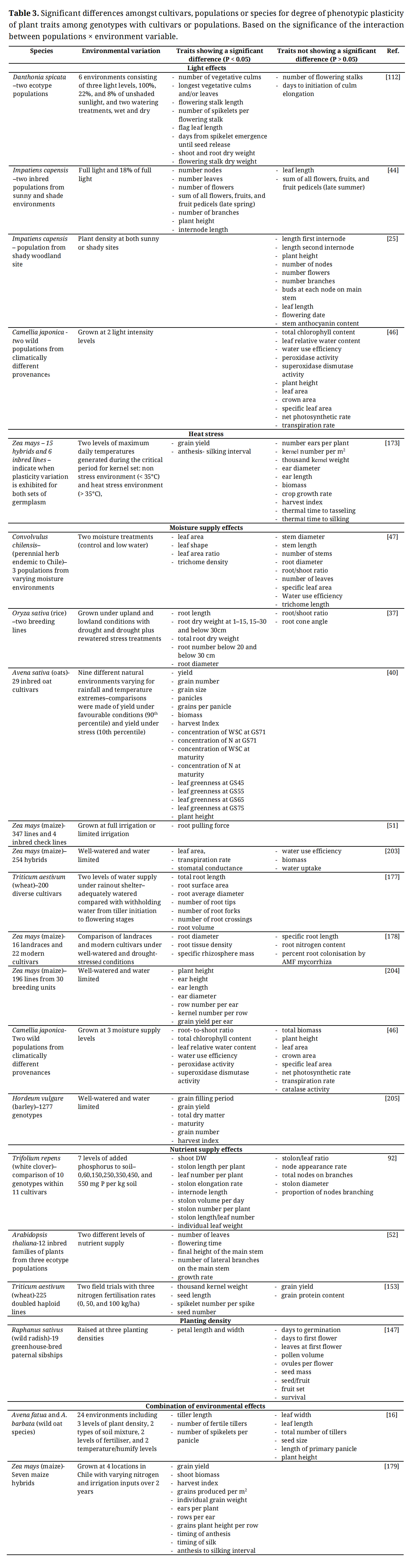 Table 3. Significant differences amongst cultivars, populations or species for degree of phenotypic plasticity of plant traits among genotypes with cultivars or populations. Based on the significance of the interaction between populations × environment variable.
Phenotypic integration, defined as the pattern and magnitude of covariation among functional traits in a given organism [181,206], is thought to be an adaptive response to stress [2,82]. Phenotypic integration refers to the extent of trait correlation and is thought to limit phenotypic plasticity and to be higher under stressful conditions, thus potentially explaining the limits to plasticity. Yet, the evidence of whether integrated traits are less plastic is largely mixed. One view is that (i) more strongly integrated traits would be less plastic [82,207,208], and (ii) that traits would be more frequently and strongly integrated under more stressful conditions [82,209]. Some reviews have however determined that more strongly integrated traits are not less plastic, but alternatively greater phenotypic integration was associated with lower variation in plastic responses [210]. They found that “the association between plastic responses and phenotypic integration was independent of experimental treatment, plant functional group and ontogeny”. However, the degree of plasticity for traits was an important factor such that positive associations between trait-level phenotypic integration and trait-level phenotypic plasticity was more likely for highly plastic traits than those low plasticity traits [210].
Genetic Variation for and Identification of Degree of Phenotypic PlasticityDifferences in degree of phenotypic plasticity between cultivars or populations within a species has been demonstrated for many traits (Table 3—and refer to Figure 2 in reference [142]). The concern about breeding for increased degree of phenotypic plasticity is determining which phenotypic traits are important that if flexible or plastic with environmental changes would lead to improved adaptation and performance of the crop or forage species of interest. Possible adaptive traits are listed in Table 1—but none of these refer directly to environments that crop and forage species will be exposed. Most of the plants investigated in Table 1 are either model species or annual weeds.
Modelling has been used to simulate trait-based breeding approaches as a way to screen plant phenotypic plasticity in large number of environments before proceeding to a phenotyping approach in field conditions [211]. They used optimisation methods to search for trait combinations that matched desired crop specifications, which in this case were increased crop yield. Three plant traits, late maturity, low leaf area distribution, and conservative stomatal conductance regulation showed little plasticity, and it was argued that these traits had major value in the tested range of environments. Five other secondary traits displayed variability in optimal values, which allowed distinctive resource use strategies that were more adapted to specific conditions [211]. Factor analytic models which use advanced linear mixed model of multi-environment data with factor analytic variance structures for the genotype-by-environment interaction effect have been promoted as an effective means of analysing phenotypic traits to determine if they are agronomically adaptive or maladaptive [142].
For the white clover study [92], it was evident that the extent of phenotypic plasticity across all traits measured also differed between cultivars with one demonstrating plasticity for less than 25% of traits while two other cultivars demonstrated plasticity for more than 75% of traits measured. However, across all genotypes it was noted that the degree of plasticity for some plant characteristics was correlated. The extensive study of Sultan and Bazzaz (1993) [21–23] did not directly compare the two populations of Polygonum persicaria for differences in degree of plasticity among genotypes within each population across a range of different environmental variables. However, across the 32 combinations of traits per treatment effect one population showed that 65% of traits had significantly different plasticity between genotypes while the other only displayed 47%. Comparison of plasticity of two natural populations of Impatiens capensis showed that genotypes from the woodland population were less plastic than genotypes from the sun population, with phenotypic differences between populations being greatest in the open site at low density [25,26] (Table 3). It was concluded that “population differences in plasticity can cause genotypes from foreign populations to be more strongly selected against in some environments than in others.” However, it was noted that there are genetic limits to degree of plasticity. Also, a study on the phenotypic plasticity of populations of Impatiens capensis when grown in differing light levels observed that “there was little evidence that population differences represented adaptive differentiation for sun or shade; rather, the results suggested the hypothesis of differential selection on patterns of meristem allocation caused by population differences in timing of mortality and intensity of competition” [44]. A comparison of two populations of Impatiens capensis from an open sunny site and a shaded woodland site when reciprocally planted into each site at two levels of plant density provided evidence for adaptive divergence through the development of different traits to improve survival which in this case were plastic shade-avoidance responses such as internode length and flowering time [24,25]. It has been proposed that stress-avoidance traits, such as early flowering, are favoured in annual species, whereas stress-tolerance traits, such as slow growth and delayed reproduction are favoured in perennial species [212]. For rice (Oryza sativa) it has been shown that root architectural plasticity can be related to yield stability across different water and crop establishment treatments [37]. While root hairs are under genetic control [213] there is also evidence of phenotypic plasticity with an increased root hair length in response to low phosphorus availability [214]. In a study with maize (Zea mays), it was proposed that root hair plasticity as a component of a broader suite of traits, including plasticity in root respiration, that permits greater root growth and phosphorus acquisition in low phosphorus soils [214].
Breeding for Degree of Phenotypic Plasticity in Crops and ForagesLinking the degree of plasticity to improved growth and persistence in a changed/changing environment has most often been discussed from an evolutionary perspective or as an aspect of ‘buying time’ to give the species a chance for allowing selection for genetic change to occur for improved survival [58,215]. However, phenotypic plasticity has been identified and studied in several crop species such as wheat [36,153], oats [40], barley (Hordeum vulgare) [216], maize [38,42,203,217], cotton (Gossypium hirsutum) [218], rice [37,39], and forest trees grown for timber [219]. Further it has been considered that landraces and wild crop ancestors may be an important resource in characterising plasticity and interpreting its adaptive value for use with cultivated crop plant [63] and that phenotypic plasticity holds promise for developing crop varieties that can maintain stable yields in increasingly variable environments [15].
Quantitative trait loci (QTLs) (i.e., a specific region of DNA that correlates with a continuous, measurable phenotypic trait influenced by multiple genes (polygenic) and environmental factors) associated with phenotypic plasticity have been identified in maize grown under limited and well-watered environments [203,204], maize grown across environments with differing temperature and precipitation [51,155,180,220,221], and wheat grown under drought stress [177].
A Genome-Wide Association Study (GWAS) on five upland cotton populations determined that the genetic factors controlling the mean phenotype and phenotypic plasticity are largely independent in upland cotton [218] and maize [41] indicating the potential for simultaneous improvement. Huang et al. (2023) [218] identified additive, dominant, and epistatic quantitative trait loci (QTLs), that are linked to phenotypic plasticity and agronomic traits. Similarly, in a study with barley, all plasticity QTLs were co-located with loci showing a QTL × environment interaction and there were no QTL that solely affected plasticity [216]. In another maize study, 130 QTL for agronomic traits under two water conditions, 71 for phenotypic plasticity, and 171 for stress tolerance indices have been identified [204]. Studies like these and others have led to proposing that considering degree of phenotypic plasticity is critical to deciphering the genetic architecture of trait response to stress in plants [203] and that “it may be possible for breeders to select cultivars that produce high yields by exploiting certain characteristics of the target performance environment” [41]. However, it is accepted that the genetic architecture underlying linear plasticity of most plant traits is complex and highly polygenic [155] but while resulting in a reduced narrow-sense heritability that should not completely prevent breeding progress if modern genomic strategies are used [222].
The concept of phenotypic plasticity of plants is not new with an extensive number of publications occurring in the last 75 years, but its potential impact as a breeding trait in its own right seems to have been ignored or overlooked or placed in the ‘too hard basket’ due to the challenges associated with quantification and evaluation. When examining the degree of plasticity for a plant trait that might improve plant performance in changing environments is it to be assumed that an increased degree of heritable phenotypic plasticity is the preferred outcome being sought rather than a reduced level plasticity? Or does this vary depending on the trait and the plant species under consideration? It has been recently observed that “relatively few studies to date have focused on the persistence of transgenerational phenotypic plasticity over more than two generations” [86]. However, the concept of adaptive transgenerational plasticity has been discussed for some time with the view that it will provide lasting benefit in cases where the parental environment continues to persist for the resulting progeny [128,223,224]. A summary from 24 studies of plants for adaptive transgenerational plasticity due to biotic and abiotic environmental stressors across one or more generations has been provided by Herman and Sultan [128].
Brooker et al. (2022) [225] argues that “active adaptive plasticity is particularly important in shaping the fitness of wild plants, representing the first line of a plant’s defence to environmental change” but notes that little progress has been made in realising this benefit in plant breeding. Some have also found that “the majority of estimates of directional selection on plasticity being weak and non-significant, and no evidence for selection on plasticity overall” [226]. Yet other studies have concluded that phenotypic plasticity is a trait that is heritable in its own right and can respond to selection [59,112,227], despite heritability for degree of phenotypic plasticity being moderate to low [228]. However, it is acknowledged that selection experiments on phenotypic plasticity can be complex to carry out, and in reality, have been relatively rare [229]. Use of near ‘real world’ environments rather than artificial selection experimentation is encouraged such that environmental variability is either created temporally or spatially. Temporal environmental variation refers to changes occurring over time while spatial environmental variation refers to a comparison across more than one geographic location. An additional challenge for measuring degree of phenotypic plasticity for perennial plants is their long generation times and outcrossing reproductive systems.
The potential importance of root phenotypic plasticity has been proposed as a target for the development of more productive crops in variable environments despite the complexities of measurement and the poorly understood consequences of these types of selections for plant fitness [220,230–232]. Schneider and Lynch (2020) [220] postulated that “root phenotypic plasticity may be beneficial in natural or low-input systems in which the availability of soil resources is spatiotemporally dynamic”. Degree of plasticity of root morphology, growth angles, diameter, elongation, branching density, and turnover rate have been determined, despite not being well understood, as critical for a plant’s ability to adapt to the challenging conditions of the environment [230]. For rice (Oryza sativa) the plasticity of root traits (e.g., lateral root development and production of aerenchyma) under different water stress conditions, and their physiological and molecular mechanisms have been determined as important for enhancement of water uptake under variable water stress conditions [233].
The impact of arbuscular mycorrhizal fungi (AMF) in nutrient uptake san drought resilience of crops and forages is well acknowledged [234–236] but its impact with and on root trait plasticity is less well understood [237]. A trial comparing two maize parental lines differing in drought resilience and their hybrid grown under adequate (60% field capacity) and drought (30% field capacity) and either with or without Funneliformis mosseae (AMF mycorrhiza) inoculation showed marked variation in root area depending on germplasm and treatment effects. For the drought sensitive parent genotype grown under adequate moisture, mycorrhizal colonisation reduced root size, whereas under drought it markedly enhanced root development. For the drought tolerant parent genotype mycorrhizal inoculation had no significant effect on root area [237]. They concluded that “the results highlight the potential of targeted AMF–genotype combinations to improve water-use efficiency and promote sustainable maize production under drought stress”. In another study comparing landraces and modern cultivars of maize plasticity was observed for percent root colonisation of AMF mycorrhizal fungi when grown in well-watered and drought-stress environments, but there was no significant difference between genotypes for degree of plasticity [178].
In wheat, comparison of closely related lines showed that phenotypic plasticity resulting in increased root system biomass to total plant biomass reduced the negative impacts of drought stress on grain yield [36]. However, interestingly in that study a plasticity response of root biomass which resulted in greater root biomass under drought than under well-watered conditions did not in itself maintain or increase grain yields under drought conditions. Differing results were obtained for a study with rice which compared 40 genotypes grown in direct-seeded upland and transplanted lowland conditions with drought and drought + rewatered stress treatments in lysimeter and field studies and a low-phosphorus stress treatment in a rhizoscope study which provides images of roots in situ [37]. Selected genotypes that showed high yield stability also showed a high degree of root plasticity in response to both drought and low phosphorus. Examination of root responses to varying nutrient supply conditions has observed that demonstrating that root proliferation is beneficial to the plant, especially in terms of nitrogen capture from patches can only be sensibly understood if plants are grown under realistic conditions, such as in interspecific plant competition, and with a complex organic patch supplying the nutrients [238]. It was concluded that “the environmental context in which the root response is expressed is as important as the magnitude of the response itself”. Alternatively, based on a comparison of 6500 field-grown maize and barley plants, it was concluded that plasticity of root traits was only of value when it moved the root phenotypes to the optimal integrated phenotype rather than due to the magnitude of the plasticity observed [232].
In cereals, high yield plasticity tends to be associated with higher grain weight, more grains per square meter, later maturity, shorter plants, less lodging and lower grain protein content and for winter cereals with higher winter damage [150]. They concluded that yield plasticity is a characteristic that needs to be considered and screened for in breeding programmes, noting that modern spring wheat cultivars had higher maximum grain yields compared to older ones but had the same level of plasticity [150]. Other work with cereals has also promoted the need for a dual focus on traits per se and their plasticity as a means to improving overall yield particularly when the genotype × environment interaction is large [155]. A study of 225 doubled haploid lines of wheat at two sites demonstrated that high yield plasticity was associated with the capacity to benefit from favourable conditions rather than with responsiveness to poor environments [153]. Alternatively, other work with wheat has shown that high yield plasticity could be an undesirable trait because it is associated with low yield in low yielding environments and is unrelated to yield in the more productive environments [152,239]. This is distinct from a similar analysis undertaken for sunflower (Helianthus annuus) and grape where high yield plasticity was associated with increased maximum yields in better environments and was largely independent of minimum yields in low yielding environments [152,239]. In a study with oats high levels of plasticity were observed for all traits measured (Table 2) as well as significant differences between cultivars for plasticity (Table 3) [40]. With that combination of cultivars and environments, differences among cultivars were better discriminated in favourable environments, where selection for high plasticity would improve both yield potential and drought adaptation. They demonstrated that high yield plasticity was associated with an asymmetric response to growing conditions: yield increased 3.3 ± 0.28 t ha−1 per unit increase in plasticity under favourable conditions, and 0.6 ± 0.16 t ha−1 per unit increase in plasticity under stress [40]. In a study with wheat, it was concluded that “phenotypic plasticity-related genes can be used to breed environmentally adaptive cultivars to maximize the effects of genes in response to environmental conditions” [227]. Similarly, for maize high plasticity was only of benefit for yield improvement when plasticity occurs specifically for phenotypic traits responsible for tolerance to imposed environmental stress, in this case for higher water uptake and drought tolerance [240].
Linking Phenotypic Plasticity to Genomic Plasticity—Are They Linked?Understanding the link between degree of phenotypic plasticity for a trait in response to a changed environment and specific genetic loci that orchestrate these differential responses to the environment may now be possible using Genome-Wide Association Studies (GWAS) particularly when these genetic loci control variation at the metabolite level (mGWAS) [78]. Here statistical links are sought between specific genetic variants and the trait being measured for degree of plasticity [241]. This method provides a guide to the genetic variant linked to a trait influenced by the environment (i.e., associations between single-nucleotide polymorphisms (SNPs) and the trait of interest) but further testing will be required as correlation does not necessarily mean causation. Indeed, examining “genomic and developmental changes in relationships of traits across environments” could provide an understanding of the evolution of complex characters [206] and allow exploitation through plant breeding for improved yield and persistence of agriculturally important plants (particularly perennials). It has been successfully used to understand the genomic architecture underlying trait-specific plasticity due to drought events on barley [205], low- and high-planting density in rice [242], and variability effects across diverse environments on wheat [243] and maize [244–246]. In the barley study, seven high-confidence SNPs located in coding regions (mapped to genes involved in osmoregulation, carbohydrate metabolism, hormonal pathways, and ion transport) indicated genotype-specific differences in the magnitude and even direction of phenotypic plasticity among barley genotypes [205]. They concluded that “the use of phenotypic plasticity as an explicit target in breeding strategies aimed at improving crop performance under variable water availability” is possible [205]. A previous study comparing seven different plasticity indices determined that plasticity indices based on calculation of a ratio between environments or the slope of the Finlay–Wilkinson model were particularly useful in uncovering the genetic architecture underlying phenotypic plasticity [157].
A diverse panel of 274 of rice indica genotypes grown under control and water-deficit conditions during vegetative growth, used genome-wide association analysis (GWAS) on 35 traits, mostly related to root morphology and anatomy and their plasticity to identify 104 significant loci for these traits under control conditions, 106 under water-deficit stress, and 76 for trait plasticity [39]. They predicted 296 (control), 284 (water-deficit stress), and 233 (plasticity) a priori candidate genes within linkage disequilibrium blocks for these loci. In another study with rice, three genomic loci have been identified as hot spots with multiple root architectural plasticity, and one locus for both root architectural plasticity and grain yield was detected [37]. They proposed that this type of work provided a starting point for marker-assisted selection for plasticity considering the likely important role of root architectural plasticity across future rice crops with changing environmental conditions. Similarly, Sandhu et al. (2016) [37] has indicated that gene markers or “SNPs related to root architectural plasticity traits can be used in marker assisted breeding to improve the yield stability of rice for future variable growing environments”.
In a study with wheat to test the hypothesis that the plasticity of yield correlates with the plasticity of ear number using free-tillering (–tin) and reduced-tillering (+tin) sister wheat lines in two genetic backgrounds demonstrated that the tin allele reduced the plasticity of both ear number and yield in one but not the other genetic background [158]. Where the tin allele was associated with reduced plasticity it was due to a small reduction in ear number under low-yielding conditions, and a large reduction in the capacity to respond to higher yielding environments. In this situation plasticity of yield was positively correlated with plasticity of ear number, plasticity of ear number was positively correlated with the plasticity of shoot biomass at harvest, and plasticity of biomass was positively correlated with the plasticity of yield. In maize, identification of genes that contribute to phenotypic plasticity using GWAS has been attempted [42,51,180,204,244,246]. They observed that genes associated with flowering time and plant height play different roles in phenotypic plasticity through different effects associated with the genotype of an individual in the environment (G + E) in addition to the interaction effect between the genotype and the environment (G × E). They concluded “that the identification of varieties with high indexes of adaptability and plasticity may be valuable for selection and practical use” [42].
Costs and Limitations Associated with Phenotypic PlasticityFactors that may select against adaptive phenotypic plasticity can be either ‘cost factors’ related to plasticity in a trait that reduces the fitness of an individual, even when that trait matches the optimal phenotype across environments, or ‘limitation factors’ that prevent an individual from developing a trait that matches the optimum, even when plasticity per se is cost-free [247,248]. Processes for measuring the likely costs and limits of phenotypic plasticity are fully explored by De Witt et al. (1998) [247] but they also concluded that “much empirical work remains to be done before a full picture will emerge on the importance and frequency of various costs and limits of plasticity.” Over 30 years ago it was argued that “cost of plasticity is not the overt effect on fitness due to the expression of a plastic trait, but rather, it is the cost of maintaining the genetic and cellular machinery necessary to be plastic” [66]. How much experimental work has been undertaken in the last 25 to 30 years to improve the understanding of costs and limitations of phenotypic plasticity is unclear. Accepting that no organism is infinitely plastic and some limits must apply, but numerous experimental studies have not detected widespread costs [249]. That study explicitly differentiating plasticity costs from phenotype costs and concluded that “relaxed selection and variable selection intensities are likely more important constraints to the evolution of plasticity than the costs of plasticity”. It seems fair to conclude that the costs and limits of adaptive phenotypic plasticity are still not well understood [250].
The impact of phenotypic integration, which is the study of complex patterns of covariation among functionally related traits in a given organism is determined by the correlation between related traits of the organism [181]. In a recent meta-analysis, it has been shown that greater phenotypic integration appears to be associated with lower variation in plastic responses, as a result of the greater correlation among plastic responses across traits [210]. This was considered to align with the seemingly contradictory evidence in the literature, showing both positive and negative associations between trait-level phenotypic integration and trait-level phenotypic plasticity. Therefore, the limit imposed on plastic responses by phenotypic integration can lead to a reduction in variation rather than the magnitude of plastic responses, i.e., the homogenisation of plastic responses among traits [210].
Phenotypic integration is a term that is defined as the coordinated variation and statistical correlation among multiple functionally related traits within an organism [34,210]. As Pigliucci and Murren (2003) [34] indicates, the phenomenon of plasticity integration concerns the way in which the degree or extent of plasticity of different traits may themselves be integrated, meaning that they can be correlated to each other. The correlation calculated could be between the value of traits compared across a variety of environmental variables [207,251] or between the degree of plasticity of traits due to an environmental variable across a range of genotypes [15,92].
Phenotypic plasticity in plants operates within a complex mix of environments. For example, it has been observed that herbivory may constrain the expression of plant phenotypic plasticity in response to abiotic factors, and symbiotic species also affect plastic responses of plants to abiotic factors [252]. This is particularly pertinent for forage/pasture plants which are regularly by their very nature and use subject to herbivory and are often reliant on microbes for survival and growth. For example, some temperate grasses need the mutualist association with Epichloë to provide tolerance/resistance to both biotic and abiotic challenges [253] and legumes such as white clover need nodulation with an effective strain of rhizobium for fixation of nitrogen [254].
For plant breeders would screening for and selection of a certain degree of phenotypic plasticity for improved adaptation to a changing environment be worth the effort? Logic might suggest that increased plasticity of flexibility would be an adaptive advantage in a changing environment, but is it? It cannot be assumed that the greatest degree of plasticity is the optimal outcome. It is possible that some increased degree of plasticity is optimal but a continued increase in plasticity may not be optimal. Diamond and Martin (2021) [215] refer to a modelling approached by Chevin et al. (2010) [255], Reed et al. (2010) [256] and Nunney (2016) [257] to propose that intermediate levels of phenotypic plasticity may be more beneficial in ensuring the plants’ fitness/persistence. Therefore, when environmental patterns are mildly unpredictable, but fluctuations are not extreme phenotypic plasticity may have role in allowing genotypes/population to survive, but when fluctuations are very high and unpredictable plasticity may result in a phenotype to environment mismatch which in the extreme could lead to extinction [214]. One other possible constraint to successful selection for increased plasticity in adaptive traits is when significant correlations occur between traits means and between degree of trait plasticity [52].
Linking degree of phenotypic plasticity for an adaptive trait in a particular defined (and yet inevitably complex) environment to an adaptive advantage for that species or population in the defined environment does underline the importance for plant breeders to select genotypes to deliver improved cultivars in an environment that is very close to its intended use. As an example, if selecting for improved white clover content or yield in a mixed species grazed sward then selection for that improvement should occur in a mixed species grazed sward [258]. However, questions remain unanswered in the case of modern pasture, forage and crop breeding:
A recent review on this complex topic has concluded that “understanding the mechanisms of plasticity and how the expression of specific phenotypes influences fitness in many environmental ranges would benefit many areas of plant science ranging from basic research to applied breeding for crop improvement” [63]. It is evident that phenotypic plasticity has been viewed as an evolutionary advantage, but because of the difficulties in quantification it has rarely featured as a valued selective trait in plant breeding. However, for plant species that are perennials and exist in a competitive environment then the value of an appropriate degree of phenotypic plasticity cannot be underestimated for persistence (survival) and in an agricultural context for maintaining or even improving yield. The lack of studies explicitly contrasting selection for plasticity versus conventional multi-environment breeding that indirectly selects for plastic responses is a risk to the proposed breeding workflow outlined below.
Adoption of phenotypic plasticity of adaptive traits into plant breeding programmes will require:
•
•
•
•
•
•
•
For perennial species where several years of trialling may be required to determine agronomic fitness it will be most important to determine the significant adaptive phenotypic traits of importance before any comparison or selection is undertaken.
While varying views on the role and importance of phenotypic plasticity in evolutionary development and hence use as a plant breeding trait have been debated, the majority position would consider that phenotypic plasticity for adaptive traits is important and worthy of investment to exploit its considered and observed benefits [142]. Yet despite the call over many years about the importance of phenotypic plasticity and the need to consider it in models of population persistence leading to improving the adaption of plants in the wild and more recently in domesticated crops and forages [10,15,211,217,218,220,225,255,259]. Schneider et al. (2026) [15] little effort has been made to knowingly integrate this trait into breeding programmes. Recent studies linking high plasticity of some traits with improved yield under favourable conditions [40,142,153] may provide the impetus to include plasticity in future breeding programmes. Linking genomic changes with the degree of phenotypic plasticity across environments may enable an understanding of how this can be manipulated through plant breeding for beneficial outcomes.
No data were generated from the study.
The author declares that he has no conflicts of interest.
The author declares that financial support was not received for this work and/or its publication.
Thanks to the reviewers for constructive feedback which added value to the final text.
1.
2.
3.
4.
5.
6.
7.
8.
9.
10.
11.
12.
13.
14.
15.
16.
17.
18.
19.
20.
21.
22.
23.
24.
25.
26.
27.
28.
29.
30.
31.
32.
33.
34.
35.
36.
37.
38.
39.
40.
41.
42.
43.
44.
45.
46.
47.
48.
49.
50.
51.
52.
53.
54.
55.
56.
57.
58.
59.
60.
61.
62.
63.
64.
65.
66.
67.
68.
69.
70.
71.
72.
73.
74.
75.
76.
77.
78.
79.
80.
81.
82.
83.
84.
85.
86.
87.
88.
89.
90.
91.
92.
93.
94.
95.
96.
97.
98.
99.
100.
101.
102.
103.
104.
105.
106.
107.
108.
109.
110.
111.
112.
113.
114.
115.
116.
117.
118.
119.
120.
121.
122.
123.
124.
125.
126.
127.
128.
129.
130.
131.
132.
133.
134.
135.
136.
137.
138.
139.
140.
141.
142.
143.
144.
145.
146.
147.
148.
149.
150.
151.
152.
153.
154.
155.
156.
157.
158.
159.
160.
161.
162.
163.
164.
165.
166.
167.
168.
169.
170.
171.
172.
173.
174.
175.
176.
177.
178.
179.
180.
181.
182.
183.
184.
185.
186.
187.
188.
189.
190.
191.
192.
193.
194.
195.
196.
197.
198.
199.
200.
201.
202.
203.
204.
205.
206.
207.
208.
209.
210.
211.
212.
213.
214.
215.
216.
217.
218.
219.
220.
221.
222.
223.
224.
225.
226.
227.
228.
229.
230.
231.
232.
233.
234.
235.
236.
237.
238.
239.
240.
241.
242.
243.
244.
245.
246.
247.
248.
249.
250.
251.
252.
253.
254.
255.
256.
257.
258.
259.
Caradus JR. Genetic Variation for Phenotypic Plasticity within Plant Species—Can It Be Measured and Selected for, and How Important Is It Anyway? Crop Breed Genet Genom. 2026;8(4):e260027. https://doi.org/10.20900/cbgg20260027.

Copyright © Hapres Co., Ltd. Privacy Policy | Terms and Conditions


