Location: Home >> Detail
J Sustain Res. 2026;8(1):e260027. https://doi.org/10.20900/jsr20260027
 ,
Lenka Kráľová ,
Richard Fedorko ,
Bianka Herichová
,
Lenka Kráľová ,
Richard Fedorko ,
Bianka Herichová
Faculty of Management and Business, Department of Marketing and International Trade, University of Prešov, Konštantínova 16, 080 01 Prešov, Slovakia
* Correspondence: Štefan Kráľ
As consumers become increasingly attuned to ethical and environmental concerns, their willingness to back sustainable practices are placing mounting pressure on businesses to adopt eco-friendly strategies. This study investigates the critical role of sustainability within the e-commerce sector—a factor that has become a commercial imperative as much as an ecological one. Through a questionnaire-based survey, we analyse consumer sentiment towards sustainability within the online retail landscape. The study drew on a sample of 173 respondents. Subsequent data analysis identified consumer perceptions of sustainability and the primary drivers of decision-making in online retail. Notably, no significant gender-based differences were observed. The paper concludes by detailing theoretical and practical implications for the industry, while suggesting avenues for future enquiry.
RQ, research question; SD, standard deviation
Electronic commerce represents a legally regulated form of economic activity that enables the buying and selling of goods and services through digital platforms. From a legal perspective, e-commerce transactions are subject to consumer protection laws that govern transparency, contractual fairness, data protection, and dispute resolution, and these laws are increasingly shaped by digital regulations such as the Digital Services Act (DSA), Digital Markets Act (DMA), and GDPR, which together redefine consumer rights and obligations in online marketplaces. Consequently, consumer behavior in e-commerce cannot be examined independently of the regulatory environment in which it operates [1,2].
Sustainability in the context of e-commerce extends beyond environmental considerations and increasingly intersects with legal obligations related to product safety, truthful information, and responsible business conduct. Consumers, defined as natural persons acting outside the scope of their business activities, are granted enhanced legal protection in digital markets due to information asymmetries and reduced bargaining power. Therefore, sustainable e-commerce should be understood as a multidimensional concept encompassing environmental responsibility, ethical business practices, and compliance with consumer protection regulations [3,4].
Recent legal scholarship emphasizes that traditional consumer protection frameworks are being transformed to address digital-specific challenges, such as platform liability, algorithmic practices, and cross-border disputes, and that these regulatory shifts are central to consumer trust and market fairness in e-commerce. Moreover, fairness and transparency obligations imposed by new digital consumer protections aim to limit deceptive practices and empower consumers through enhanced legal safeguards, thereby influencing consumer behavior and perceptions in digital markets [5–7].
The drive for sustainability in e-commerce is gaining international traction, propelled by both ecological concerns and commercial logic. However, the sector’s growth brings a concomitant rise in emissions and waste, particularly from packaging and returned goods, which demands systematic intervention in logistics and packaging design [8]. According to Bhatia [9], consumers are increasingly attuned to these ethical and environmental stakes. Furthermore, extensive data indicate a growing expectation for eco-friendly practices and a willingness to pay a premium for them. This incentivises retailers to adopt sustainable transport and product strategies and to communicate them cohesively [10,11]. Consequently, firms that prioritise ecological stewardship, responsible sourcing, and supply chain transparency secure a distinct competitive edge.
In recent years, sustainability has transitioned from the periphery to the mainstream across numerous sectors, becoming a central priority for producers, managers, marketers, and consumers alike. This evolution in consumer sentiment, coupled with a heightened awareness of environmental impact, has catalysed research into ‘green’ purchasing behaviour—particularly within the realm of e-commerce, as consumption patterns increasingly migrate to digital channels [12–14]. Yet, while e-commerce has revolutionised how we shop, this digital transformation has simultaneously precipitated significant environmental concerns. In the rapidly growing digital marketplace, sustainability is now a core aspect of e-commerce strategy. Driven by a surge in environmentally conscious consumers, the need to embed ecological principles into online retail is now paramount. Consequently, sustainability fundamentally shapes e-commerce practices, driving initiatives such as eco-friendly packaging, zero-emission delivery logistics, and the curation of sustainable product lines [10,15]. Ultimately, demonstrating commitment to environmental protection aids in achieving a healthier planet while simultaneously delivering a positive impact on commercial performance [16].
Growing consumer environmental awareness necessitates the adoption of sustainable practices by e-commerce operators [17], thereby fostering key trends that are fundamentally reshaping the sector's future. One such trend addresses the problem of packaging waste reduction, for which e-commerce is frequently criticised. Recognizing that online retail is often associated with excessive materials, companies are now focusing on minimising packaging volumes, right-sizing parcels, and implementing recycled solutions. Concurrently, there is a push for carbon neutrality, delivered either by purchasing emission offsets or by successfully integrating low-emission delivery methods. A growing preoccupation with product origin is compelling online retailers to embed ethical sourcing into their business frameworks, including adherence to Fair Trade standards, support for artisan economies, and the protection of labour rights. To address this demand, e-commerce platforms leverage their platforms to communicate transparently, detailing their sustainability policies, environmental credentials, supply chain traceability, and the range of green alternatives available to the consumer.
Prior research examining online purchasing drivers has consistently highlighted critical factors such as delivery cost and speed, return policy, the availability and accessibility of customer support, trustworthiness, and overall service quality [18–23]. However, notwithstanding the acknowledged weight of speed and cost in shipping, evidence suggests that the environmental footprint of the delivery process may also influence consumer choice [21]. Beyond current operational practices, online retailers must address supplementary sustainability attributes, including heightened consumer demand for reduced packaging waste and sustainable alternatives for both packaging and products. Simultaneously, the significant change in consumer environmental attitudes is evident in the increased interest in information disclosure about online stores' sustainability practices [24–26]. However, the purchase decision remains complex: Shehawy and Ali Khan [27] identify price as the most significant predictor of sustainable product purchases. Furthermore, while product quality is a decisive factor, these utilitarian considerations must be balanced against the hedonic motives that often drive consumer behaviour in the online sphere [28].
Given that the digital sphere has become the dominant platform for shopping, and its rapid expansion introduces both new business opportunities and environmental risks, examining consumer attitudes towards sustainability in this context is essential. With shoppers increasingly mindful of the ecological impact of their decisions, sustainability is rapidly becoming a key influencer of purchasing choices, customer loyalty, and brand confidence. Understanding consumer attitudes towards eco-friendly packaging, the carbon intensity of shipping, and product origin allows e-commerce companies to better adapt their business models. This ensures their operations reflect consumer values whilst simultaneously supporting the reduction of negative environmental consequences. Consequently, this research provides a significant benefit, not only for global sustainability but also for the commercial viability and enduring success of online sellers.
The rapid expansion of electronic commerce has intensified not only sustainability-related challenges but also issues concerning consumer protection and trust in digital markets. As online transactions increasingly replace traditional forms of trade, understanding how consumers perceive sustainability within a regulated e-commerce environment becomes essential for both policymakers and market actors. Despite growing academic interest in sustainable consumption, limited attention has been paid to how these attitudes manifest in everyday online purchasing decisions, particularly within emerging European markets.
Based on these considerations, the present study aims to examine consumer attitudes toward sustainability in e-commerce and their role in purchasing decisions. To achieve this objective, the following research questions were formulated:
RQ1: How do consumers perceive sustainability during the online purchasing process?
RQ2: Does sustainability constitute a significant factor in consumers’ online purchasing decisions?
RQ3: Are there statistically significant gender differences in consumers’ perception of sustainability within e-commerce?
This study employs a combination of fundamental scientific research methods to ensure methodological rigor. The method of analysis was used to examine existing academic literature and legal frameworks related to sustainability, e-commerce, and consumer protection. Synthesis was subsequently applied to integrate insights from economic, behavioral, and legal perspectives into a coherent theoretical framework. Induction was used to derive general conclusions from empirical survey data, while deduction guided the formulation of research questions based on established theoretical assumptions. The method of comparison was applied when contrasting the study’s findings with previous empirical research conducted in different economic and regulatory contexts. Together, these methods support a comprehensive and systematic investigation of consumer attitudes toward sustainability in e-commerce.
The research drew on secondary data sourced from international professional publications, academic studies, and relevant online sources. Primary data were obtained via an online questionnaire, hosted on Google Forms, a tool chosen for its logistical efficiency and simplified data processing. The research made use of the non-probability sampling method and convenience sampling. From a statistical perspective, non-probability sampling does not allow for the estimation of sampling error or full population generalization. However, according to established methodological literature, this approach is considered appropriate when the research objective is to identify patterns, tendencies, and relationships within a specific consumer group, particularly in early-stage or context-specific research [29]. Given the exploratory nature of this study and its focus on consumer attitudes toward sustainability in e-commerce, convenience sampling provides a pragmatic and theoretically justified solution. The initial section collected socio-demographic items (gender, age, highest educational attainment, and economic status) to profile the respondents. Subsequent items were designed to examine the frequency of online shopping and decisive purchasing factors. A dedicated set of fifteen items focused on determining respondents' subjective attitudes towards sustainability in the e-commerce process. The majority of items utilised a Likert scale, with response options typically limited to a single selection (excluding the open-ended age item).
The survey was conducted in Slovakia, a Central European country experiencing a steady growth in e-commerce adoption. The choice of Slovakia as the research context reflects the increasing relevance of sustainability-related issues in emerging e-commerce markets, where online shopping is expanding rapidly, particularly among younger and digitally active consumers. Data was collected in February and March 2025. The questionnaire was disseminated to respondents via selected social media platforms. Informed consent was obtained from all subjects involved in the study. The collected data were processed and evaluated using frequency analysis, descriptive statistics (Mean, Median, Standard Deviation–SD), and inferential statistics via the Mann-Whitney U test for difference analysis. All analyses were conducted using IBM SPSS Statistics 26.
The research cohort comprised 173 participants. The sample exhibited a slight female bias, consisting of 94 women (54.3%) and 79 men (45.7%). The mean age was 27.7 years (ranging from 17 to 64 years), with the modal age being 22 years (13.3% representation). In terms of educational attainment, the largest group held a secondary school leaving certificate (48.6%), followed by those with a bachelor's degree (26.0%). Regarding economic status, students formed the most represented category (42.8%), closely followed by participants in full-time employment (34.1%).
Analysis of online shopping frequency revealed that the combined total for respondents shopping at most once a month and those shopping at most three times a month was 40.5%, with these two categories being equally represented. Shopping activity breaks down further, with 12.6% of respondents purchasing online weekly, and 6.4% shopping multiple times per week. Although the primary frequency analysis presents an overall distribution of online shopping behaviour, additional insights emerge when considering the demographic structure of the sample. The dominance of younger respondents, particularly students, suggests that online shopping frequency is closely linked to digital familiarity and lifestyle factors. At the same time, this group demonstrates heightened awareness of sustainability issues, yet remains strongly constrained by economic considerations, which influences their purchasing priorities.
Table 1 presents the descriptive statistics of selected factors influencing online purchasing decisions. Respondents were asked to evaluate the importance of each factor on a five-point Likert scale. The reported mean values represent the average perceived importance of each factor across all respondents, while the median reflects the most typical evaluation. The standard deviation indicates the degree of consensus or variability among respondents’ assessments, with lower values suggesting stronger agreement regarding the importance of a given factor.
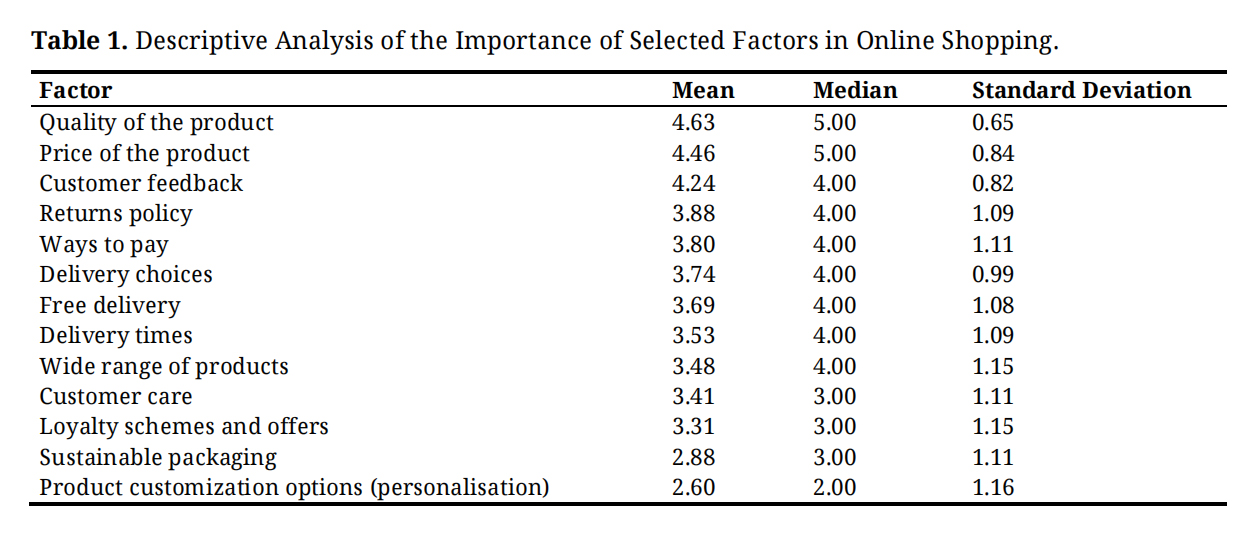 Table 1. Descriptive Analysis of the Importance of Selected Factors in Online Shopping.
The findings suggest that consumers value most highly product quality, product price, and customer reviews when navigating online purchasing decisions. Factors such as sustainability and personalisation, however, appear to play a negligible role in determining choice. Furthermore, in terms of response variation, the item ‘personalisation’ registered the highest dispersion (highest SD), whereas the data for ‘product quality’ showed minimal variability, indicating strong agreement among the respondent cohort on its essential importance.
Table 2 summarizes respondents’ attitudes toward sustainability in e-commerce based on thirteen attitudinal statements. Each statement was assessed using a five-point Likert scale ranging from strong disagreement to strong agreement. The mean scores reflect the overall tendency of respondents’ attitudes, with values around the midpoint indicating neutral positions, values above the midpoint suggesting agreement, and values below the midpoint indicating disagreement. The relatively high standard deviations across items suggest heterogeneity in consumer attitudes toward sustainability-related issues. The data show that most responses trended neutrally towards disagreement, suggesting that consumers do not yet afford sustainability a major role in their online purchasing decisions. Crucially, this is in alignment with the previous findings, where sustainability was ranked among the least decisive factors. Positive agreement was only observed for three specific statements: preferences relating to sustainable products with extended warranties, merchants using sustainable and ethical production methods, and sellers committed to reducing shipping and packaging waste.
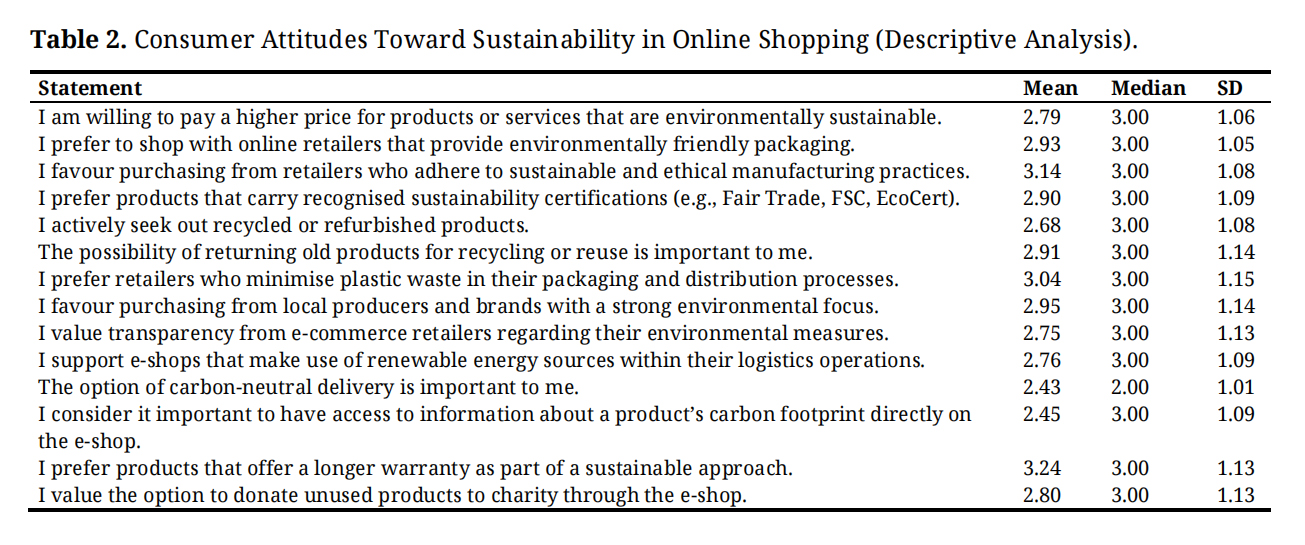 Table 2. Consumer Attitudes Toward Sustainability in Online Shopping (Descriptive Analysis).
The Mann-Whitney U test was performed (as shown in Table 3) to examine the existence of gender variations in consumer perceptions of sustainability in e-commerce. The results demonstrated no statistically significant differences between male and female respondents. Thus, we find no definitive evidence to suggest a disparity in the sustainability perception between genders. Figure 1 provides a visual representation of these findings.
Recent literature increasingly emphasizes the contextual nature of sustainable consumption, particularly within digital and e-commerce environments. Studies published in the last five years highlight the role of economic constraints, perceived convenience, and market maturity in shaping sustainability-related purchasing behavior. By integrating these perspectives, the present study contributes to a more nuanced understanding of sustainability in e-commerce, especially within emerging European markets [30–33].
 Table 3. Results of Inferential Testing for Gender Differences in Sustainability Perception.
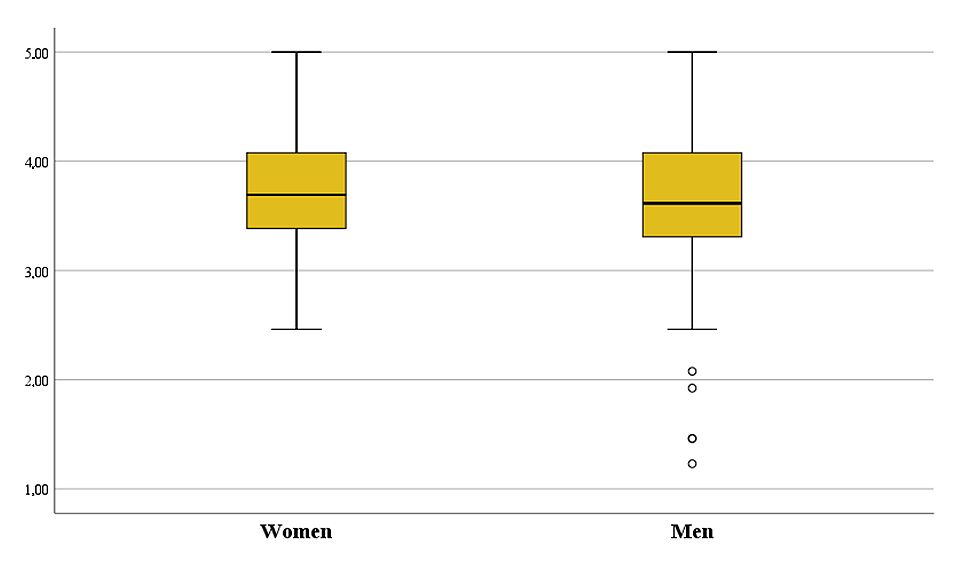 Figure 1. Graphical Visualisation of the Results from the Mann-Whitney U Test.
Prior studies have consistently highlighted the necessity for systematic solutions to address the environmental impact of e-commerce, particularly concerning logistics and packaging. Furthermore, researchers underscore that consumers are willing to pay extra for sustainable alternatives [9,10,34,35]. This point holds true for a specific segment of our findings, where several statements related to eco-friendly packaging and ethical practices showed a slight positive trend, even though overall sustainability was ranked marginally.
This supports the established view that sustainable packaging acts as an important determinant of consumer trust and provides a competitive edge for businesses, often having a direct impact on purchasing decisions [36–38]. A notable discrepancy emerged when comparing the overall marginal ranking of sustainability and eco-friendly packaging in our study with the general literature [39], which suggests consumers increasingly prefer environmentally friendly practices and are willing to modify their purchasing behaviour accordingly. This conflict necessitates highlighting the existence of the so-called ‘attitude–behaviour gap’. This concept denotes the disparity between consumers stated intentions and their actual purchasing decisions. Previous studies corroborate this phenomenon, demonstrating that while consumers express interest in sustainable products, their purchasing behaviour is often dictated by pragmatic barriers such as price sensitivity or product availability (e.g., ElHaffar et al. [40]; Štofejová et al. [30]; Munro et al. [41]; Magano et al. [42], Islam et al. [43]). This discrepancy suggests that positive environmental attitudes alone are insufficient to drive sustainable purchasing behaviour in an online context.
In our findings, this attitude-behaviour discrepancy was particularly salient among younger consumers, who demonstrated an interest in eco-friendly solutions but simultaneously exhibited a lower willingness to pay a premium for them. From a segmented perspective, the findings indicate that younger consumers tend to express relatively positive attitudes toward sustainable practices in e-commerce; however, these attitudes do not consistently translate into purchasing behavior. This pattern can be partially explained by their economic status, as students and early-career individuals often exhibit higher price sensitivity, which outweighs sustainability considerations during actual purchase decisions. However, these results contrast sharply with the findings of Bansal et al. [44] or Ali et al. [45], whose research indicated that attitudes toward sustainability vary with age and lifestyle, proposing that younger and more environmentally engaged consumers express a higher propensity to support sustainable e-commerce. Consequently, sustainability in e-commerce appears to function more as a normative expectation than as a decisive purchasing criterion. Collectively, the evidence from both this study and the wider literature underscore the urgent necessity for continued empirical research in this domain.
The divergence between our findings and several prior studies reporting stronger sustainability-driven purchasing behavior can be attributed to multiple factors. First, much of the existing literature focuses on developed or highly mature e-commerce markets, where sustainable alternatives are more accessible and affordable. Second, the younger and economically constrained composition of our sample differs from studies that emphasize higher-income or environmentally engaged consumer segments. Third, contextual differences related to market development, price sensitivity, and perceived trade-offs between sustainability and convenience help explain why sustainability was ranked as a secondary factor in this study. These findings underscore the importance of contextualizing sustainability research within specific socio-economic and regional environments.
In relation to the formulated research questions, the findings indicate that while consumers perceive sustainability positively within the online purchasing process (RQ1), it does not yet represent a dominant decision-making factor (RQ2). The absence of significant gender differences (RQ3) further suggests that sustainability perceptions are shaped more by economic and contextual factors than by basic demographic characteristics. Collectively, these results highlight the need for e-commerce retailers to address structural barriers–such as price and transparency–to effectively narrow the attitude–behavior gap.
This study examined consumer attitudes toward sustainability in the context of e-commerce and identified key factors influencing online purchasing decisions. The findings demonstrate that while sustainability is generally perceived positively, it does not yet function as a dominant determinant of consumer behavior. Instead, purchasing decisions remain primarily driven by traditional factors such as product quality, price, and customer feedback. The results further confirm the presence of a pronounced attitude–behavior gap, particularly among younger consumers who express environmental awareness but exhibit limited willingness to translate these attitudes into concrete purchasing actions. This gap appears to be shaped by economic constraints, perceived trade-offs between sustainability and convenience, and insufficient visibility of sustainable options in online retail environments.
Finally, the inferential analysis found no statistically significant gender differences in consumer perception of sustainability within e-commerce.
The present study is subject to several methodological limitations. First, the research employed a non-probability convenience sampling method, which limits the generalizability of the findings. The sample is characterized by an overrepresentation of younger respondents and students, which may influence attitudes toward sustainability and purchasing behavior. Second, the study is geographically limited to Slovakia, where e-commerce practices, consumer purchasing power, and sustainability awareness may differ from those in more mature or global markets. Therefore, the results should be interpreted as context-specific and exploratory, rather than representative of consumer behaviour at a broader international level. Future research should therefore look to extend the study to an international context, enabling the comparison of diverse age and cultural groups. Subsequent studies should also incorporate qualitative research methods to gain a deeper understanding of real-world online purchasing behaviour.
The study offers significant theoretical implications by expanding the body of knowledge concerning the interplay between sustainability and consumer behaviour in e-commerce. Furthermore, this paper enriches the academic discourse on emerging determinants of consumer purchasing decisions by highlighting the importance of contextual and market-specific factors in shaping sustainable e-commerce consumption. The practical implications translate into actionable recommendations for e-commerce operators, advising them to place greater emphasis on eco-friendly packaging, supply chain transparency, and, crucially, proactive communication of their sustainable strategies to customers. These actions will subsequently strengthen their competitive standing in the marketplace.
The dataset of the study is available from the authors upon reasonable request due to restrictions, e.g., privacy or ethical. The data is not publicly available due to GDPR.
Conceptualization, ŠK, LK, RF and BH; methodology, ŠK and LK; software, ŠK and LK; validation, BH; formal analysis, ŠK and RF; investigation, ŠK, LK and RF; resources, LK and BH; data curation, ŠK and LK; writing—original draft preparation, ŠK and LK; writing—review and editing, RF and BH; visualization, ŠK and LK; funding acquisition, ŠK. All authors have read and agreed to the published version of the manuscript.
The authors declare that they have no conflicts of interest.
This study is funded by the EU NextGenerationEU through the Recovery and Resilience Plan for Slovakia under the project No. 09I03-03-V05-00006.
1.
2.
3.
4.

Copyright © Hapres Co., Ltd. Privacy Policy | Terms and Conditions


